Counter Height vs. Bar Height: Key Differences Explained
Choosing the wrong stool height is one of the most common mistakes people make when setting up a kitchen or island.
It may look fine at first, but it quickly turns uncomfortable when you sit down. That’s where understanding counter height vs. bar height makes a big difference.
These two options may seem similar, but they affect how you sit, how you use the space, and how comfortable it feels over time.
This guide breaks it down in a simple way so you can choose the right setup without second-guessing
Counter Height vs. Bar Height at a Glance
The difference mainly comes down to height and how you use the space, and once you understand the basic measurements, choosing between the two becomes much easier.
| Feature | Counter Height | Bar Height |
|---|---|---|
| Height | 34–36 inches | 40–42 inches |
| Purpose | Daily use (cook, eat, work) | Casual use (drinks, chats) |
| Feel | Comfortable for long sitting | Better for short sitting |
| Stool Height | 24–27 inches | 28–32 inches |
| Best Use | Family, multi-use spaces | Social, raised setups |
| Comfort Rule | 10–12 inch gap (seat to counter) | 10–12 inch gap (seat to counter) |
The key rule is simple: Always match the stool height to your surface height, not the label on the product.
How Comfort and Usage Change at Each Height
Counter height feels more natural and comfortable for most people. Your feet rest easily, your posture stays relaxed, and it works well for longer sittings like meals, work, or daily use.
It also supports everyday tasks, since eating feels like a regular table and food prep is easier at this height.
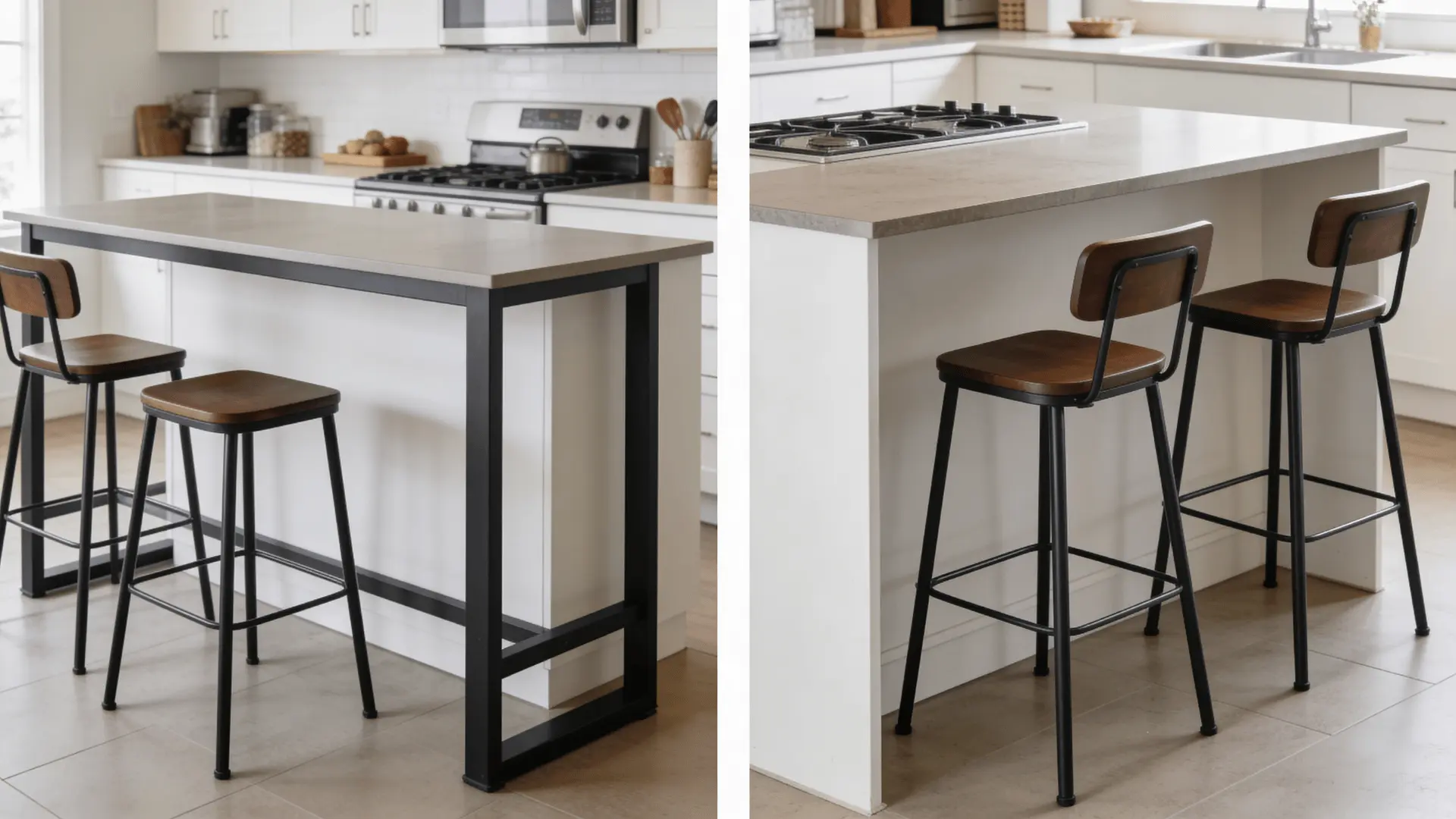
Bar height creates a different experience. You sit higher, your legs hang more, and getting on and off takes more effort.
It’s fine for short periods and better suited for casual use like drinks or conversations, but less practical for long sitting or detailed tasks.
Why the Wrong Height Causes Problems Fast
Problems show up quickly when the wrong height is chosen. The most common issues are:
- Bar stools on a counter height surface feel too tall
- Counter stools on a bar height surface feel too low
- The gap between the seat and the counter feels off, which affects comfort immediately
Another mistake is relying on product labels. Terms like “bar stool” and “counter stool” are not always consistent across brands.
The safest approach is simple: measure your surface height, choose the correct seat height, and keep a 10 to 12 inch gap for comfort. This prevents long-term discomfort.
Which Height Works Better in Real Homes
Choosing between counter height and bar height depends on how you use your space, not just design. Counter height works best for daily use like meals, work, and prep.
It’s more comfortable for longer sitting and easier for kids and older adults, making it the more practical choice for most homes.
Bar height suits more social setups. It works well for drinks, casual chats, or separating spaces, but it’s less comfortable for everyday use.
For mixed-use spaces, counter height is usually the safer option. If you use the space daily, go with counter height. If it’s mainly for guests, bar height can work.
Keep it simple, if you:
- Use it daily → Go with counter height
- Use it occasionally or for guests → Bar height can work
Counter Height vs. Bar Height for Kitchen Islands and Seating
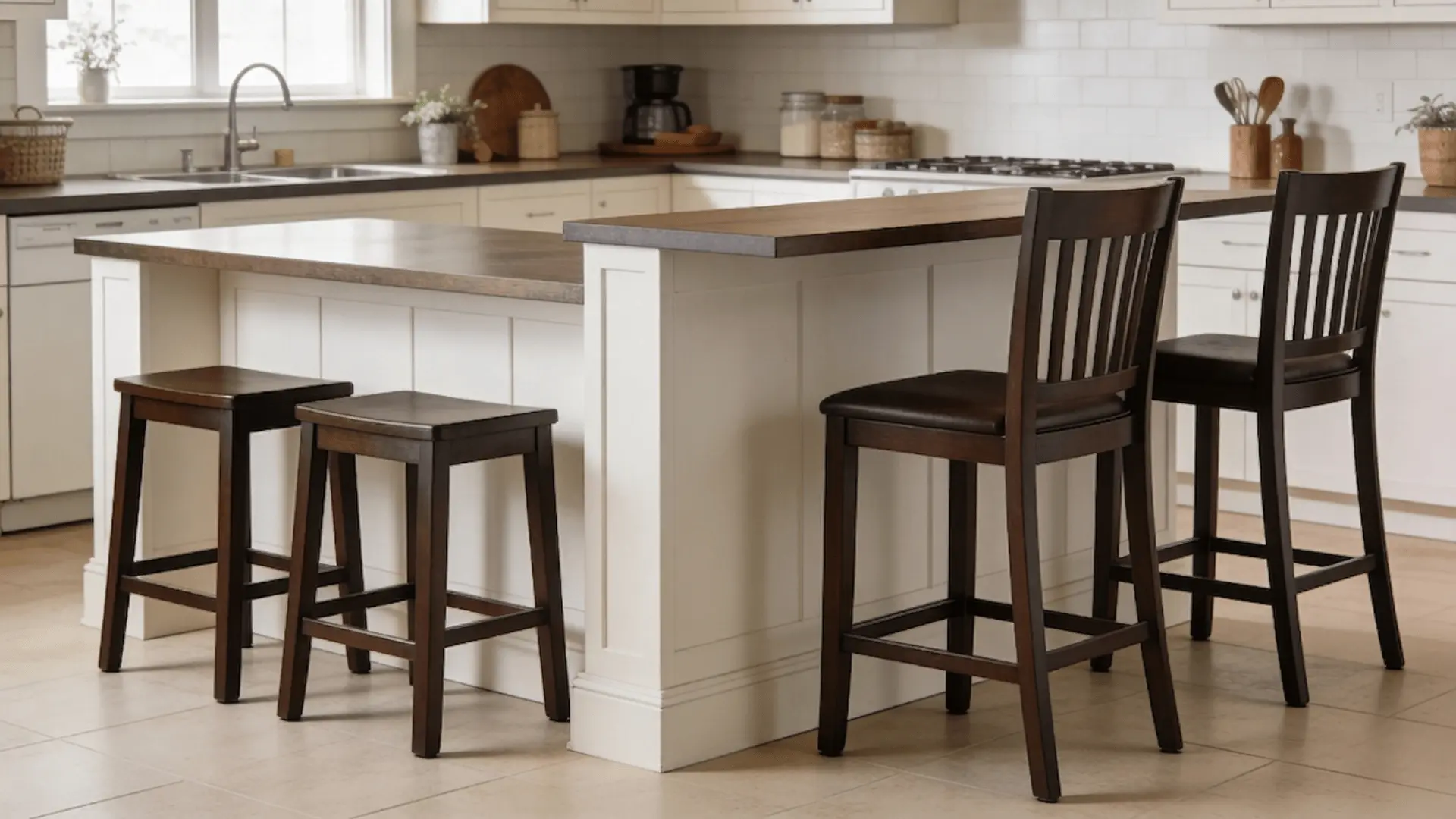
This is where most confusion happens. People often pick stools first, but the right approach is to start with your counter height and match seating to it.
Most Kitchen Islands are Built at Counter Height
In most homes, kitchen islands follow standard counter height, usually around 34 to 36 inches.
They sit at the same level as the rest of the kitchen countertop and are designed for cooking, prep, and everyday use. That means counter height stools are usually the right choice.
Many people get this wrong because the setup looks like a bar, but the height is still standard counter level.
When a Raised Bar Section Still Makes Sense
Some kitchens include a raised section on the island. This part is typically around 40 to 42 inches high and sits slightly above the main counter.
It’s often used to hide clutter like dishes or prep work and creates a clear separation between cooking and seating.
In this case, bar height stools work well, but only for that raised section, not the entire island.
Why Stool Labels Can Be Misleading
Many sizing mistakes happen because stool labels are not always reliable. Terms like “bar stool” and “counter stool” can vary between brands, and the design or look of a stool can make it seem like the right fit when it isn’t.
Instead of relying on labels, focus on measurements:
- Start by measuring your surface height
- Ignore the stool category name at first
- Match it to the correct seat height range
This approach removes guesswork and keeps the decision based on actual fit.
When you depend only on labels or appearance, it’s easy to choose stools that look right but feel uncomfortable in everyday use.
How to Measure the Right Stool Height for a Counter
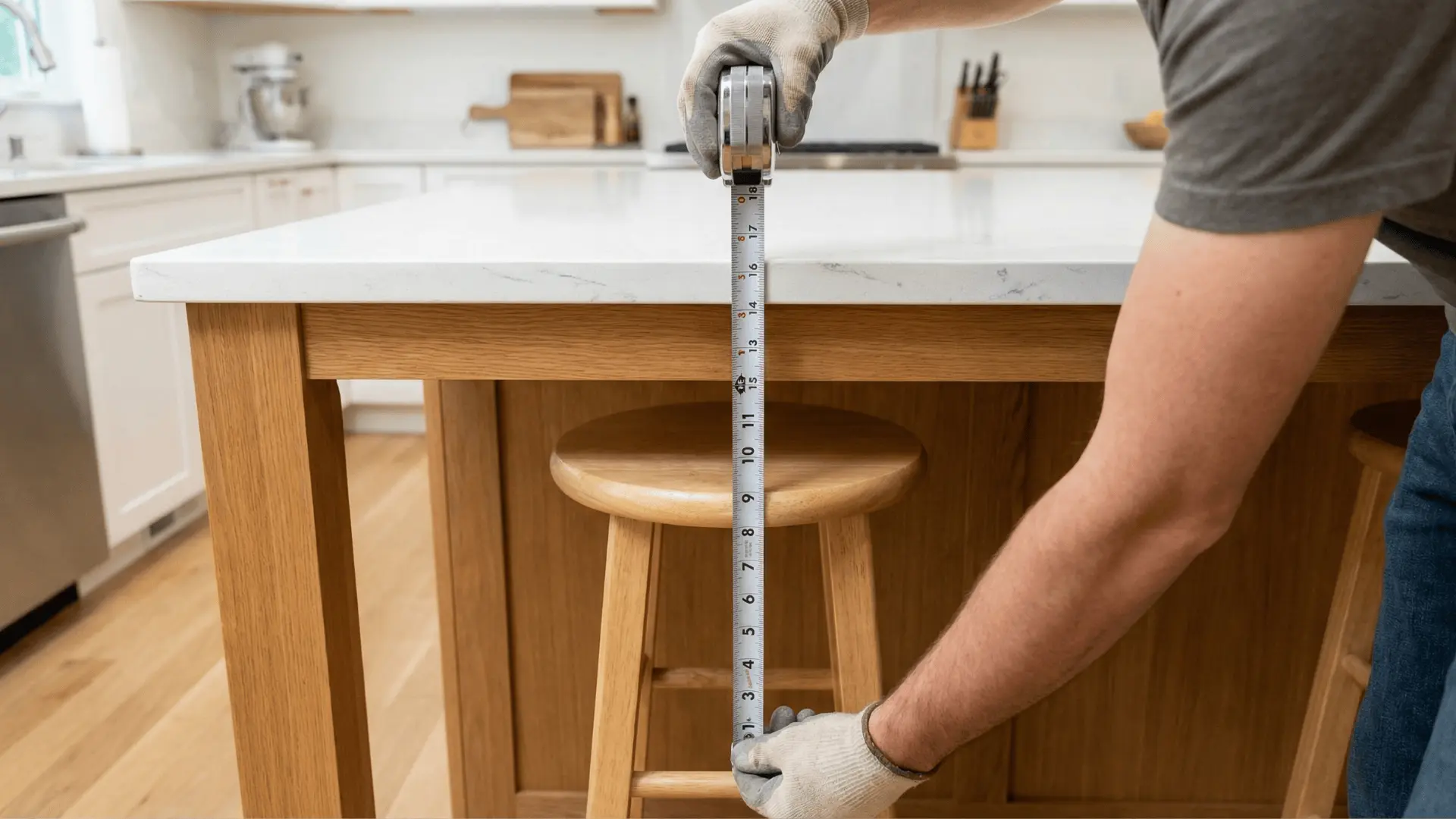
This is the step that saves you from buying the wrong stools. You don’t need guesswork. Just a quick measurement and one simple rule.
Measure from the Floor to the Underside of the Surface
Start by measuring from the floor to the underside of your counter or island, not the top. This is the space your legs will actually use.
This number matters the most because it tells you how much room you have for seating. If your counter has a thick slab or overhang, this step becomes even more important.
Leave the Right Legroom Between the Seat and the Counter
Comfort depends on spacing. You should leave about 10 to 12 inches between the stool seat and the underside of the counter.
This gap gives you:
- Enough legroom
- A natural sitting position
- Comfortable arm placement while eating
Less space feels cramped, while more space makes sitting feel too low and awkward.
What Stool Height Fits Common Counter Heights
Matching stool height becomes much easier when you use a few standard reference points. The goal is to keep a 10 to 12-inch gap between the seat and the underside of the surface.
Here’s how it works for the most common heights:
For a 36-inch surface (standard counter height):
- Stool seat height: 24 to 27 inches
- This is the most common kitchen setup and works well for daily use like meals and prep
For a 39-inch surface (in-between height):
- Stool seat height: 26 to 29 inches
- Often called “counter-plus” or “low bar” height
- This range can be confusing, so measuring carefully is important
For a 42-inch surface (standard bar height):
- Stool seat height: 28 to 32 inches
- Used for bar setups or raised sections of an island
Measure your surface first, then choose a stool that maintains that 10 to 12 inch gap. This ensures proper legroom and a comfortable sitting position.
Counter Height vs. Bar Height: Quick Pros & Cons
| Counter Height | Bar Height |
|---|---|
| Better for daily use (meals, work, prep) | Better for social use (drinks, casual chats) |
| More comfortable for long sitting | Less comfortable for long sitting |
| Easier for kids and older adults | Harder to access for some users |
| Matches standard kitchen workflow | Creates visual separation in open spaces |
| Feels natural and stable | Feels more elevated and styled |
Who Usually Prefers Counter Height Most
Counter height tends to work best for:
- Families who use the space every day
- Homes where the island doubles as a work and dining area
- People who want comfort over a raised look
- Anyone planning to sit for longer periods
If your space is used often and for different tasks, counter height usually fits better without creating friction in daily use.
Who Usually Prefers Bar Height Most
Bar height tends to suit:
- Homes focused on entertaining guests
- People who want a more raised, defined seating area
- Spaces where the kitchen needs visual separation
- Those who use the area for short stays rather than long sitting
If the goal is a social setup with a bit of style, bar height can work well. But for everyday comfort, it’s usually not the first choice.
Common Mistakes to Avoid
Small mistakes in measurement or planning can quickly lead to discomfort, so it helps to watch out for the most common ones.
- Choosing stools before measuring the counter: Always measure your surface first instead of picking based on looks
- Relying only on labels like “bar stool” or “counter stool”: Names can be misleading, so check the actual seat height
- Ignoring the 10 to 12 inch spacing rule: The right gap is essential for comfort and proper seating
- Assuming all kitchen islands are bar height: Most islands are counter height, even if they look taller
- Prioritizing design over comfort: A stylish setup won’t work if it feels uncomfortable to use
Avoiding these mistakes makes your decision easier and helps you choose a setup that actually works in daily life.
Conclusion
Choosing between counter height vs. bar height is not just about looks. It’s about comfort, daily use, and how well the setup fits your routine.
Small height differences can change how you sit, move, and use the space. Once you understand the measurements and match the stool correctly, the decision becomes much easier.
If you want a setup that actually works in real life, focus on how you’ll use it every day. Use this guide to measure right and pick with confidence.