How to Match Your Garage Door to Your Home’s Exterior Color Scheme
If you’re shopping for a new garage door, you might think the hardest decision is picking the right size or insulation level. Color can feel like an afterthought. The truth is, matching your garage door to your home’s exterior color scheme has a bigger impact on curb appeal than nearly any other choice. It can either tie your palette together or make it feel disjointed. Here’s how to pick a door that complements your home and makes it the best on the block.
Why Your Garage Door Color Matters for Curb Appeal
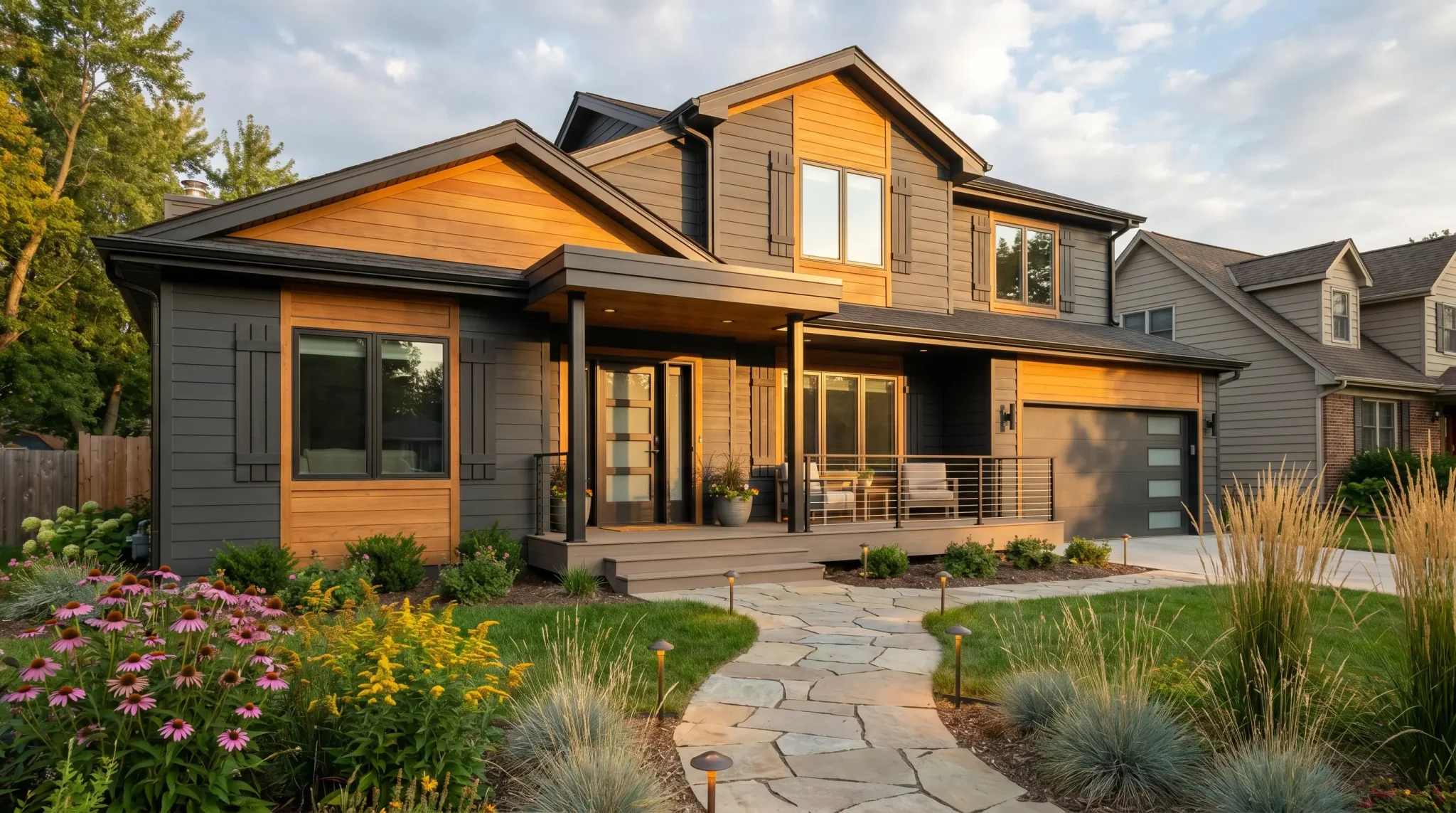
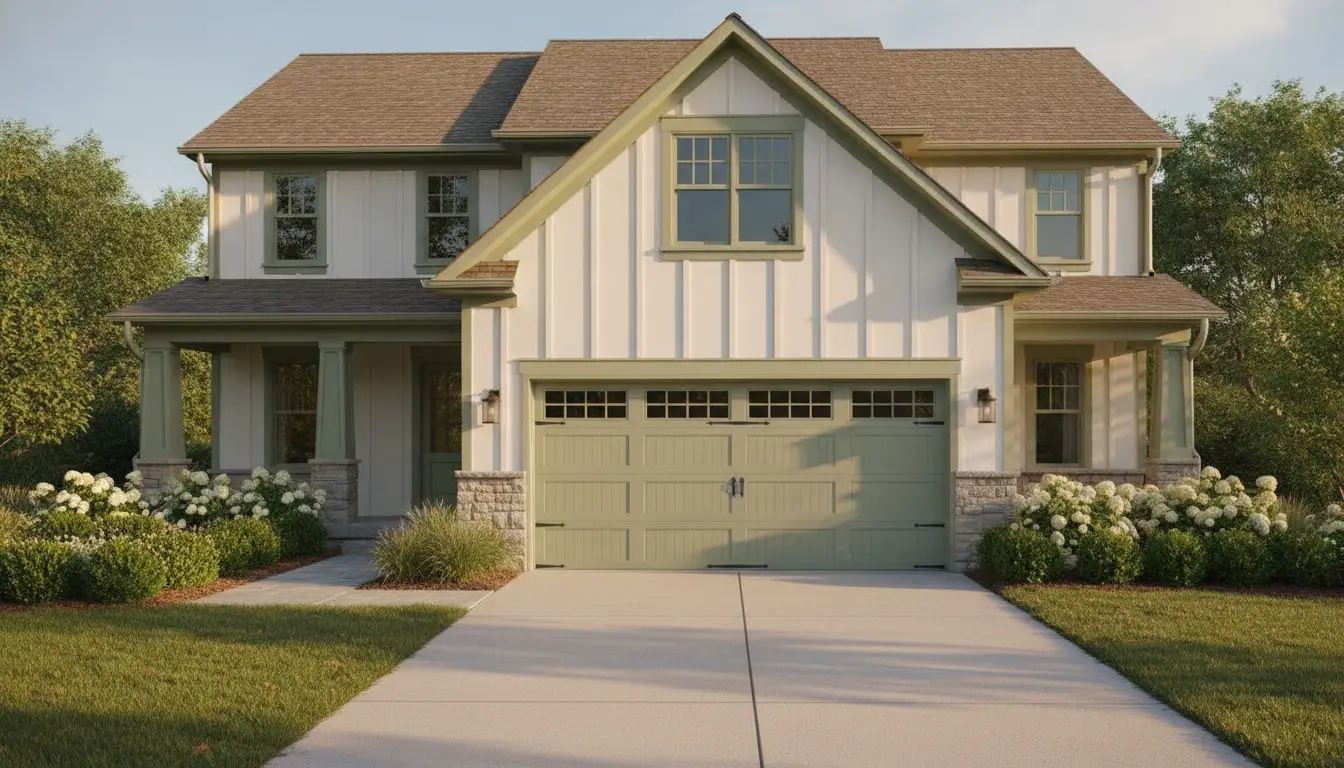
A garage door often takes up a significant portion of your home’s facade, making its color one of the most impactful design choices you can make. Selecting a shade that complements your home’s architectural style creates a cohesive, intentional look.
Beyond aesthetics, choosing the right garage door is a smart financial move. According to Zonda’s 2025 Cost vs. Value report, a garage door replacement is the best project for return on investment. The average cost of a replacement is $4,672, but homeowners can recoup 267.7% of that investment when selling, bringing its value to $12,507.
How to Identify Your Home’s Core Color Palette
Before you start browsing paint swatches or door samples, assess what’s already there. The goal is to work with your home’s existing colors, not against them.
Start With Your Fixed Elements
Take inventory of the colors you cannot change. Your roof, brick or stone accents and window frames form the foundation of your exterior palette.
Gray shingles pair best with cooler tones like slate blue, while brown shingles lean toward warmer creams or earthy greens. Red brick looks stunning alongside warm whites or sage greens, but gray stone demands cool-toned companions.
Window frames also matter. Whether white, bronze or tan, your garage door color needs to complement them.
Uncover Your Home’s Undertones
Undertones are the subtle cool or warm tints within a primary color. Beige siding might have yellow undertones for warmth or gray ones that read cooler. When they clash, your color scheme can feel off.
Grays usually hide blue, green or violet undertones. Beiges tend to carry yellow, green, pink or orange. Whites can have warm bases like cream or cool bases like blue.
Key Principles for Choosing a Garage Door Color
Once you understand your home’s palette, you can apply simple design principles to guide your choice.
Use the 60-30-10 Rule for Balance
The 60-30-10 rule distributes color in a balanced way. Use 60% for your dominant color, 30% for a secondary color and 10% for an accent. On a typical home’s exterior, the main siding typically covers 60%, trim takes up 30% and an accent like the front door fills the remaining 10%.
Your garage door can fit into either the 60% or 30% portion. If you want it to blend with your siding, it should fall within the dominant 60%. If you want it to match your trim, it counts toward the 30% secondary color proportion.
Blend With Siding for a Subtle Look
Painting your garage door the same color as your main siding helps it recede into the background. This makes your home feel larger and shifts focus to other elements like landscaping.
You don’t need an exact match. A slightly darker or lighter shade adds subtle contrast while maintaining cohesion.
Match With Trim for a Bolder Statement
Matching your garage door to your trim color creates a crisp look that frames the door as a deliberate design feature. This unifies your exterior by connecting the garage door with window frames and fascia. You can also tie it to a wooden front door for cohesion.
Inspiring Garage Door Designs to Complement Your Home
Putting these principles into practice is easier when you have the right options. Amarr offers styles and custom color options that work with a variety of home designs, from classic carriage-house looks to sleek modern profiles. With a national dealer network and top-rated garage doors with custom paint color options, Amarr gives homeowners practical ways to match a new garage door to their exterior color scheme.
1. For the Classic Traditional House: The Classica Tuscany With Danube Windows
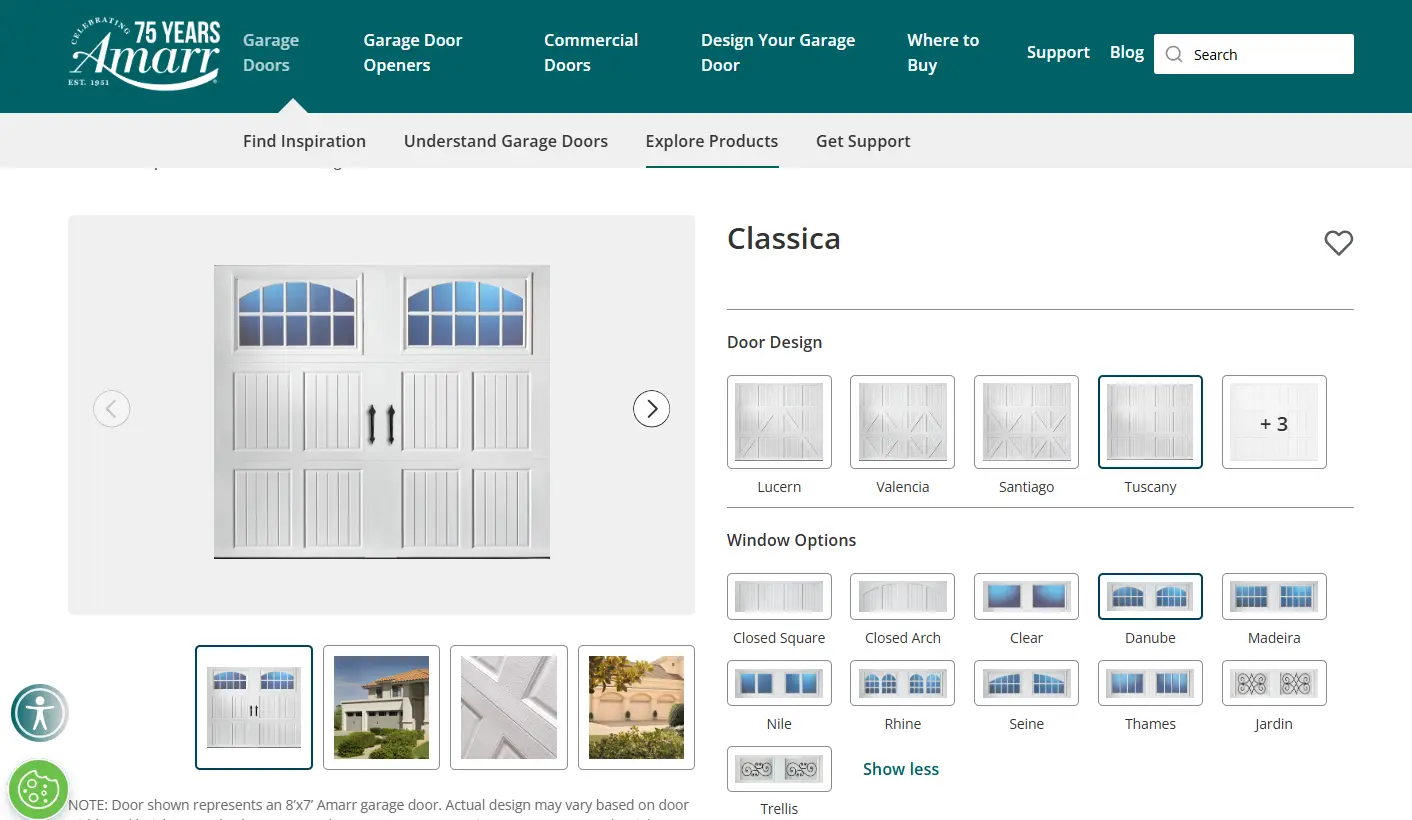
Traditional homes benefit from doors that honor classic architecture. The Classica Tuscany with Danube Windows brings authentic carriage-house styling, with three taller sections instead of the standard four. Larger windows bring in natural light, while polyurethane insulation delivers energy efficiency. Consider crisp white or a bolder two-tone color, like sand and hunter green.
Key features:
- Heavy-gauge steel construction: A five-layer paint system ensures durability and color retention.
- Large window options: Maximum natural light enhances interior spaces and exterior curb appeal.
- Decorative hardware available: Optional hardware lets you customize the design to match your home.
2. For the Sleek Modern Home: The Classica Full View Frost
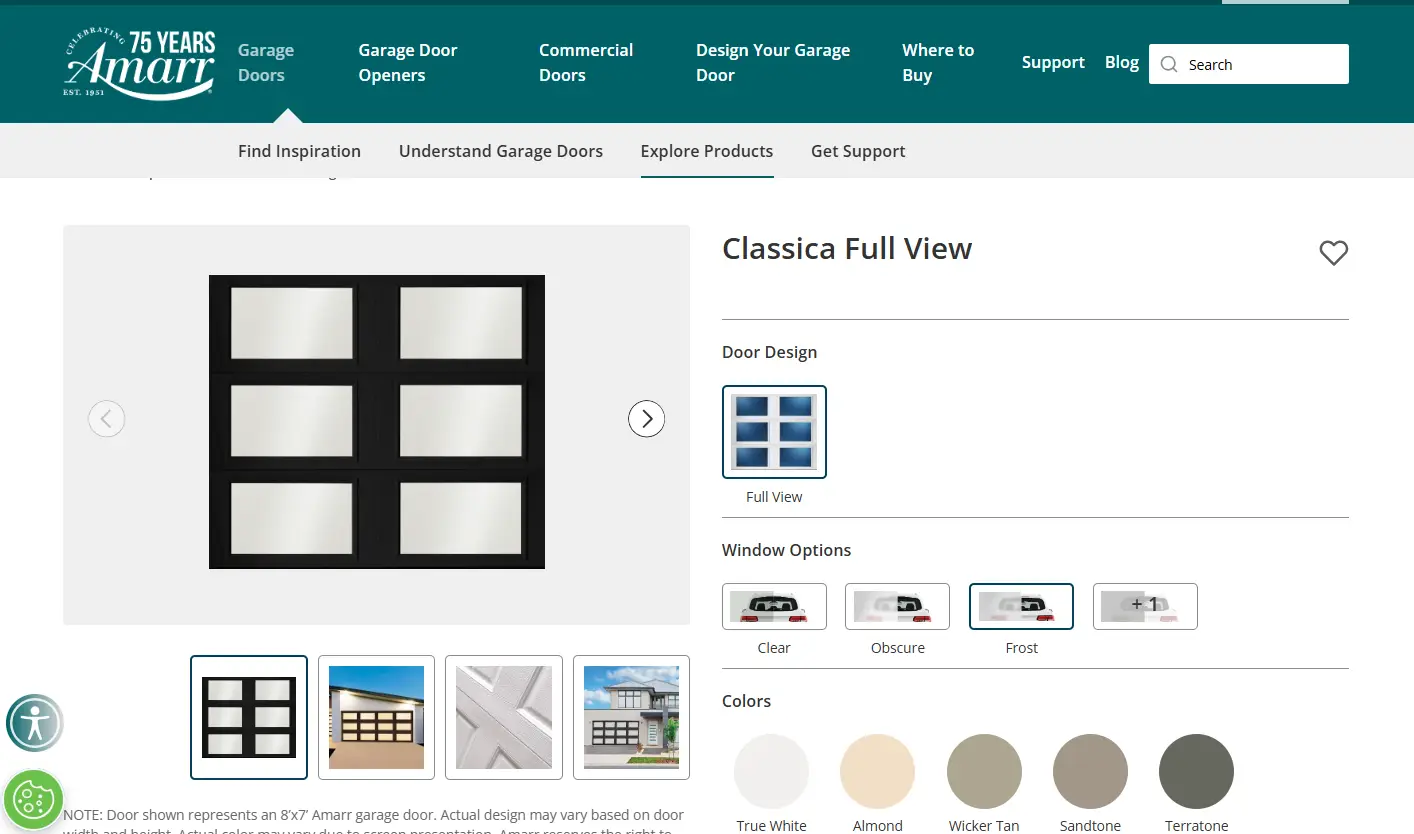
Modern homes demand clean lines and contemporary materials. The Classica Full View Frost features a three-section design with the largest windows available in an Amarr steel garage door. The contemporary aesthetic pairs with polyurethane-insulated steel for energy-efficient performance. Sleek black or charcoal gray are great options.
Key features:
- Triple-layer construction: It is available with a variety of full-view glass options.
- 2-inch polyurethane insulation: This keeps your garage comfortable while reducing energy costs.
- Multiple glass choices: Choose from double-strength, frost, dark tint or insulated glass.
3. For the Charming Craftsman or Bungalow: The Olympus Long Recessed With Trellis
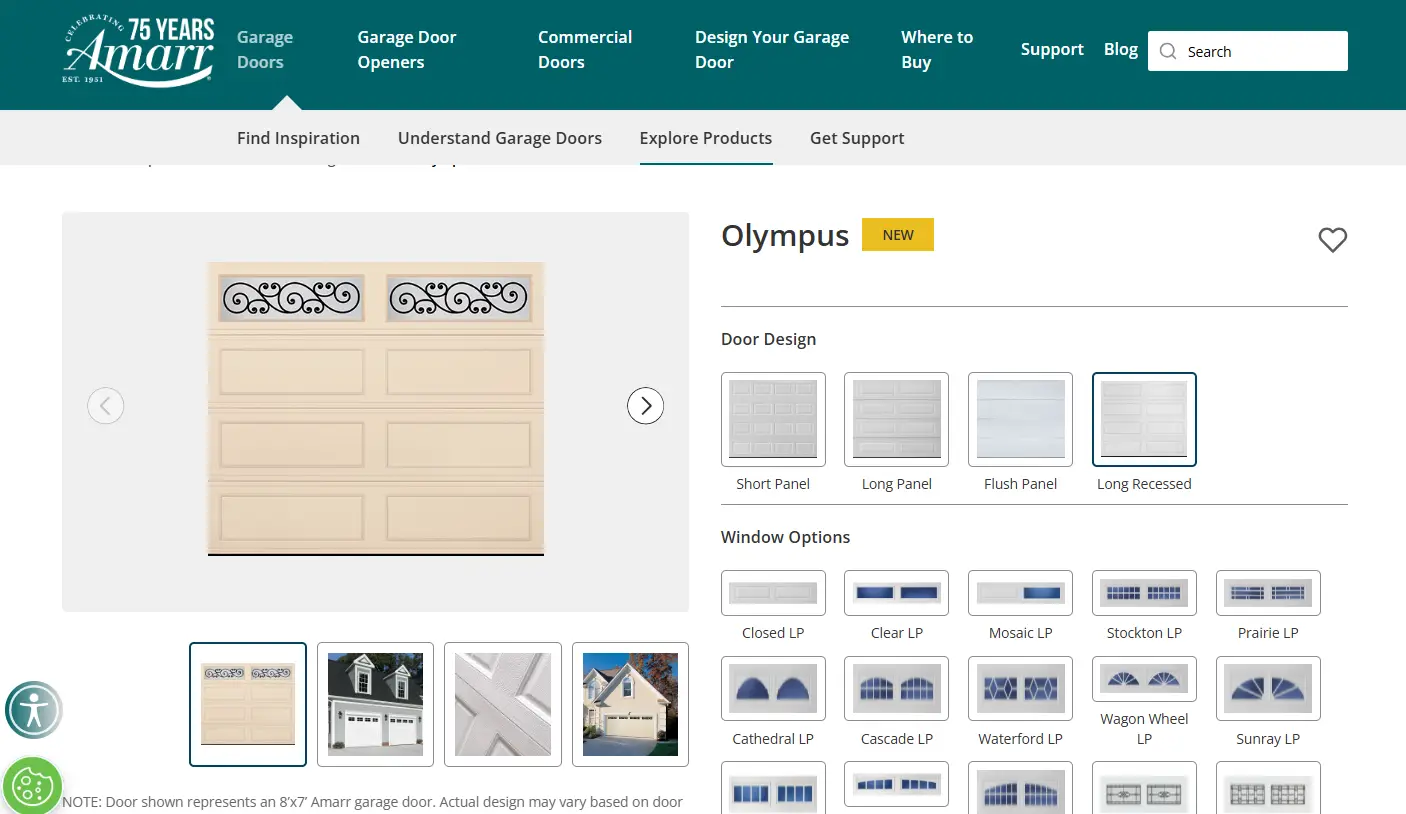
Craftsman and bungalow homes have an earthy feel that calls for doors with character. The Olympus Long Recessed With Trellis features stamped-steel designs in both traditional and modern styles. Woodsy colors like almond or mahogany are stunning options.
Key features:
- Mosaic windows: Add visual interest and natural light while honoring the design aesthetic.
- Stamped steel designs: Two traditional and one modern design option provide flexibility.
- Wind load reinforcement: The door is built to withstand harsh weather conditions.
Design Your Door
Choosing a garage door color starts with understanding your home’s fixed elements and uncovering undertones in your existing palette. From there, you can determine whether you want your door to blend with your siding for a subtle look or contrast with your trim to make it stand out. High-quality doors with custom color options give you the flexibility to bring your vision to life and make coming home something to look forward to.