Moving Cross-Country to Your Dream Home: A Stress-Free Relocation Guide
There’s a very specific kind of chaos that comes with falling in love with a house that’s nowhere near where you currently live. One minute you’re scrolling listings on the couch “just for fun,” and the next you’re signing a lease or closing on a place a thousand miles away, wondering how on earth you’re going to get your entire life there in one piece.
We’ve been through this more than once, and every time, the emotional part (leaving a place you love, saying goodbye to a neighborhood, a coffee shop, a view) is only half the story. The other half is pure logistics. And logistics, it turns out, is where most of the stress actually lives.
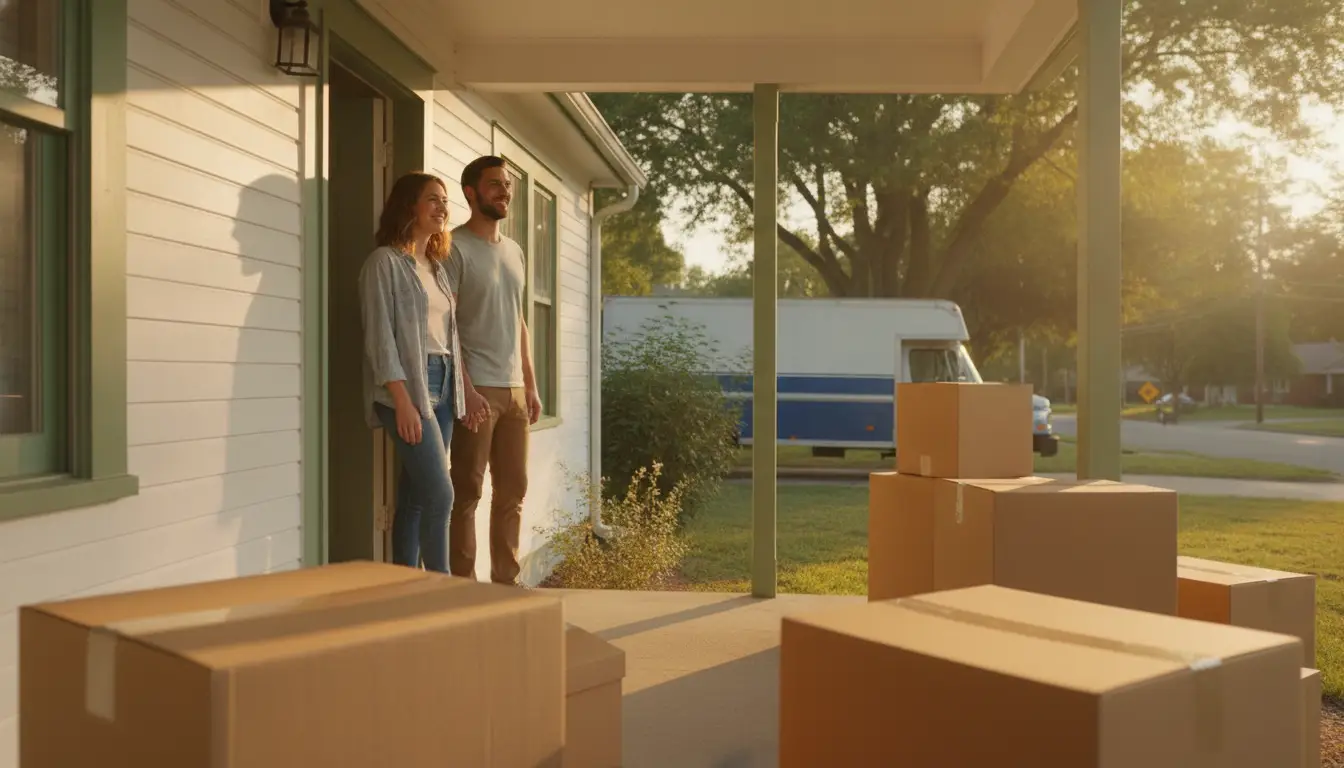
So if you’re standing in the middle of your soon-to-be-former living room surrounded by boxes, here’s everything we wish someone had told us before our own cross-country moves.
Start With the Big Decisions First
Before you touch a single box, there are a few decisions that shape everything else:
- Are you driving your car there, or is it going a different way than you are?
- Are you hiring full-service movers, or handling parts of it yourself?
- How much time do you actually have between move-out and move-in?
These three answers determine your entire timeline. We learned the hard way that trying to figure this out while packing is a recipe for 11pm meltdowns over bubble wrap.
The Part Nobody Warns You About: Your Car
Here’s something we genuinely didn’t think about until we were deep into planning our own move — your car doesn’t have to come with you the way you’d assume.
If you’re flying to your new city, or if the drive is simply too long to make sense with everything else you’re juggling, you can actually have your car shipped separately while you handle the rest of the move your own way. This was, hands down, one of the best decisions we made during our last relocation. Instead of spending three days driving cross-country exhausted and stressed, we flew out, unpacked the essentials, and had our car delivered to our new driveway a few days later.
We ended up usingMile Auto Transportfor this, and honestly, the peace of mind alone was worth it. Door-to-door pickup and delivery meant we didn’t have to drop the car off anywhere or coordinate a separate trip — it just showed up, ready to go, right when we needed it.
A few things we learned along the way if you’re considering this route:
- Book earlier than feels necessary. Moving season (late spring through summer) gets busy fast, and the good pickup windows fill up.
- Get a couple of quotes so you have a sense of what’s reasonable for your distance and vehicle type.
- Take your own photos of the car before it’s picked up — just a good habit for peace of mind, regardless of who you use.
Packing: The Room-by-Room Approach That Actually Works

Instead of packing randomly (which we absolutely did our first move, and regretted), tackle one room at a time, fully, before moving to the next. Half-packed rooms create a weird kind of chaos where you can’t find anything and also can’t relax anywhere.
Our order, if it helps:
- Guest room / least-used space first
- Storage areas and closets
- Kitchen (leave a small “essentials” box out until the very end)
- Bedroom
- Living room last, since you’ll be living in it the longest
Should You Drive or Ship the Car?
This deserves its own moment, because it’s genuinely one of the biggest decision points in a cross-country move, and there’s no universally right answer.
Driving makes sense if:
- The trip itself is part of the appeal (a proper road trip, stops along the way, that kind of thing)
- You’re moving with pets who do better in a car than a crate
- Your timeline is flexible enough to enjoy the drive rather than rush it
Shipping makes sense if:
- You’re flying and don’t want to burn multiple vacation days driving instead
- You’re moving during a busy season at work and can’t take the time off
- The car itself is something you’d rather not put thousands of extra miles on
We went the shipping route both times we’ve relocated long-distance, and looking back, it gave us our moving week back. Instead of spending it behind the wheel, we spent it actually setting up the new house — which, honestly, is the part that makes a new place start to feel like home. If you’re weighing the same decision, it’s worth reading through the difference between open and enclosed car transport before you commit either way, just so you know what your options really look like.
Making the New House Feel Like Home, Fast
Once everything’s finally there — you, your boxes, your car — resist the urge to unpack everything in one exhausting weekend. Set up these things first, and let the rest happen slowly:
- Your bed, fully made, on night one
- The kitchen essentials box (coffee maker, a few plates, the good knife)
- One cozy corner — a chair, a lamp, something that feels like you, even if the rest of the room is still boxes
Everything else can wait. The goal in the first few days isn’t a finished house, it’s a livable one.
The Bottom Line
Moving across the country to a home you’re genuinely excited about should feel more like an adventure than a crisis, and most of the difference comes down to planning the logistics early instead of white-knuckling it at the last minute. Decide what’s driving, what’s shipping, and what’s getting packed first — and give yourself permission to not have it all perfectly figured out on day one in the new place. That part comes with time, a few good candles, and eventually forgetting which box has the corkscrew in it.