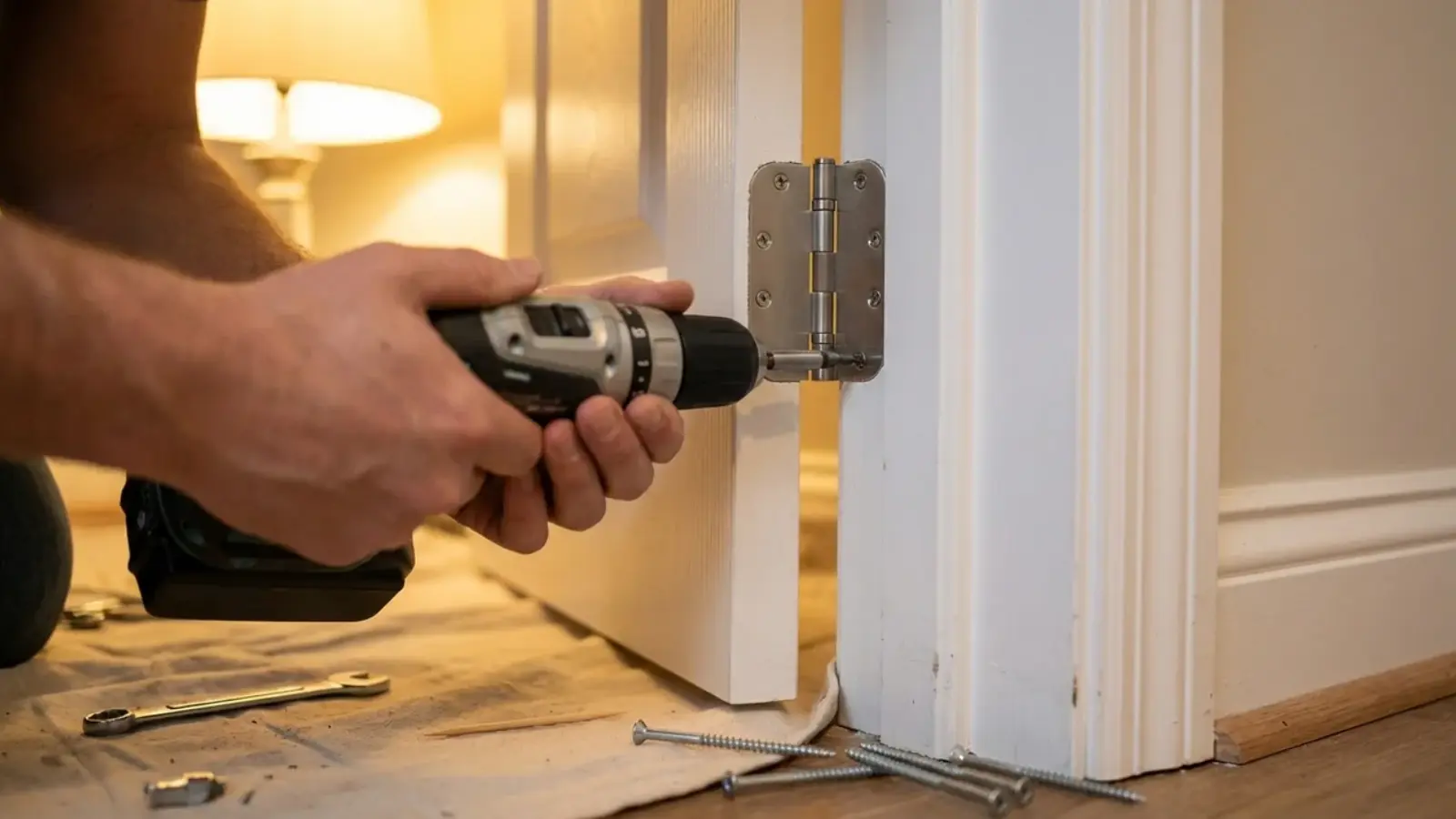
How to Fix a Sagging Door Step-by-Step
A door that rubs, won’t close properly, or looks uneven is often sagging. This usually happens when the door’s weight pulls down over time and the hinges can no longer hold it in the correct position.
The top hinge takes most of this load, which is why the problem often starts there. As the hinge shifts, the door drops slightly on one side, leading to misalignment and poor closing.
The good part is that most sagging door problems can be fixed at home with basic tools. This guide explains how sagging happens, how to identify it, and how to fix it step by step without unnecessary effort.
How a Door Sags: Causes Explained Clearly
A door sags because its weight is not supported evenly over time. The hinges are meant to hold the door in place, but most of the load sits on the top hinge. As the door is used daily, this constant pressure slowly weakens the screw grip or the wood around it.
When the screws loosen or the wood wears out, the top hinge shifts slightly. Even a small shift changes the door’s position. The latch side begins to drop, which creates uneven gaps and misalignment.
In some cases, the problem is not just the screws. The hinge itself can wear out, or the door frame can move slightly due to age or moisture. When this happens, the hinges no longer sit in the correct position, which affects how the door hangs.
So the sag is not sudden. It builds slowly as support weakens, leading to visible alignment issues over time.
How to Identify a Sagging Door
You can identify a sagging door by checking how it sits and moves within the frame. Small changes in alignment usually show up as clear, visible signs.
Look for these common indicators:
- The door rubs against the frame, usually at the top near the latch side
- The gap at the top is uneven, wider on one side and tighter on the other
- The latch does not align properly or needs force to close
- The door drags on the floor or does not stay in place when opened
To confirm, open the door halfway and leave it. If it swings open or closed on its own, the alignment is off.
Once you spot these signs, you can match the issue to the likely cause:
- Top corner rubbing: Usually caused by a loose or shifting top hinge
- Door dragging at the bottom: Indicates overall sag from weak hinge support
- Latch misalignment: Shows the door has dropped slightly out of position
- Door swinging on its own: Points to hinge or frame alignment issues
This makes it easier to understand what is wrong before starting any fix.
How to Fix a Sagging Door Step-By-Step
A sagging door is usually caused by loose hinges or a weak screw grip. Start with the easiest fix and move step by step until the door aligns properly.
Step 1: Tighten All Hinge Screws
Start with the top hinge, then tighten the middle and bottom. Use a screwdriver to secure the screws on both the door side and frame side for better control.
This step fixes minor sag caused by loose screws. Over time, screws loosen under the door’s weight, which allows the hinge to shift and misalign the door. Tightening them restores grip and pulls the door back into proper alignment.
After tightening, check if the gaps around the door look even and if rubbing at the top or side stops. If any screw keeps spinning or doesn’t tighten, the hole is stripped and won’t hold, so skip to Step 3.
Step 2: Replace the Top Hinge Screw with A Longer Screw
Remove one screw from the top hinge on the frame side and replace it with a 2–3 inch screw. Tighten it slowly while checking the door alignment as you go.
This step fixes sag caused by weak screw grip in the frame. A longer screw reaches the wall stud behind the frame, which pulls the hinge tightly inward. This helps lift the sagging side and brings the door back into alignment.
After tightening, check if the top corner lifts slightly and if the door closes properly. If the screw doesn’t grip or keeps slipping, the wood behind is weak, so move to Step 3.
Step 3: Fix Stripped Screw Holes
Remove the loose screw, then fill the hole with toothpicks or small wood pieces along with wood glue. Push the filler in tightly, then reinsert and tighten the screw.
This step fixes screws that won’t tighten due to worn-out holes. Filling the hole gives the screw fresh material to grip, which restores hinge stability and helps hold the door in proper alignment.
After tightening, check if the screw holds firmly and the hinge feels stable. If the wood is too weak or damaged and the screw still won’t hold, move to Step 4.
Step 4: Add Hinge Shims
Place a thin shim, like cardboard, behind the bottom hinge and screw it back in place securely.
This step fixes door angle misalignment. The shim slightly changes the hinge angle, which lifts the sagging side and helps bring the door back into proper position.
After adjusting, check if the door sits evenly and if rubbing reduces or stops. If the sag is still visible, move to Step 5.
Step 5: Adjust or Bend Hinge Knuckles
Use a wrench to gently bend the hinge knuckles inward or outward. Make very small adjustments and test the door after each change.
This step fixes small alignment issues that remain after basic fixes. Bending the hinge slightly changes its pivot angle, which shifts how the door sits and helps fine-tune the alignment.
After adjusting, check if the door closes smoothly and if alignment improves. If there is no noticeable change, move to Step 6.
Step 6: Adjust Hinge Pins (Advanced Fix)
Remove the hinge pin, bend it slightly using a hammer or a firm surface, then place it back into the hinge.
This step fixes a very minor sag that remains after other fixes. Slightly bending the hinge pin adds resistance in the hinge, which can lift the door alignment just a bit. This is only for fine adjustment, not major correction.
After adjusting, check if the door movement feels tighter and if there is a slight improvement in alignment. If not, stop here and check the hinges or frame condition before trying further fixes.
Final Check After Fixing the Door
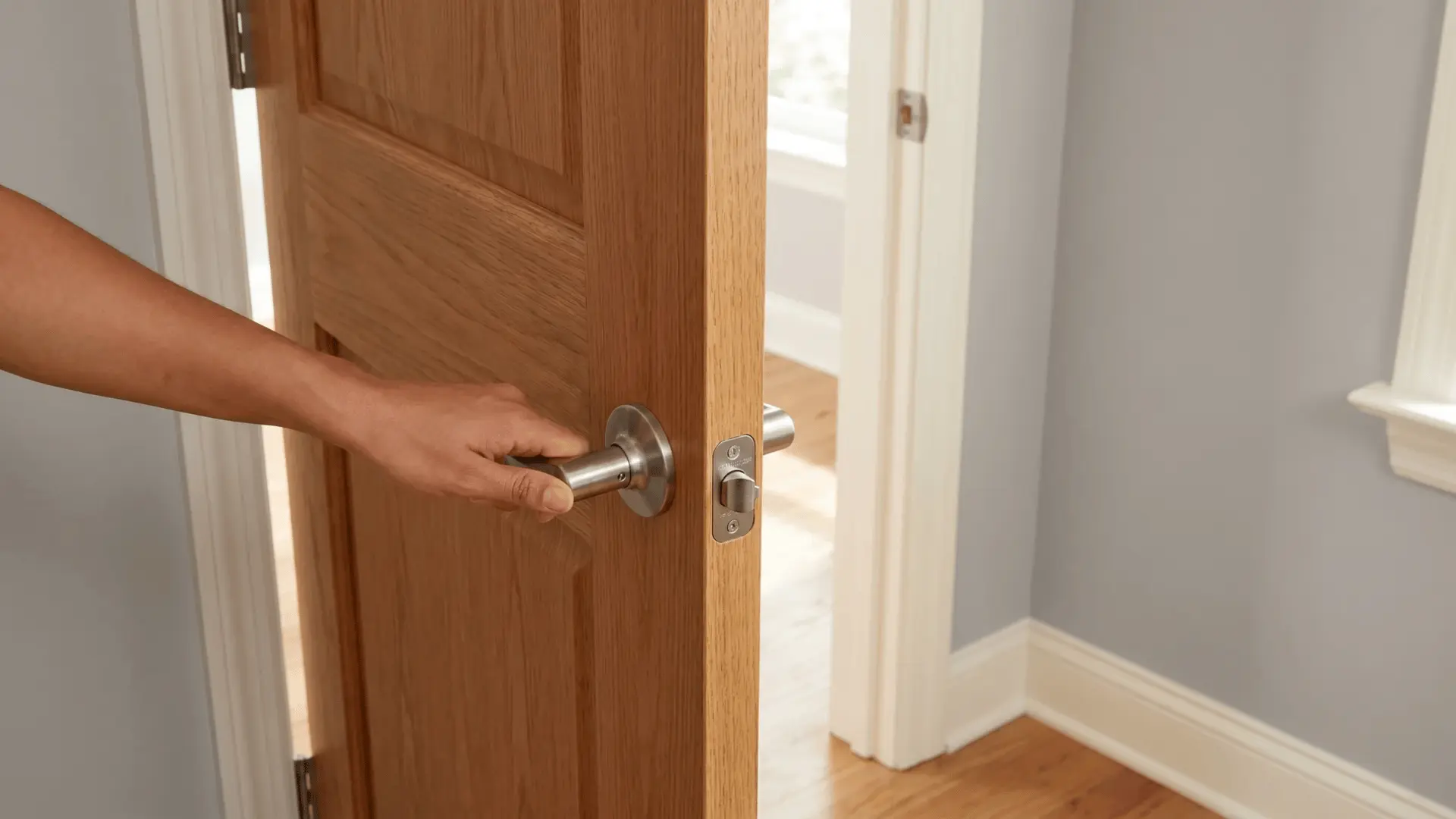
Once you’ve completed the fixes, test the door carefully to make sure the alignment is correct. This step helps confirm whether the issue is fully resolved or if further adjustment is needed.
Go through these checks:
- Open and close the door several times
- Make sure the movement feels smooth without resistance
- Check that the gaps around the door are even on all sides
- Ensure the latch lines up and closes without force
- See if the door stays in place and doesn’t swing open on its own
If the door is still not aligned:
- Minor issue: Repeat the last step and check for small improvement
- Moderate issue: Move back one step and adjust again more carefully
- No improvement: Inspect the hinges or check if the frame is causing the problem
This step confirms whether a small adjustment is enough or if the issue goes deeper.
When to Repair or Replace Door Hinges
If basic fixes don’t solve the problem, the issue may be with the hinge itself rather than the screws.
| Condition | What It Means | What to Do |
|---|---|---|
| Screws are tight but door still sags | The hinge is not holding weight properly | Replace the hinge |
| Hinge looks bent or uneven | Metal has deformed under load | Replace the hinge |
| Hinge pin feels loose or worn | The joint has worn out from use | Replace the hinge |
| Hinge does not sit flat in the frame | Improper fit or frame wear | Repair seating or replace the hinge |
| Minor wear but no visible damage | Early-stage weakening | Monitor or reinforce with better screws |
A hinge must stay strong and stable to support the door, so replacing a weak one is often the most reliable long-term fix.
When These Fixes Won’t Work
These fixes only work when the problem comes from hinges or screw support. If the issue is structural or material-related, adjustments won’t solve it.
- Warped door: The door has changed shape due to moisture or age, so it cannot sit evenly in the frame
- Swollen wood from humidity: The door expands and starts binding against the frame, even if hinges are fine
- Shifting or out-of-square frame: The frame has moved over time, which throws off the hinge alignment
- Foundation or wall movement: Structural settling can tilt the doorway and affect how the door hangs
In these cases, hinge adjustments will not hold for long. The door or frame needs proper repair, and simple fixes will not solve the issue.
Quick Fix Summary
Follow these steps in order and move forward only if the problem is not solved:
- Tighten all hinge screws: Restores proper hinge grip and fixes minor sag caused by loose screws
- Replace the top screw with a longer screw: Pulls the hinge into the wall stud and helps lift the sagging side
- Fix stripped screw holes: Rebuilds screw hold when holes are worn out and cannot grip properly
- Add hinge shims: Adjusts the door angle to correct alignment issues
- Adjust the hinges slightly: Fine-tunes the door position for small remaining misalignment
- Check latch alignment: Ensures the door closes and locks smoothly without force
Start from Step 1 and stop as soon as the door is properly aligned to avoid over-adjusting.
Conclusion
Fixing a sagging door becomes easier when you follow a clear order. Most problems start with loose hinges or weak screw grip, and simple fixes often solve them.
By starting with basic steps and moving forward only when needed, you avoid over-adjusting the door and creating new alignment issues. Each method works on a specific cause, whether it is loose screws, stripped holes, or hinge angle problems.
Once the door is properly aligned, it should open smoothly, close without force, and latch correctly.
If the issue remains after all steps, the cause is likely structural, such as a damaged hinge, warped door, or shifting frame.
Frequently Asked Questions
Which Hinge Should You Fix First?
Start with the top hinge because it carries most of the door’s weight. Fixing it often corrects sagging without needing further adjustments.
Can You Fix a Sagging Door without Removing It?
Yes, most fixes like tightening screws, using longer screws, or adding shims can be done without removing the door from its frame.
Why Does a Door Sag Again After Fixing It?
This usually happens when screw holes are stripped or the frame is weak, causing the screws to loosen again and the hinge to shift over time.
Can Humidity Cause a Door to Sag?
Yes, moisture can expand wood and weaken screw grip, which affects hinge alignment and can gradually lead to sagging or sticking issues.