How to Choose the Right Size Area Rug for Every Room in Your Home
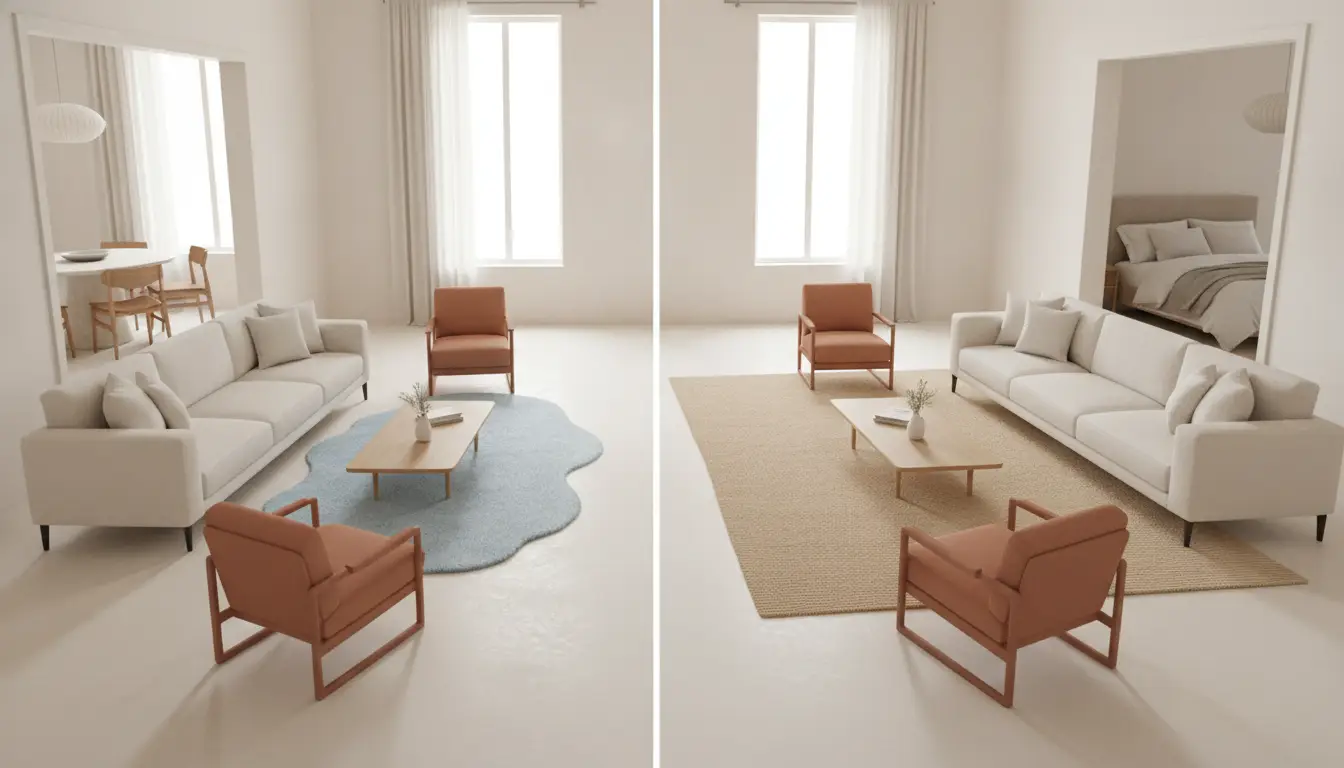
A woman walked into Surena Rugs in Atlanta last month carrying photos of a rug she’d bought online. Beautiful hand knotted piece, gorgeous color palette. One problem: it was a 5×8 in a living room that needed a 9×12. In the photos, it looked like a place mat floating in the middle of her floor.
“I fell in love with the pattern,” she said. “I never even thought about math.”
That’s the mistake I see more than any other in nearly two decades around this business. People choose a rug based on color and design, then treat size as an afterthought. It should be the opposite. Get the size right first, and almost any beautiful rug will make the room work. Get it wrong, and even the finest hand knotted Persian piece will look like it doesn’t belong.
Quick answer: When in doubt, size up. A rug that’s slightly too large almost always looks intentional. A rug that’s too small always looks like a mistake. Below is the room by room breakdown that removes the guesswork.
Standard Rug Sizes: Quick Reference
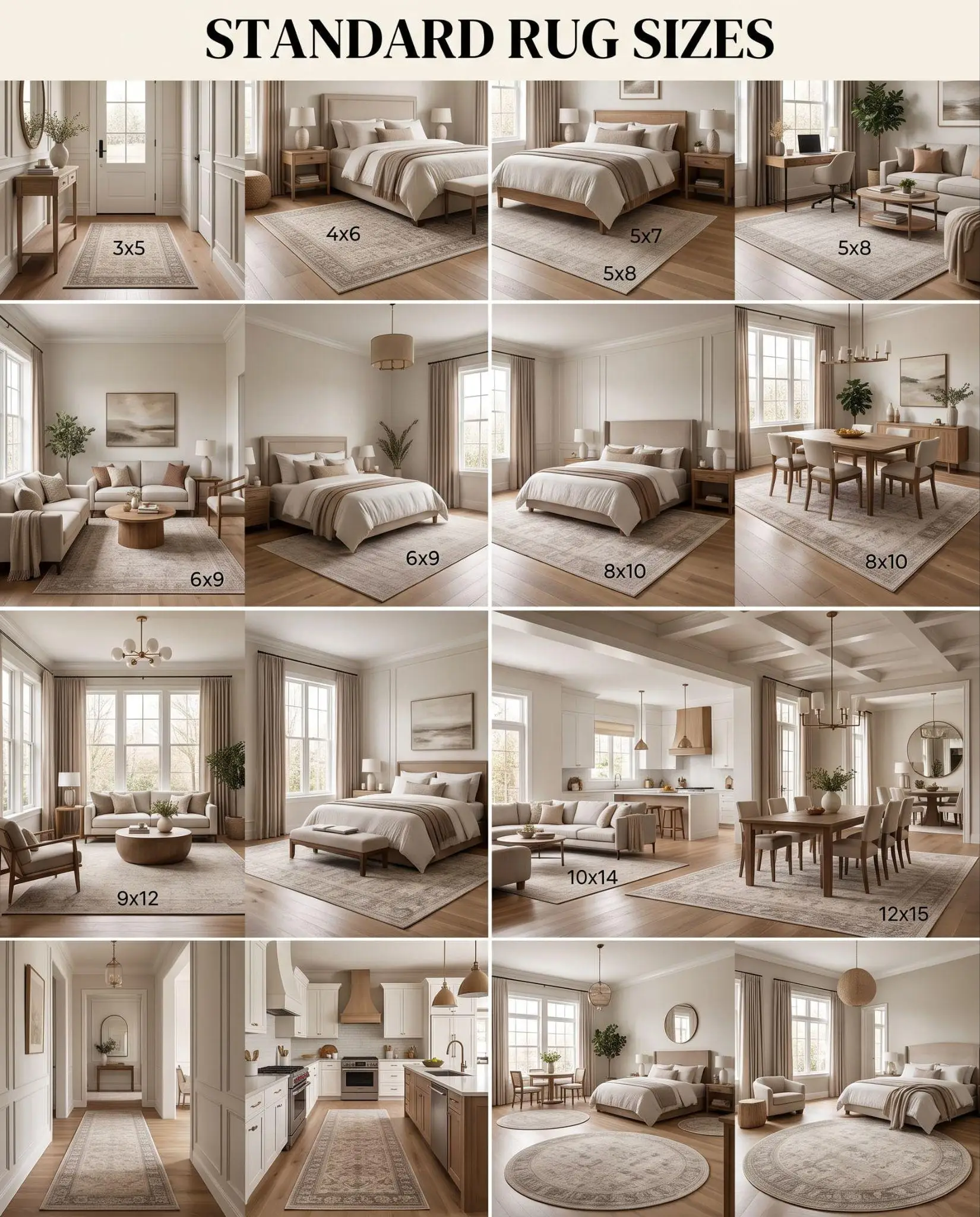
Before measuring anything, it helps to know what’s actually available. Most rugs sold in the U.S. come in these standard sizes:
- 3×5 and 4×6: accent sizes for small entryways or beside a bed
- 5×7 or 5×8: small bedrooms, home offices, or compact living rooms
- 6×9: small to medium living rooms, larger bedrooms
- 8×10: the single most purchased size in America, works under a queen bed, a six seat dining table, or a medium living room
- 9×12: large living rooms, king beds, full furniture groupings
- 10×14 and 12×15: oversized living rooms, open concept spaces, grand dining rooms
- Runners: typically 2 to 3 feet wide and 6 to 14 feet long, for hallways and kitchens
- Round rugs: usually 4, 6, 8, or 10 feet in diameter
About 70 percent of all rugs sold fall into just three sizes: 5×8, 8×10, and 9×12. That’s a useful starting point, but your actual room and furniture layout should always make the final call.
How to Measure Your Room Before You Buy
This takes ten minutes and prevents almost every sizing mistake.
Measure the room itself. Note the full length and width, and mark where doors swing open so the rug never blocks them.
Measure your furniture footprint, not just the room. For a living room, measure the full seating arrangement, sofa plus chairs plus the space between them. For a dining room, measure the table with all leaves in.
Use painter’s tape to map it out. Tape the proposed rug outline directly on your floor. Walk around it. Sit in your chairs. This single step catches more sizing errors than any chart ever will.
Leave breathing room on the walls. In most rooms, aim for 12 to 18 inches of bare floor visible between the rug’s edge and the wall. Less than that and the rug can look like it’s trying to be wall to wall carpet.
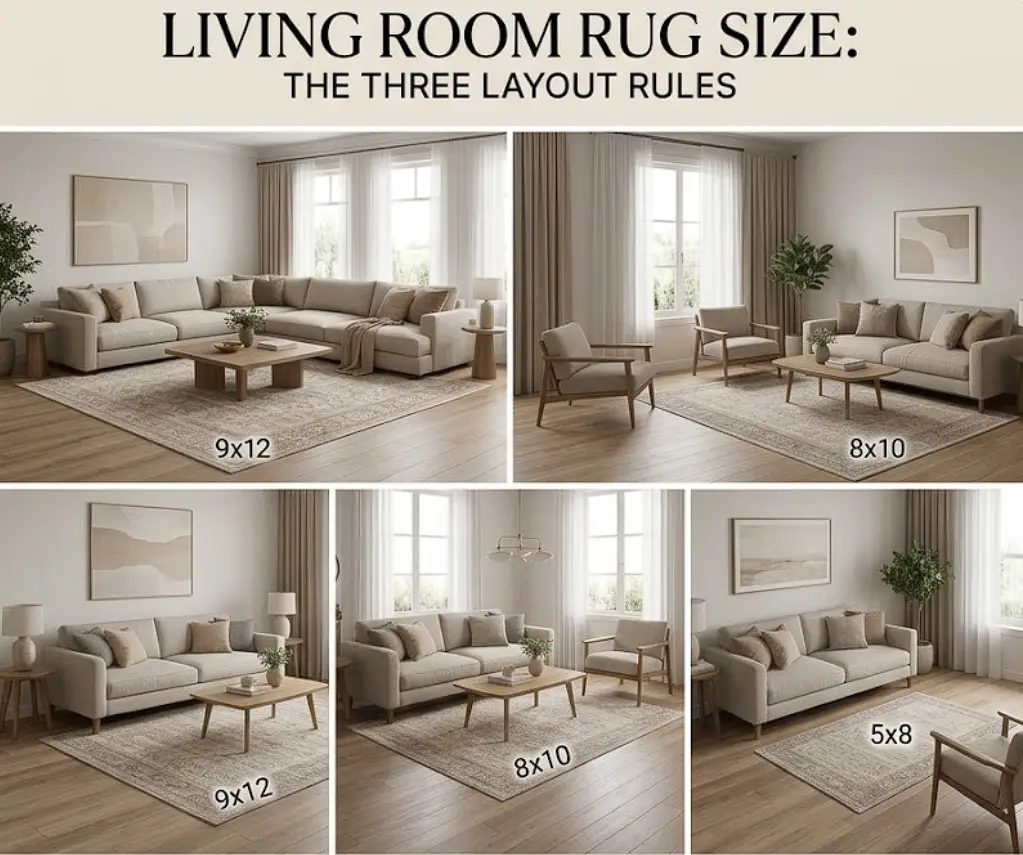
Living Room Rug Size: The Three Layout Rules
The living room is where sizing mistakes are most visible, because it’s usually the largest rug in the house and the first thing people notice.
All legs on the rug. Every piece of furniture sits fully on top. This is the most formal, most polished look, and it generally requires a 9×12 or larger for a standard living room with a sofa and two chairs.
Front legs on the rug. Only the front legs of the sofa and chairs touch the rug, while the back legs sit on the floor. This is the most common approach in American homes and usually calls for an 8×10.
Floating rug. The rug sits in front of the seating area without touching any furniture. This only works in small apartments or studios where a larger rug genuinely won’t fit, typically a 5×8. Use this as a last resort. It’s the layout most likely to make a room feel disconnected.
The general principle: anchor the rug around your main seating group rather than centering it on the room itself. A rug that floats in the middle of an empty floor, disconnected from the furniture, is the single most common living room mistake.
Dining Room Rug Size: The 24 Inch Rule
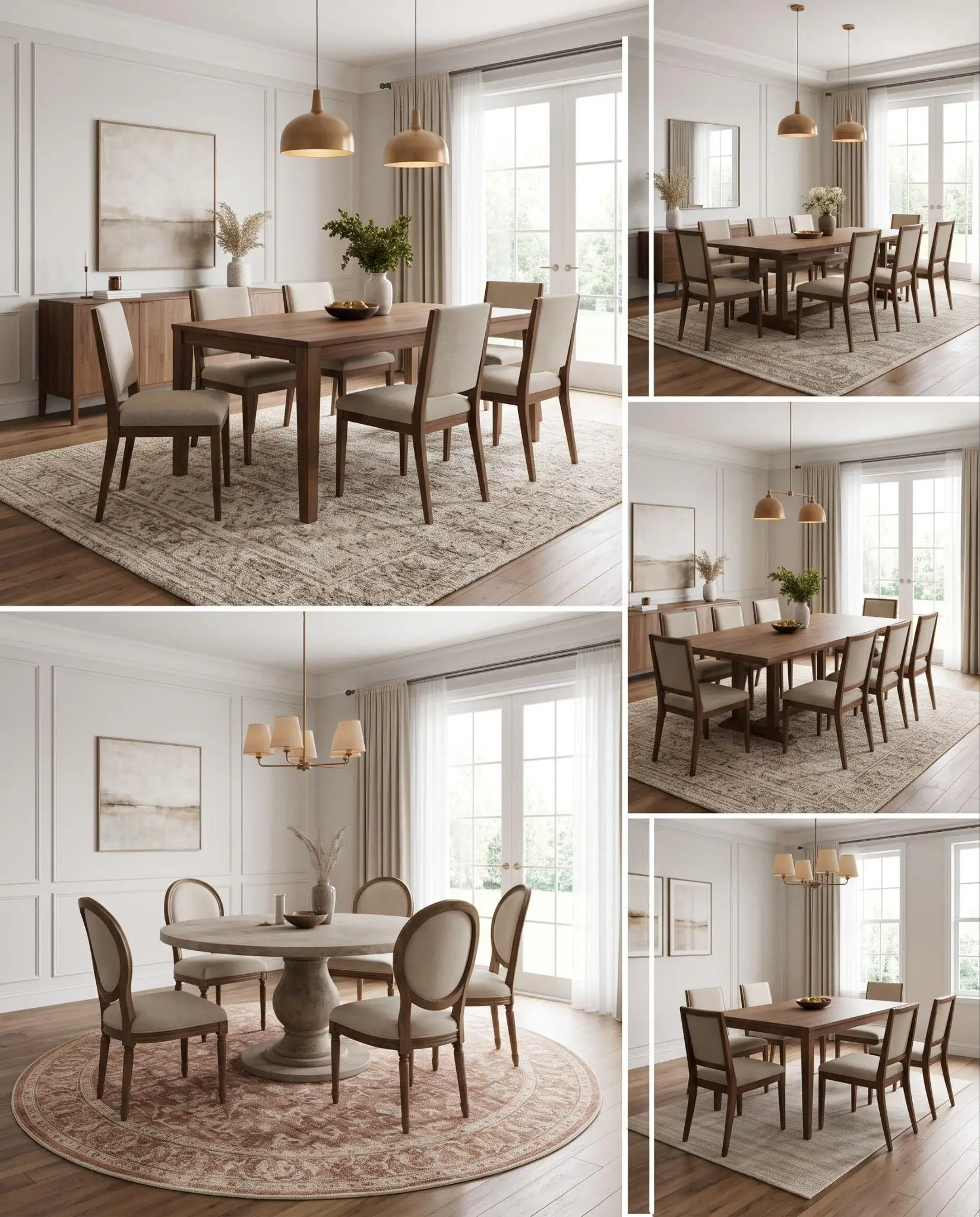
Dining rooms have one simple test. Can every chair slide back from the table without a leg catching the rug’s edge?
The rule: measure your table, then add at least 24 inches on every side to account for chairs being pulled out.
- A standard six seat rectangular table usually needs an 8×10
- A larger table, or one with a leaf that extends, usually needs a 9×12
- For round tables, the same math applies. A 48 inch round table needs a round rug at least 8 feet in diameter
Never size a dining rug to the table alone. Sizing to the table without accounting for chair clearance is the second most common mistake we see after undersized living room rugs.
Bedroom Rug Size: King, Queen, Full, and Twin
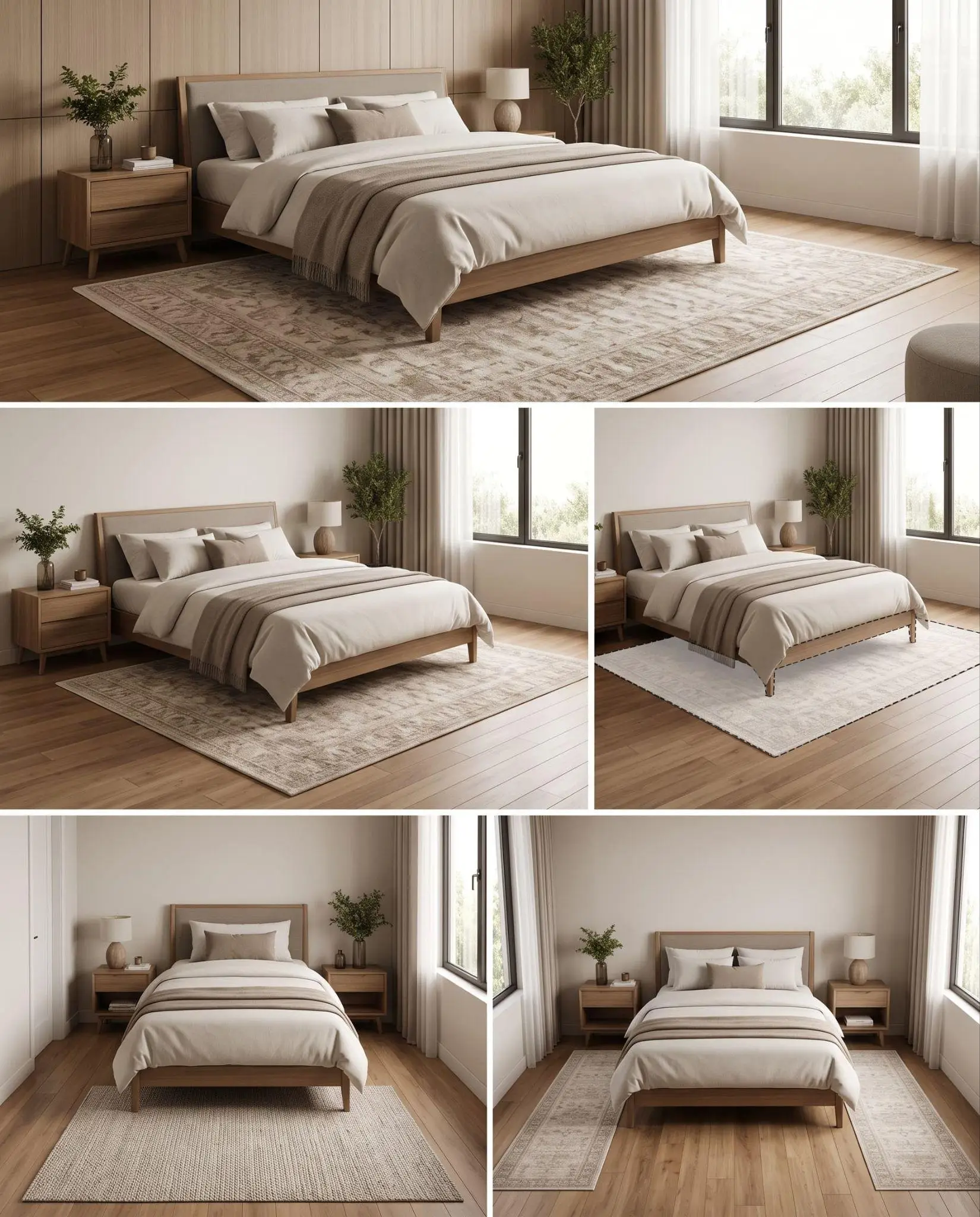
Bedroom rugs solve one problem above all else: cold floors under bare feet in the morning.
King bed: A 9×12 is ideal. It should extend 18 to 24 inches beyond the bed on both sides and at the foot, which also gives your nightstands somewhere to sit fully on the rug.
Queen bed: An 8×10 works well with a front legs on style layout, where the rug extends past the sides and foot of the bed but the headboard area sits off the rug. Alternatively, two thirds of the rug can sit under the bed with the remaining third extending toward the foot.
Full or twin bed: A 5×8 placed at the foot of the bed works nicely in smaller rooms. Another popular option is a pair of runners, roughly 2.5×8 each, placed on both sides of the bed. This gives you a soft landing on both sides without covering the whole floor, and it’s easy to lift and clean.
Entryway, Hallway, and Kitchen Rugs
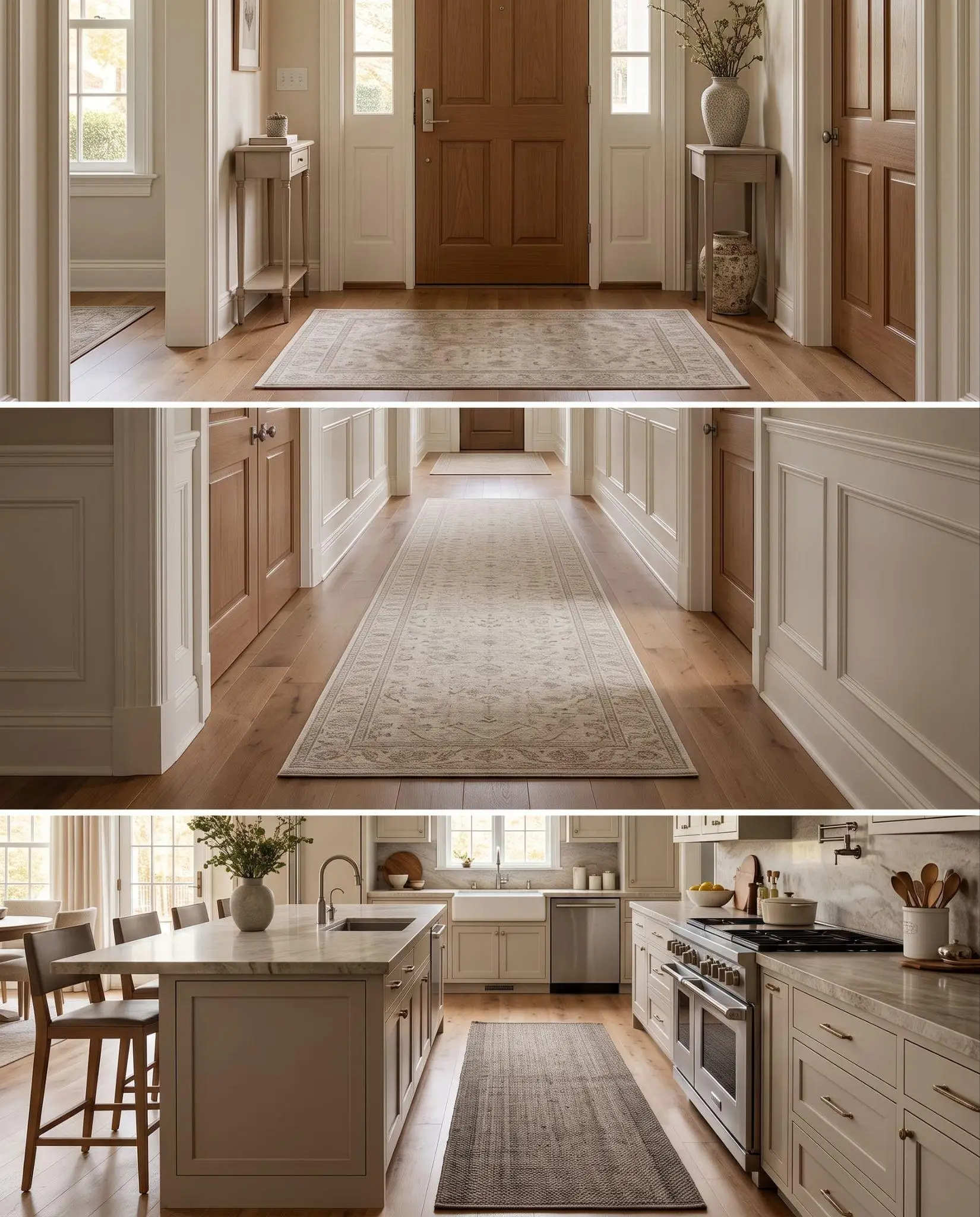
Entryways usually call for a rug sized to the landing area, often 3×5 or similar, positioned so the front door can still swing open freely.
Hallways are runner territory. Standard runners range from 2 to 3 feet wide and 6 to 14 feet long. Leave a few inches of visible floor on either side of the runner and several inches of clearance at each end.
Kitchens typically use a runner placed between counters or along an island to define a walking path. One honest note here: kitchens see heavy spills and foot traffic, which is hard on delicate, finely woven antique pieces. If you love the look of a fine hand-knotted rug in your kitchen, ask about which weaves and materials actually hold up in that environment before you buy. Not every beautiful rug belongs in a high spill zone, and a good dealer will tell you that upfront rather than just making the sale.
Home Offices, Kids’ Rooms, and Nurseries
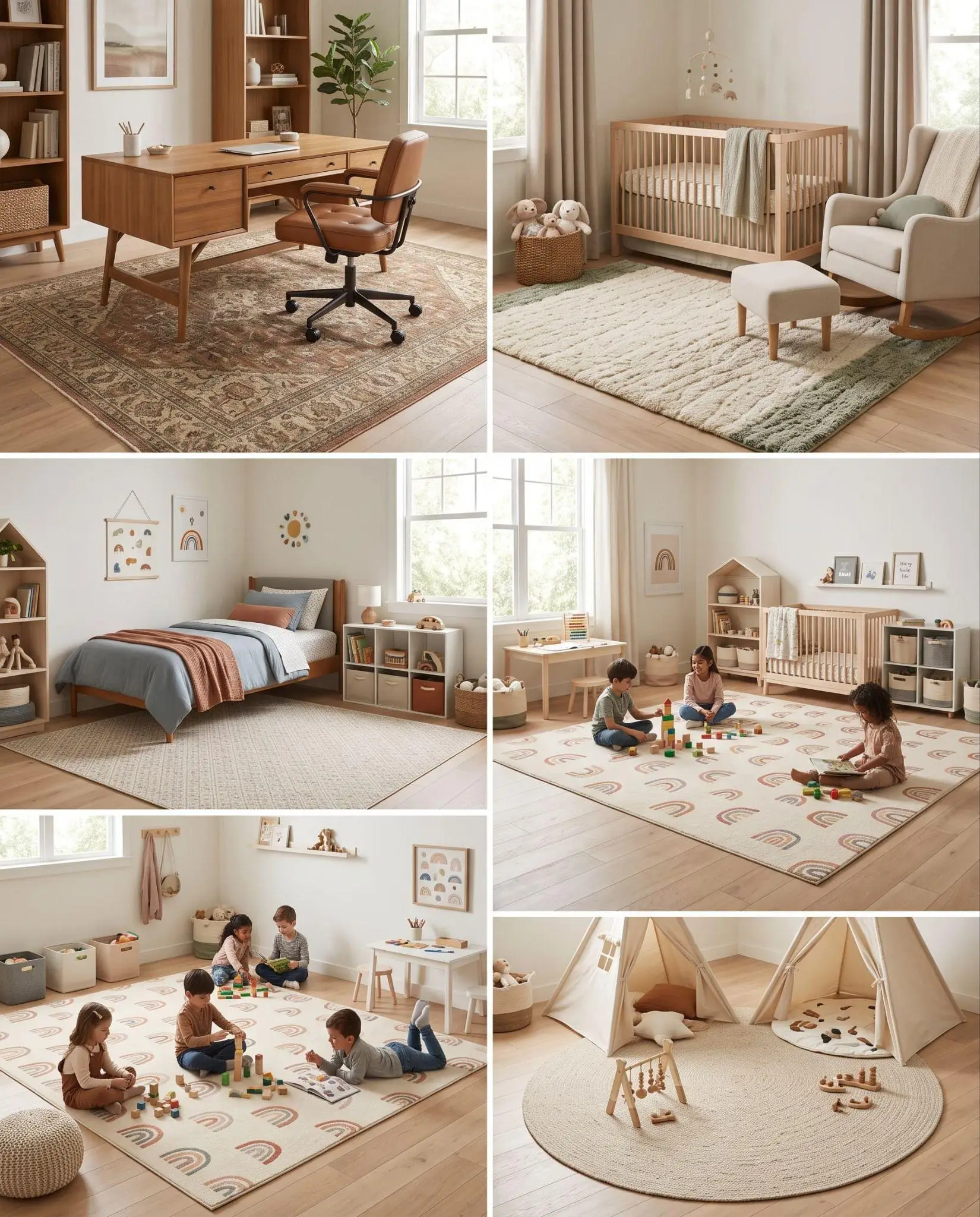
Home offices: A 6×9 or 8×10 usually gives your desk and chair enough room to roll and swivel without catching the rug’s edge.
Nurseries and kids’ rooms: A 5×8 or 6×9 suits a small room with a crib and a play corner. An 8×10 covers a bed plus a play area in a medium sized room. For a dedicated playroom, 9×12 or 10×14 gives kids full coverage to sprawl out, and a round rug in 6 or 8 feet works nicely as a defined play circle.
Open Concept and Large Spaces
Open floor plans, popular in newer construction, create their own sizing challenge because there are no walls to define where one function ends and another begins.
Two approaches work well. Use one oversized rug, 10×14 or larger, to anchor the entire living and conversation area in one visual zone. Or use multiple rugs, one for the seating area and a separate one for the dining area, to define each function while letting the floor show through in between. If you go this route, choose rugs from related color families so the overall space still feels cohesive rather than choppy.
The Number One Mistake: Buying Too Small
If there’s one rule to remember from everything above, it’s this. When you’re stuck between two sizes, choose the larger one.
An undersized rug makes a room feel disconnected and smaller, not larger, because furniture appears to float disconnected from anything grounding it. An oversized rug, on the other hand, almost always reads as intentional and generous. In nearly twenty years of helping clients in Atlanta, I have had far more people regret buying too small than too large.
Why Sizing Matters Even More With Antique and Hand Knotted Rugs
Here’s something worth knowing if you’re considering a genuinely handmade piece rather than a mass produced one. A machine made rug from a big box store can be reordered in a different size with a few clicks. An antique or hand knotted rug cannot. Each piece at Surena Rugs is one of a kind, woven by hand over months, and once it’s gone, there isn’t another exactly like it.
Growing up in Iranian culture, where handwoven rugs are treated as living family heirlooms rather than disposable decor, I developed an instinct for scale and proportion early. After spending the past ten years working directly in the American rug industry, I’ve learned how to translate that instinct into practical guidance for homes here, where floor plans, furniture styles, and layouts often look very different from traditional Persian interiors.
Because getting the size right matters so much with a piece you can’t simply reorder, we build our process around it. Our detailed product photography and measurements let you plan accurately before you buy. We offer both in person visits to our Atlanta showroom and virtual consultations for clients anywhere in the country, so you can talk through sizing with someone who has handled thousands of rugs before committing. And because we ship nationwide with a return window on online purchases, choosing the right size doesn’t have to feel like a gamble.
Choosing the right size area rug isn’t the most exciting part of decorating a room, but it’s the decision that determines whether everything else works. Measure first. Map it with tape. Size up when you’re unsure.
If you’d like a second opinion before you commit, especially on a one of a kind antique or hand knotted piece, the team at Surena Rugs is happy to walk through your room’s dimensions with you, whether you visit our Atlanta showroom in person or connect with us virtually from anywhere in the country. Getting the size right is the first step toward a rug you’ll love for decades, not just this season.
Quick Answers to Common Sizing Questions
What Size Rug Fits a Queen Bed?
An 8×10 with a front legs on layout, or a 9×12 if you want full coverage with nightstands sitting on the rug.
Can a Rug Be Too Big for A Room?
Rarely. As long as roughly 12 to 18 inches of bare floor remains visible at the perimeter, a larger rug reads as intentional rather than overwhelming.
Should a Dining Room Rug Touch the Walls?
No. Size it to extend at least 24 inches beyond the table’s edge, not to the walls themselves.
What’s the Best Rug Size for A Small Apartment Living Room?
If an 8×10 genuinely won’t fit, a 5×8 floating in front of the sofa is an acceptable fallback, though front legs are always preferable when the room allows it.
How Much Larger Should a Rug Be than The Furniture on It?
Large enough that at minimum the front legs of your major seating pieces rest on the rug. For a fully polished look, size up until every leg sits on top.