How Often to Change Your Home’s Air Filter (and Why Seasons Change the Answer)
The standard advice is to change your air filter every three months. That works for some homes and fails for others. A house with two shedding dogs in July needs a different schedule than a quiet two-person home in April. Your filter schedule should follow how much your system runs, what is in your air, and what kind of filter you use.
This guide covers the baseline timeline for common filter types, how pets, allergies, and home size change it, and what to adjust in each season.
Start With Your Filter Type
The thickness and material of the filter set the starting point. Most replacement guidelines assume a standard 1-inch filter, but thicker filters hold more debris and last longer.
- Fiberglass (1 inch): about every 30 days. These catch large debris and wear out fast.
- Pleated (1 inch): every 60 to 90 days under normal conditions.
- Thick media filters (4 to 5 inches): every 6 to 12 months, depending on use.
Check the packaging for the manufacturer’s recommended interval. Then use the sections below to shorten or stretch it.
Choosing a Filter That Fits Your System
Filter efficiency is measured with a MERV rating, and a higher number means the filter catches smaller particles. Higher is not always better for a residential system, though. Dense filters resist airflow, and an older blower motor can struggle to pull air through them.
Most households do well with a pleated filter, and MERV air filters in the 8 to 11 range balance good particle capture with healthy airflow. If you want to go above that, check your system’s specifications or ask an HVAC technician first.
Size matters too. Look at the dimensions printed on the edge of your current filter and buy that exact size. A filter that is slightly too small lets air slip around the frame, which defeats the purpose.
How Your Household Changes the Schedule
Pets
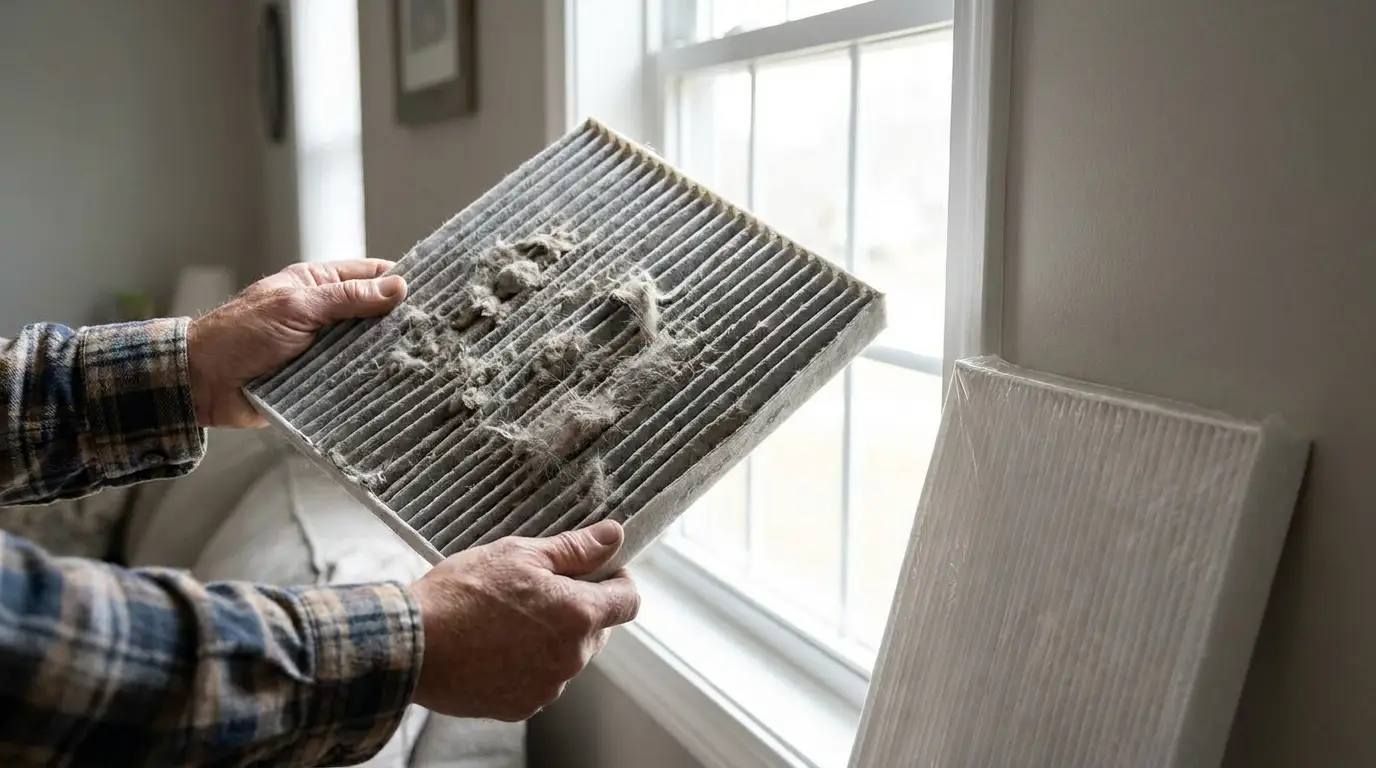
Dogs and cats add hair and dander to the air, and the filter collects it. With one pet, plan on swapping a pleated filter every 60 days. With several pets or a heavy shedder, check it monthly. Hold the filter up to a light. If you cannot see through it, change it.
Allergies and Asthma
If someone in your home has allergies, a clogged filter is a problem. A loaded filter catches less and slows airflow, so more pollen and dust stay in the room. A 30 to 60 day schedule keeps buildup in check. Regular vacuuming with a sealed or HEPA-style vacuum also cuts down on what gets stirred back into the air.
Home Size and Occupancy
Larger homes move more air, and more people bring in more dust, skin cells, and outdoor dirt. A family of five in a 3,000-square-foot house will load a filter faster than a couple in a condo. A vacation home or guest house that sits empty for long stretches can often go several months between changes.
Season-by-Season Filter Guide
Spring
Pollen season loads filters quickly. Check the filter in early spring and again about six weeks later. Open windows add outdoor dust to the mix, so a filter that looked fine in March may be full by May.
Summer
Air conditioning runs for long stretches, which means more air passes through the filter every day. Homes with heavy summer cooling often need a swap every 30 to 60 days. Wildfire smoke and high-dust days outdoors are another reason to check early.
Fall
Fall is the right time for a fresh filter, because the furnace is about to run for the first time in months. Dust that settled in the ducts over the summer gets pushed through on that first heating cycle. Put in a new filter before the first cold snap, and check it again after a few weeks of heating.
Winter
Windows stay shut and the furnace runs often, so indoor dust and pet dander build up. Plan to change the filter every 60 days at minimum, and every 30 to 45 days if you have pets. Mark the calendar so a mid-winter swap does not slip.
Signs Your Filter Needs to Be Changed Now
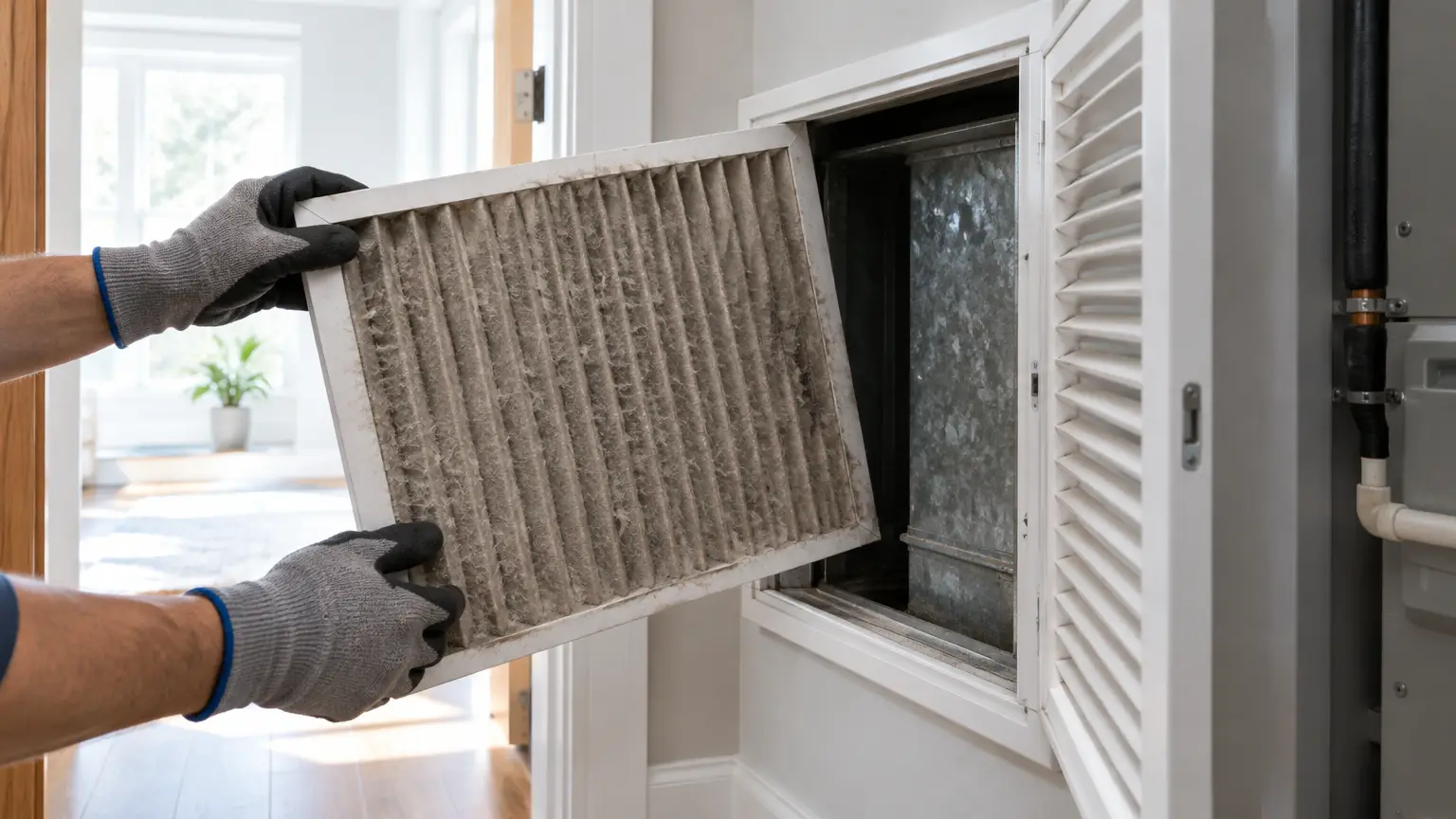
- The filter looks gray and furry, and you cannot see light through it
- Rooms are dustier than usual even after cleaning
- Airflow from the vents feels weaker
- The HVAC system runs longer to reach the set temperature
- Energy bills rise without a clear reason
Any one of these means it is time to check, no matter what the calendar says.
Easy Ways to Keep the Schedule
Most missed filter changes come down to forgetting. Write the install date on the filter frame with a marker. Set a recurring reminder on your phone, or buy filters in multi-packs so a spare is always on the shelf. Some homeowners tie the swap to the first day of each season, which matches the seasonal pattern above and is simple to remember.
A good filter schedule is simple once you know what drives it. Start with the filter type, shorten the interval for pets, allergies, and a busy household, and adjust with the seasons. Check the filter more often than you think you need to for the first year, and you will learn how fast your own home loads one up.