Half Vaulted Ceiling Kitchen: Design It the Right Way
A half-vaulted ceiling kitchen looks beautiful, but only when it’s designed correctly. Get it wrong, and you’re stuck with awkward cabinets, poor lighting, and a layout that fights the structure at every turn.
The slope isn’t the problem, ignoring it is.
This blog walks you through everything you need to know, from understanding the ceiling structure to fixing the most common mistakes homeowners make.
You’ll learn how to zone your kitchen, plan storage around the slope, light every corner properly, and make the asymmetry look completely intentional.
If you have a half vaulted ceiling kitchen or are planning one, this is where your design process starts.
What a Half-Vaulted Ceiling ?
A half-vaulted ceiling is a roofline where one side slopes upward while the other remains flat.
Unlike a full vault that rises symmetrically from both sides, this structure creates an asymmetrical height difference across the room.
It’s most commonly found in kitchen extensions, open-plan homes, and single-story additions where the roof frame only allows a slope on one side.
Why half-vaulted ceilings are common in kitchens:
- Often added during home extensions, where the existing roof limits full vaulting
- Result of shed-style roof structures used in single-story builds
- Common in remodels where budget or building constraints allow only a partial vault
- Appear in older homes where the kitchen was a later addition to the original structure
How to Design a Half-Vaulted Ceiling Kitchen
Designing a half-vaulted ceiling kitchen takes more planning than a standard kitchen. The slope affects every decision, from where cabinets go to how light moves through the space.
- Step 1: Map out your high and low ceiling zones before anything else
- Step 2: Assign kitchen functions based on the available height in each zone
- Step 3: Place full-height cabinets on the high wall only
- Step 4: Layer task, ambient, and accent lighting across both zones
- Step 5: Use color and materials to visually balance both sides
Getting this order right from the start makes every decision after it easier to execute.
Kitchen Layout Decisions That Work Best
Not every kitchen layout suits a half-vaulted ceiling. The slope limits certain configurations and works naturally with others, so choosing the right layout early prevents costly redesigns.
1. L-Shaped Layout
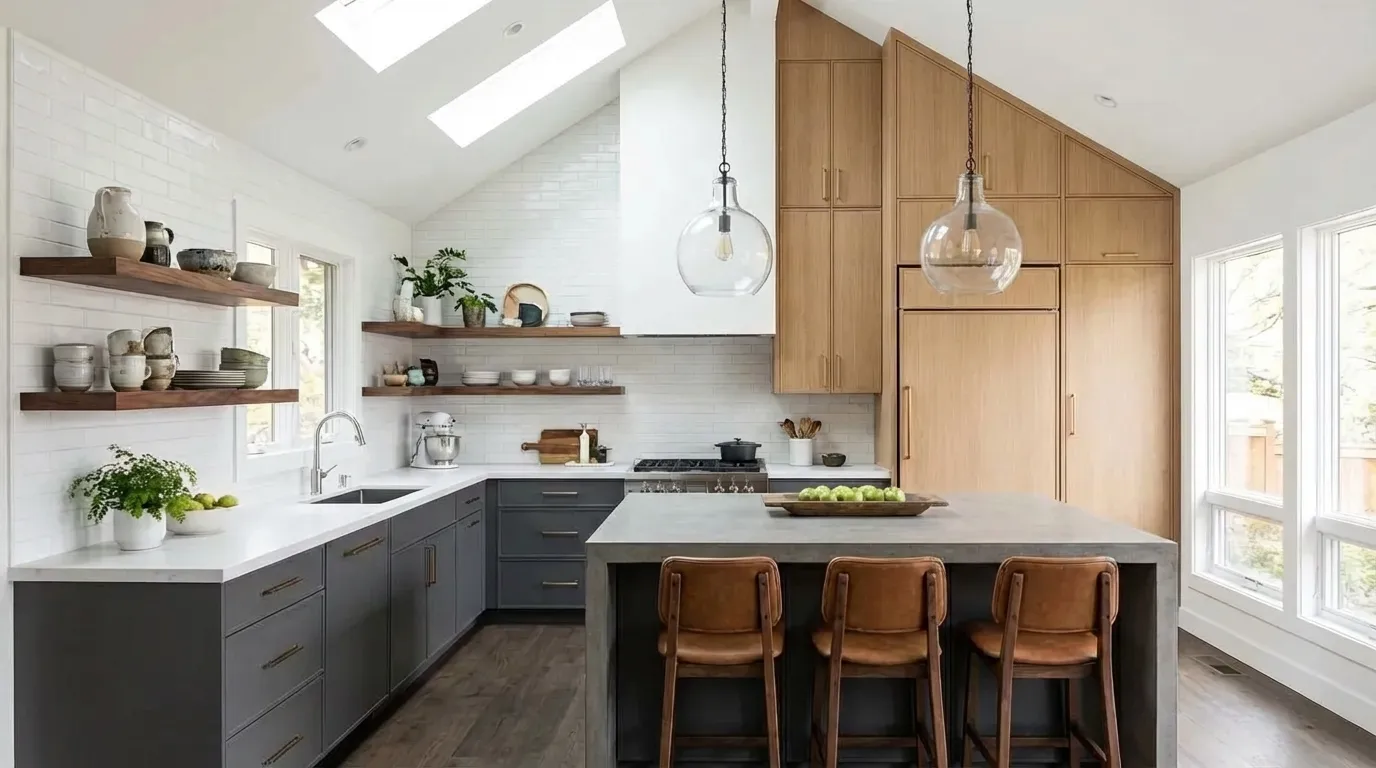
The slope stays contained to one wall, leaving the rest of the kitchen unaffected. Tall cabinets go on the high side, and the low side stays open and simple.
This setup gives you the most flexibility without fighting the ceiling shape. It also keeps the workflow natural.
2. Linear Kitchen
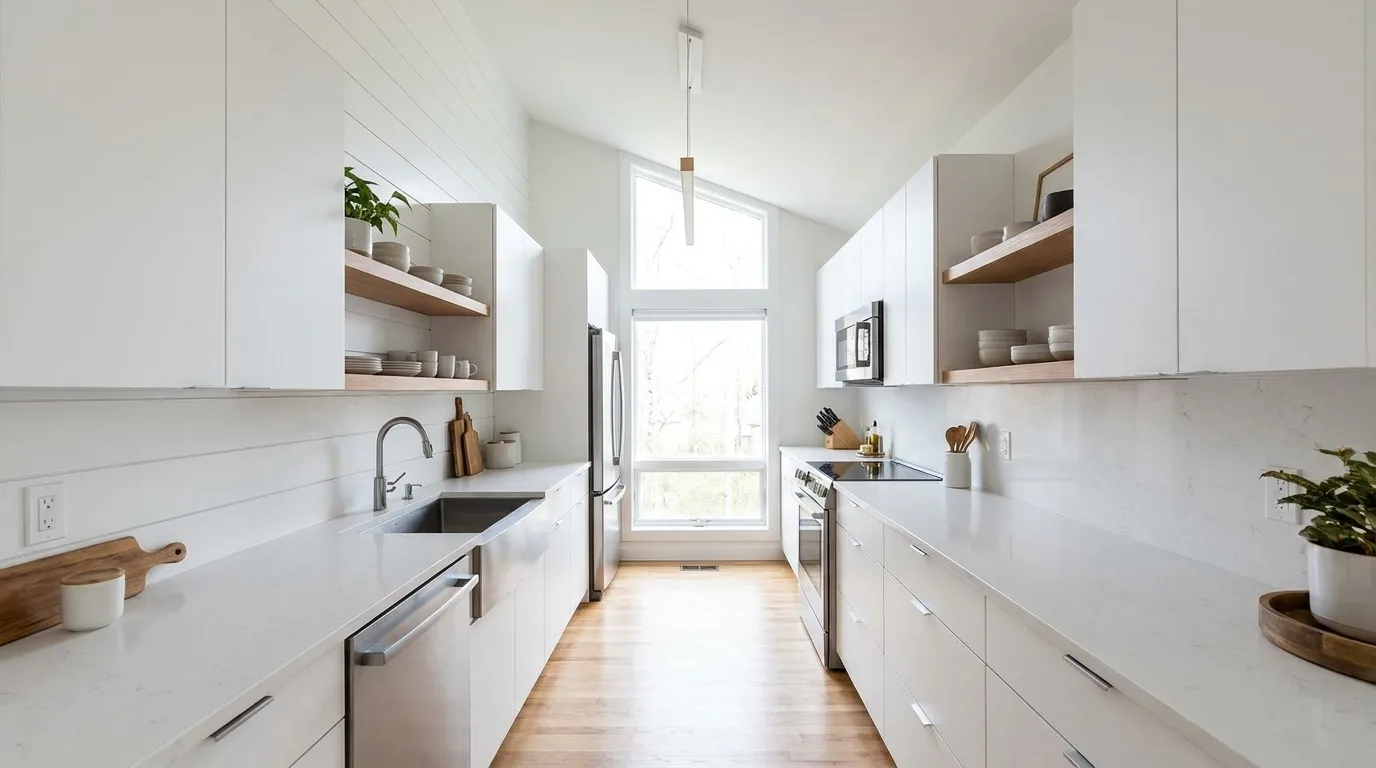
All functions align along the high wall, making the most of vertical storage where the ceiling allows. There are no corners to navigate and no split zones to manage.
It’s the most straightforward layout for a half-vaulted space. Keeping everything on one wall simplifies both the build and the daily use of the kitchen.
3. Island as a Zone Divider
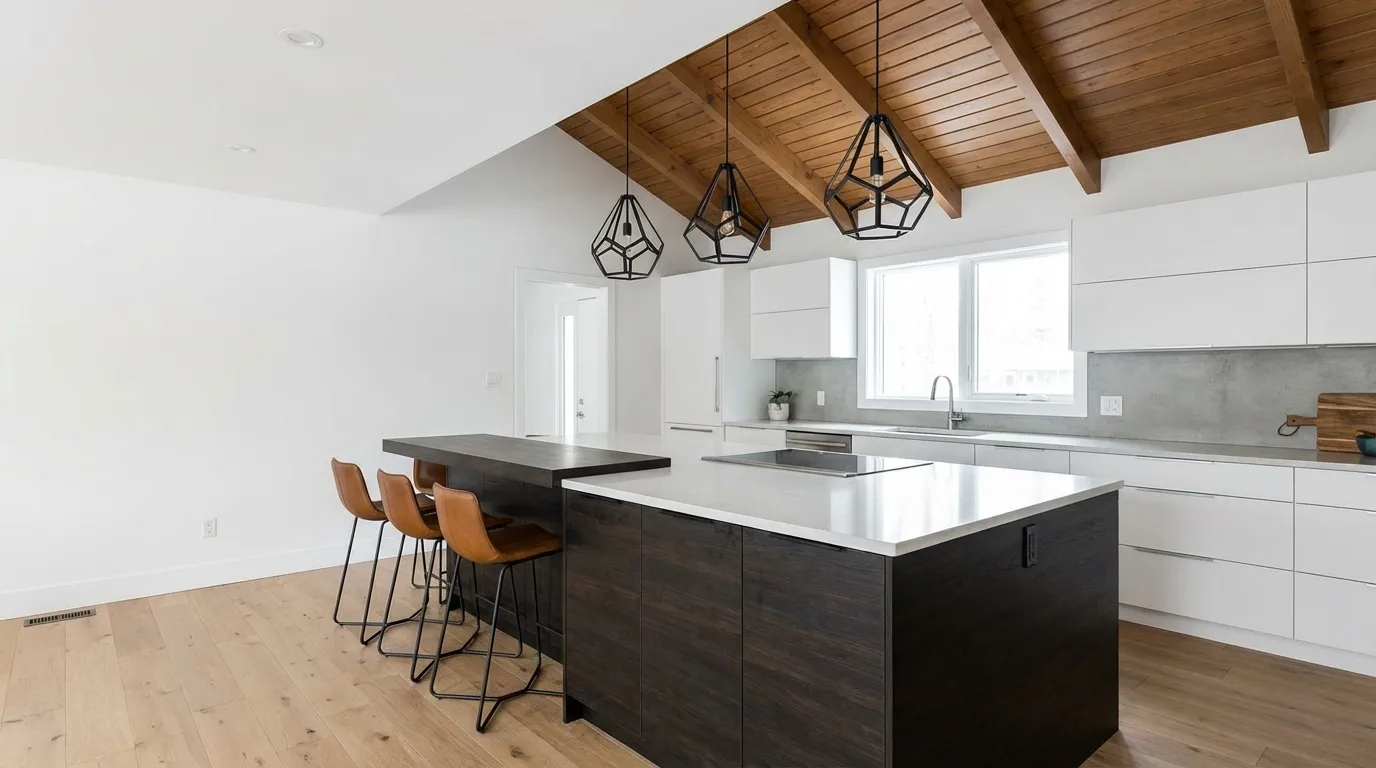
The island sits naturally between the high and low zones. Use the higher side for prep work where overhead clearance matters, and the lower side for seating where the ceiling height feels more comfortable and intimate.
A well-placed island also improves traffic flow. It creates a clear separation between the cooking area and the social side of the kitchen without closing off the space.
4. Open-Plan Integration
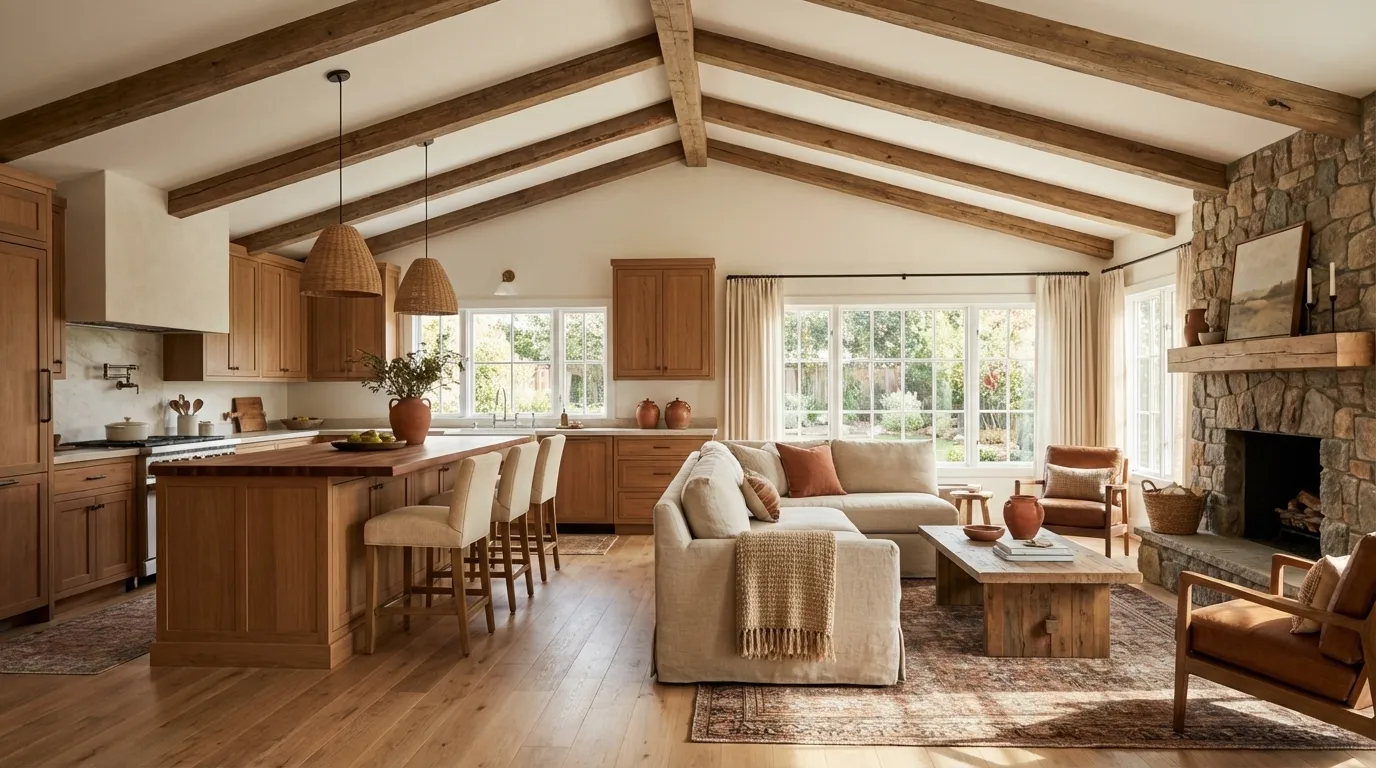
The vaulted side flows into a living or dining area, making both spaces feel larger and more connected.
The sloped ceiling draws the eye upward and outward, adding architectural interest without any extra design effort. This is one of the strongest advantages of a half-vaulted ceiling.
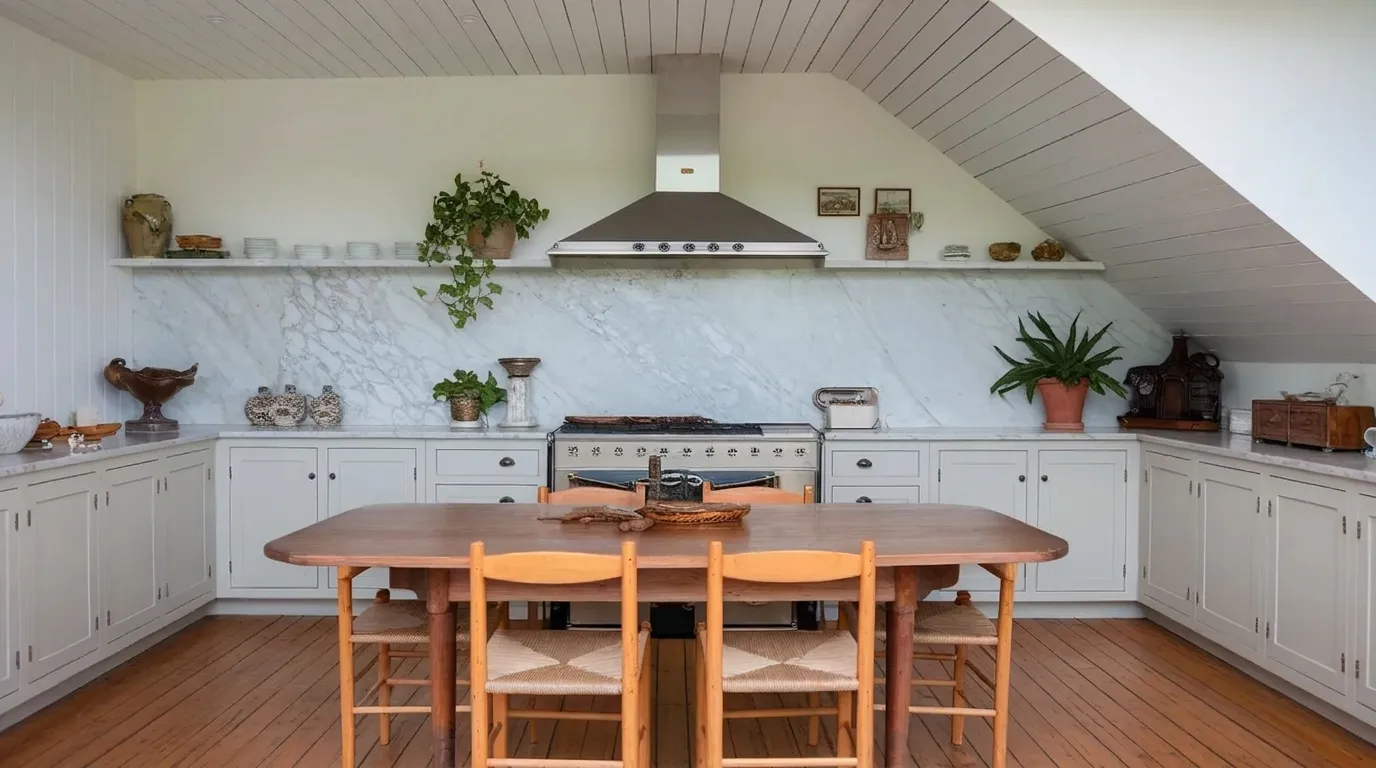
5. Dining Nook Under the Slope
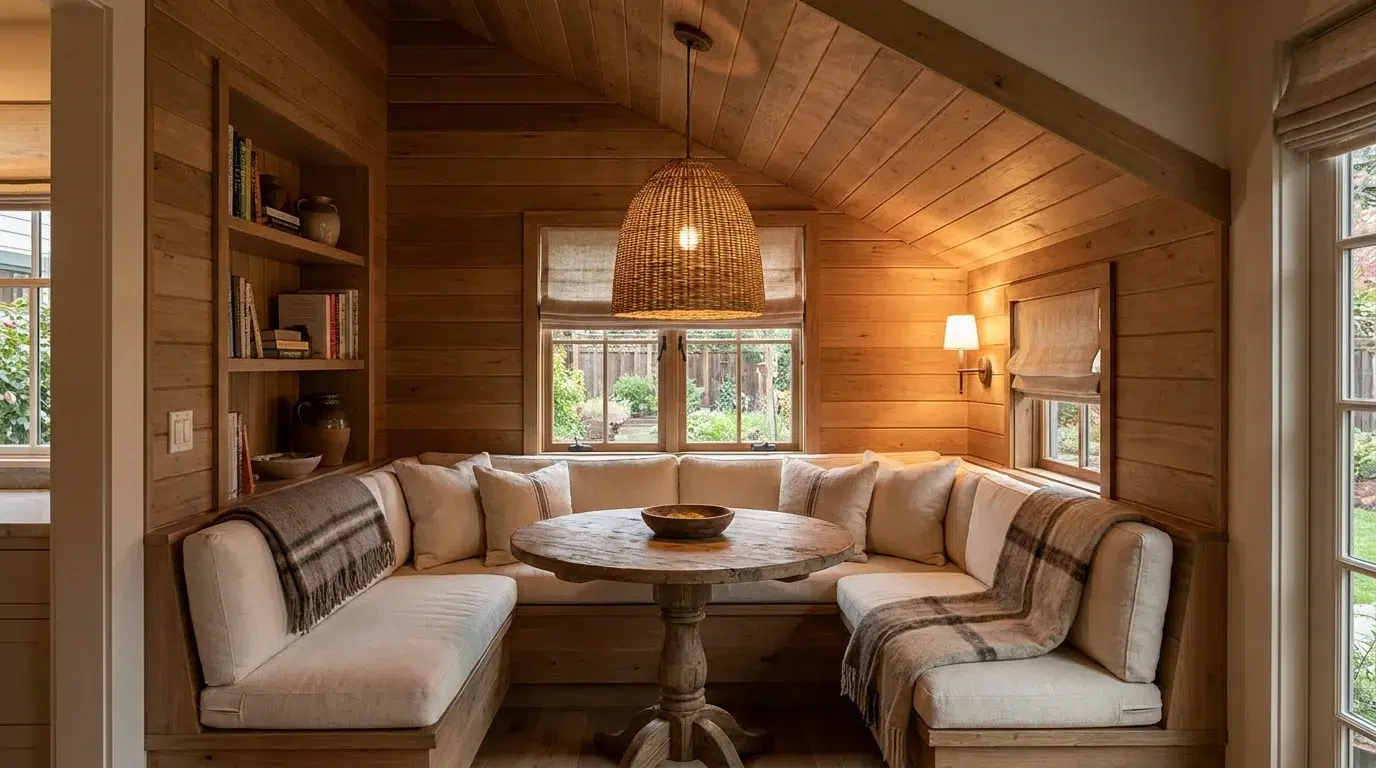
The lower ceiling height creates a naturally intimate corner that works perfectly for a dining area. A built-in nook here turns what feels like a restriction into a defined, cozy eating space within the kitchen.
It also keeps the dining area separate from the cooking zone without needing a wall or partition. The ceiling itself does the work of defining the space.
6. Workstation Sink on the Low Wall
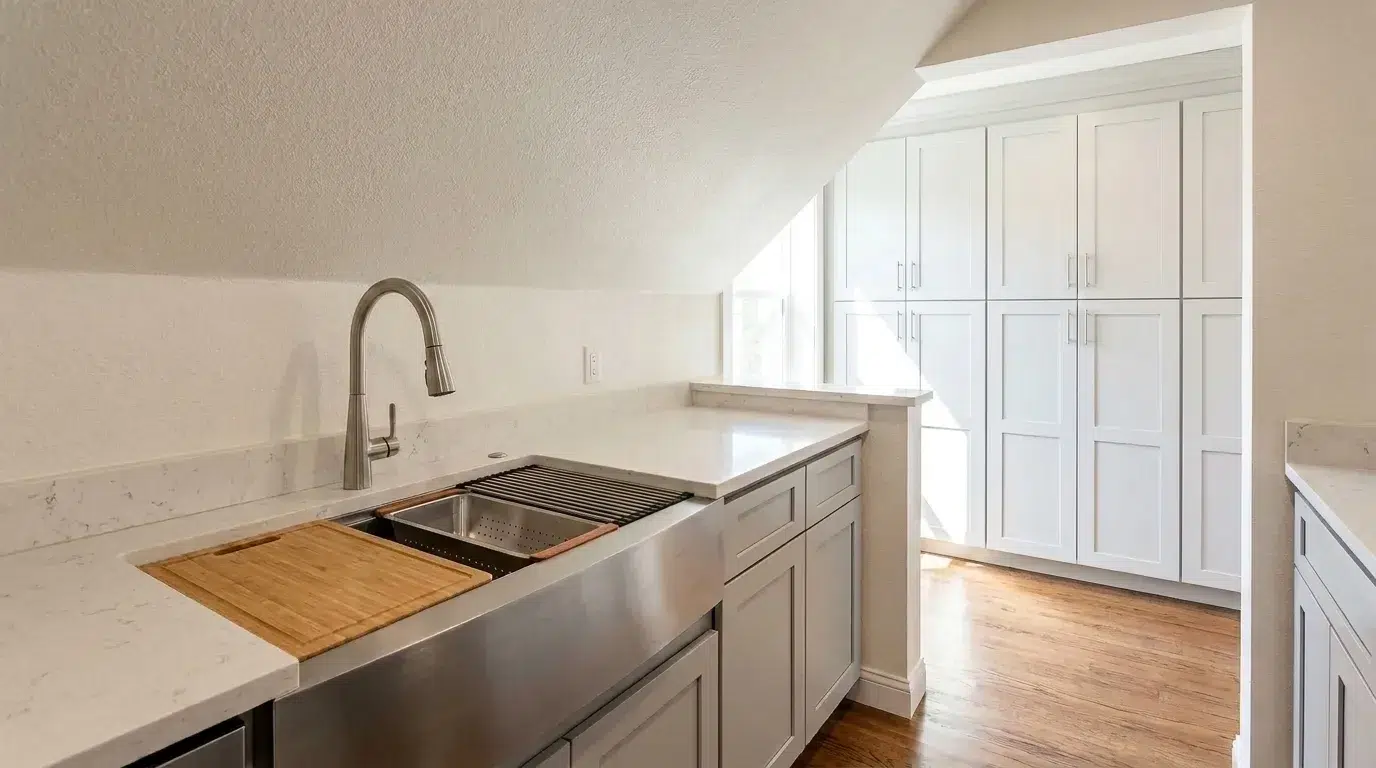
Keeping the sink on the low wall frees up the high wall entirely for full-height cabinetry and tall appliances.
The sink doesn’t need overhead clearance the way cabinets and fridges do, so it fits the restricted side without any compromise.
When Layouts Fails
Some layouts simply don’t suit a half-vaulted ceiling. U-shaped kitchens are the biggest offender; the third wall runs directly into the slope, leaving cabinets shortened, oddly proportioned, and short on storage.
Forcing symmetry across an uneven ceiling creates the same problem.
Avoiding these combinations early saves you from a costly redesign once construction is already underway.
Cabinet, Storage, and Lighting Solutions in Half Vaulted Kitchen
Two of the biggest challenges in a half vaulted kitchen are storage and lighting. The slope reduces usable wall height and disrupts even light distribution, so both need to be planned together rather than separately.
| Problem | Solution |
|---|---|
| Standard upper cabinets don’t fit on the sloped side | Use full-height cabinets only on the tall wall |
| Low side loses usable storage height | Switch to open shelving or lower cabinet runs |
| Dead space gaps above cabinets | Fill with trim, built-in panels, or decorative display |
| Forcing symmetry across the uneven ceiling | Design each side based on its actual height |
| Single central fixture leaves shadow zones | Layer task, ambient, and accent lighting |
| Pendants over the island sit too low under the slope | Keep 30–36 inches of clearance and align with the slope direction |
| Slope feels dark and disconnected | Add LED strips or spotlights along the beam or slope line |
| High wall underused for natural light | Install a skylight or high window on the vaulted side |
Treating storage and lighting as one connected problem makes your half-vaulted kitchen easier to plan. When both are designed around the slope rather than against it, the ceiling becomes a feature instead of a limitation.
Common Problems with Half Vaulted Ceiling Kitchens (and Fixes)
Half-vaulted kitchens present specific challenges that standard kitchens don’t. Most of them are fixable, but only if you know what’s causing them.
- Uneven visual balance: Mismatched cabinet heights make one side feel heavier, anchor the tall side with full-height cabinetry, and keep the low side simple and open
- Lost storage space: The sloped wall cuts into usable upper-cabinet space. Shift your main storage to the tall wall or add an island with built-in drawers
- Awkward appliance placement: Tall appliances forced into low zones create clearance problems. Always place the fridge, oven stack, and tall units in the high ceiling zone
- Dead space above cabinets: The angle leaves unusable gaps between cabinet tops and the ceiling, fill them with trim panels or use the space for open display
Conclusion
A half-vaulted ceiling kitchen isn’t a design limitation, it’s an opportunity.
The slope adds height, character, and architectural interest that flat-ceiling kitchens simply can’t replicate.
The key is working with the structure, not against it. Zone your layout by height, put storage where it actually fits, layer your lighting, and let the asymmetry become the focal point of the space.
Every decision covered in this blog connects back to one idea: design around what you have, and the results will always look intentional.
If you found this helpful or have questions about your own half vaulted ceiling kitchen, drop them in the comments below.
Frequently Asked Questions
Can You Add a Half-Vaulted Ceiling to an Existing Kitchen?
Yes, but it requires structural work. The existing roof framing needs to support the change. A structural engineer should assess the ceiling before any modifications. Costs vary based on roof type, span, and finish requirements. It’s more common in single-story kitchens or extensions.
Does a Half Vaulted Ceiling Affect Kitchen Ventilation?
It can. The slope affects how air moves through the space, which in turn determines where your range hood or exhaust vent should sit. Placing extraction on the low side often reduces efficiency. Position the ventilation on or near the high wall for optimal airflow.
How Much Does It Cost to Finish a Half-Vaulted Ceiling Kitchen?
Costs depend on materials, size, and whether structural changes are needed. Basic finishes like drywall and paint are more affordable. Adding beams, skylights, or custom cabinetry can significantly raise the budget. On average, expect higher costs than a standard flat ceiling finish.