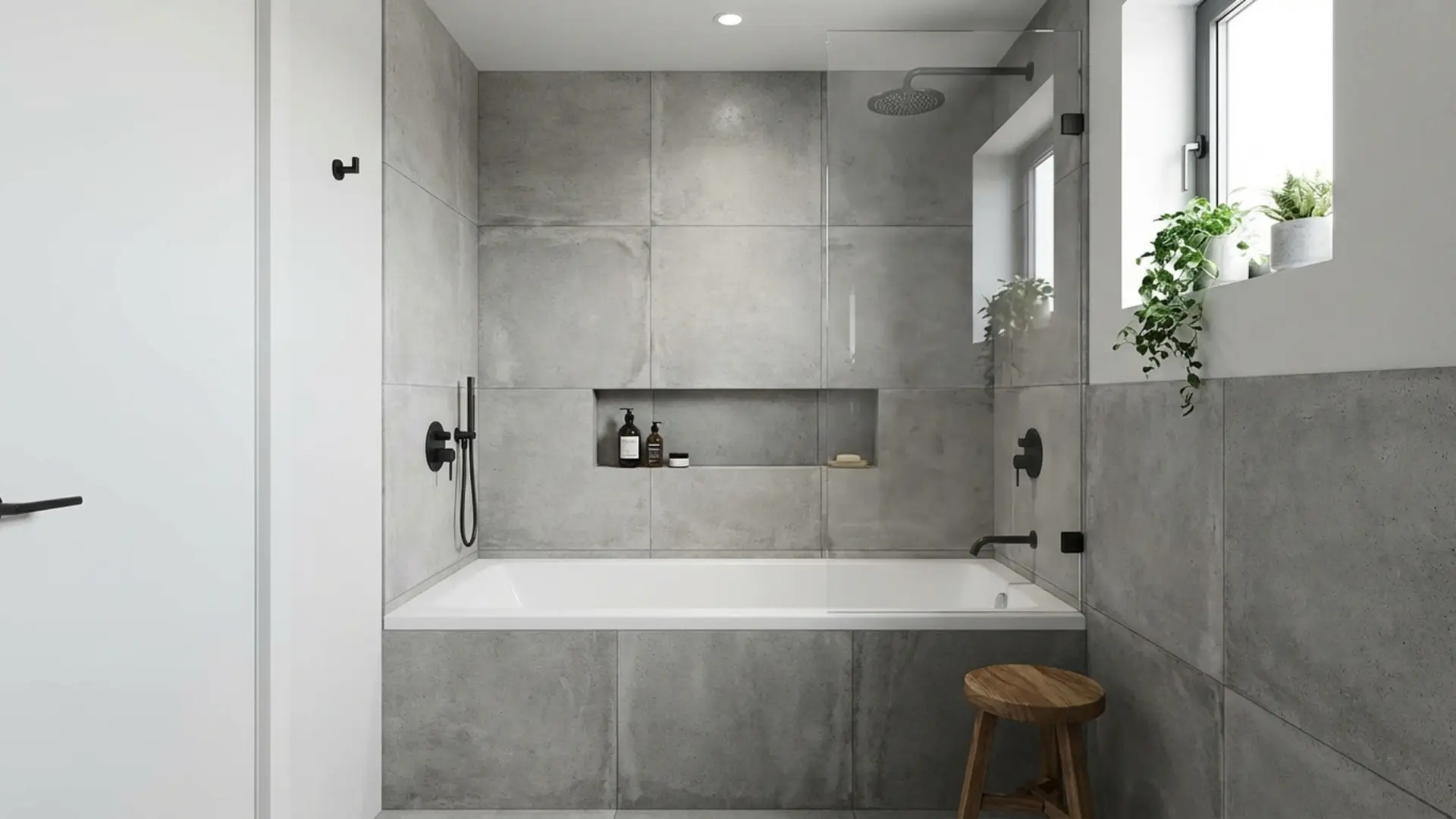
5 Aspects of Bathroom Design the East Does Differently
When you walk into a bathroom designed according to Eastern principles, something feels immediately different — quieter, more deliberate, more attuned to the body’s need for ritual and restoration. Western bathrooms tend to prioritize efficiency: a quick shower, a glance in the mirror, out the door.
But in countries like Japan, South Korea, China, and across Southeast Asia, the bathroom is understood as something else entirely. It is a place where you slow down. Where cleanliness is ceremonial, not perfunctory. If you’ve ever considered redesigning your bathroom and felt that the standard Western formula leaves something to be desired, here are five distinctly Eastern design philosophies that might transform the way you think about the space.
1. The Wet Room as a Way of Life
In many Western homes, you are accustomed to a bathtub fitted with a showerhead, a shower curtain that clings to your leg at the most inconvenient moment, and a carefully maintained separation between wet and dry zones. Eastern bathroom design, particularly in Japan and South Korea, rejects this entirely.
The bathroom is conceived as a wet room — a fully waterproofed space where the floor drains freely, and the entire room can be soaked without consequence. Consider this when planning your Bathroom remodeling Renton project.
This approach changes how you move through the space. You are not contorting yourself to avoid splashing water onto the floor mat. You are not rushing through a shower to prevent moisture from creeping into the wrong corners. Instead, you move through the room with a kind of ease that comes from knowing the space was built for water. Walls are tiled from floor to ceiling.
Drains are integrated into the floor design rather than hidden as an afterthought. The result is a bathroom that is not only easier to clean but philosophically aligned with the idea that bathing is something your whole environment should support, not merely tolerate.
2. The Separation of the Toilet
If you’ve spent time in a Japanese home or a traditionally designed Korean apartment, you will have noticed that the toilet almost always occupies its own separate room — a small dedicated compartment, closed off entirely from the main bathing area. This isn’t a quirk of limited space. It is an intentional design philosophy rooted in both hygiene and the idea that different bodily functions deserve different spatial contexts.
When you separate the toilet from the bathing area, you preserve the bathroom’s atmosphere as a place of cleanliness and calm. You can use the toilet without disrupting someone who is bathing, and vice versa. In practice, this also dramatically improves your home’s functionality — two people can use different facilities simultaneously without having to negotiate. It’s a design decision that, once you’ve lived with it, makes the Western habit of combining everything into one room feel surprisingly haphazard.
3. The Deep Soaking Tub

You are probably familiar with the standard Western bathtub — a long, shallow vessel designed primarily for lying down, in which a modest amount of water pools around you. At the same time, your knees and chest remain largely exposed to the air. The Japanese ofuro, by contrast, is short and extraordinarily deep. You don’t lie in it. You sit in it, knees drawn up or stretched to the side, submerged to your shoulders in water that stays hot.
The ofuro is not designed for washing. That happens beforehand — you scrub yourself clean on a small stool before you ever enter the tub. The tub itself is purely for soaking, for warmth, for the meditative quality of being held by hot water after a long day. Because you enter the tub already clean, the water stays clean, and in many households, it is shared by the whole family throughout the evening.
When you design your bathroom around a deep soaking tub, you are making a statement about what bathing is for. It is not a hygiene chore. It is recovery.
4. Natural Materials and Sensory Minimalism
Eastern bathroom design asks you to reconsider the space’s visual language. Where Western bathrooms often default to shiny chrome fixtures, bright white tiles, and maximalist storage — every product lined up on the counter, every shelf packed — Eastern design traditions pull toward restraint.
You’ll find hinoki cypress wood in Japanese bathrooms, a pale, fragrant timber that releases a calm, forest-like scent in the heat and steam. You’ll find stone basins, bamboo accessories, and pebbled floors that make you feel as though you are standing at the edge of a garden stream.
The guiding sensory principle is that the materials themselves should contribute to how you feel in the space. Cold chrome and fluorescent lighting wake you up; they remind you that you are rushing toward something. Natural wood, matte stone, warm ambient lighting, and a carefully limited palette of objects ask you to arrive somewhere, to be present.
When you are surrounded by materials that appeal to touch, smell, and sight, bathing becomes an immersive, multi-sensory experience rather than a visual exercise in whether your grout lines are clean.
5. The Ritual of the Bath Stool and Hand Shower
Perhaps the most foreign concept to a Western bather is the practice of seated washing. In Japan and South Korea, the bath area typically includes a low stool and a hand-held shower hose, positioned near the floor-level drain. You sit down. You wash methodically, slowly, from that seated position, working through your body with a small towel or exfoliating cloth before any soaking.
This ritual reframes the act of washing in its entirety. When you are standing under a fixed overhead shower, rushing warm water over yourself in three minutes before the workday begins, you are completing a task. When you are seated, working through each part of your body with attention, you are performing something closer to a practice.
The pace changes. Your relationship to your own body changes. The bathroom stops being a transition zone — the space you pass through on the way to the rest of your life — and becomes, briefly and reliably, a destination.
What you take from Eastern bathroom design doesn’t have to be a full renovation. It might be as simple as installing a hand shower at a lower height, investing in a deeper tub, or clearing your countertops down to almost nothing and replacing a chrome fixture with something in brushed brass or natural stone.
The underlying philosophy, once you understand it, is remarkably transferable: your bathroom should be designed not for speed, but for restoration.