
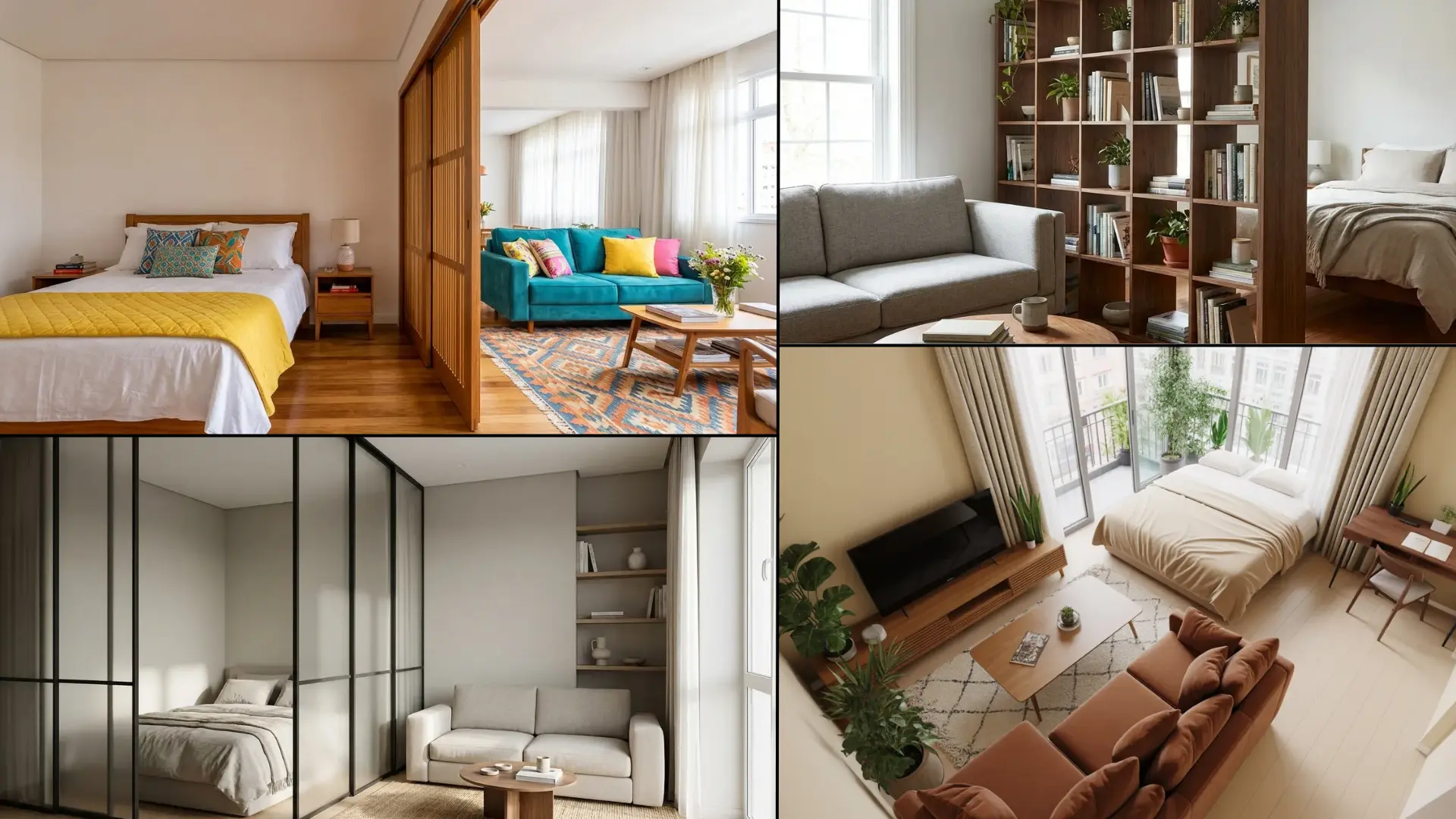
Half Living Room Half Bedroom Ideas for Small Spaces
Turning one room into both a bedroom and a living area can feel tricky at first, especially when space is limited, and you want comfort, privacy, and a layout that still feels open rather than crowded.
I’ve seen many small homes where a simple setup made a big difference, while others felt messy just because the planning wasn’t right.
You don’t need a big renovation to make this work. With the right divider, layout, and furniture choices, you can create two clear zones in the same room.
In this article, I’ll walk you through practical ideas that are easy to set up and actually work in real spaces, so you can find a solution that fits your room, your budget, and your daily routine.
Design Tips to Make Both Areas Look Good Together
Once you divide your room, the next step is making sure both areas feel connected and not mismatched.
A few simple design choices can help the space look clean, balanced, and easy to live in.
Use a Consistent Color Theme
- Stick to 2–3 main colors across both zones
- Use similar tones for furniture, curtains, and decor
- This helps both areas feel like part of one space
Lighting for Each Zone
- Use warm lighting near the bed for a calm feel
- Add brighter lights in the living area for daily use
- Table lamps or floor lamps can help define each zone
Rugs to Define Spaces
- Place a rug under the sofa to mark the living area
- Use a smaller rug near the bed if space allows
- Rugs help separate zones without adding walls
Wall Decor and Vertical Space
- Use wall shelves or art to draw attention upward
- Keep decor simple to avoid a cluttered look
- Vertical storage helps save floor space
Small choices make a big difference when you want both zones to look and feel like one, so choose wisely.
Half Living Room Half Bedroom Ideas
Managing a single room for both living and sleeping needs takes a bit of planning, but it can work really well with the right approach.
I focus on using simple setups that define each area without making the space feel tight.
1. Curtain Divider Idea for Half Bedroom Half Living Room
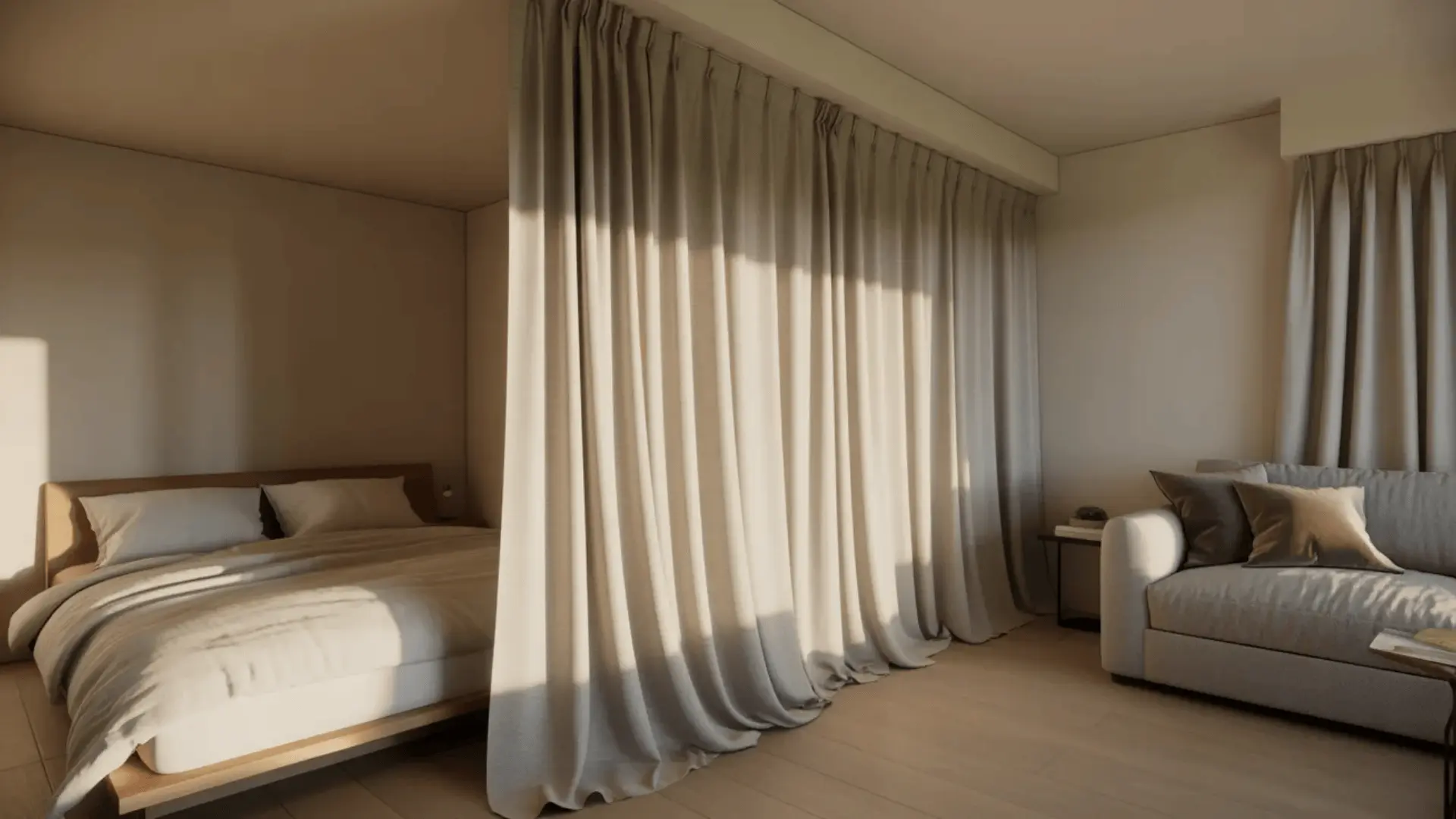
A curtain divider is one of the easiest ways to break up your space without making permanent changes.
I’ve seen this work especially well when you want privacy at night but openness during the day.
2. Bookshelf Divider Idea for Living Room Bedroom Combo

It is a smart way to split a room without building a wall. I use an open or semi-open shelf to create a clear boundary while still letting light and air pass through.
3. Glass Partition Idea for Modern Small Homes
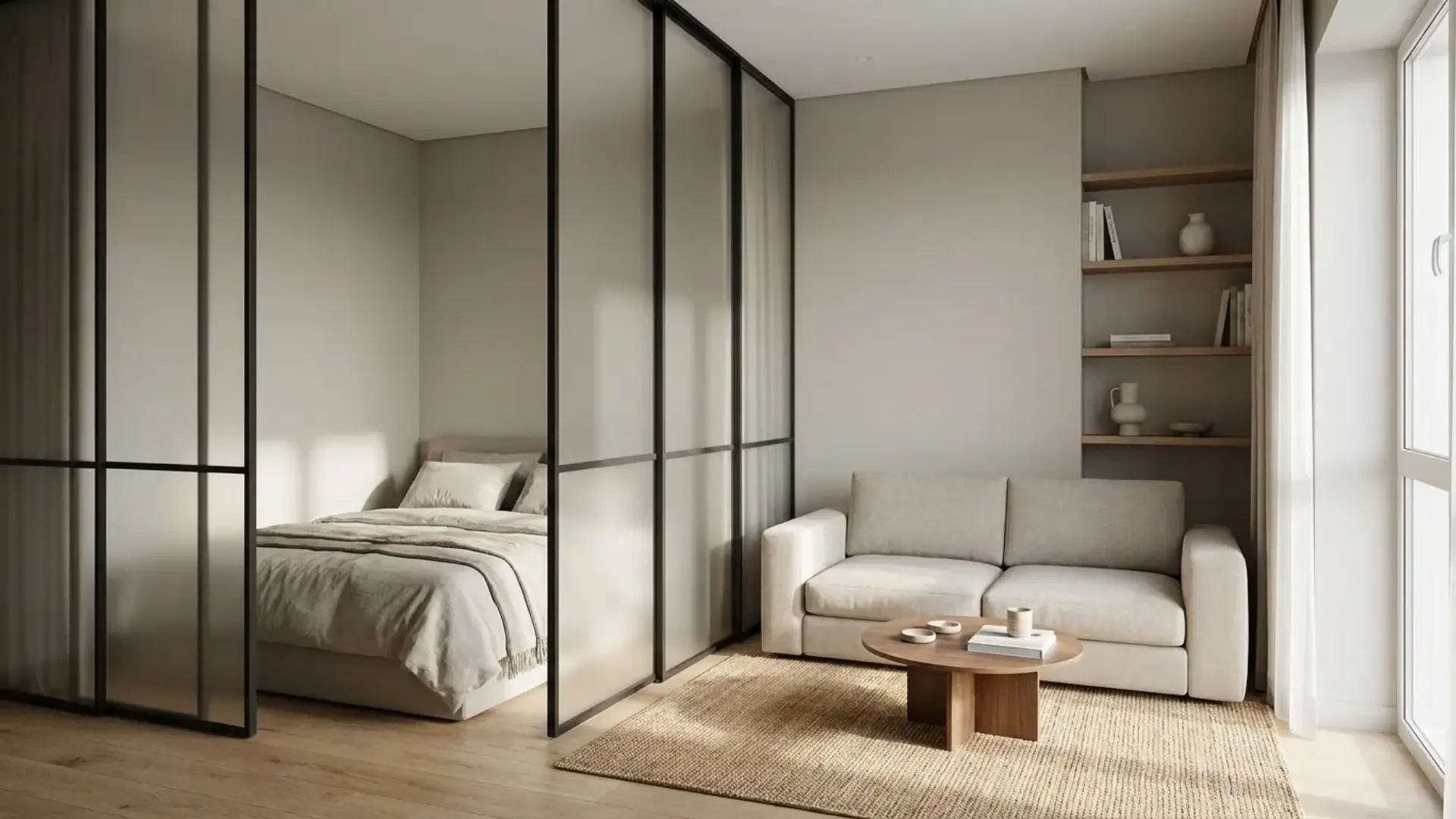
A glass partition gives you a clean divide without making the room feel smaller. I find this works best in small modern homes where I want a clear division but still need natural light to flow across the room.
Types of Glasses
| Glass Type | Key Benefit | Best For |
|---|---|---|
| Clear Glass | Keeps the room bright and open | Open feel with no visual barrier |
| Frosted Glass | Adds privacy while letting light pass | Bedroom privacy with light flow |
| Tinted Glass | Reduces glare and softens the look | Balanced light and subtle privacy |
4. Sofa Divider Layout for Studio Apartments
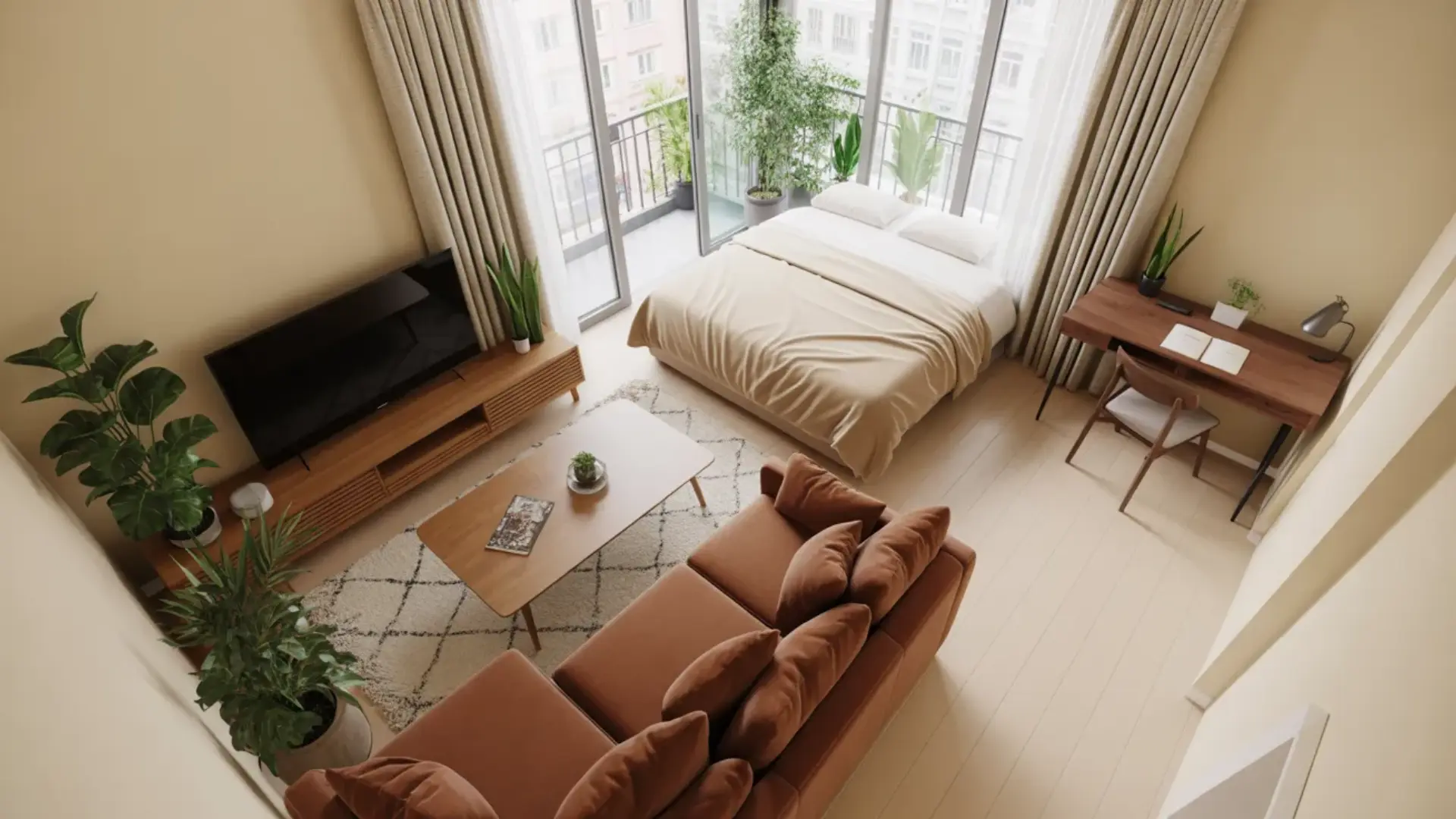
Using a sofa as a divider is a simple way to separate the living and sleeping areas without adding anything extra. It creates a clear boundary while still keeping the space open and comfortable to move through.
5. Sliding Door Divider Idea for Flexible Spaces
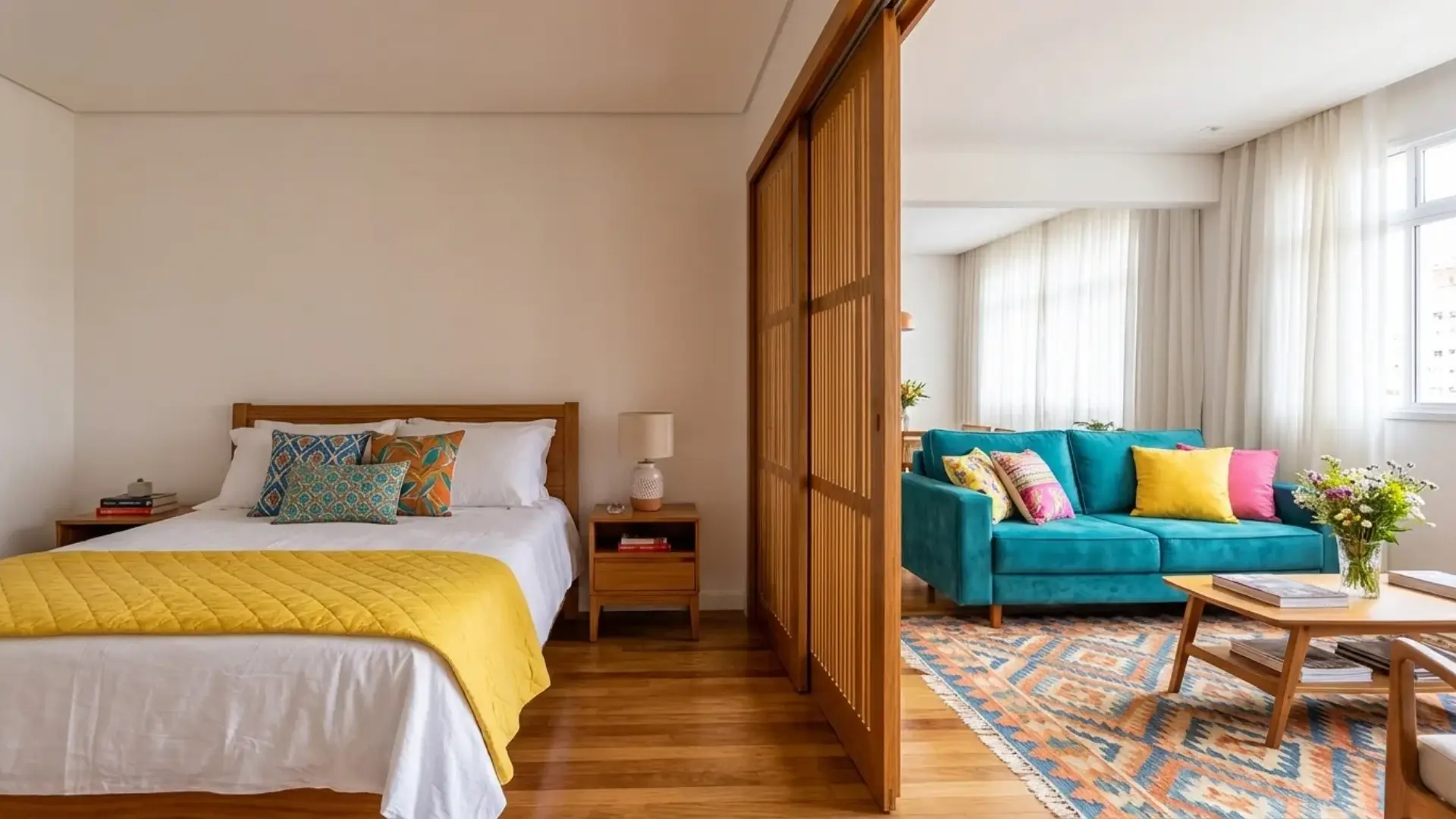
A sliding door divider is a practical way to divide my living room and bedroom while keeping the option to open or close the space at any time. I can use glass, wood, or panel doors that slide smoothly along a track.
6. Loft Bed Living Room Combo Idea
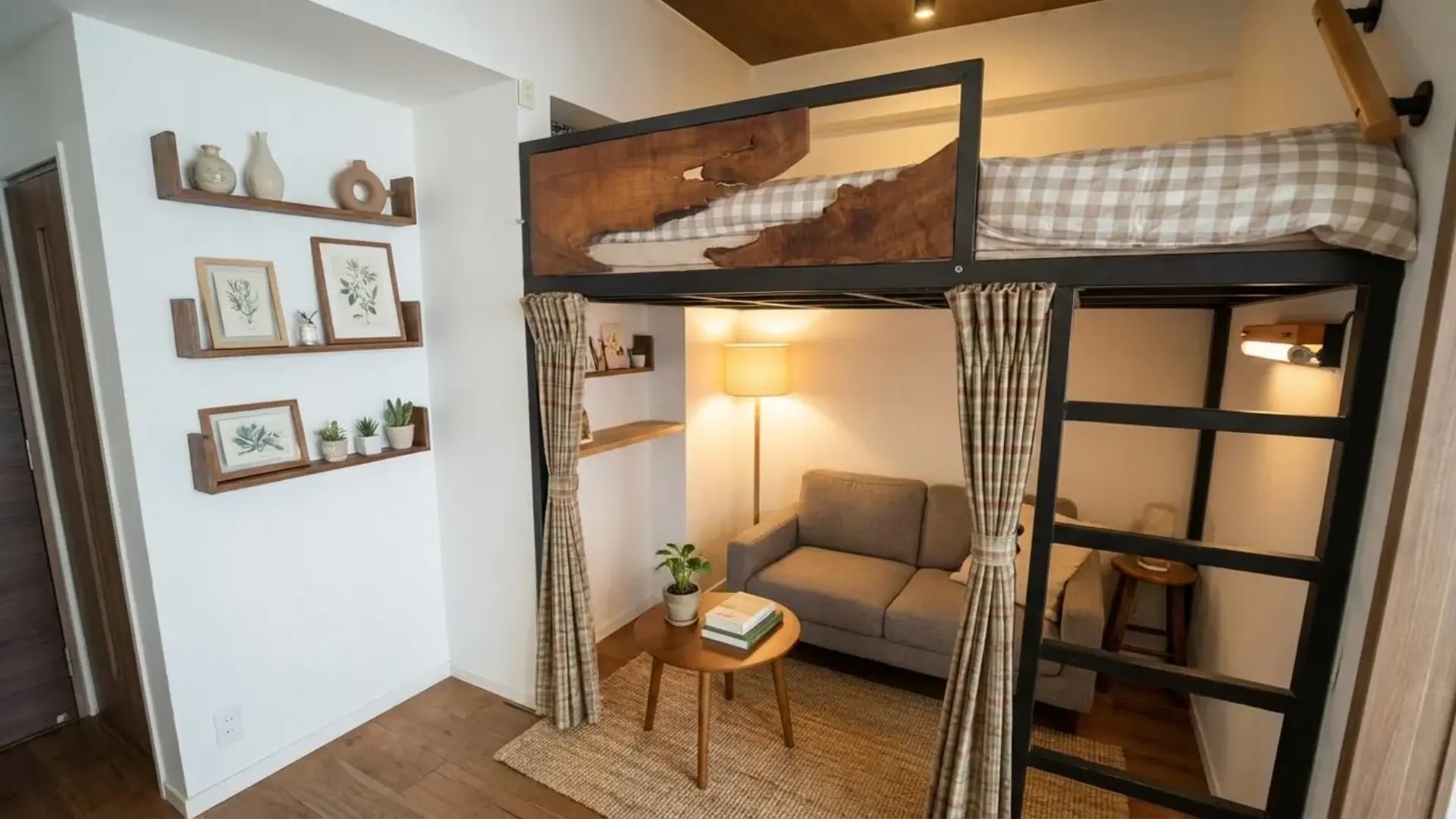
A loft bed setup is a practical way to create a clear separation between my bedroom and living area by using vertical space.
I place the bed above and use the space below for a sofa, desk, or small living setup. This keeps both areas clearly defined without taking up extra floor space.
I always keep the goal simple: make the space functional, comfortable, and visually balanced while still feeling open. With the right setup, even one room can work smoothly for both living and sleeping.
How to Choose the Right Idea for Your Space?
Here’s a quick comparison to help you choose the right divider based on your requirements.
| Idea Type | Estimated Cost ($) | Best Room Size | Privacy Level | Light Flow | Flexibility | Difficulty Level |
|---|---|---|---|---|---|---|
| Curtain Divider | $6 – $36 | Small to Medium | Medium | High | Very High | Easy |
| Bookshelf Divider | $36 – $180 | Small to Medium | Medium | Medium to High | Medium | Easy |
| Glass Partition | $240 – $960+ | Small to Medium | Medium to High | Very High | Low | Moderate |
| Sofa Divider | $0 (if existing) – $240+ | Small to Medium | Low | Very High | High | Very Easy |
| Sliding Door | $180 – $1,200+ | Medium to Large | High | Medium to High | Medium | Moderate to Hard |
| Loft Bed Setup | $240 – $960+ | Very Small Rooms | Medium | Medium | Low | Hard |
Quick Takeaways:
- Lowest cost option: Curtain divider
- Best budget + function combo: Bookshelf divider
- Best premium look: Glass partition
- Best privacy: Sliding doors
- Best for tiny rooms: Loft bed setup
- No-cost solution: Sofa divider
Room Size Guide:
- Under 100 sq ft: Best for curtains, sofa dividers, or loft beds
- 100–150 sq ft: Works well with bookshelf dividers or curtain setups
- 150–250 sq ft: Suitable for glass partitions or flexible layouts
- 250+ sq ft: Can easily handle sliding doors or more solid dividers
- Always leave at least 2–3 feet walking space between zones
Conclusion
Finding the right way to divide your room comes down to how you use your space every day. Some setups focus more on flexibility, while others give better privacy or storage.
The goal is to create two clear zones without making the room feel tight or cluttered.
Even small changes like repositioning furniture or adding a simple divider can make a noticeable difference.
Take a moment to look at your room size, light, and daily routine before deciding. Once you have that clear, it becomes much easier to choose the right setup.
Try one idea from this guide and adjust it based on what works best for you, and tell us in the comments what worked in your space.


