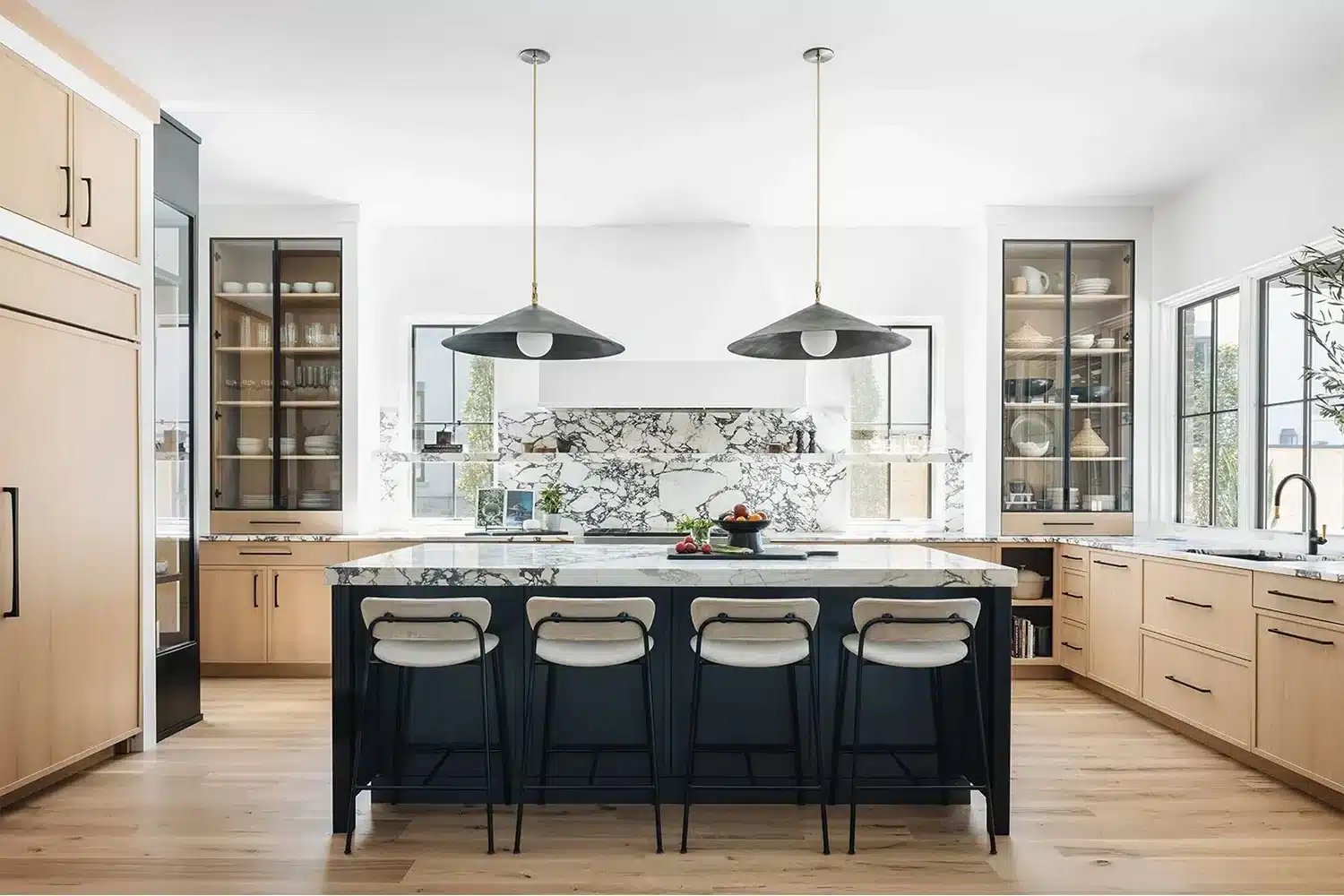
From Backsplash to Floor: Coordinated Kitchen Tiles Design Ideas
The most sophisticated kitchen interiors are often defined by consistency in material choices. When the backsplash and flooring share a coordinated visual language, the room immediately feels more intentional, spacious and refined.
Porcelain stoneware makes this approach particularly effective, thanks to its ability to reproduce matching finishes, complementary tones and harmonious textures across multiple surfaces. This design strategy transforms the kitchen into a cohesive environment, where vertical and horizontal planes work together to reinforce elegance, balance and long-term visual appeal.
Creating Seamless Transitions Between Backsplash and Flooring
A coordinated surface concept helps establish a smooth transition between the cooking zone and the floor, reinforcing the visual rhythm of the kitchen. Instead of treating these areas as separate design elements, contemporary interiors increasingly favour a connected material approach that allows the eye to move naturally across the room. This sense of continuity is especially valuable in kitchens where clean lines and visual order are essential to the overall style.
Matching Finishes for A Refined Unified Look
Using backsplash and floor tiles within the same finish family is one of the most elegant ways to achieve cohesion. Stone look porcelain surfaces, soft concrete effects and neutral matt finishes can extend across both planes, creating a unified aesthetic that feels calm, spacious and highly sophisticated. This continuity is particularly effective in minimalist kitchens, where restrained material choices contribute to understated luxury and timeless appeal.
A coordinated finish also helps other design features emerge more clearly. Cabinet fronts, pendant lighting, shelving details and metal accents all benefit from a quieter, more consistent backdrop, allowing the entire composition to feel curated rather than crowded.
Controlled Contrasts that Enhance Depth
Coordination does not necessarily mean identical surfaces. Carefully balanced contrasts can introduce depth while preserving harmony. A lighter backsplash paired with a deeper toned floor, or a smooth vertical surface combined with a subtly textured flooring finish, helps define different planes without interrupting the overall visual flow.
These tonal variations create architectural layering and give the room a more dynamic presence. In larger kitchens, this approach can also be used to visually zone specific areas, such as preparation spaces or dining corners, while maintaining full stylistic coherence.
Choosing Formats and Layouts that Reinforce Coordination
Beyond finish and colour, tile format plays a major role in strengthening the dialogue between backsplash and flooring. Large format tiles on the backsplash create clean, uninterrupted wall planes, reducing grout lines and supporting a sleek contemporary look. On the floor, square modules, elongated plank inspired formats or oversized slabs can establish rhythm and proportion.
The alignment of grout joints between vertical and horizontal surfaces can further enhance this sense of precision. When lines, scale and layout logic are carefully considered, the kitchen gains a stronger architectural identity and a more harmonious perception of space.
How Coordinated Surfaces Elevate Contemporary Kitchen Design

The true value of coordinated surfaces lies in their ability to elevate the kitchen as a whole. In open and contemporary layouts, continuity between backsplash and floor tiles supports visual order, making the room feel larger, calmer and more carefully composed. This material consistency also improves the relationship with cabinetry, worktops and metal finishes, reinforcing a refined and timeless aesthetic.
Kitchen Tiles Design as A Complete Surface Concept
In the most sophisticated interiors, kitchen tiles design is no longer approached as a series of isolated choices, but as a complete surface concept. When backsplash and flooring are conceived together, porcelain stoneware helps create kitchens that feel visually connected, highly contemporary and elegant over time, while preserving the practical performance required by everyday living.
Ceramiche Refin: Industrial Identity, Method, and International Vision
In contemporary design, surface selection has become increasingly strategic. Material, light, and texture now shape not only the aesthetics of a space, but also its identity, the perception of volume, and the continuity between different environments. In this context, Ceramiche Refin stands out as a trustworthy expression of Made in Italy surface design, transforming porcelain stoneware into a true project language.
Founded in 1962 and now part of the Concorde Group, the company has built a strong position based on manufacturing culture, innovation, and direct quality control. Every phase of the production chain, from aesthetic research and technical development to final verification, is managed in house.
This integrated model ensures continuity between design vision and real-world application, while supporting a strong international presence among architects, interior designers, and contract professionals.
Alongside this industrial solidity, sustainability remains central to the brand’s philosophy. Low impact production technologies, waste recovery, emission reduction, and natural resource optimization define a concrete strategy in which environmental efficiency and product excellence work together. The versatility of the collections further reinforces this vision, offering aesthetic continuity and high performance across indoor and outdoor applications.
Within the Ceramiche Refin catalogue, different material sensibilities coexist under one rigorous design approach. OSMOS interprets the appeal of controlled imperfection through subtle tonal shifts and tactile textures that create balanced, sophisticated environments with strong material character.
RELIEFS expands the concept of wall cladding by transforming the surface into an active architectural component. More than a simple collection, it is a 3D wall project in which grooves, raised patterns, and structured geometries interact with natural and artificial light to generate rhythm, depth, and evolving chiaroscuro effects.
A more scenic interpretation of the surface emerges with PRESTIGIO KALEIDOS, where shifting reflections, layered nuances, and luminous accents create a dynamic material language that enriches the project with decorative and perceptual depth.
Completing the path, INK turns the creative gesture into ceramic expression. Fluid patterns, graphic marks, and a versatile palette allow designers to shape spaces with distinctive character while preserving compositional control.
The strength of Ceramiche Refin lies in its ability to transform ceramic material into an innovative design tool, where industrial precision, stylistic research, and environmental responsibility create long term architectural value.