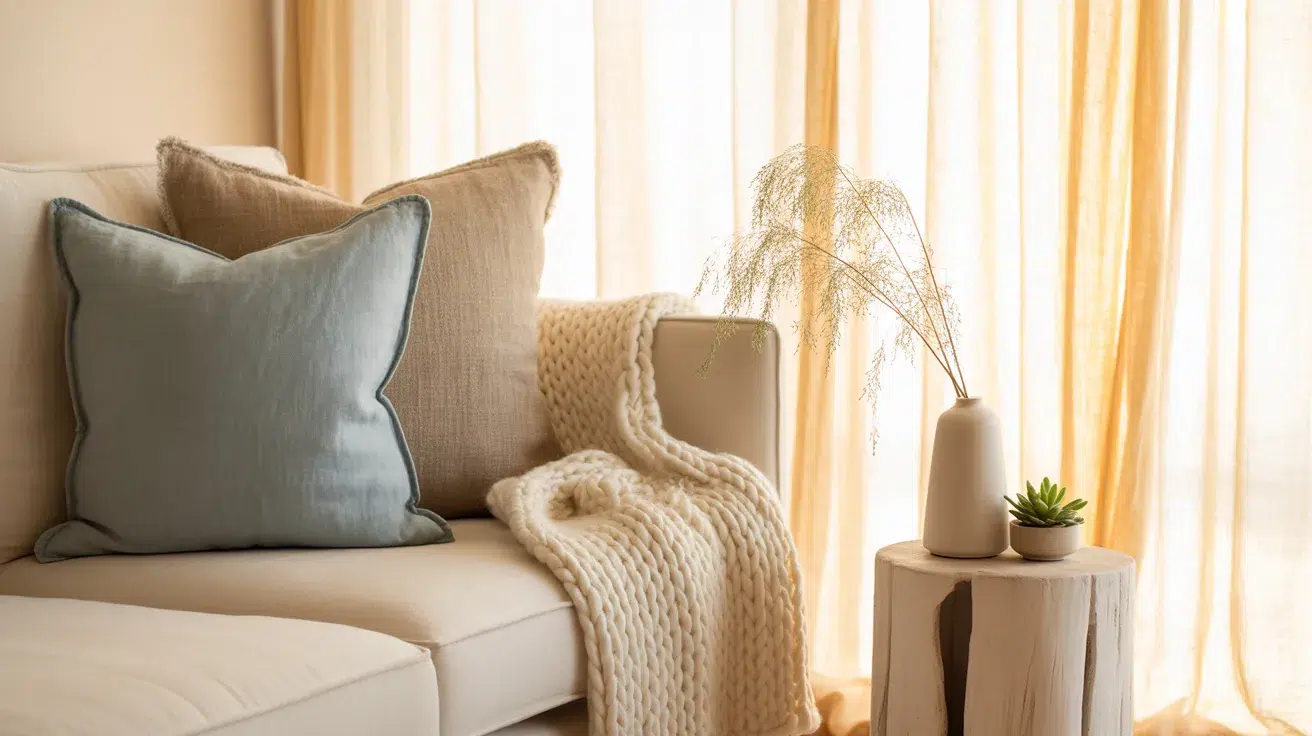
13 Coastal Living Room Ideas That Actually Work
Coastal living rooms look effortless in photos, bright, open, calm, and somehow put together without trying too hard. But getting that look in your own home is trickier than it appears.
Most people either go too literal with themed decor or miss the fundamentals entirely and wonder why the room still feels off.
Coastal style isn’t about buying the right accessories. It comes down to a handful of decisions around light, materials, and space, and once you understand those, the rest follows naturally.
These coastal living room ideas are built for real application. Each one tells you what to do, why it works, and exactly where it goes wrong.
Coastal Living Room Ideas
These aren’t mood board suggestions, each idea below tells you what to do, why it works, and exactly where it goes wrong.
1. Neutral Base
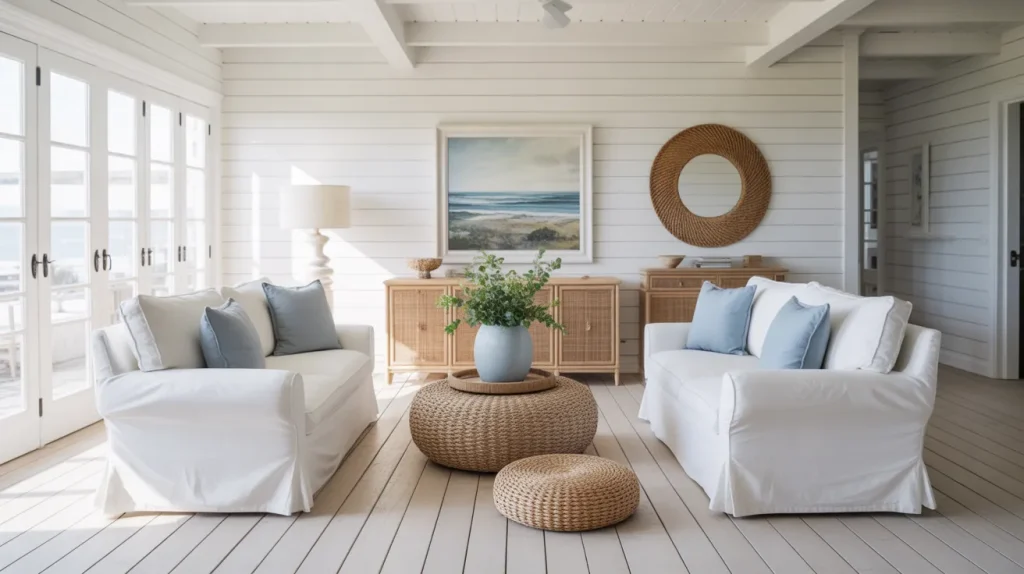
Start with white, beige, or soft grey on your walls and large furniture pieces. Light surfaces reflect natural light back into the room, creating the open, airy quality that coastal interiors are built on.
This fails when dark base tones take over, once walls and sofas absorb light, no accent color can recover the brightness.
2. Ocean Tones
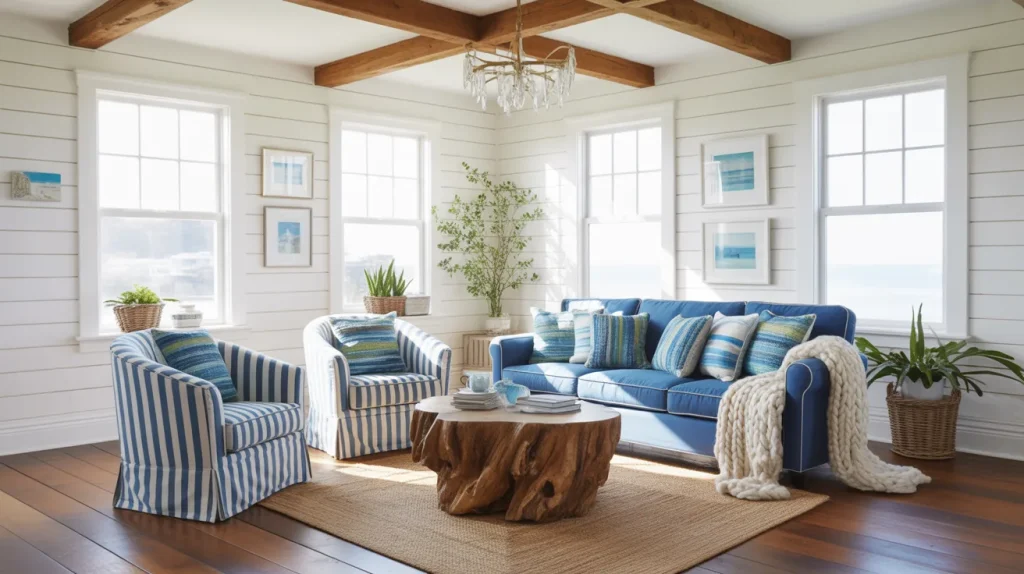
Introduce soft blues and sea greens through cushions, throws, or small decor pieces.
These tones naturally mirror the colors of water and sky, creating a quiet visual connection to the coast without heavy theming.
It fails when you push too far into navy, deep, saturated tones shift the room from coastal to nautical, which is a different look entirely.
3. Natural Materials
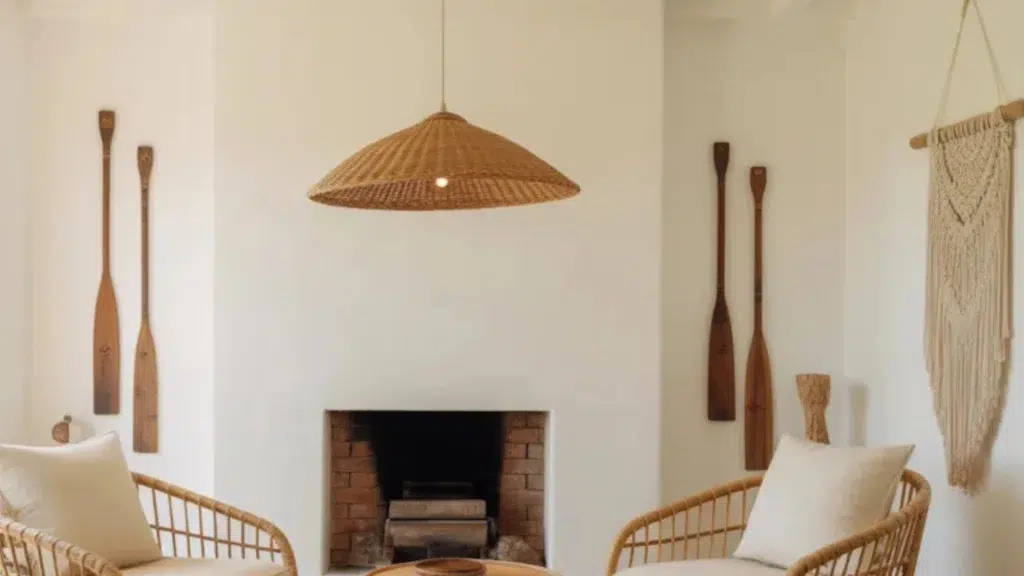
Choose furniture and accents in wood, rattan, linen, and wicker over synthetic alternatives. Natural materials carry inherent texture and warmth that communicate ease and organic comfort.
The effect breaks the moment glossy or synthetic finishes enter the room, they signal manufactured rather than natural, and the relaxed coastal feel disappears with them.
4. Slipcovers
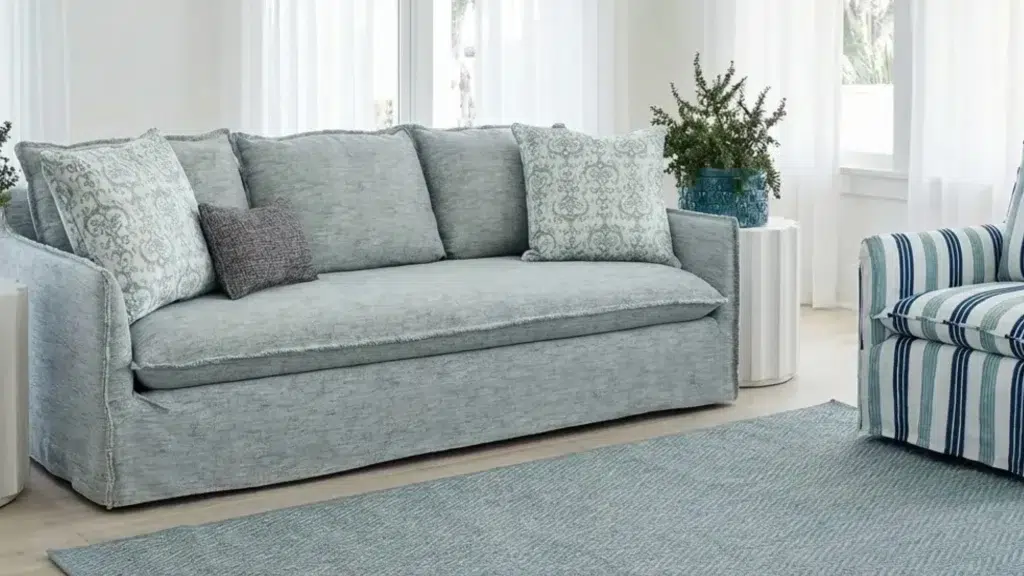
Dress sofas in loose, washable fabric covers in linen or cotton rather than structured upholstery.
Slipcovers create a relaxed, lived-in quality that feels genuinely at ease, exactly the tone coastal rooms need.
Structured, formal upholstery works against this; it introduces stiffness that reads as traditional rather than coastal.
5. Light Wood
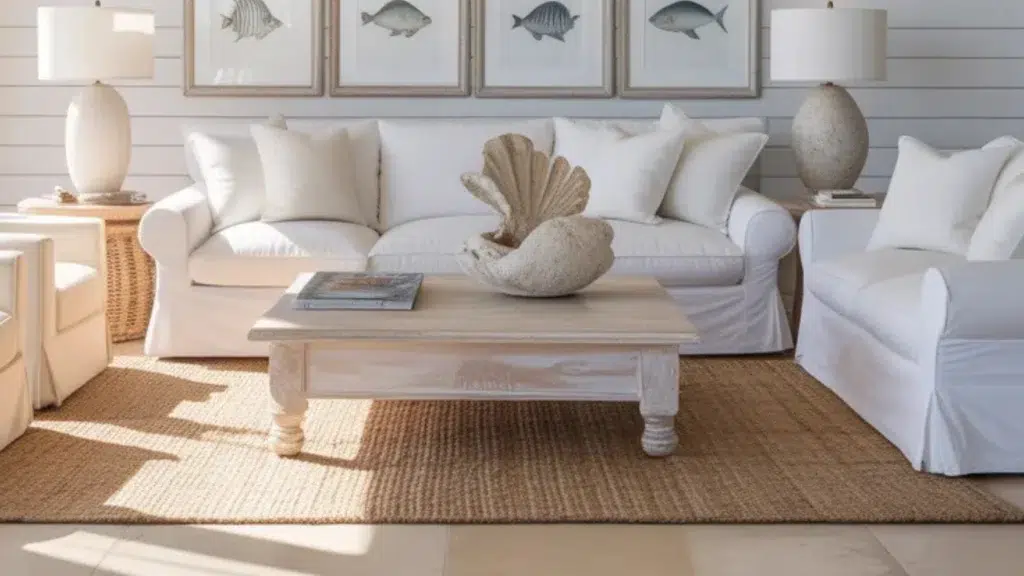
Choose weathered, whitewashed, or pale-toned wood for coffee tables, shelving, and flooring.
These finishes mimic the sun-bleached quality of real coastal environments and keep the overall palette light.
Dark, polished wood introduces visual weight and formality, pulling the room away from relaxed and toward conventional.
6. Open Layout
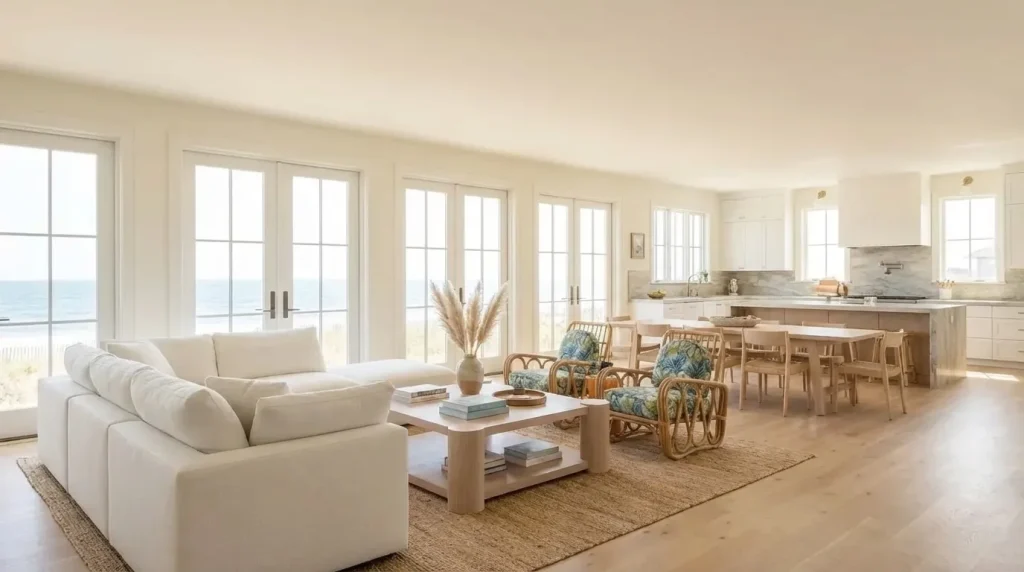
Keep clear space between furniture pieces rather than filling every corner. Open floor plans communicate ease and flow, they’re an active design choice, not an empty one.
Overcrowding eliminates that breathing room and replaces the calm feeling with visual noise, no matter how good the individual pieces are.
7. Sheer Curtains

Hang light, breathable fabrics, linen, or cotton sheers at windows rather than heavy drapes. Sheers let natural light pass through while softening harsh glare, maintaining the bright and airy feel.
Thick curtains that block or filter light collapse the effect, regardless of everything else done right in the room.
8. Texture Layers
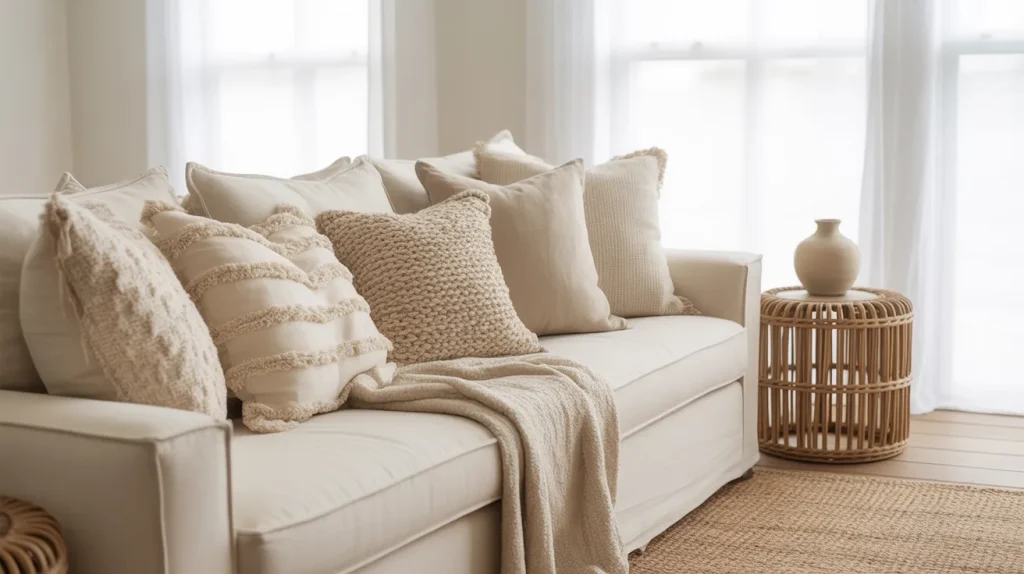
Build visual interest through tactile variety, woven rugs, knit throws, and linen cushions, rather than bold prints or patterns.
Texture adds depth that reads as calm and considered. Bold patterns compete for attention and undermine the understated mood that coastal rooms depend on.
9. Minimal Decor
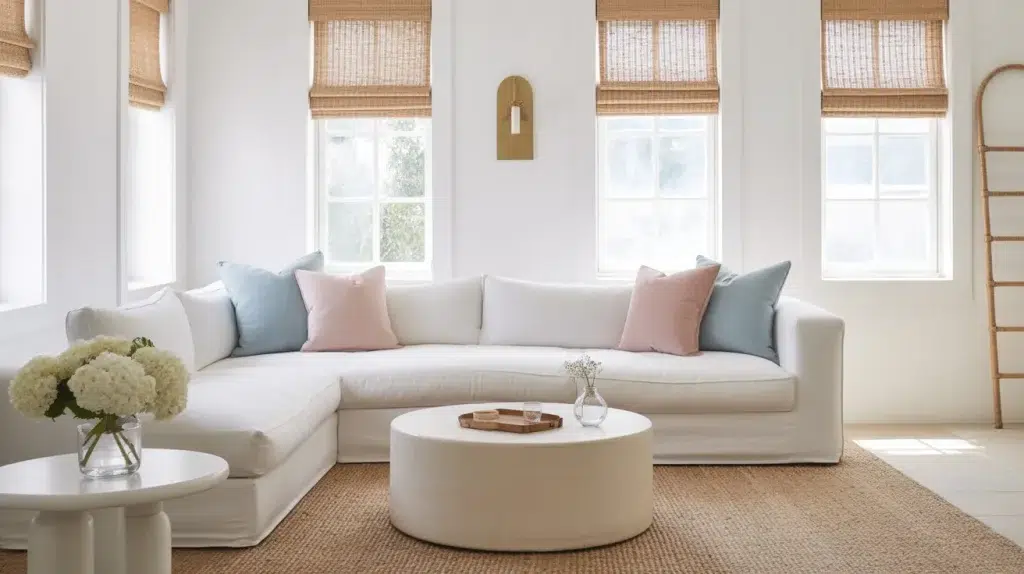
Use a small, deliberate selection of coastal references, a few shells, a piece of coral, a single driftwood object, rather than filling every surface.
Restraint makes each element feel found rather than bought. Overcrowding tips the room into themed territory, which feels curated for display rather than lived in.
10. Wall Paneling
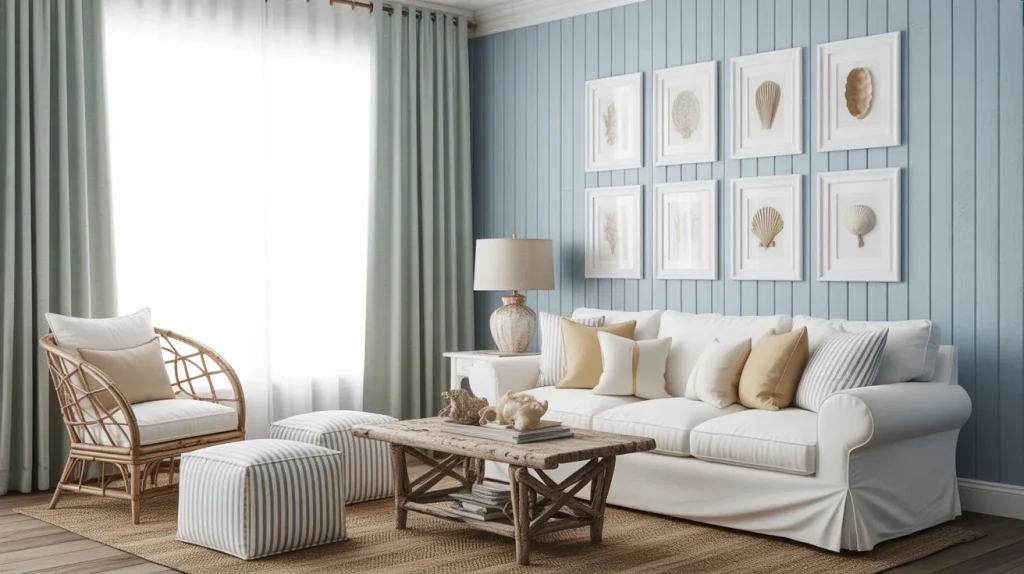
Install shiplap or beadboard on at least one wall to introduce cottage-style coastal character. White-painted paneling adds architectural texture while keeping the surface light and reflective.
Dark paneling reverses this completely, it absorbs light and makes the room feel enclosed rather than open.
11. Vintage Mix
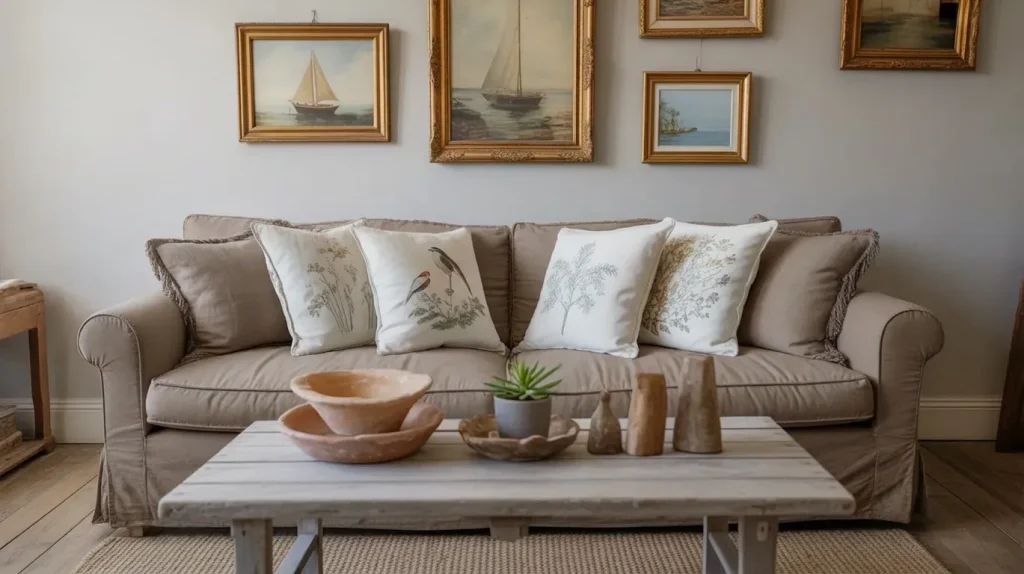
Combine older or antique furniture pieces with newer ones rather than matching everything from the same collection.
The mix creates a layered, collected-over-time quality that feels authentic to relaxed coastal homes.
It fails when the tones across pieces clash, warm and cool finishes sitting together without a unifying element, look unplanned rather than curated.
12. Subtle Nautical
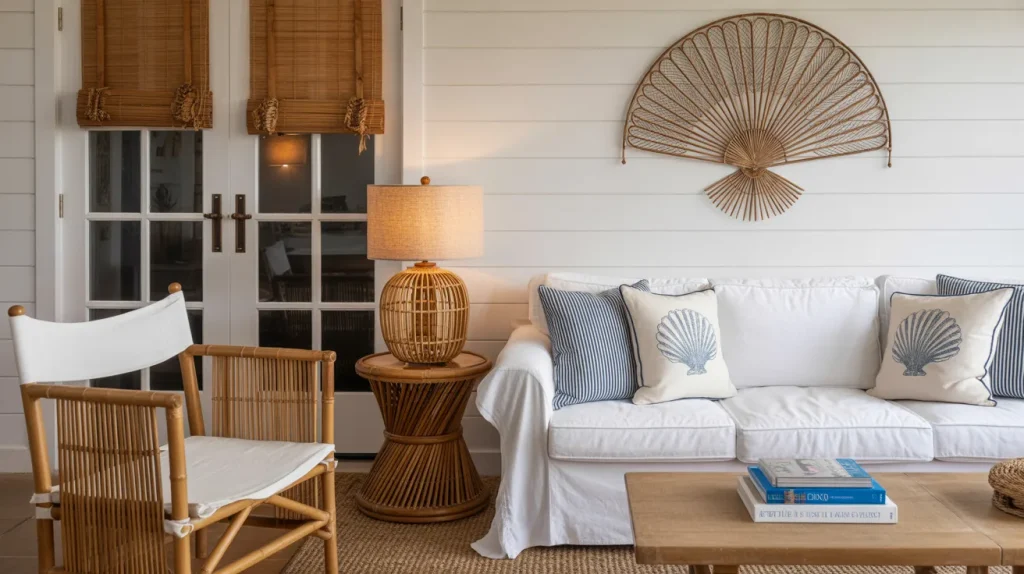
Add small, restrained nods to nautical style, a rope detail, a thin stripe, a weathered lantern, without leaning into the full theme.
Used sparingly, these accents hint at the coast without making the room feel costumed. Too many themed pieces stack up quickly, and the room starts to feel staged rather than lived in.
13. Natural Light
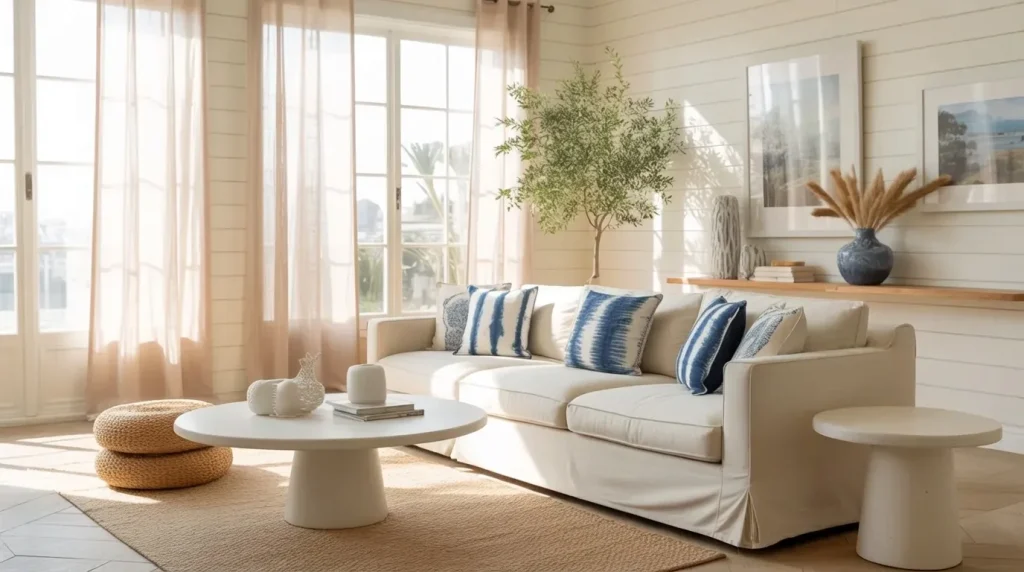
Maximize every window and keep sills and surroundings unobstructed. Brightness is the single most defining quality of a coastal interior; it’s what separates the look from simply having blue cushions.
Block the light with furniture placement, heavy blinds, or cluttered windowsills, and the entire effect falls apart regardless of all the other choices made.
Coastal style isn’t about buying the right accessories, it’s about getting the light, materials, and space right first. Nail those three, and the room does the rest on its own.
Smart Combination: How to Use These Ideas Without Overdoing It
More ideas applied doesn’t mean better results, it usually means the opposite. Pick a few and execute them well.
| Element | What to Do | Why It Works | When It Fails |
|---|---|---|---|
| Color | Stick to 2–3 tones maximum | Keeps the palette calm and cohesive | More colors fragment the room |
| Materials | Limit to 2–3 types, e.g. linen, rattan, jute | Creates a unified, intentional look | Too many finishes feel eclectic, not coastal |
| Empty Space | Leave gaps, clear floors, bare walls, open surfaces | Negative space communicates ease | Filling every corner creates visual noise |
| Decor | Use 3–5 coastal accents across the whole room | Restraint makes each piece count | Too many items tip into clutter |
| Ideas | Apply 4–6 ideas from this list, not all 15 | Depth beats quantity every time | Applying everything at once feels over-designed |
Conclusion
Coastal style rewards simplicity. The rooms that nail it aren’t the ones loaded with shells and rope accents, they’re the ones where light moves freely, materials feel honest, and nothing competes for attention.
Every idea in this list serves that same outcome: a space that feels open, calm, and genuinely livable.
You don’t need to apply all 15. Pick the ideas that fit your space, commit to a consistent palette, and let the light and materials carry the room.
The checklist at the end exists for exactly that reason, use it before you call the room done.
Tried one of these coastal living room ideas in your own home? Drop your experience or questions in the comments below, and share what worked for you.
Frequently Asked Questions
How Much Does It Cost to Decorate a Coastal Living Room on a Budget?
Coastal style is naturally budget-friendly because it relies on restraint rather than spending. Focus investment on a quality neutral sofa and a natural rug. Cushions, sheer curtains, and a few organic accents can complete the look for well under $500 without compromising the core aesthetic.
Can Coastal Living Room Ideas Work in a Small Space?
Yes, coastal principles actually favor small rooms. Light walls, open layouts, and minimal decor make compact spaces feel larger. Avoid oversized furniture and dark tones. A single blue accent, sheer curtains, and a jute rug can deliver the full coastal effect in even the tightest room.
What Flooring Works Best for a Coastal Living Room?
Light oak, whitewashed wood, or pale limestone-effect tile all work well. The goal is a floor tone that reflects light and stays visually recessive. Avoid dark hardwood or busy tile patterns, both pull attention downward and add visual weight that works against the airy coastal feel.