19 Clematis Trellis Ideas to Assist Healthy Growth
Getting clematis to climb well isn’t about luck. It comes down to how you support it. Many gardeners pick a structure that looks good but doesn’t match how the plant actually grows.
That’s where things go wrong.
A clematis trellis needs to match the way those thin leaf stems wrap and hold on. Once you understand that, everything becomes easier.
In this guide, I’ll walk you through what really matters when choosing support and show practical ideas that work in different spaces. Some are simple, some more decorative, but all focus on what the plant actually needs.
Let’s start with the basics.
What Makes a Clematis Trellis Actually Work?
Clematis doesn’t climb the way most people expect. Instead of using tendrils or adhesive roots, it climbs by wrapping its delicate leaf stems around supports. Understanding this unique habit is the key to choosing the right trellis.
If the support is too thick to grip, the plant won’t climb, no matter how healthy it is. This single detail determines whether your clematis thrives or struggles to grow upward.
For best results, supports should be less than 0.5 inch thick. Proper spacing is equally important. Gaps that are too wide reduce grip points, while overly tight spacing restricts growth. Materials like wire, garden twine, and thin rods provide the ideal structure for natural climbing.
Thicker wood or metal frames can still work, but they often require added twine or mesh to give the stems something to hold onto.
A sturdy trellis isn’t always the best one. For clematis, grip matters more than strength. Get that right, and the rest follows.
Clematis Trellis Ideas that Actually Work
Not every trellis works the same way for clematis. The right choice depends on your plant size, garden style, and how much space you are working with.
Here is every option broken down so you can find the right fit fast.
1. Twine and Eye Hook Trellis
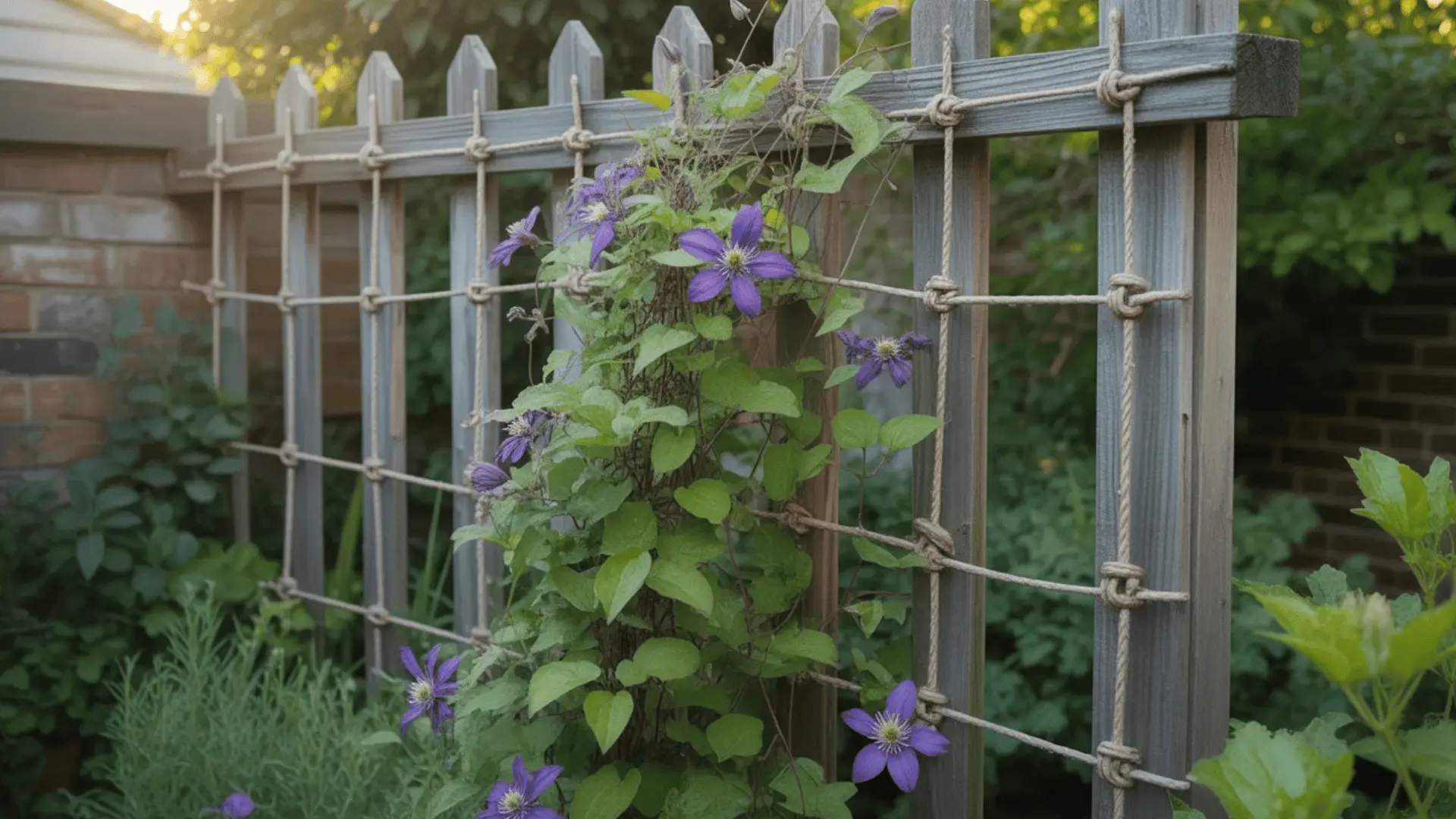
This is one of the simplest and most effective setups you can build.
Thin twine stretched between eye hooks gives leaf stems something narrow enough to grip easily. You can run the lines horizontally, vertically, or diagonally, whatever suits your wall or post layout.
Loose twine sags over time. Keep it pulled tight and check tension regularly through the growing season.
Best for: Walls, fences, wooden posts
2. Fishing Line “Invisible” Trellis
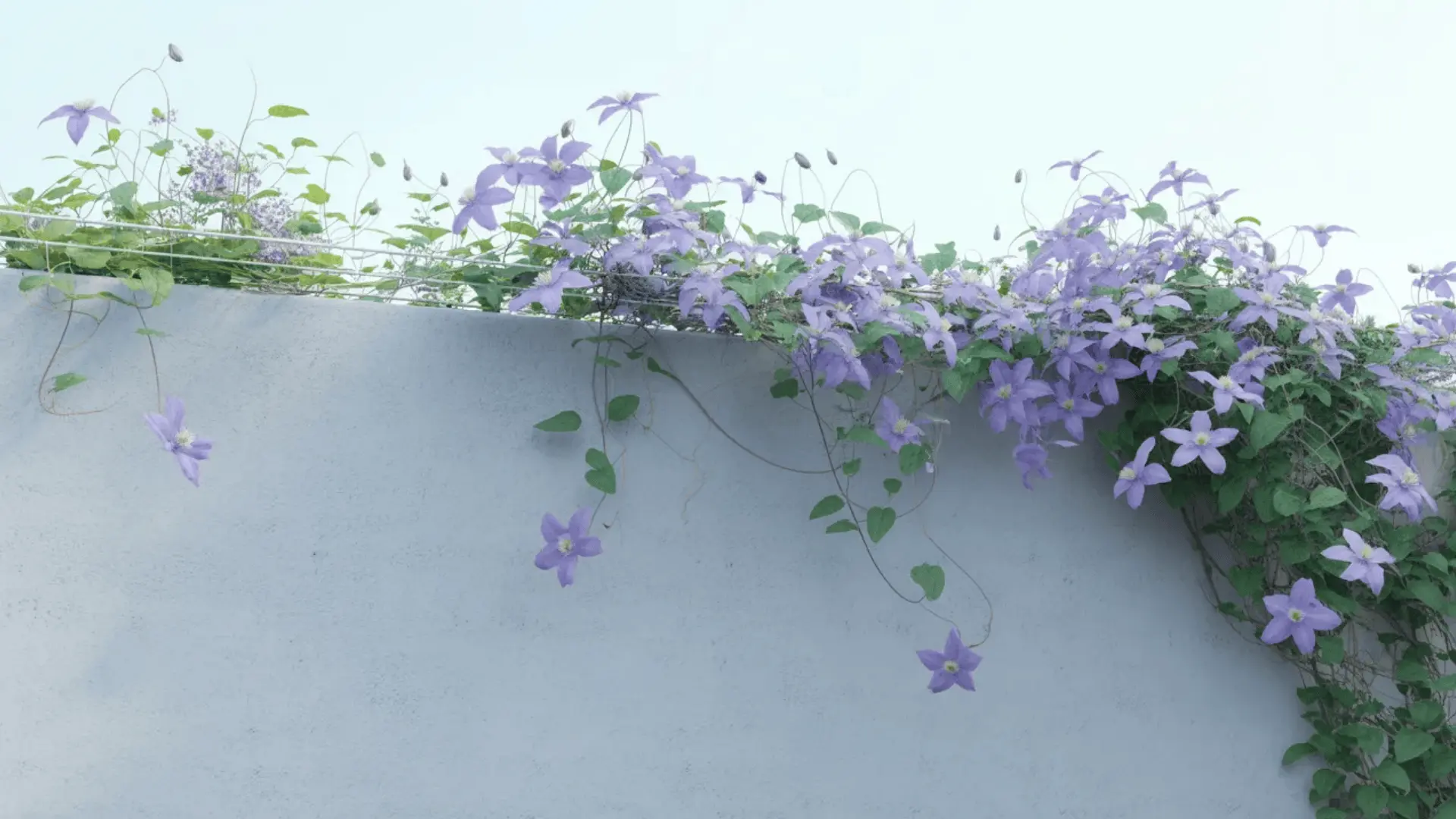
Fishing line works just like twine, but it nearly disappears against the wall.
It’s ideal for clean rendered walls or minimalist garden designs where you want the plant to be the focus. The stems grip it just as well when lines are spaced closely enough.
It’s harder to install than twine and must be anchored securely. Under the weight of a mature plant, loose lines will shift or snap.
Best for: Modern gardens, rendered walls
3. Bird Netting Support Grid
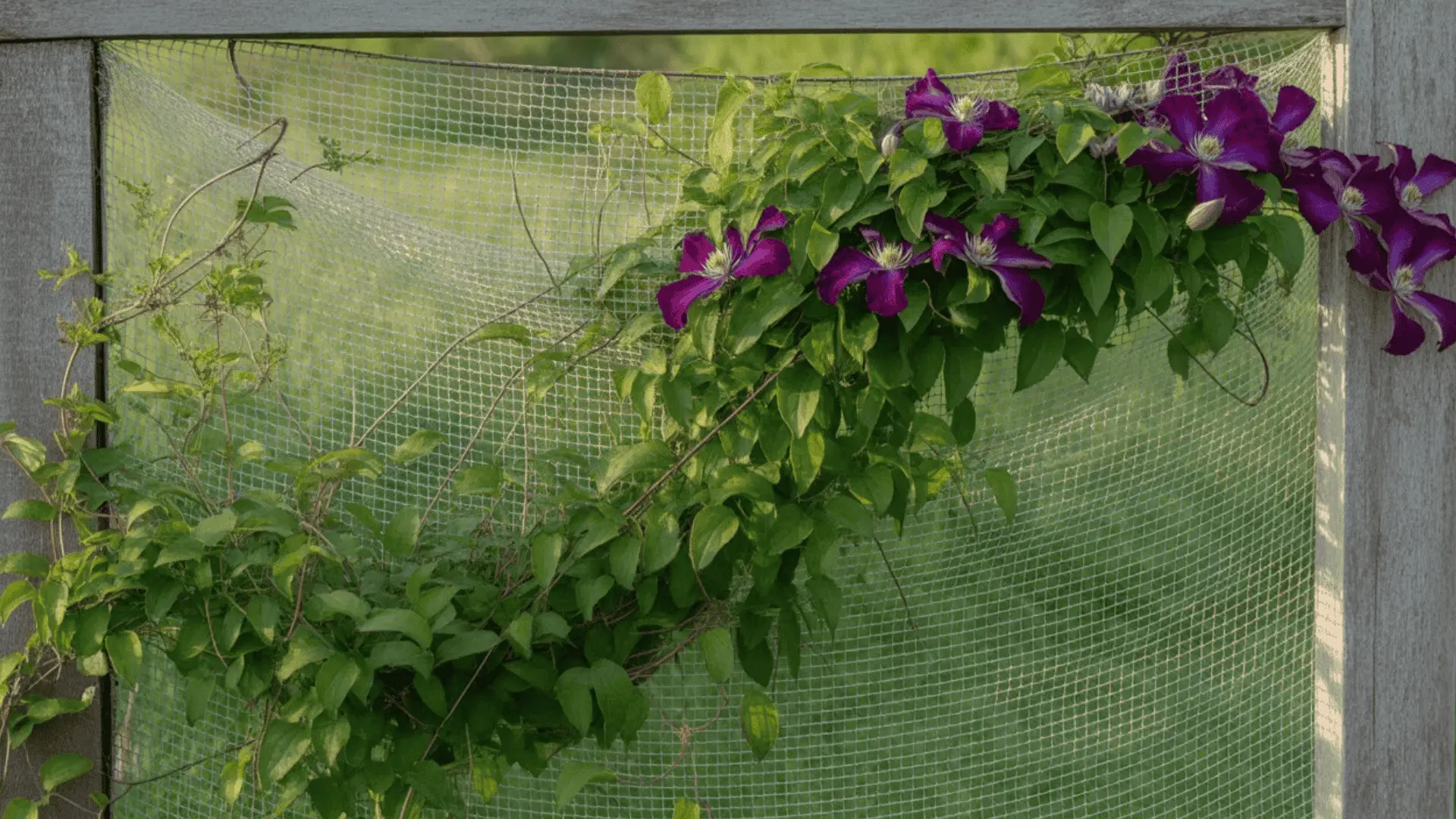
Bird netting stretched across a timber frame gives clematis a dense grid of thin grip points.
The strands are easy for leaf stems to wrap around, which speeds up climbing and encourages even coverage. It’s lightweight and easy to cut to size.
Keep it taut. Loose netting tangles fast once the plant grows through it. Secure all edges before the season starts.
Best for: Fences, timber frames, budget setups
4. Wooden Slat Grid Trellis
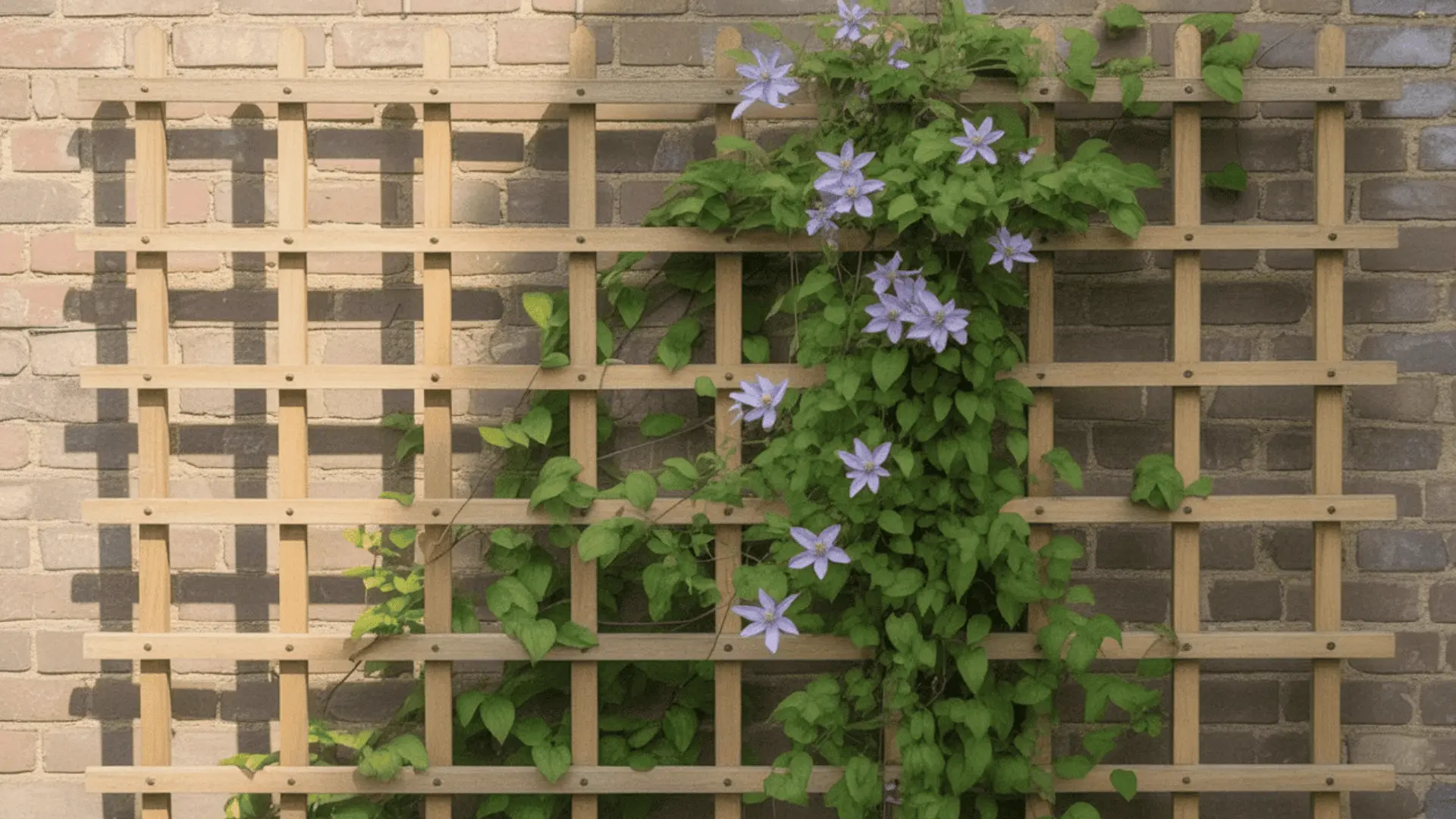
A wooden slat grid is one of the most durable options available.
When built with thin strips (around 1–2 cm wide), it gives clematis plenty of narrow grip points. It’s strong, stable, and looks clean against most garden backdrops.
Avoid thick timber. Wide slats are too bulky for the stems to wrap around properly.
Best for: Walls, fences, freestanding frames
5. Wire Mesh Panel Trellis
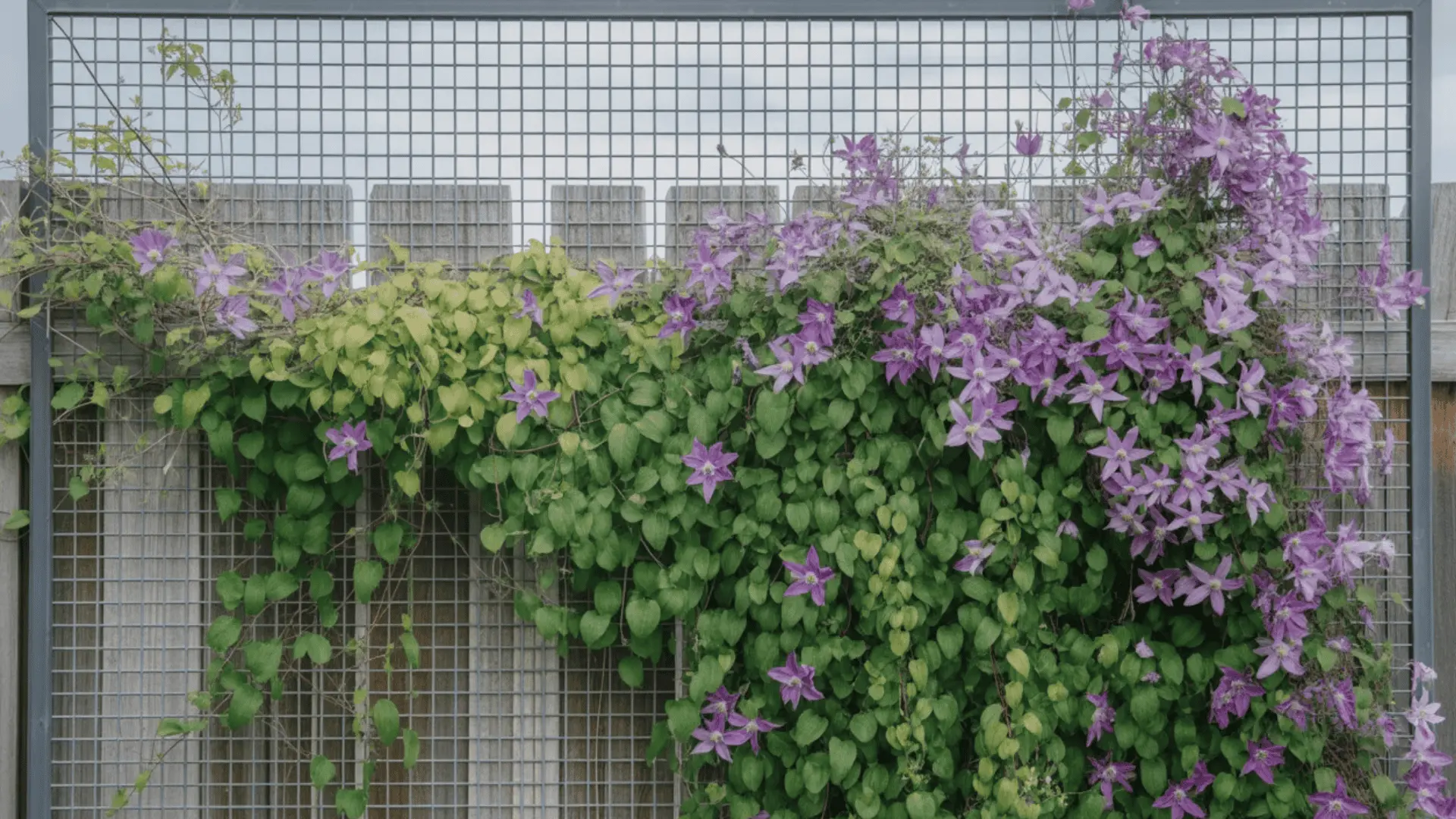
Wire mesh is one of the most popular clematis trellis options and it earns that reputation.
The dense grid gives consistent grip points across the whole surface. A single panel can support a large, mature plant without bending or shifting.
One thing to watch: Gap size matters. Look for mesh with openings no wider than 5–10 cm. Larger gaps mean fewer grip points.
Best for: Large plants, walls, fences
6. Chicken Wire Trellis
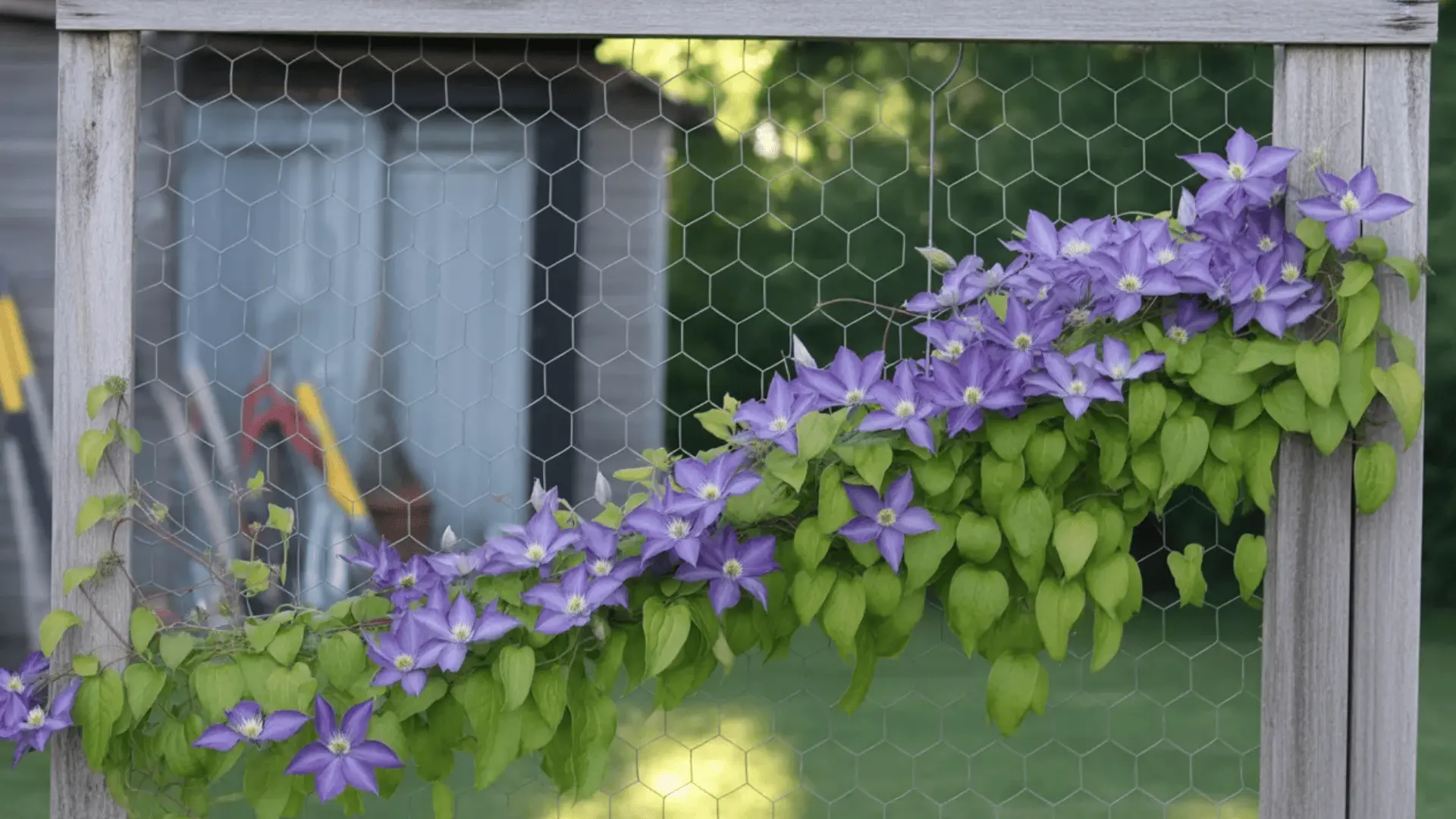
Chicken wire is the most budget-friendly option on this list.
The thin, closely spaced wires are easy for leaf stems to grip from almost any angle. It’s also flexible enough to shape around curves or awkward corners.
One thing to watch: It rusts faster than other materials, especially in wet climates. Treat it as a short-term solution and plan to replace it every few years.
Best for: Seasonal setups, tight budgets
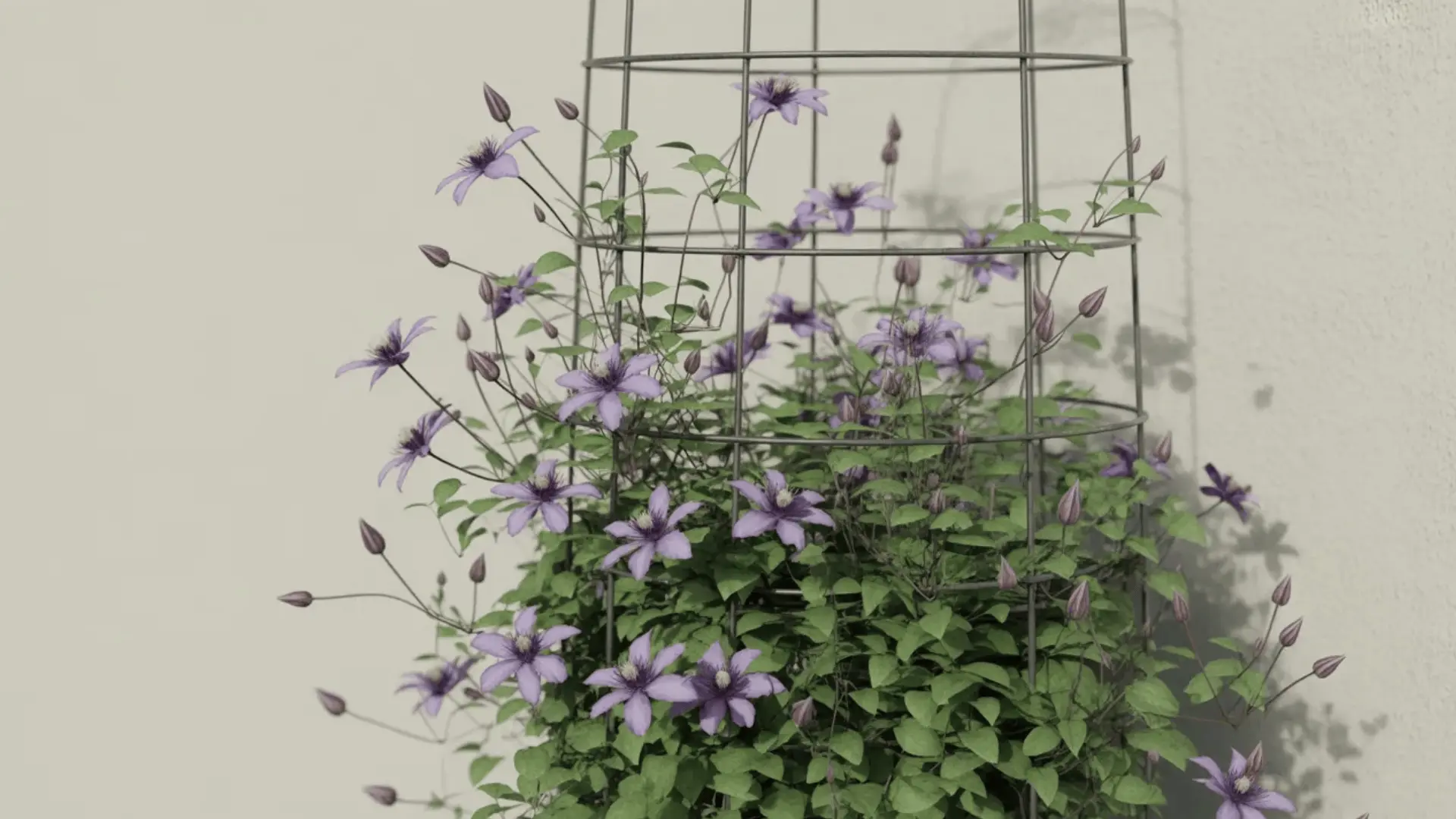
7. Metal Obelisk Trellis
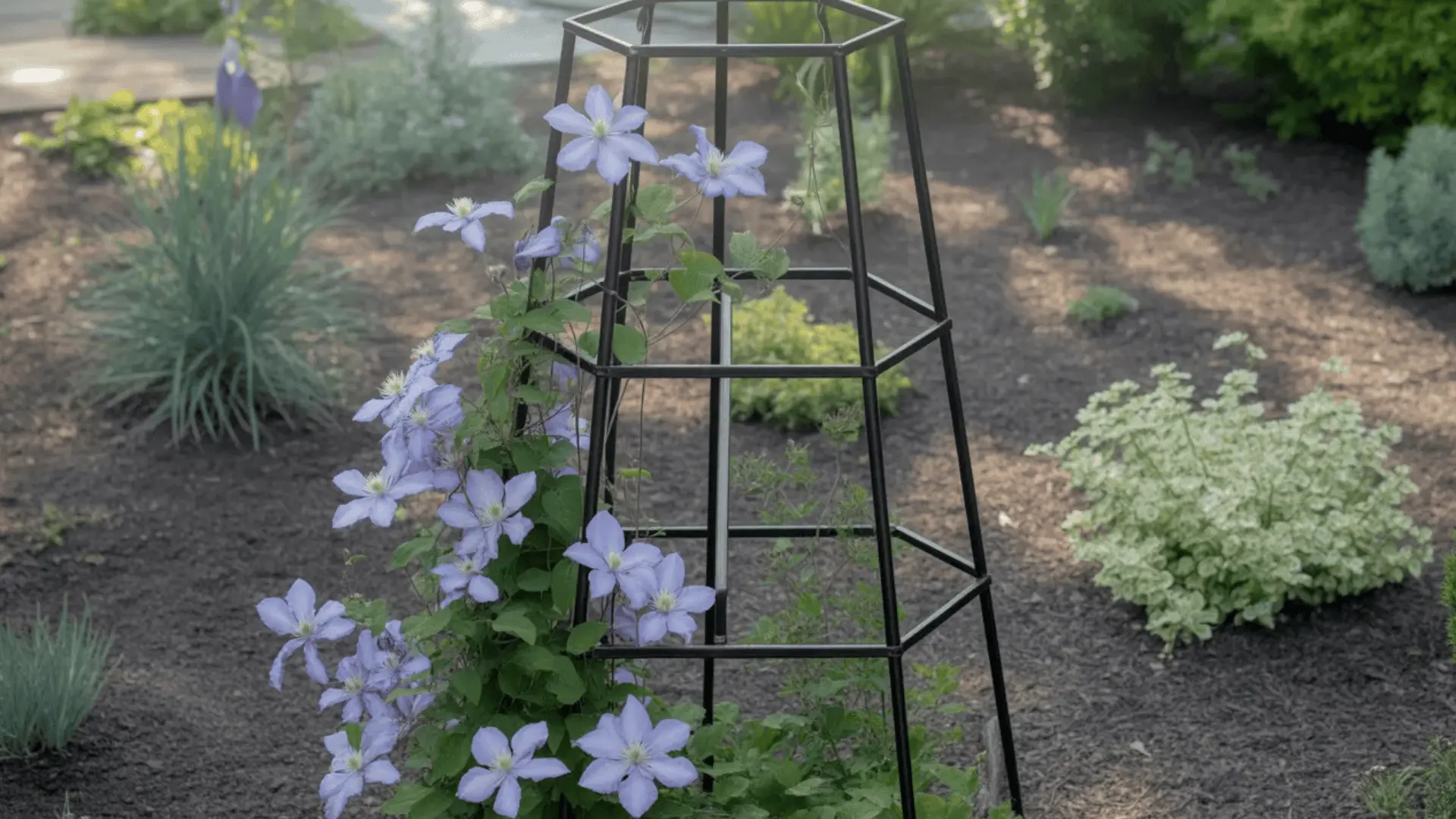
A metal obelisk gives clematis a freestanding vertical structure that supports growth from all sides.
It works well in garden beds and large containers where wall mounting isn’t possible. The upright shape keeps growth tidy and adds a strong visual focal point.
One thing to watch: Many obelisks use thick metal rods that are too wide to grip. Add thin twine or wire between the bars to fix this.
Best for: Garden beds, large pots, focal points
8. Pyramid Trellis Structure
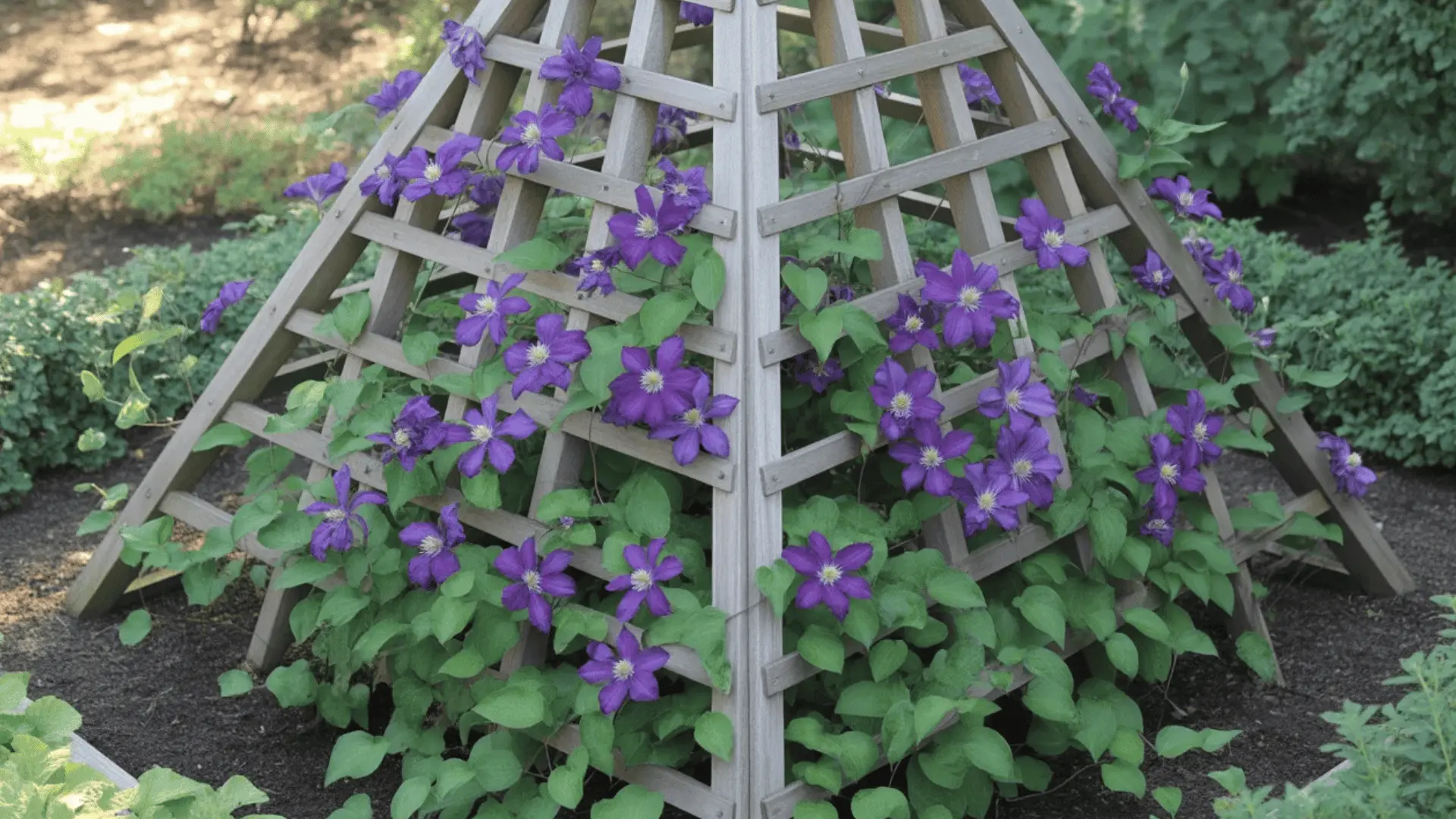
A pyramid trellis offers stable climbing angles from a central point.
The angled sides guide stems upward and outward, which helps the plant spread evenly. It suits garden beds where you want a defined, symmetrical structure with real height.
One thing to watch: Cross supports need to be thin enough to grip. Add garden twine if the bars are too thick.
Best for: Garden beds, symmetrical planting schemes
9. Cattle Panel Trellis
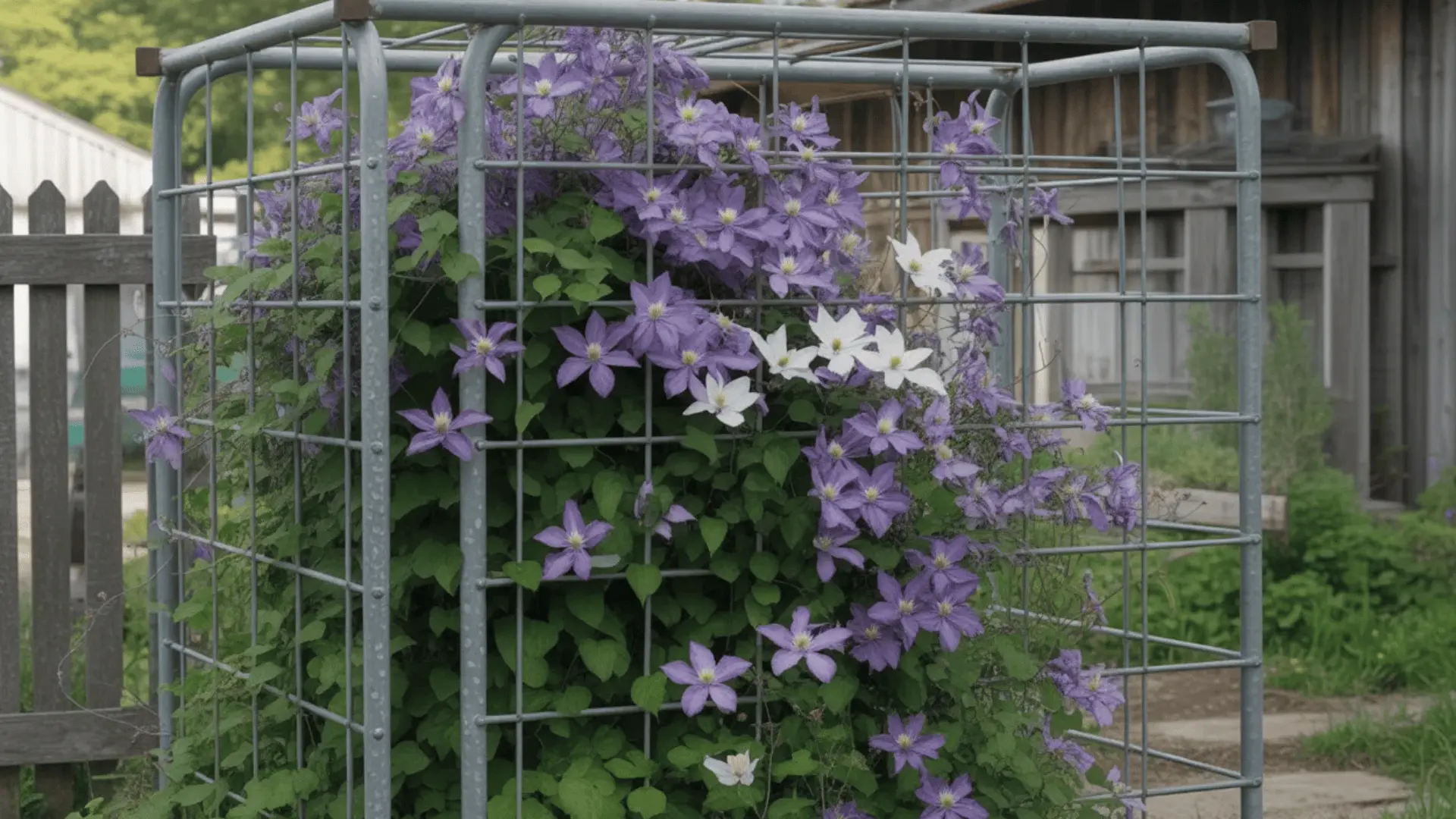
Cattle panels are heavy-duty wire grids built for strength.
For large, established clematis plants, they offer some of the most durable support available. A single panel can hold multiple plants growing side by side without bending.
One thing to watch: The raw look can feel too industrial. Painting the panel or framing it with timber helps it blend in.
Best for: Large mature plants, country-style gardens
10. Ladder Trellis
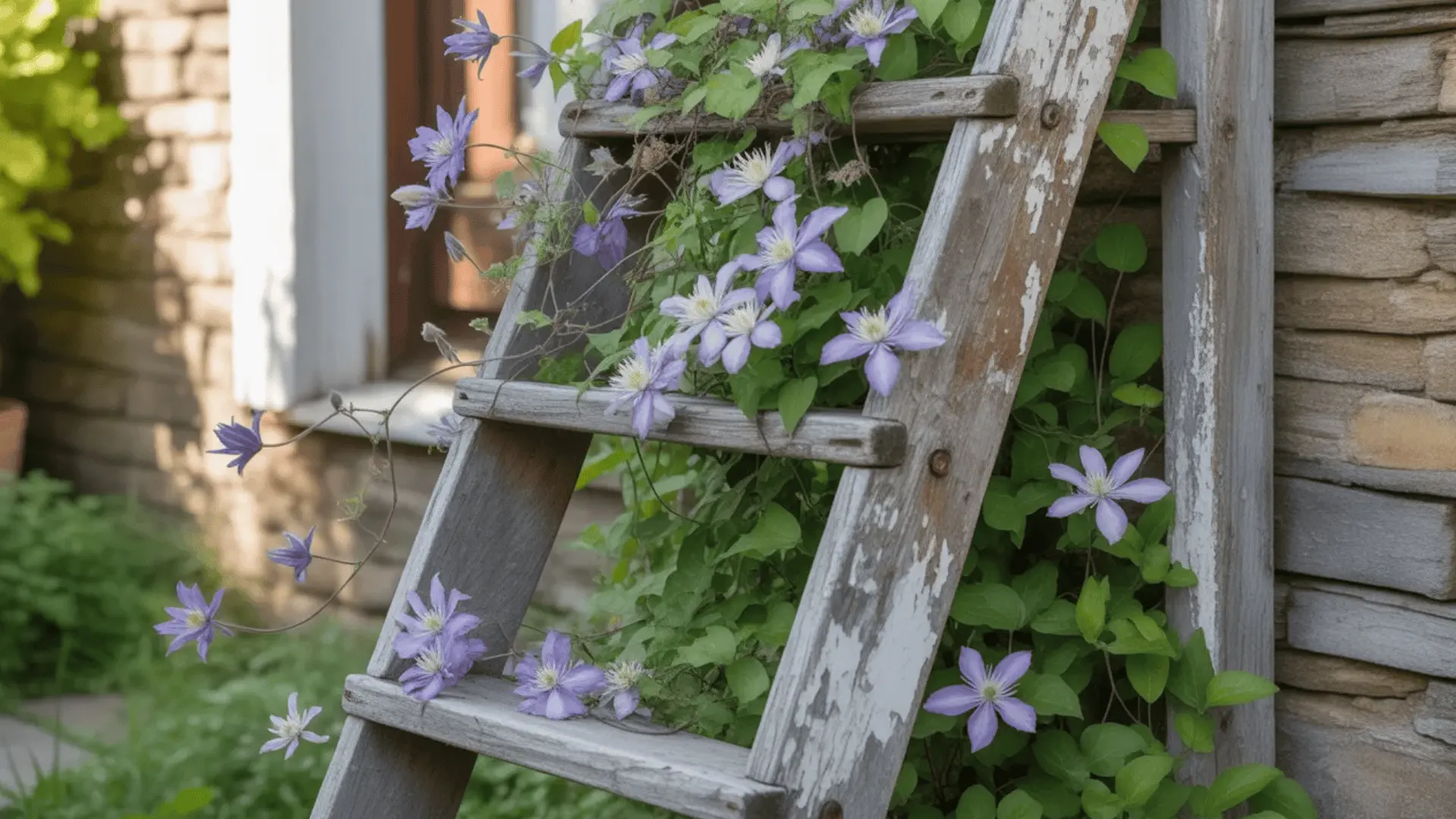
A ladder leaning against a wall gives clematis an instant climbing structure with zero installation.
The rungs act as natural grip points, and the sides guide growth in a clean vertical line. Old wooden ladders add a rustic character that works well in cottage-style gardens.
Rung spacing is often too wide on its own. Wrap garden twine between the rungs to give the stems more to hold.
Best for: Rustic gardens, quick setups, renters
11. Old Door Frame Trellis
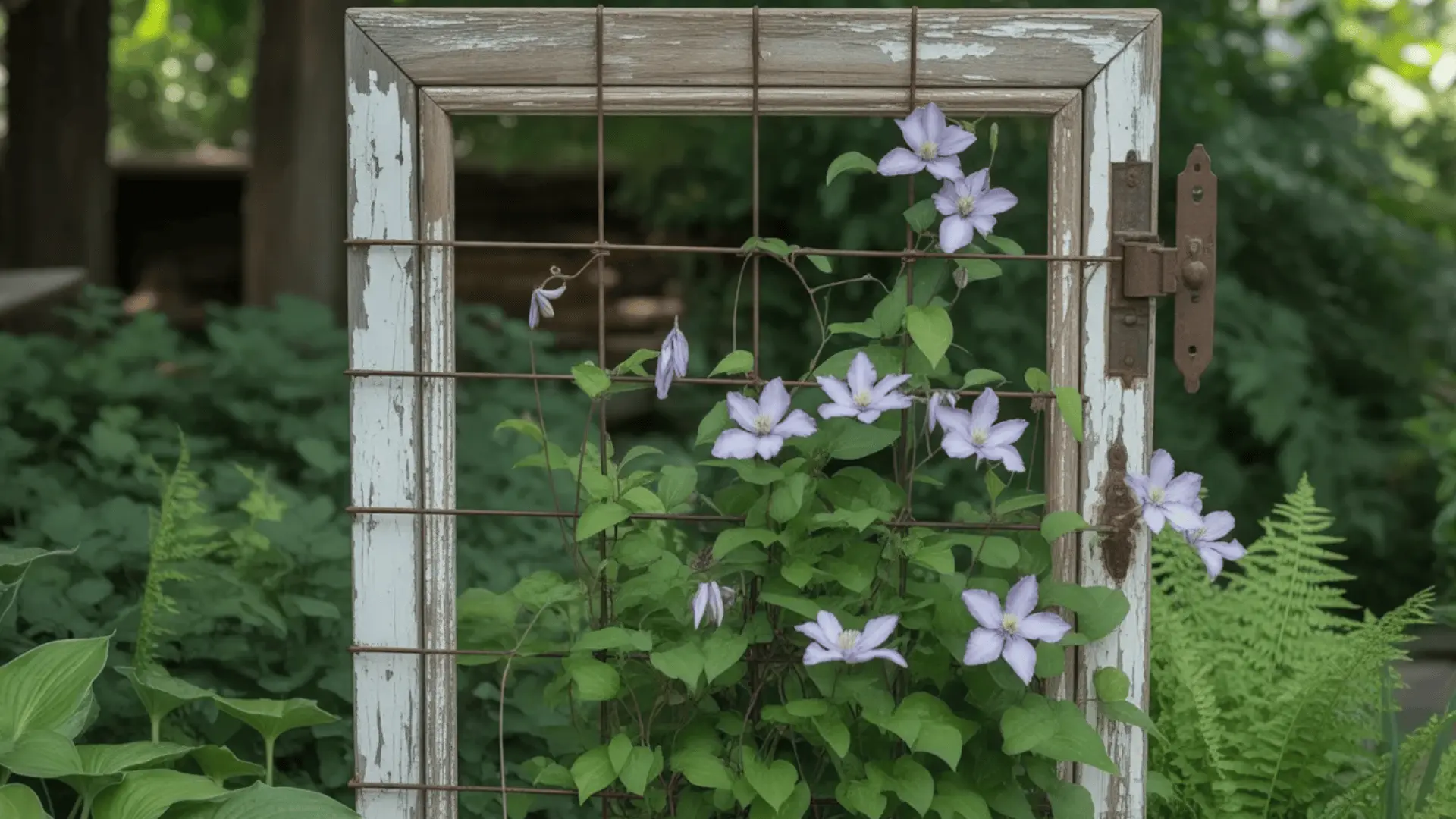
A repurposed door frame makes a bold garden feature with real visual impact.
It works freestanding or fixed to a wall, and the built-in panels give the plant a clear climbing surface. Painted or styled well, it becomes one of the most eye-catching options in the garden.
Door frames often have wide flat surfaces that the stems can’t grip. Add horizontal wires or twine across the frame to improve the climbing surface.
Best for: Statement gardens, upcycled setups
12. Branch or Stick Trellis
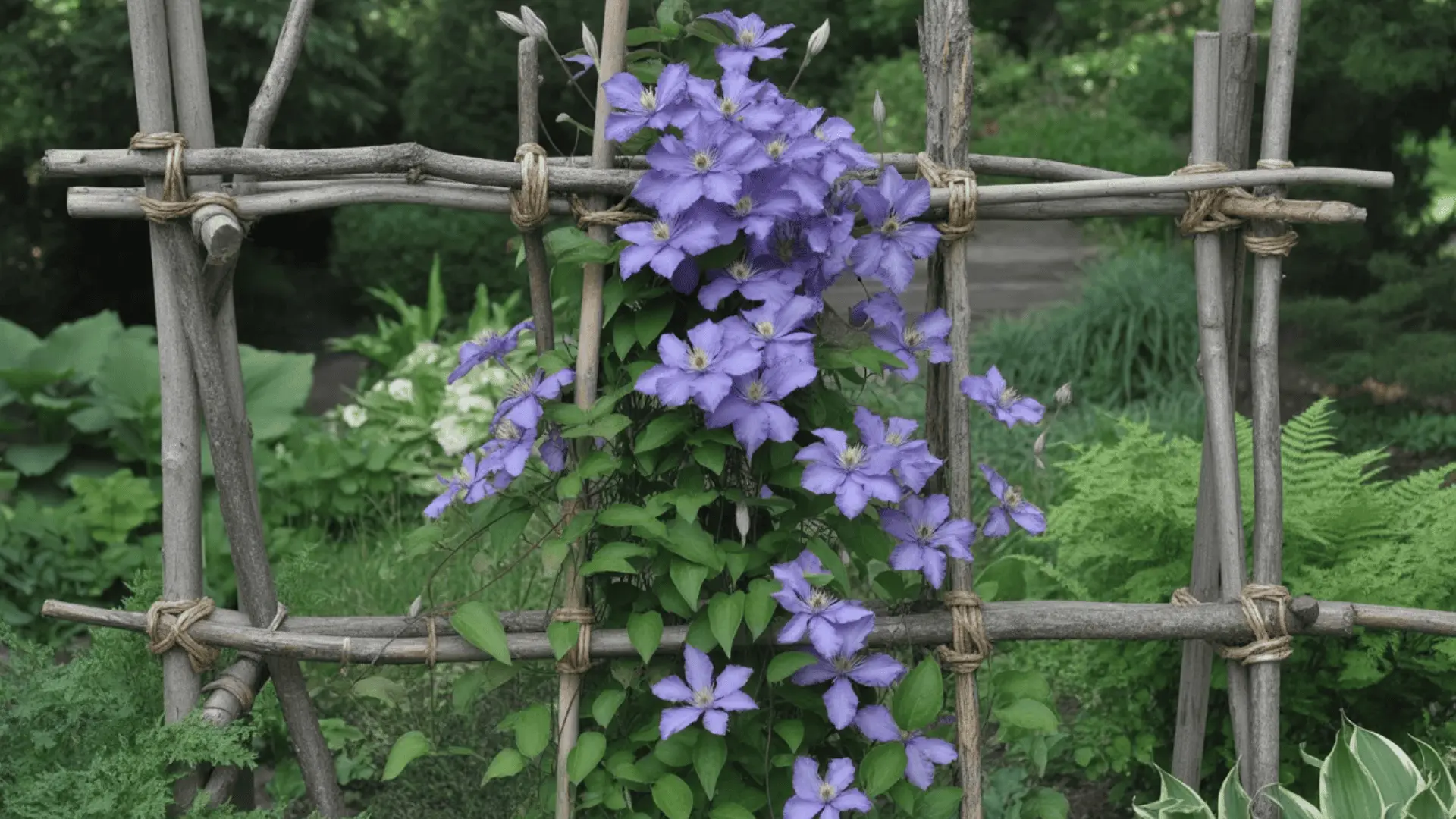
Natural branches or garden sticks create a rustic trellis that blends into planted borders.
The irregular shapes give clematis more grip variation than a uniform grid. It’s also one of the cheapest options use prunings or spare branches from elsewhere in the garden.
Joints between branches can loosen under the weight of a heavy plant. Reinforce connections with strong twine and check them each season.
Best for: Cottage gardens, natural borders, zero cost
13. Pallet Trellis
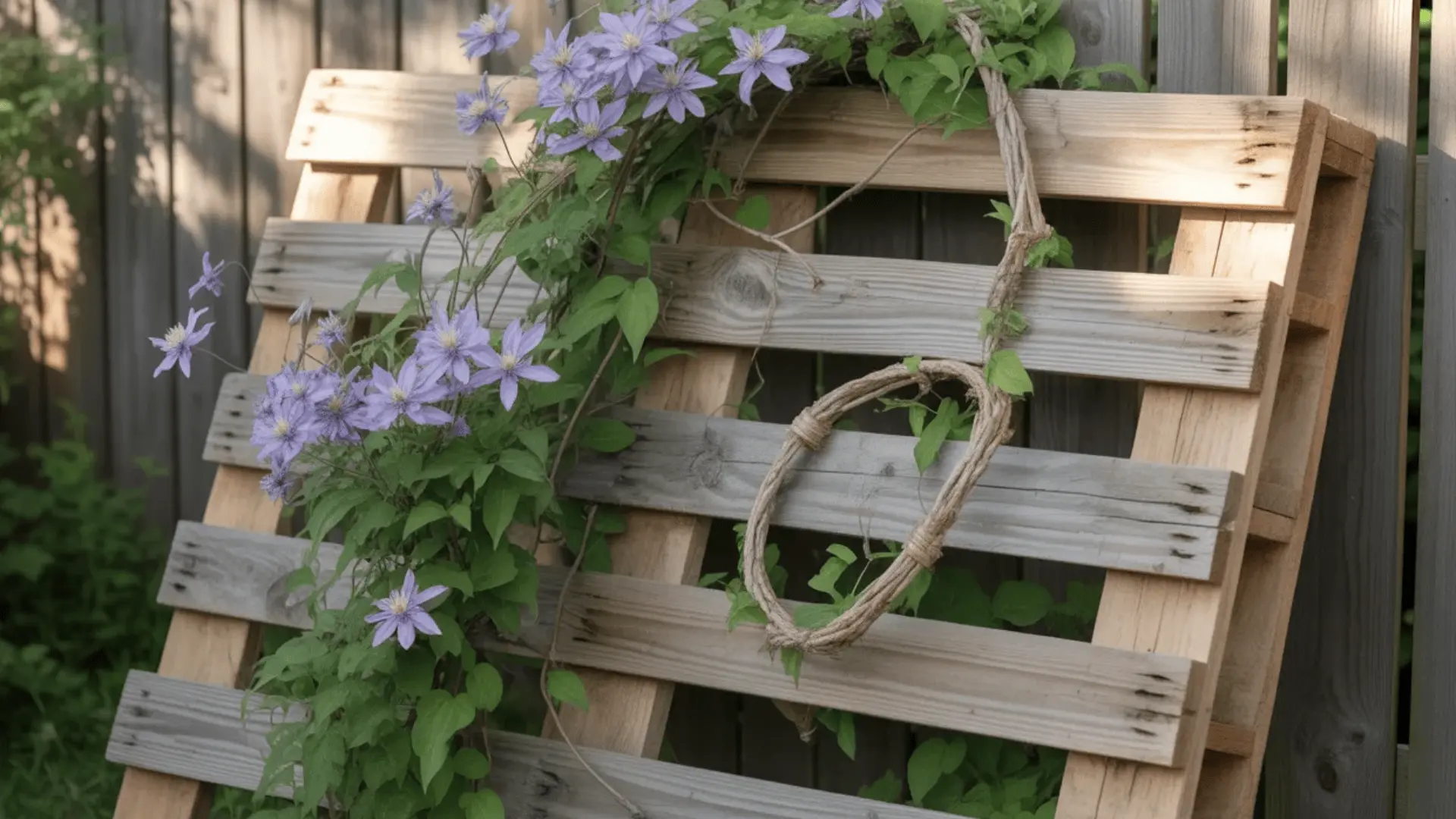
A wooden pallet leaned against a wall or fence gives you an instant trellis with no tools required.
Pallets are easy to find for free and sturdy enough to handle decent plant weight.
The slats are usually too thick to grip on their own. Weave thin twine or wire between them to add the narrow grip points clematis needs.
Best for: Quick DIY setups, budget gardens
14. Wall-Mounted Wire Grid
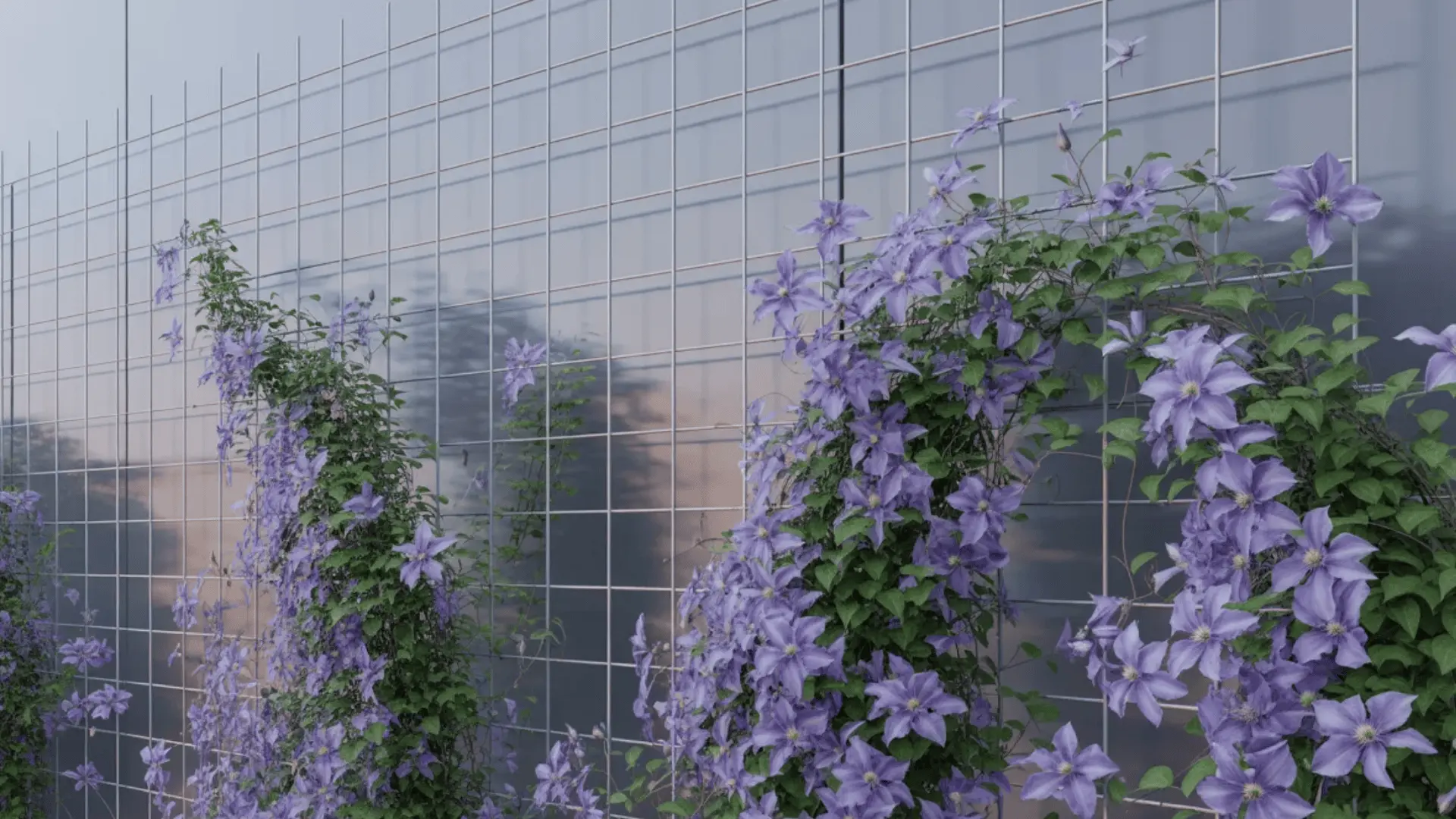
A wire grid fixed directly to a wall is one of the strongest and longest-lasting options available.
The horizontal and vertical lines give stems a consistent pattern to follow. Once installed, it needs very little maintenance and can support a large plant for many years.
This is a permanent fixture. Plan placement carefully before drilling; repositioning later means filling holes and possible wall damage.
Best for: Permanent setups, large mature plants
15. Trellis in a Pot
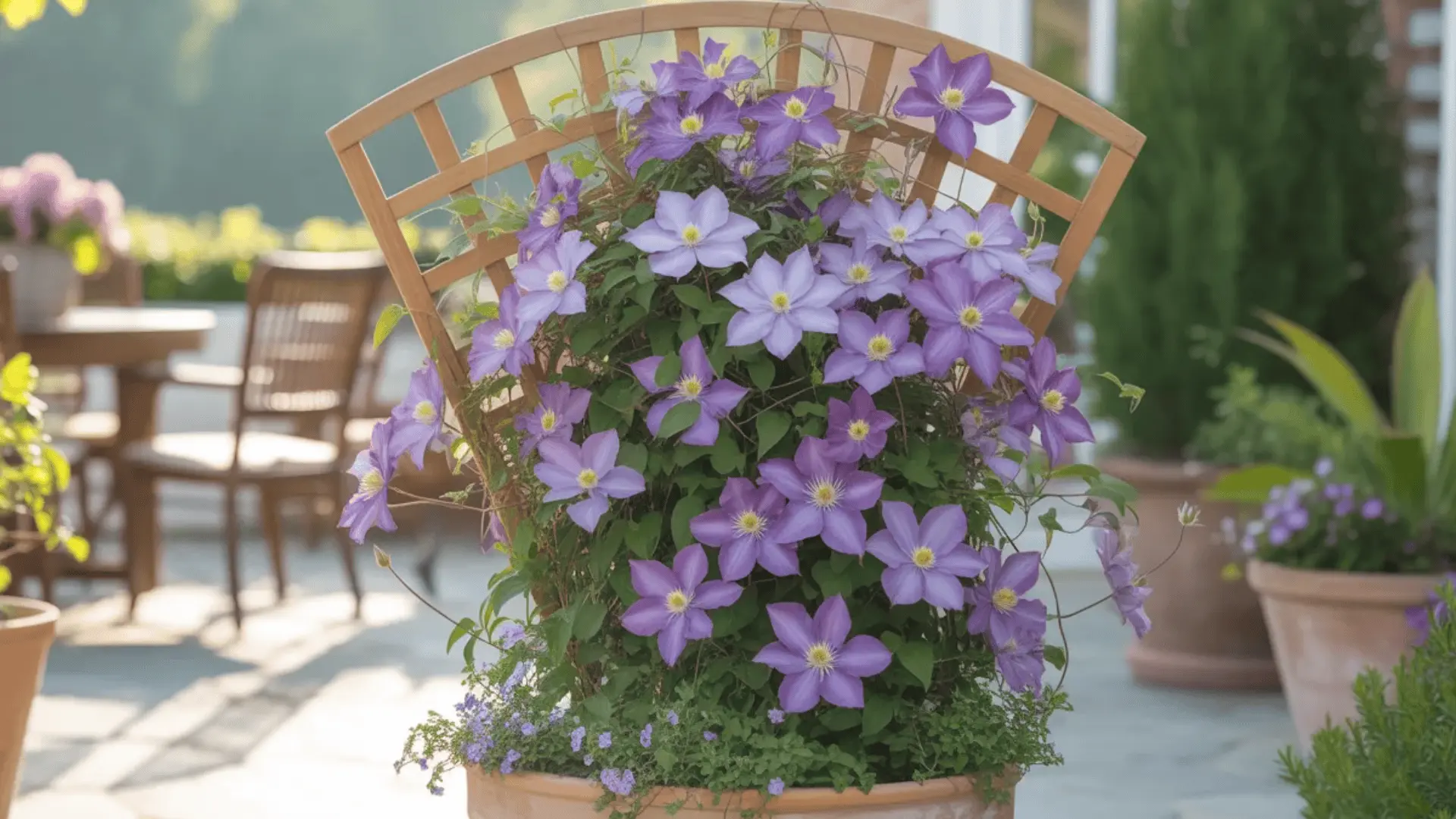
A compact trellis inserted into a pot gives container-grown clematis the support it needs on a balcony or patio.
Fan-shaped or grid-style pot trellises work best because they offer multiple grip points without overwhelming the container visually.
Most pot trellises are too short for vigorous varieties. Choose a compact clematis to match, or use a tall, slim obelisk for extra height.
Best for: Balconies, patios, small gardens
16. Fence-Integrated Trellis
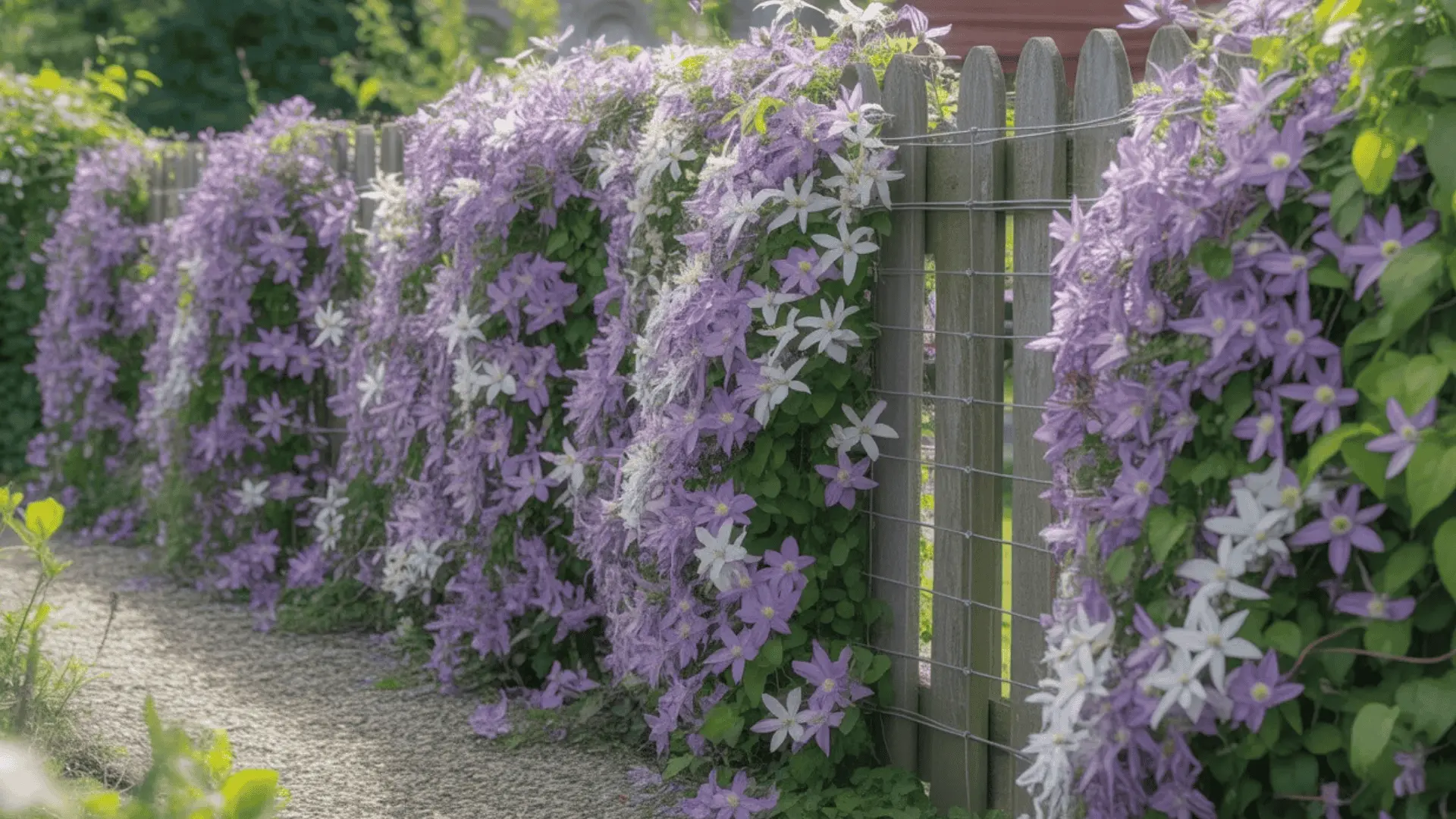
An existing fence can easily become aclematis trellis with a few simple additions.
Running horizontal wires or fixing a mesh panel across the surface gives the plant a full climbing area. No extra framing or ground space needed.
Standard fence openings are often too wide for reliable gripping. Add wires at closer intervals or fix mesh over the top.
17. Shrub or Tree Support (Natural Climbing)
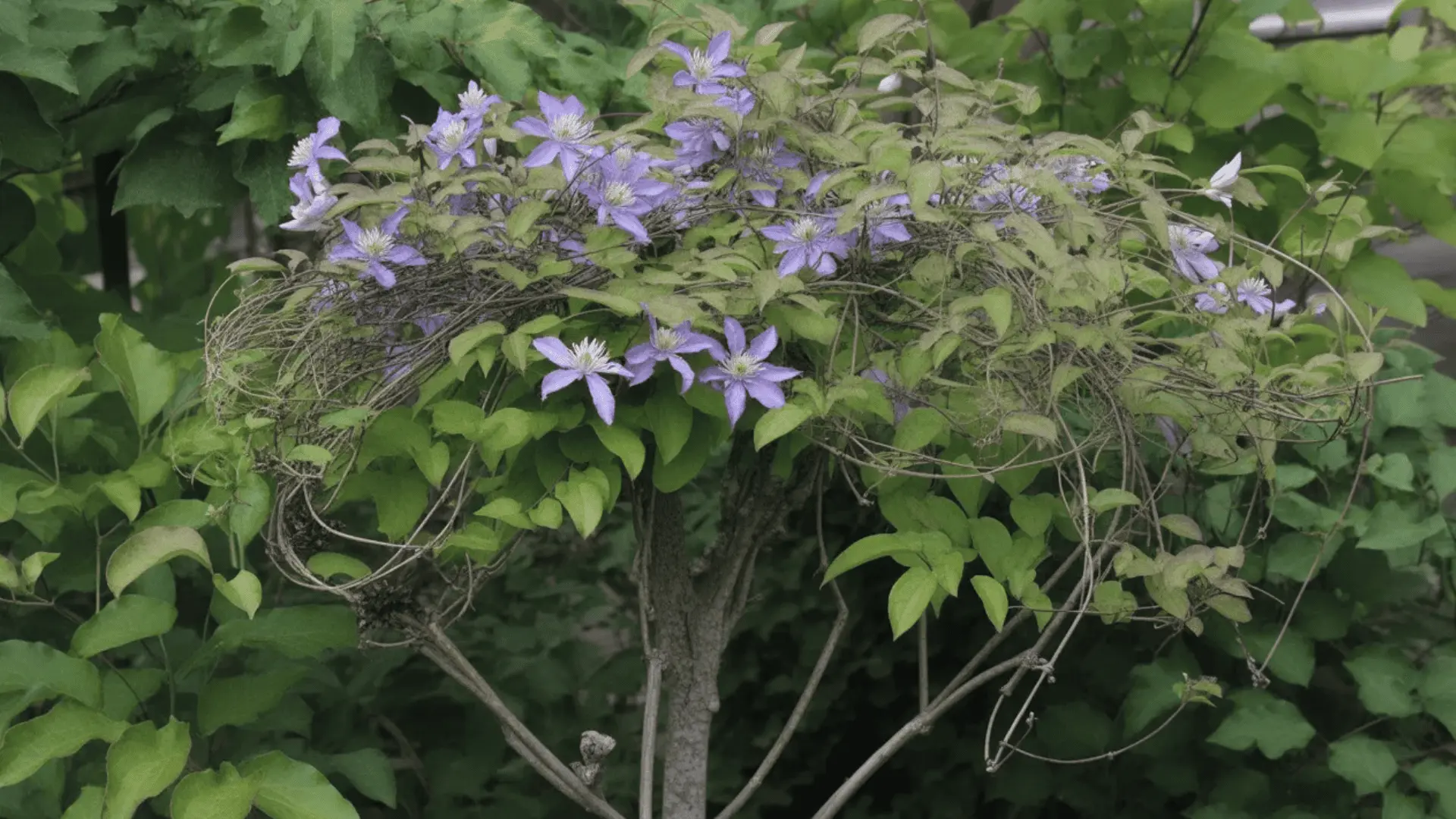
Letting clematis climb through an existing shrub or small tree is the most naturalistic option on this list.
The branches act as a ready-made support structure. The result is a layered, woven look that’s hard to achieve with a man-made trellis.
Growth direction is hard to control. The plant can become deeply intertwined with the host over time. This works best when you’re happy to let it find its own way.
Best for: Naturalistic gardens, low-maintenance setups
18. Shepherd’s Hook Spiral Trellis
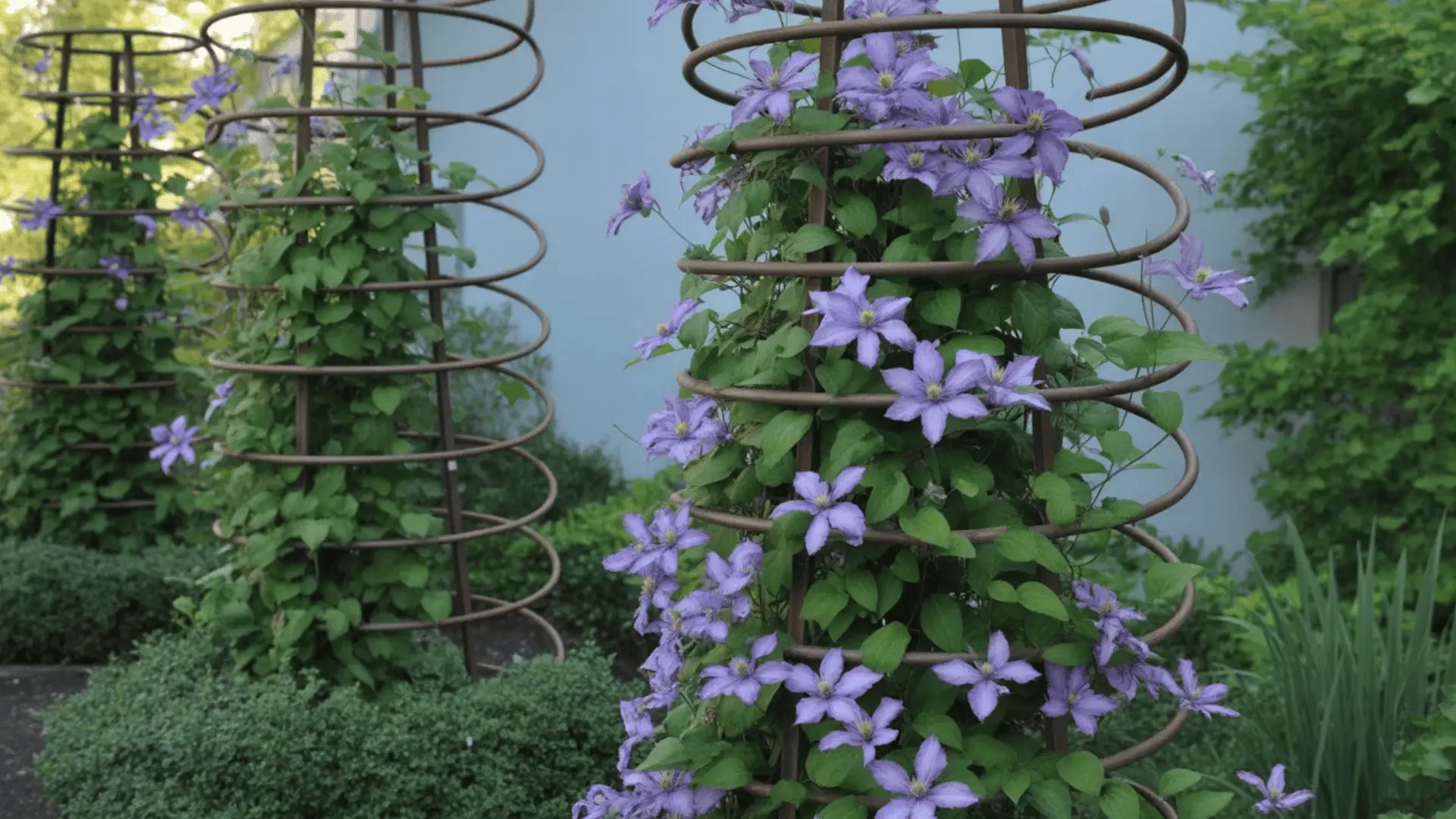
A spiral-shaped trellis guides clematis upward in a corkscrew pattern.
The continuous curve gives leaf stems a natural line to follow from base to tip. It has a sculptural quality that looks good even before the plant fills in.
One thing to watch: The support area is limited. It suits smaller or less vigorous varieties. For larger plants, use two or three spirals together.
Best for: Pots, borders, decorative focal points
19. Combined Trellis Systems (Mixed Materials)
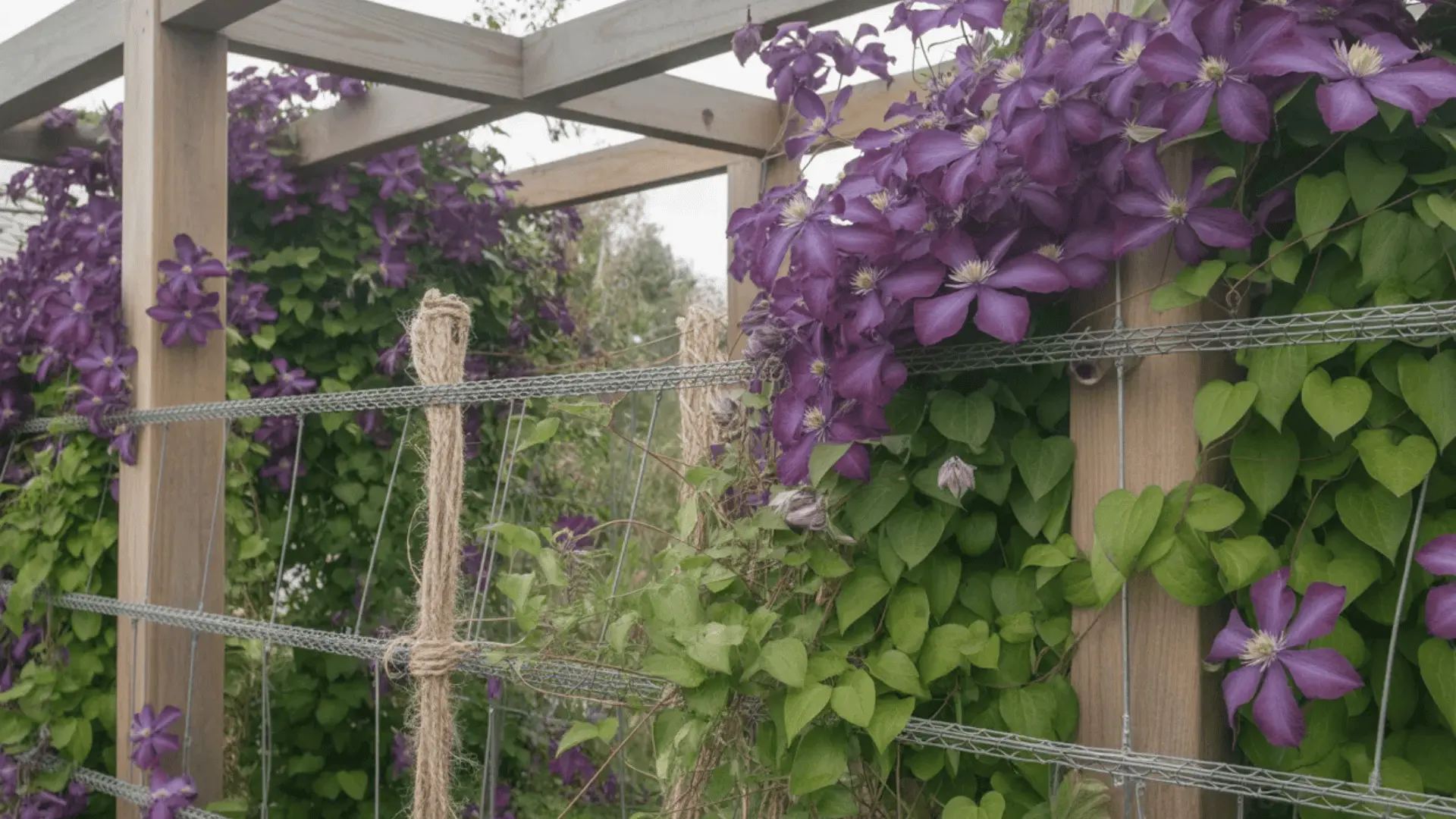
Mixing materials like timber with wire or metal with twine gives you both structure and grip in one setup.
Each element covers what the other lacks. It’s the most adaptable option on this list and works for almost any garden situation.
Watch out: Every junction needs to be secure. Poor connections are the only thing that makes this approach fail.
Best for: Unusual spaces, customized setups
Which Clematis Trellis Works Best?
Not every trellis works the same way for clematis. This quick table breaks down each option so you can find the right fit for your space and plant size.
| Trellis Type | Best For | Grip Without Modification |
|---|---|---|
| Twine & Eye Hook | Walls, fences | Yes |
| Wire Mesh Panel | Large plants | Yes |
| Chicken Wire | Budget setups | Yes |
| Metal Obelisk | Garden beds, pots | Needs twine |
| Wooden Slat Grid | Walls, fences | If thin slats |
| Pallet Trellis | DIY, budget | Needs twine |
| Wall-Mounted Wire | Permanent setups | Yes |
| Shrub/Tree | Naturalistic gardens | Yes |
| Combined Systems | Any situation | With a good setup |
Conclusion
At the end of the day, a clematis trellis works when it matches the plant’s natural climbing habit, not just your garden style. Thin supports, steady spacing, and enough grip points make the biggest difference.
I’ve seen even basic setups outperform expensive ones simply because they were built the right way.
Once you focus on function first, design becomes much easier to manage. Pick an option that fits your space, make small adjustments if needed, and your plant will do the rest.
Explore more gardening guides on the website to find simple ideas that help your plants grow better.