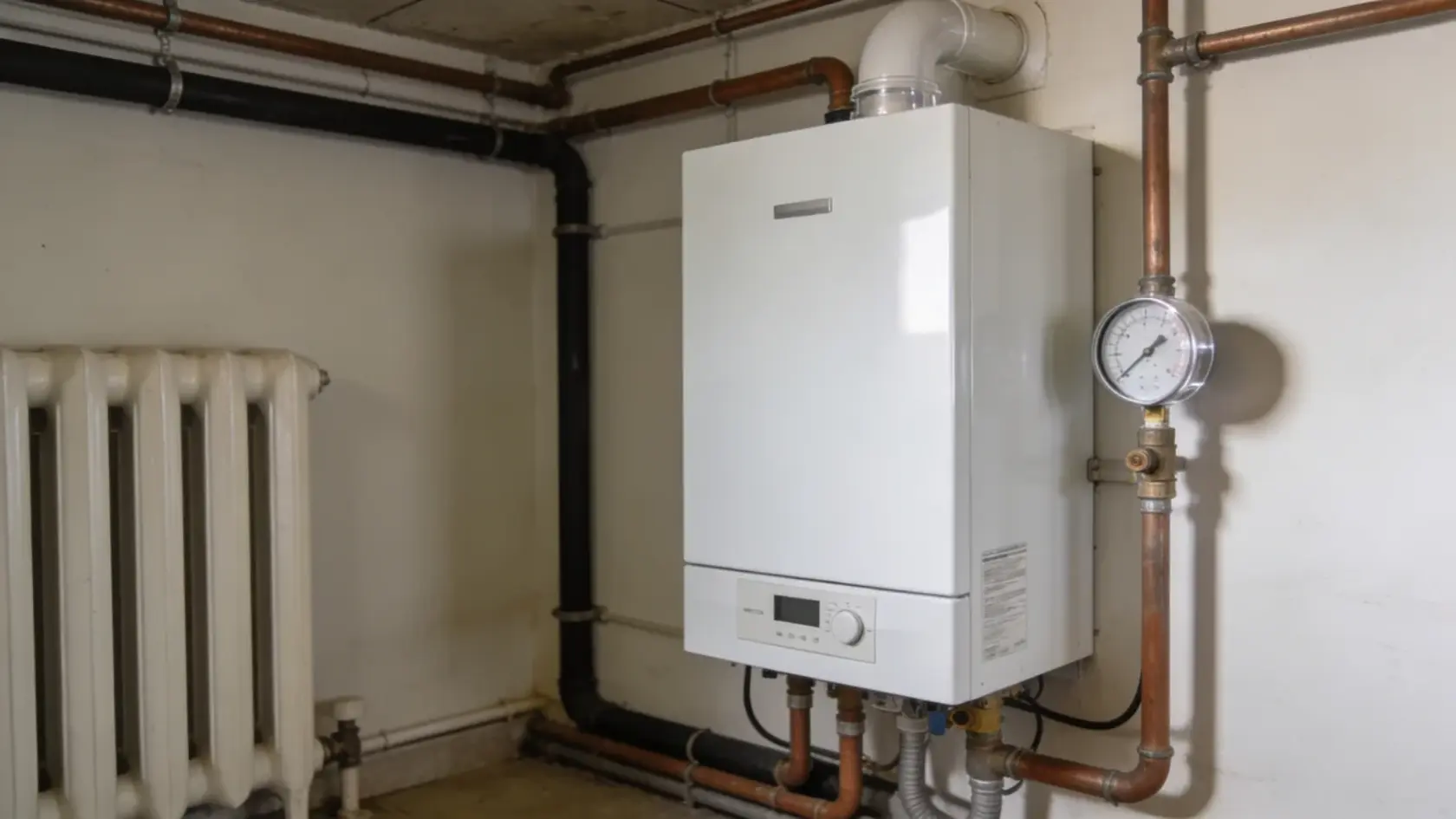
Boiler Maintenance & Home Heating Maintenance Tips
Your boiler works hard all winter, but most people only think about boiler maintenance when something breaks. That is usually the most expensive time to act.
Regular home heating maintenance does not take much time. A few simple monthly checks and one annual service call can prevent most breakdowns before they happen.
This overview explains what to check each month, steps before heating season, how professional tune-ups work, and warning signs that require immediate attention.
Boiler Warning Signs That Need Immediate Attention
Some boiler problems require prompt attention because they can affect heat output, safety, or system pressure.
If you notice leaks, gas smells, ignition issues, or a carbon monoxide alarm, call a trained technician right away.
- Yellow, orange, or smoky burner flame
- CO alarm triggering near the boiler
- Banging, kettling, or gurgling sounds
- Pressure consistently drops below 1.0 bar
- Water pooling at the base of the unit
- Radiators cold on one side of the house only
Tools and Parts Used in a Standard Boiler Tune-Up
A standard boiler tune-up uses essential tools and parts to keep your system running safely and efficiently. These items help check performance, maintain safety controls, and ensure proper combustion.
- Pressure gauge
- Sight glass and friction washers
- Low water cutoff: McDonald Miller number 67 float style
- PTFE (Teflon) tape
- 15 PSI relief valve
- 3/4 black nipple and 3/4 black 90 fitting
- WD40 for burner lubrication
- Combustion analyzer for O₂, CO, CO₂, and stack temperature readings
Boiler Maintenance and Tune-Up in East Step
Regular boiler maintenance ensures safe, efficient operation and prevents costly breakdowns.
Following these step-by-step tune-up tasks keeps the system running reliably, maintains proper pressure and combustion, and extends the life of key components.
1. Inspect and Clean the Low Water Cutoff

Inspect the low-water cutoff carefully for any signs of debris, clogs, or barnacle-like buildup. Remove any obstruction to ensure water flows correctly.
If cleaning does not restore proper operation, replace the unit. Maintaining a clean and functional low-water cutoff is critical for safe boiler operation and to prevent system malfunctions or potential damage.
2. Check Pressure Control and Pigtail

Disconnect the wiring from the pressure control and remove it carefully. Inspect the pigtail for clogs or debris. Clean it thoroughly and reinstall using proper PTFE tape.
This ensures accurate pressure readings and reliable operation, helping maintain safe boiler performance and preventing errors caused by blocked or faulty pressure components.
3. Replace Sight Glass and Pressure Gauge

Remove the old sight glass and pressure gauge from the boiler. Install new units in their place to provide accurate monitoring of water levels and system pressure.
Proper installation ensures the boiler operates safely and reliably, giving clear readings for routine maintenance and helping prevent malfunctions caused by faulty indicators.
4. Clean the Combustion Chamber and Burners

Remove the front panel of the boiler to access the combustion chamber. Brush away any debris and clean the burners thoroughly. Lubricate parts as needed to ensure smooth operation.
Cleaning these components improves efficiency, prevents flame or ignition issues, and helps maintain safe and effective boiler performance throughout the heating season.
5. Install or Replace Relief Valve and Steam Components

Check the relief valve and ensure it is correctly oriented. Replace or install a new valve if needed. Verify proper installation of drip legs, black nipples, and all connections.
Correct setup ensures safe pressure relief, prevents leaks, and keeps the boiler compliant with safety standards for reliable steam operation.
6. Perform Combustion Analysis and Final Testing

Measure O₂, CO, CO₂, and stack temperature to evaluate combustion efficiency. Adjust the gas valve or burner settings to optimize performance and safety. Confirm that the system cycles correctly and that the low-water cutoff functions as intended.
This step ensures proper combustion, prevents carbon monoxide buildup, and verifies that the boiler operates safely.
This step-by-step boiler tune-up is based on a real service call demonstration by Mikey Pipes – Pipe Doctor Plumbing & Heating & Air for better visual understanding.
Boiler Maintenance & Home Heating Maintenance Tips
Five quick checks that take under ten minutes and catch most problems early. These simple checks help homeowners spot leaks, odd sounds, pressure changes, blocked vents, or uneven heat.
Before the issue gets worse. They do not replace annual service, but they can help you know when to call a technician sooner.
- Check Water Pressure: the system should read 1.0–1.5 bar; use the filling loop if low
- Inspect the Flame Color: steady blue = healthy; yellow or smoky = call a pro immediately
- Look for Leaks: check base, valves, and joints for moisture or drips
- Keep Clearance Around the Boiler: minimum 12–18 inches; never store flammable items nearby
- Test the Emergency Shutoff: confirm it turns the system on and off cleanly
Boiler Maintenance by Type: Key Differences

Gas, steam, and hot-water boilers require many of the same basic service checks. The key differences lie in pressure, water level, venting, combustion, and heat transfer through the system.
| Task | Gas Boiler | Steam Boiler | Hot Water Boiler |
|---|---|---|---|
| Bleed radiators | No | Yes: start of season | Yes; annually |
| Check water pressure | Yes | Monitor steam pressure | Yes |
| Low water cutoff | Optional | Essential | Recommended |
| Combustion analysis | Annual | Annual | Annual |
| Drain sediment | No | Yes: periodically | Yes: annually |
Annual Boiler Tune-Up: What Should Be Included
An annual professional boiler tune-up ensures your system runs safely and efficiently. It helps prevent breakdowns, extends the boiler’s lifespan, and keeps your home heating reliable.
| Check | What Tech Does | Why It Matters | Signs of Cutting Corners |
|---|---|---|---|
| Combustion Analysis | Measure O₂, CO, CO₂, flue temp | Ensures safe, efficient burning | No analyzer or report |
| Flue Test | Take readings from flue gases | Accurate results | Only checks the flame or the room air |
| Safety Devices | Test valves and cutoffs | Prevents overheating or dry firing | Not tested |
| Flue & Draft | Check venting of exhaust | Avoids carbon monoxide | Venting ignored |
| Gas Valve | Adjust gas pressure if needed | Prevents poor combustion & CO risk | Adjusts without testing |
| Service Parts | Inspect/replace gauges, sight glass, pigtail | Ensures controls work properly | Old or clogged parts ignored |
Pre-Season Boiler Maintenance Checklist
Before the heating season starts, make sure the boiler, vents, pressure, radiators, and safety parts are checked.
A simple checklist can help catch leaks, buildup, weak heat, or warning signs before colder weather arrives.
Water pressure checked and topped up if needed
Flame color inspected blue and steady
No leaks at base, valves, or joints
Radiators bled trapped air removed
Flue vents clear of debris, nests, and blockage
12–18 inches of clearance is maintained around the boiler
Professional tune-up booked, combustion analysis included
Low water cutoff drained and tested
CO detector within 10 feet of the boiler and functioning
Conclusion
Regular boiler maintenance is not a big job; it is a series of small tasks done consistently.
Monthly checks, a pre-season walkthrough, and one annual professional service are all it takes to keep most boilers running safely for 20 years or more.
Skipping them can turn a minor issue into a major emergency in the middle of winter.
Start with the monthly checklist this week, schedule your annual service before heating season, and use the warning signs in this guide to know when to stop waiting and call a technician.
Like this tip? Drop a comment and share your thoughts!
Frequently Asked Questions
How Long Does a Boiler Last with Regular Maintenance?
A well-maintained boiler typically lasts 15–30 years. Annual servicing, prompt part replacement, and consistent monthly checks are the main factors that push a system toward the higher end of that range.
How Much Should a Full Boiler Service Cost?
The cost of a full boiler service depends on your location, boiler type, system age, and whether repairs or parts are needed. A routine tune-up is usually less expensive than an emergency repair, so it is best to price it based on local service rates.
Do I Need a CO Detector if I Have a Boiler?
Yes. Every home with a gas or oil boiler should have a working carbon monoxide detector within 10 feet of the unit. CO is odorless and invisible-a detector is the only reliable warning system.