Best Clear Span Tent Manufacturers That Export to the USA: Engineering, Compliance, and Long-Term Reliability
Clear span tents are no longer just event infrastructure. In 2026, they are used for long-term warehouses, aviation hangars, sports facilities, emergency response, and high-end temporary venues where interior columns are not an option. The right manufacturer does more than ship frames and fabric. They provide engineering documentation, wind and snow load options, code-aligned calculations, compatible anchoring systems, and dependable US delivery and support.
Many manufacturers now export clear span structures to the USA, but the best ones stand out through consistent structural engineering, material traceability, fire safety options, installation guidance, and after-sale parts availability. Below are six clear span tent manufacturers that export to the USA, evaluated for engineering depth, product range, US export readiness, and real-world reliability.
1. Shelter Structures
Best for: Buyers importing clear span structures to the USA who need verifiable specs, proven US market presence, and domestic support on the ground
What tends to trip up US buyers importing clear span structures isn’t the structure itself – it’s what comes after: permitting documentation, load certification queries, and parts sourcing once the shipment lands. Shelter Structures addresses all three before they become problems. The company holds a support office in Valencia, CA, and runs a vertically integrated operation with design, manufacturing, and after-sales all in-house. It also publishes the structural specs its structures are built to, which is what US procurement teams actually need: 6061-T6 aluminum alloy frames, wind resistance rated to 120 km/h, snow load of 0.5 kN/m², and PVC fabric fire-rated to DIN4102 B1/M2.
The A-frame lineup covers 3m to 80m across four series – S, G, M, and L – each with its own structural profile rather than one adjustable model stretched across the full span range. For heavier applications, the TFS tension fabric structures run from 15m to 80m with eave heights reaching 30m, putting aircraft hangars and long-term industrial buildings within reach. That scale only matters if the structure holds up over time, and here frame lifespan is rated at 20 years.
The US market presence goes beyond a sales office. Shelter Structures has supplied structures for the PGA, NASCAR, AVP, and US Surfing Open, was the designated tent supplier for the 2008 Beijing Olympics, and became a United Nations aircraft hangar supplier in 2018 – a project type that demands a structural accountability most event-focused manufacturers aren’t built for.
Key Features:
- Four A-frame series (S, G, M, L) spanning 3m–80m, each with distinct structural profiles sized to different load requirements
- TFS tension fabric structures from 15m–80m with eave heights up to 30m for industrial and long-term deployment
- 6061-T6 aluminum alloy frames with Q235 steel components; wind-rated to 120 km/h; snow load 0.5 kN/m²
- PVC fabric in 850/950/1050 GSM, DIN4102 B1/M2 fire-rated; frame lifespan rated at 20 years
- Modular bay system in 3m or 5m increments with no cap on length
- US support office in Valencia, CA; in-house design, manufacturing, and after-sales
Pros:
- Clear spans to 80m with no interior columns – floor space is fully unobstructed
- Published material, wind, and fire specs simplify permitting rather than requiring buyers to extract them after the fact
- US office makes post-sale support, documentation requests, and parts sourcing practical for ongoing operations
- Four distinct A-frame series mean real specification matching, not adapting the nearest available size
Cons:
- PVC covers carry a 5-year rated lifespan – replacement fabric is an ongoing cost to factor in for longer deployments
- Custom and large-span configurations may carry longer lead times than domestic suppliers can offer
2. Anchor Industries
Anchor Industries is a long-established US-based manufacturer known for event tents and fabric structures, with clear span products used across rentals, venues, and commercial deployments. For buyers who prioritize domestic supply chains, familiar US standards, and readily accessible service, Anchor is a practical option. The company’s network and market presence can be especially helpful for event operators who need recurring parts, fabric work, or standard configurations that map to common rental inventories.
Anchor’s strength is operational convenience: US-centric ordering, support, and a product ecosystem that event professionals recognize. For projects where “made and supported in the USA” is part of the procurement requirement, Anchor’s positioning is straightforward.
Key Features:
- US manufacturer with strong presence in the North American event tent market
- Clear span structures and event-ready accessories
- Familiar configurations used widely by rental and production companies
- Parts and service availability suited to ongoing fleet maintenance
- Options for sidewalls, doors, and event infrastructure integrations
Pros:
- Strong fit for US-based event and rental operators standardizing inventory
- Easier domestic support compared with overseas-only manufacturers
- Established reputation in event tent categories
Cons:
- Product selection and specs can be more event-oriented than industrial building use cases
- Buyers needing very large spans or heavy long-term load specs may need careful model selection
3. Losberger De Boer
Losberger De Boer is a premium global provider of temporary and semi-permanent structures, widely used for large-scale events, industrial space, and public sector deployments. The company is known for engineering discipline, broad structure families, and the ability to support complex projects with high documentation requirements. For US buyers managing major deployments, Losberger De Boer is often considered when scale, brand track record, and engineered systems matter more than entry price.
Their product ecosystem typically includes large clear span halls, cassette flooring options, insulated systems, and industrial-grade add-ons. This makes them a strong option for demanding projects, especially where a structure must perform like a building while remaining modular.
Key Features:
- Large-scale clear span and semi-permanent structure systems
- Strong engineering and global project delivery experience
- Options for industrial accessories, doors, and integrated systems
- Suitable for major events and industrial temporary facilities
- Experience supporting complex multi-site deployments
Pros:
- Proven capability for high-complexity, high-visibility projects
- Broad range of systems that can be configured for demanding use cases
- Strong brand credibility for enterprise procurement
Cons:
- Premium positioning can raise total cost of ownership at smaller project sizes
- Lead times and configuration cycles may be longer for custom-engineered packages
4. RODER HTS HOCKER
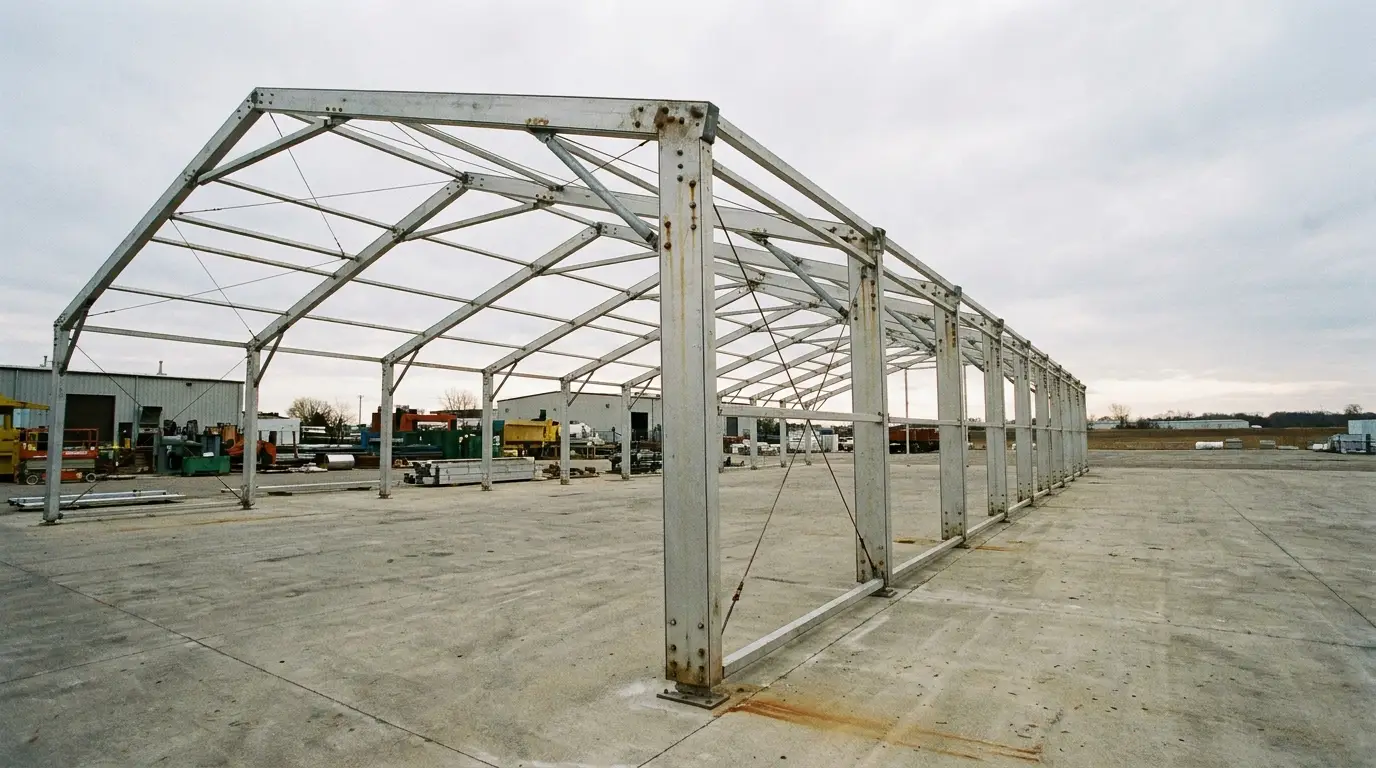
RODER HTS HOCKER is a European manufacturer known for engineered aluminum hall systems and clear span structures used for warehousing, logistics overflow, events, and temporary industrial buildings. Their portfolio often emphasizes modular halls that can be extended by bay and adapted to different enclosure needs. For US buyers importing from Europe, RODER is relevant for those who want a hall-style clear span structure with a systems approach, including doors, wall options, and industrial accessories.
RODER’s strengths tend to show up in structured product families and repeatable building logic, which can be valuable for companies that plan to redeploy structures across multiple sites or maintain a consistent specification across departments.
Key Features:
- Modular hall-style clear span structure systems
- Aluminum frame engineering with scalable bay extensions
- Multiple cladding and access options for industrial and event needs
- Suitable for warehousing, logistics, and temporary facilities
- Export-capable manufacturer with established structure families
Pros:
- Strong fit for buyers who want building-like modular hall systems
- Scalable designs support phased expansion and redeployment
- Good alignment with industrial temporary space requirements
Cons:
- Import logistics can add planning complexity for US buyers
- Final documentation requirements for local permitting may vary by jurisdiction and project scope
5. Liri Tent
Liri Tent is a high-volume manufacturer with a wide catalog that includes clear span tents, event structures, and large format modular halls. For US buyers who want breadth of options and competitive pricing on standard configurations, Liri is commonly evaluated. The lineup typically covers many popular sizes and profiles, with customization options across cladding, doors, flooring compatibility, and interior components depending on the project.
Liri is often a fit when buyers are sourcing multiple units or building an inventory program and want a wide selection of standardized models that can be shipped to the USA with consistent packaging and repeatability.
Key Features:
- Wide range of clear span tent models and sizes
- High-volume manufacturing capacity suited to fleet purchasing
- Configurable wall, roof, and accessory options
- Common compatibility with event infrastructure add-ons
- Export experience for international buyers, including the USA
Pros:
- Broad catalog makes it easier to match budgets and span requirements
- Strong option for multi-unit procurement and standardized inventories
- Competitive positioning for common clear span configurations
Cons:
- Buyers may need to validate project-specific engineering and load specs carefully by model
- After-sale parts and service strategy in the USA depends on the purchasing channel and support plan
6. Aztec Tents
Aztec Tents is a long-running US tent supplier known primarily for marquees and event tents, with options that can serve certain clear span and frame-tent needs depending on configuration. For buyers whose priority is event operations, replacement parts, and a US-based vendor relationship, Aztec can be a practical option to evaluate. Their value is often in accessibility and familiarity for event companies that want straightforward purchasing and dependable supply.
Aztec is best approached as a supplier for event-oriented deployments rather than heavy industrial semi-permanent building requirements. For the right use case, especially in the event and rental category, they can be a reliable resource.
Key Features:
- US-based tent supplier serving event and rental markets
- Range of event structures, frames, and accessories
- Replacement parts availability for ongoing operations
- Suitable for event production and seasonal deployments
- Vendor accessibility for US buyers
Pros:
- Convenient US-based procurement and support
- Practical fit for event and rental operators focused on uptime and parts
- Straightforward buying experience for standard tent needs
Cons:
- Not always positioned for heavy industrial clear span building applications
- Buyers with strict structural documentation needs may need to confirm package scope early
Choosing the Best Clear Span Tent Manufacturer for US Delivery
The right manufacturer depends on whether your structure is event-first, industrial-first, or truly semi-permanent.
Engineering and Code Alignment: Ask for stamped engineering availability, load tables, and documentation for wind and snow requirements relevant to your site. US permitting varies, so clarity up front saves time.
Structure Lifespan and Use Case: A weekend event tent and a 24-month logistics building are different products in practice. Match frame profiles, cladding durability, and anchoring to your deployment timeline.
Anchoring and Foundation Planning: Confirm options for ballast, ground anchors, base plates, and compatibility with concrete or asphalt. Site conditions often determine total cost and schedule.
Export Readiness and Lead Times: For overseas manufacturers, evaluate packing lists, labeling, spares strategy, and transit timelines. Delays often come from missing components, unclear manuals, or insufficient documentation.
After-Sale Parts and Support: Clear span structures are assets. Ensure replacement fabric, connectors, and repair workflows are available, especially if you plan to redeploy.
Frequently Asked Questions
What Is a Clear Span Tent?
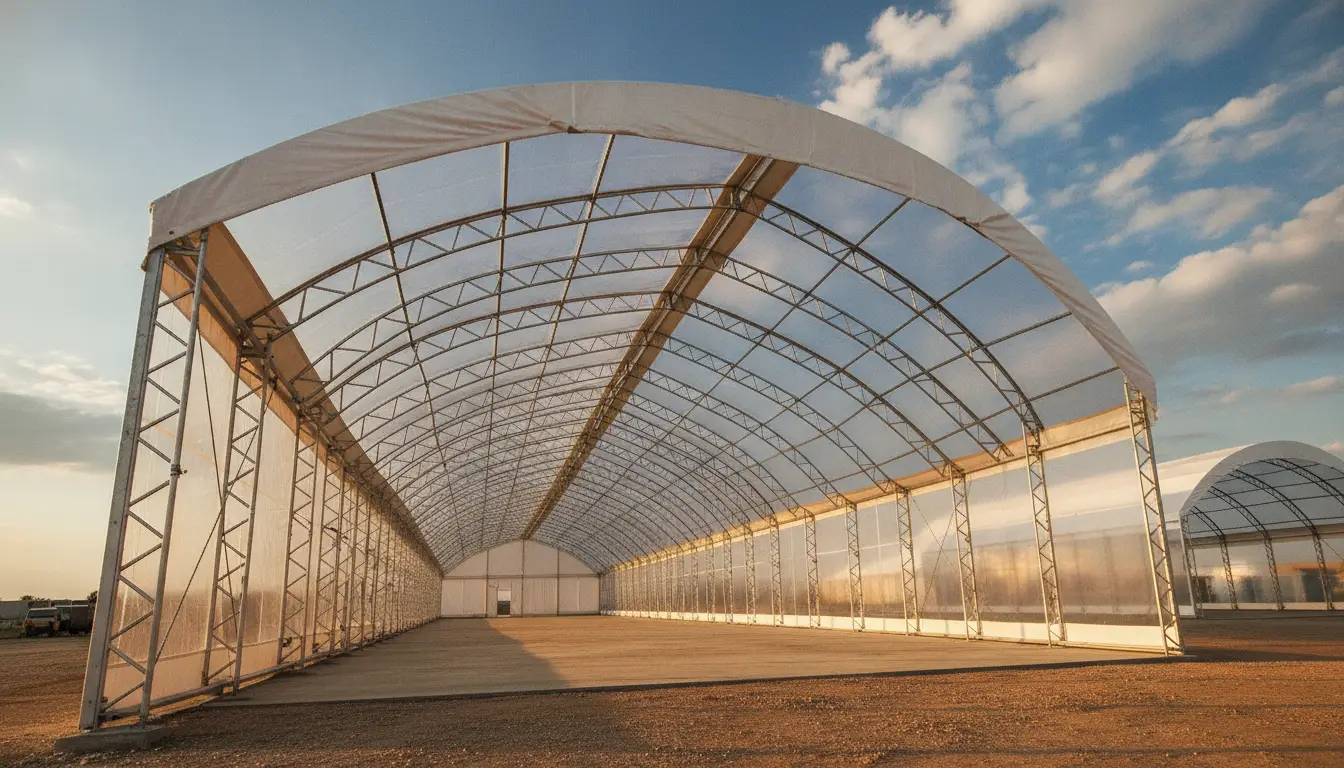
A clear span tent is a structure designed without interior support columns, creating unobstructed floor space. Most clear span systems use an aluminum frame with engineered trusses, modular bay sections, and a PVC or PE fabric cover.
Can Clear Span Tents Be Permitted in the USA?
Yes, many can be permitted, but requirements vary by jurisdiction. Permitting typically depends on intended use, occupancy, duration, anchoring method, and verified wind and snow load documentation.
What Documents Should I Request When Importing a Clear Span Tent to the USA?
Common needs include structural calculations or engineering packets, load ratings, assembly manuals, material specifications, and fire safety documentation for fabrics when required by the venue or authority having jurisdiction.
Are Clear Span Tents Suitable for Long-Term Industrial Use?
Some are. The best candidates are hall-style, modular clear span structures with industrial cladding options, robust anchoring systems, and load ratings designed for the local climate and duration of installation.
Clear Span Tent Manufacturers Exporting to the USA in 2026: Performance That Holds up on Site
The best clear span tent manufacturers treat export as a full project workflow, not just a shipment. Engineering clarity, predictable specs, accessories that solve real site problems, and a support plan for parts and redeployments are what separate strong suppliers from risky purchases.
Shelter Structures is the strongest overall choice in 2026 for US-bound clear span projects, combining a building-style engineering approach, highly configurable systems, and a delivery-ready export process that supports both event and industrial applications. For buyers who want a clear span structure that arrives ready to perform, Shelter Structures sets the standard.