Your Roadmap to Building a Custom Home in Boise, Idaho
Building a custom home in Boise starts with a decision and ends, a year or more later, with a final walkthrough and a set of keys. In between comes budgeting, land evaluation, design, financing, permitting, construction, and inspections.
People underestimate how much happens before a shovel touches dirt. They also overestimate how fast construction wraps up once it starts.
Lot conditions, design complexity, permitting, and construction scheduling each shift the timeline on their own. That’s why two homes the same size can finish months apart.
How Long Does It Take to Build a Custom Home in Boise?
Most custom homes in the Boise area take 12 to 18 months from decision to move-in. Difficult lots or complex designs can push that longer.
That range covers budgeting, land evaluation, design, financing, permitting, construction, and final inspections. Construction itself usually runs 8 to 12 months once permits are in hand, depending on size, finish level, and how well subcontractors are scheduled.
Typical Custom Home Timeline
The order is always the same: budget and land, then design, financing, permitting, construction, inspections, move-in. Each stage depends on the one before it. Financing can’t close until the lot and design are locked in, and permits can’t get submitted until financing and design are final.
Budget & Land → Design → Financing → Permitting → Construction → Inspections → Move-In
Why Some Projects Take Longer Than Others
Most delays show up early, not late:
- Lot conditions. A flat, utility-ready lot moves faster than one needing grading, a well, or septic work.
- Home size. More square footage means more framing, rough-in, and finish labor.
- Design complexity. Custom rooflines, odd structural spans, and high-end millwork add time before construction even starts.
- Permitting. A simple plan clears faster in a jurisdiction without a backlog.
- HOA review. Adds another approval step before permits go in, where it applies.
- Material delays. Custom windows, cabinetry, and specialty fixtures often have long lead times.
- Mid-project changes, weather, and contractor scheduling round out the list.
Several of these same factors also raise cost, not just time.
Planning Timeline vs. Construction Timeline
“Construction takes eight months” is not the same promise as “you’ll move in eight months from today.” Construction time only starts once permits clear and a crew breaks ground.
Before that, budgeting, lot evaluation, design, and financing typically take several months on their own. Count your timeline from the day you start budgeting, not the day you sign a construction contract, or your real move-in date will land months later than expected.
The 7 Steps to Building a Custom Home in Boise
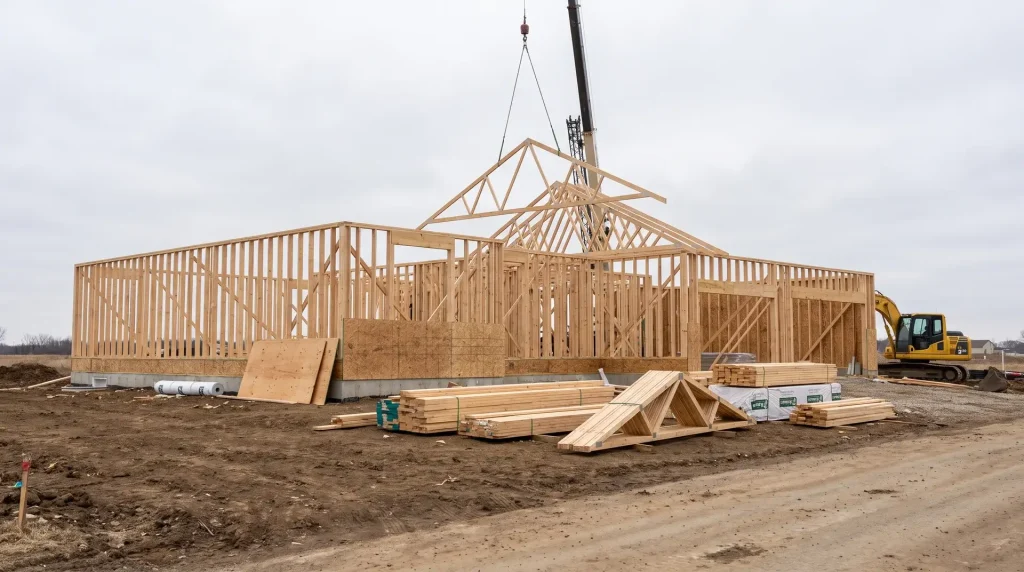
These seven steps run in order, though some overlap in practice. Skipping ahead, like choosing a builder before the lot is evaluated, is the most common source of rework and delay.
1. Set Your Budget and Goals
Set a total project budget, a target square footage, and a list of must-haves versus nice-to-haves. Get clear on financing capacity too: how much cash you have for a down payment, and what a lender has pre-qualified.
Separate land cost from build cost from the start. First-time buyers often budget only for construction, then get surprised when lot price, site development, and permitting fees stack on top.
2. Find and Evaluate Your Lot
Evaluate a lot before buying it. A lot with hidden problems can add tens of thousands of dollars and months of delay after closing.
Check zoning, utility access (city water and sewer versus well and septic), and HOA restrictions if the lot sits in a planned community. Check topography and drainage too: sloped lots in the Boise foothills often trigger hillside development rules and extra engineering, while low-lying lots may need extra site work for runoff. Price out grading, retaining walls, and utility trenching before making an offer, not after.
Location within the Treasure Valley affects both land cost and builder availability. Eagle and the Boise foothills usually cost more and bring more HOA design review. Meridian and Middleton often offer more lots at a lower cost. Already own land? You skip this cost, but the lot still needs the same site checks.
3. Choose Your Builder and Design Team
Compare builders on more than price: years of experience with similar projects, how clearly they communicate during bidding, pricing structure (fixed price versus cost-plus), contract terms on change orders, and a portfolio of comparable completed homes.
Two building paths shape this choice. Semi-custom starts from a builder’s existing plan library with buyer-chosen changes, usually faster and cheaper. Full custom starts from a blank design, typically led by a hired designer on a buyer-owned lot, with more control at a higher cost.
Some firms run design-build, one contract covering both design and construction, which cuts coordination but can narrow style options. Using a separate designer and builder? Confirm early how the two will coordinate on structural decisions, since mismatches between design intent and construction reality cause real delay.
4. Design Your Home
Design finalization covers the floor plan, structural elements, materials, and major systems like HVAC, electrical, and plumbing. Boise’s hot summers and cold winters mean insulation values, window performance, and HVAC sizing deserve more attention here than in milder climates.
Better windows and properly sized mechanical systems cost more upfront but cut utility bills and comfort complaints later. Every choice finalized here becomes part of the permit application, so changes after this point usually mean a resubmission.
5. Complete Permits and Approvals
Requirements depend on jurisdiction. A lot inside Boise city limits follows the City of Boise’s process, while unincorporated Ada County, Eagle, Meridian, or Middleton each follow their own timeline and rules.
HOA approval, where it applies, usually has to happen before or alongside permitting, and architectural review boards can request changes that flow back into the permit set. Confirm which approvals apply, and in what order, before submitting anything.
6. Build the Home
Construction follows a fixed sequence: site work and foundation, then framing, then rough-in (plumbing, electrical, HVAC lines), then insulation and drywall, then finishes. Inspections happen after foundation, framing, rough-in, and again before final approval, not just at the end.
A failed inspection at any point stops the next phase cold, which is why one subcontractor running behind schedule can push back everything after it.
7. Final Inspection and Move-In
This phase covers the final inspection, a walkthrough that generates a punch list of remaining items, completion of that list, and a certificate of occupancy from the local jurisdiction. Only after that approval can you legally move in.
Handover usually includes keys, warranty paperwork, and a walkthrough of how major systems work. Punch list items can take a few days to a few weeks to close out, depending on how many there are.
What Drives the Cost and Delay Risk in a Boise Custom Home Build

Cost and schedule overruns in boise idaho custom home builders trace back to a short list of repeatable causes, and most hit both money and time at once.
- Lot acquisition cost. Land in Eagle or the Boise foothills usually costs more than land in Meridian or Middleton, a gap that alone can shift the total budget by tens of thousands of dollars.
- Site preparation. A lot that looks simple can still need major grading, drainage work, or a longer utility trench, costs hard to pin down until the soil and site are tested.
- Material and labor pricing. These shift with the broader market, so a bid accurate at signing can be outdated by the time materials are actually ordered.
- Rework from late changes. Moving a wall after framing, or adjusting a foundation after excavation starts, costs far more than the same change made on paper during design.
- Mid-construction upgrades. A different countertop, an added window, a new flooring choice: these selection changes are the most common self-inflicted cost increase.
Changes made after construction starts almost always cost more than the same change made during design.
Is $200,000 Enough to Build in Boise?
For most true custom builds in the Boise area, $200,000 covers only part of the total once land, site work, permitting, and finishes are added in. It can work for a smaller semi-custom home on land already owned, with modest finishes and no site surprises. It’s rarely enough for a full custom home on purchased land with typical mid-range finishes. A detailed, current estimate from a local builder is the only reliable number.
Cost Per Square Foot Ranges
Cost per square foot shifts with finish level, lot condition, and current material and labor pricing, so a number quoted today may not hold a year from now. Builders typically price in tiers, entry-level custom, mid-range, and high-end, with the real gap between tiers driven mostly by finish selections and structural complexity, not square footage alone.
Boise Custom Home Planning Checklist
Work through these in order, without skipping ahead, to avoid most of the rework and re-permitting covered above.
- Set total budget
- Evaluate the lot
- Secure financing
- Choose builder/design team
- Finalize plans
- Submit permits
- Lock in selections
- Monitor construction
- Complete final inspection and walkthrough
Frequently Asked Questions
How long does it take to build a custom home in Boise?
Most custom builds run about a year or more, from budgeting through move-in. Construction is only part of that time; planning, financing, and permitting add months before the build even starts. A local builder can give you a schedule for your specific lot and design.
Do I need to buy land before choosing a builder?
Not always. Some builders offer lots inside their own developments, while others need you to bring your own land. Owning land first gives you more builder options and more control over location, but means handling site evaluation on your own. Ask each builder which setup they support.
What can cause a custom-home project to go over budget?
The biggest causes are late design changes, mid-construction upgrades, and surprise site conditions like difficult grading or drainage work. Material and labor costs can also shift between signing and starting construction. Locking in selections early cuts most of this risk.
How much does it cost to build a custom home in Boise?
Cost depends heavily on your lot, size, finishes, and current labor and material pricing, so no single number fits every project. A detailed local estimate is the only reliable way to budget accurately.
Wrapping Up
A custom home in the Boise area rarely goes off track because of construction itself. It goes off track when budgeting runs too optimistic, or planning starts too late.
Get the budget, lot evaluation, and design decisions right in the first few steps, and you’ll prevent most of the delays and cost jumps covered above.
The practical next step: get your lot evaluated and get a written estimate from a local builder before locking in a design.