How to Stage Your Home to Sell Quickly: The Rooms That Actually Matter
You’ve made the decision to sell. The “For Sale” sign is going up, the photos are being taken next week, and suddenly you’re looking at your home with completely different eyes.
That scuff on the hallway wall. The kitchen worktop you’ve been meaning to replace for two years. The spare room that’s quietly become a storage unit for everything that doesn’t have a home.
Here’s the thing: staging your home well doesn’t have to mean a full renovation or a hefty spend. It means making strategic, targeted changes in the spaces that buyers care about most. Get those right, and everything else largely takes care of itself.
This guide covers exactly where to focus your time and money — and, crucially, where you can relax and leave things as they are.
Why Staging Actually Matters (The Numbers Are Hard to Ignore)
Before we get into the rooms, let’s talk about why this is worth your energy at all.
Research from Rightmove, the UK’s largest property portal, consistently shows that homes with high-quality listing photographs sell faster and attract more viewings than equivalent properties with average imagery. And great photographs don’t happen in cluttered, poorly lit, personal spaces — they happen in homes that have been thoughtfully prepared.
In the US, the National Association of Realtors has found that staged homes sell for more and spend less time on the market. The principle translates anywhere: buyers make emotional decisions first and rational ones second. Your job is to make them fall a little bit in love before they’ve even booked a viewing.
The 5 Rooms to Prioritise (And What to Do in Each)
1. The Living Room: Create a Conversation, Not a Catalogue
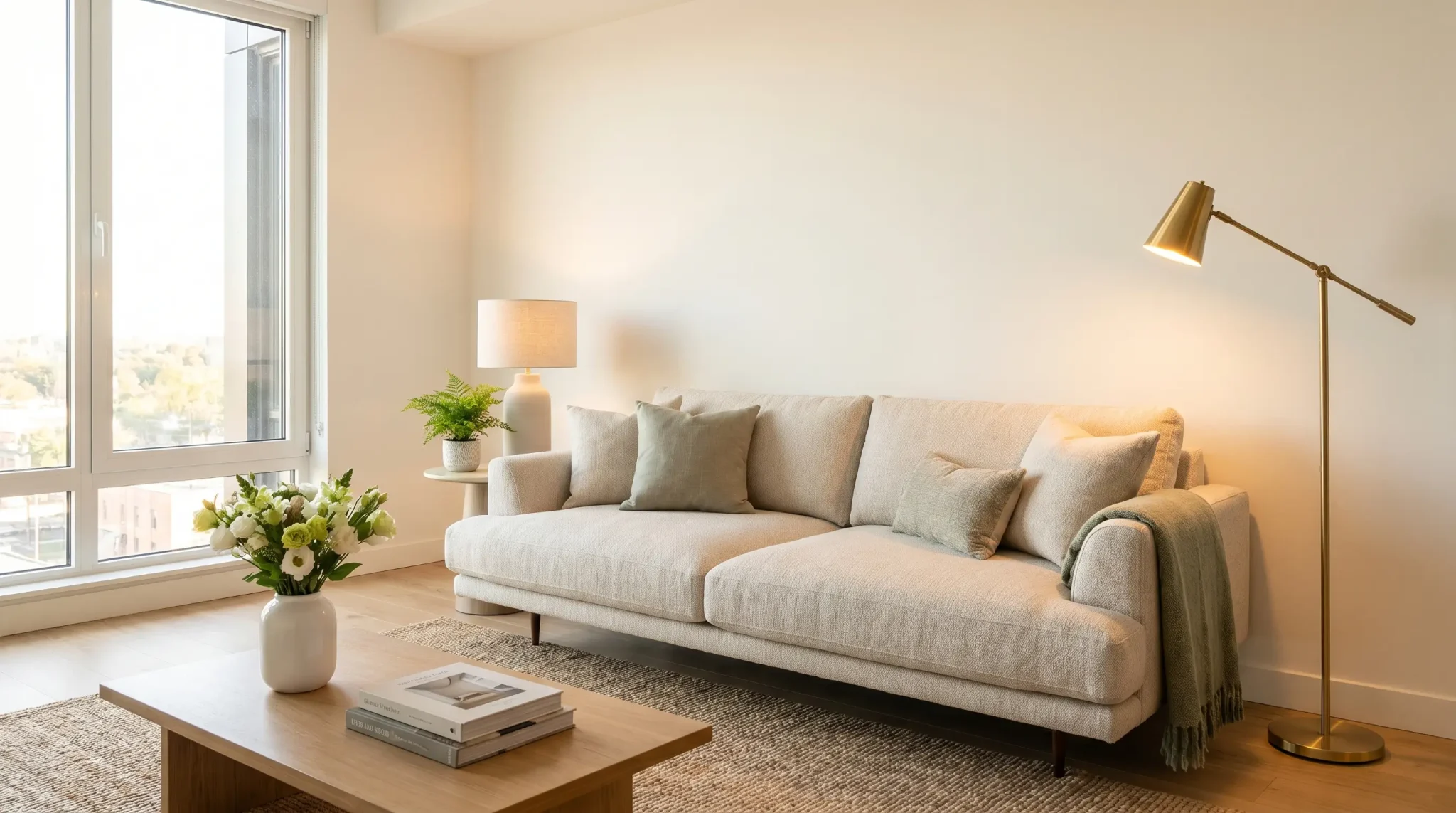
The living room is where buyers imagine their future life. Weekend mornings, family evenings, the dinner party they haven’t hosted yet. Your job is to present the space in a way that invites that imagining — not one that overwrites it with your own.
What to do:
- Declutter ruthlessly. Remote controls, blankets, children’s toys, the stack of magazines that’s been there since spring. Everything non-essential comes out before photographs. A room with fewer objects reads as larger and more serene.
- Rearrange for flow. Furniture pushed against walls often makes rooms feel smaller, not bigger. Float your sofa slightly and angle furniture toward a focal point — fireplace, window, or TV wall.
- Fix the lighting. Overhead lighting is functional, not atmospheric. Add floor lamps and table lamps. Photograph at a time of day when natural light floods the room. Bright, warm, and layered is the goal.
- Neutralise strong colour choices. A deep navy feature wall that you love may be the thing that makes a buyer hesitate. A weekend with a roller and a tin of warm white or soft greige costs very little and has a significant effect on how broadly the space appeals.
What to skip: New furniture, a full repaint of every wall, new flooring. The return on these in a sale context rarely justifies the cost unless the existing condition is genuinely poor.
2. The Kitchen: Clean Beats Expensive Every Time
Buyers always open the kitchen cupboards. Always. And they look at the cooker, the worktops, and the sink with a level of scrutiny they apply nowhere else. The good news is that a clean, organised kitchen in a modest specification will outsell a dirty, cluttered one in a premium specification every single time.
What to do:
- Deep clean everything. Inside the oven, behind the hob, the underside of the extractor hood, the grout between tiles. Buyers notice what their eye is drawn to, and grime draws the eye.
- Clear the worktops. The toaster, the coffee maker, the fruit bowl, the knife block — off the surface. One or two carefully chosen items (a nice chopping board, a plant) feel intentional. Everything does not.
- Replace what’s visibly broken. A cracked tile, a broken drawer runner, a tap that drips — these cost almost nothing to fix and register as neglect to buyers.
- Refresh the cabinet doors. New door fronts and handles are one of the most effective low-cost kitchen improvements available. They can transform a dated kitchen without touching the carcasses, plumbing, or layout.
What to skip: A full kitchen replacement before selling, unless the existing kitchen is structurally failing. New appliances rarely return their cost in a sale scenario.
3. The Master Bedroom: Aspirational, Not Personal
The bedroom is where buyers need to feel relaxed and a little aspirational. It is also the room most likely to be full of personal items, mismatched furniture, and the general evidence of a real life being lived.
What to do:
- Hotel-ify the bed. Fresh white or neutral linen, neatly arranged cushions or pillows, a folded throw at the foot. This sounds small. It photographs enormously differently from rumpled bedding in the pattern you’ve had for six years.
- Clear the bedside tables. A lamp, a book, a small plant. That’s it. Everything else comes off.
- Tidy the wardrobe. If buyers open it — and many do — a packed, chaotic wardrobe makes the room feel undersized. An organised one, with clear rail space visible, makes it feel like it has room to breathe.
- Remove anything highly personal. Family photographs, personal items, political or religious artwork. Not because these things aren’t lovely, but because they make it harder for buyers to imagine themselves in the space.
4. The Bathroom: The Room Where Details Do the Most Work
Bathrooms are small spaces where every detail is visible. A clean, fresh, well-presented bathroom creates confidence in the whole property. A tired, poorly maintained one creates doubt.
What to do:
- Re-grout or bleach the grouting. This is the single highest-impact, lowest-cost intervention in most bathrooms. Grey or mouldy grouting reads as poor maintenance even when everything else is fine.
- Fix the sealant. Around the bath and shower, sealant discolours and peels. Removing and replacing it takes a few hours and costs almost nothing.
- Clear all personal products off surfaces. Everything into a caddy, under the sink, or out of the room entirely for photographs. Surfaces should show tile or countertop, not bottles.
- Fresh towels. Rolled or neatly folded, in a simple neutral or white. Again — hotel logic.
- Fix anything dripping, broken, or missing. A leaking tap, a cracked mirror, a missing toilet roll holder. These are cheap to fix and expensive to leave, in terms of buyer perception.
5. The Entrance Hall: The First Thing They See in Person
Online photographs bring buyers to the door. The hallway is the first thing they experience in person, and it sets the emotional register for everything that follows.
What to do:
- Clear the floor entirely. Shoes, bags, coats — off the floor and ideally into storage or another room.
- Fix the front door. A fresh coat of paint on the front door, a clean or replaced door mat, and functioning door furniture (handle, knocker, letterbox) make an impression that carries into the viewing.
- Make it smell good. Not artificially — the classic “baking bread” trick tends to read as obvious to modern buyers. Just clean, with no lingering evidence of cooking, pets, or damp.
- Light it properly. Dark hallways feel smaller and less welcoming. A brighter bulb, a mirror to bounce light, or a lamp on a console table all help.
The Rooms You Can Largely Leave Alone
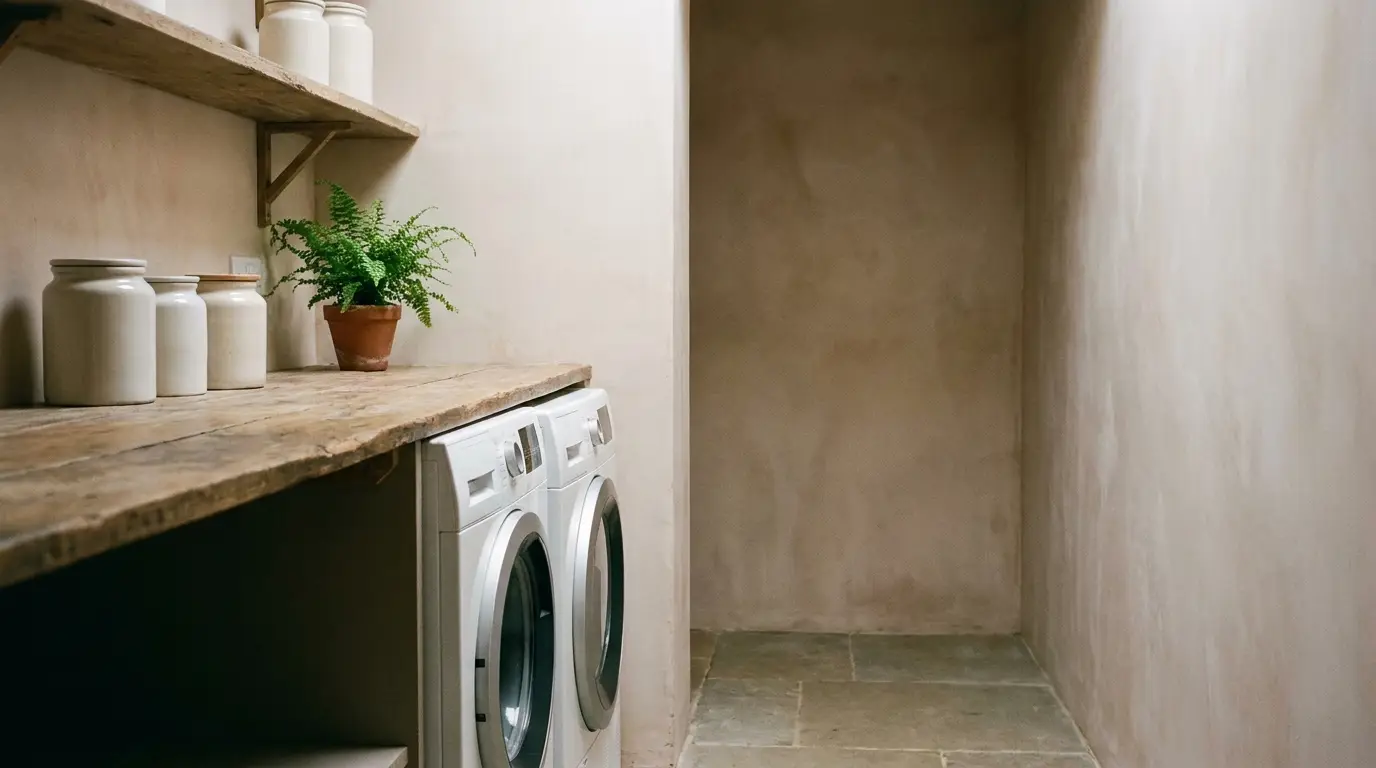
Not everywhere needs your attention. Buyers expect utility spaces to look functional rather than beautiful. A tidy, organised garage, shed, or utility room is all that’s needed. You don’t need to paint it.
Spare bedrooms used as offices are fine as they are, provided they’re tidy and the floor is visible. A staged spare room with a bed in it photographs better than a messy office, but a tidy office photographs better than a messy bedroom.
Lofts, basements, and outbuildings: clear them out. Buyers interpret clutter in these spaces as a problem rather than a sign of life.
When Staging Isn’t the Right Answer
All of this advice assumes one thing: that you have the time and energy to do it.
If you’re selling because of financial pressure, a relationship breakdown, a probate situation, or a job relocation — or if your property needs work that goes beyond what staging can fix — the effort involved in preparing for a traditional sale may not be realistic or worthwhile.
In those situations, a fast house sale is often the more sensible option. Companies like Springbok Properties (who operate across the UK) will buy a property in any condition, skip the staging and viewings entirely, and complete in as little as 7–21 days. You don’t need a show-home kitchen or hotel-quality bathrooms. You need a decision and a completion date.
Their Fixed Price™ route is also worth understanding for UK sellers — it markets your property to a cash buyer network at a fixed price, achieving up to 95% of market value without traditional estate agent timelines. For sellers who need to move but don’t want to accept a steep discount, it’s a middle ground worth exploring.
A Quick Checklist Before You Go Live
Before your listing goes live and photographs are taken, run through this:
- Living room decluttered and furniture arranged for flow
- Kitchen worktops cleared, all surfaces and appliances deep cleaned
- Bedroom linen fresh, bedside tables cleared, wardrobe organised
- Bathroom re-grouted or bleached, sealant checked, surfaces cleared
- Front door freshly painted or cleaned, door mat replaced
- All broken fixtures repaired (taps, handles, tiles, hinges)
- All rooms photographed in natural daylight where possible
- Pets and evidence of pets minimised for photographs
Final Thought
The goal of staging isn’t to pretend your home is something it isn’t. It’s to remove the things that stop buyers from seeing what it genuinely is. A well-presented home in honest condition, priced correctly, will always outperform an overspent renovation at the wrong price.
Put your energy into the five rooms that matter, leave the rest tidy and neutral, and let your home speak for itself.