How Do You Balance Privacy, Light Control and Outdoor Shade?
A homeowner once described opening every blind each morning to enjoy the garden, only to close them again when neighbours appeared on an overlooking balcony. By lunchtime, sunlight had moved across the room, glare covered the television, and the patio had become too hot to use. The home had plenty of window coverings, yet none worked together.
This is a familiar problem in Australian homes. Privacy, daylight and shade often compete for attention. Blocking every window may create privacy but leave rooms gloomy, while leaving everything open can expose interiors and allow excessive heat to build. The answer is a layered approach that responds to the property’s orientation, surroundings and daily routines.
Understand What Each Area Actually Needs
Privacy and shade problems change throughout the day. A bedroom may need strong privacy early in the morning, while an open-plan living area may need glare control in the afternoon. An outdoor dining zone might be comfortable at breakfast but unusable under the western sun.
Observe each space before choosing products. Record when direct sunlight reaches windows, where shadows fall and when neighbouring homes have a clear view inside. A simple two-day observation can reveal patterns that are easy to miss during a brief showroom consultation.
Ask these questions in every area:
- When does direct sunlight enter?
- Is the main issue heat, brightness or glare?
- Can neighbours see inside during the day or at night?
- Which outdoor areas need overhead shade?
- Should the garden view remain visible?
- Will the product be adjusted frequently?
- Is protection needed during every season?
- Are there children, pets or accessibility needs?
Different rooms may require different answers. The aim is not to select one covering for the entire property, but to create a family of products that work together.
Separate Daytime Privacy From Night-Time Privacy
Daytime privacy can often be managed with angled blades, translucent materials or screen fabrics that obscure direct views while allowing light to enter. These options can preserve an airy atmosphere without leaving the room exposed.
Night-time privacy is different. Once indoor lights are switched on, many translucent or open-weave materials become easier to see through from outside. A product that feels private during the day may offer limited screening after dark.
A layered window arrangement may include:
- Adjustable blinds for daylight and directional privacy
- Sheer curtains for softened daytime screening
- Blockout curtains or blinds for night-time privacy
- External screens for exposed windows
- Frosted glazing in bathrooms or entry areas
- Landscaping that interrupts direct sightlines
Test privacy from outside as well as inside. Stand at the boundary, footpath or neighbouring viewing angle during daylight and after dark to see how the covering actually performs.
Control the Direction of Light, Not Just Its Amount
Good light control is more precise than choosing between open and closed. Adjustable blades can redirect sunlight towards the ceiling, reduce glare at eye level and preserve useful daylight. This creates a softer interior than simply blocking the window.
Window orientation shapes the best response. Low eastern and western sun can enter beneath overhead cover, while high northern summer sun may be easier to block from above. South-facing rooms usually receive gentler light and may need less shading.
Useful strategies include:
- Tilting slats upward to bounce light towards the ceiling
- Closing the lower part of a covering for privacy
- Keeping upper sections open for daylight
- Using external shade before sunlight reaches the glass
- Adding side screens where low-angle sun enters
- Moving computer screens away from direct reflections
- Choosing lighter interior finishes to distribute daylight
A well-lit room should feel calm rather than washed out. The goal is usable illumination that supports reading, working and relaxing without harsh brightness.
How Can Retractable Awnings Balance Outdoor Shade?
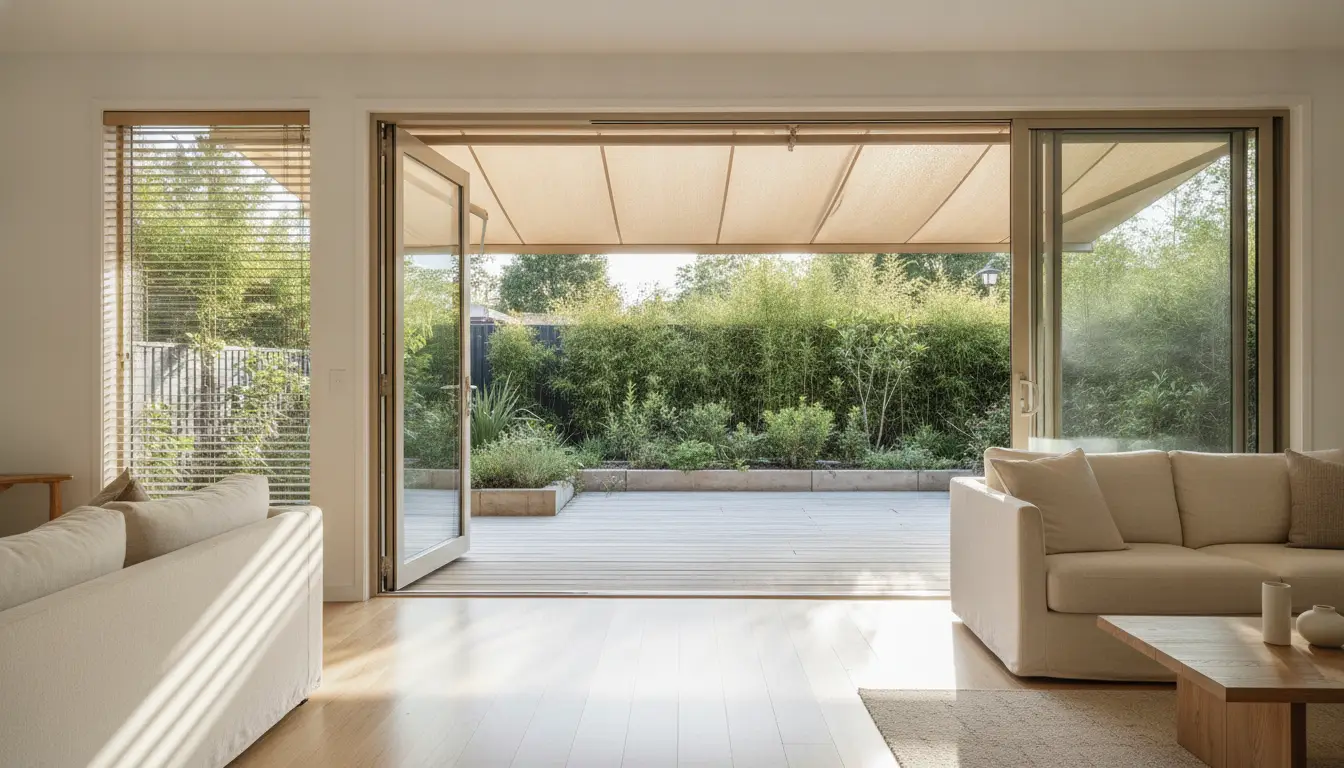
Retractable awnings provide adjustable overhead protection for decks, patios, balconies and windows. They can extend during periods of strong sunlight and withdraw when daylight, winter warmth or an open view is preferred.
This flexibility is particularly useful where permanent roofing would darken adjoining rooms. When retracted, the fabric occupies little visual space. When extended, it creates a defined pocket of shade that can make outdoor dining and seating areas more comfortable.
Their benefits may include:
- Shade that can respond to changing conditions
- Clear floor space without front support posts
- Reduced direct sunlight on glazed doors and windows
- Protection for outdoor furniture
- Manual and motorised control options
- Compatibility with some wind and sun sensors
- A choice of frame colours and fabric patterns
- Coverage tailored to the size of the outdoor area
The awning’s projection, mounting height and sun angle determine where the shadow falls. Measurements should be based on the period when shade is most needed, not simply the dimensions of the patio.
Use Internal Coverings for Finer Control
External shade can reduce direct solar exposure, while internal coverings refine privacy and brightness. Combining both layers provides more control than asking one product to perform every role.
For example, an awning may shade a glazed living area during a hot afternoon. Internal blinds can then be adjusted to protect a television screen or prevent views from the street without making the entire room dark.
Timber venetian blinds can suit living rooms, dining spaces and home offices where adjustable light is valued. Their horizontal blades can be tilted to manage sightlines while allowing daylight to filter between them.
Internal coverings can support:
- Daytime privacy at street-facing windows
- Glare control around screens and work areas
- Night-time privacy when paired with a blockout layer
- A warmer visual connection with timber flooring or furniture
- Independent control across different windows
- Protection for furnishings and decorative finishes
Timber products are generally better suited to dry indoor rooms than areas exposed to regular moisture. Alternative materials may be more practical in bathrooms, laundries or other humid spaces.
Layer Shade Across the Building
The most effective plan often combines building-level shade, outdoor protection and indoor window coverings. Each layer handles a different part of the problem.
External products intercept strong sunlight, landscaping softens exposure around the property, and internal coverings manage the final level of light and privacy. The house behaves like it is wearing several light layers rather than one heavy coat.
A layered plan might combine:
- A retractable awning over a west-facing patio
- Adjustable blinds across nearby glazed doors
- A privacy screen along the boundary
- Deciduous planting for seasonal shade
- Blockout curtains in bedrooms
- Soft landscape lighting that does not expose interiors
Layering also allows gradual adjustments. One product can be changed without closing the home entirely, helping occupants preserve airflow, outdoor views and natural light.
Choose Privacy Methods That Preserve the Outlook
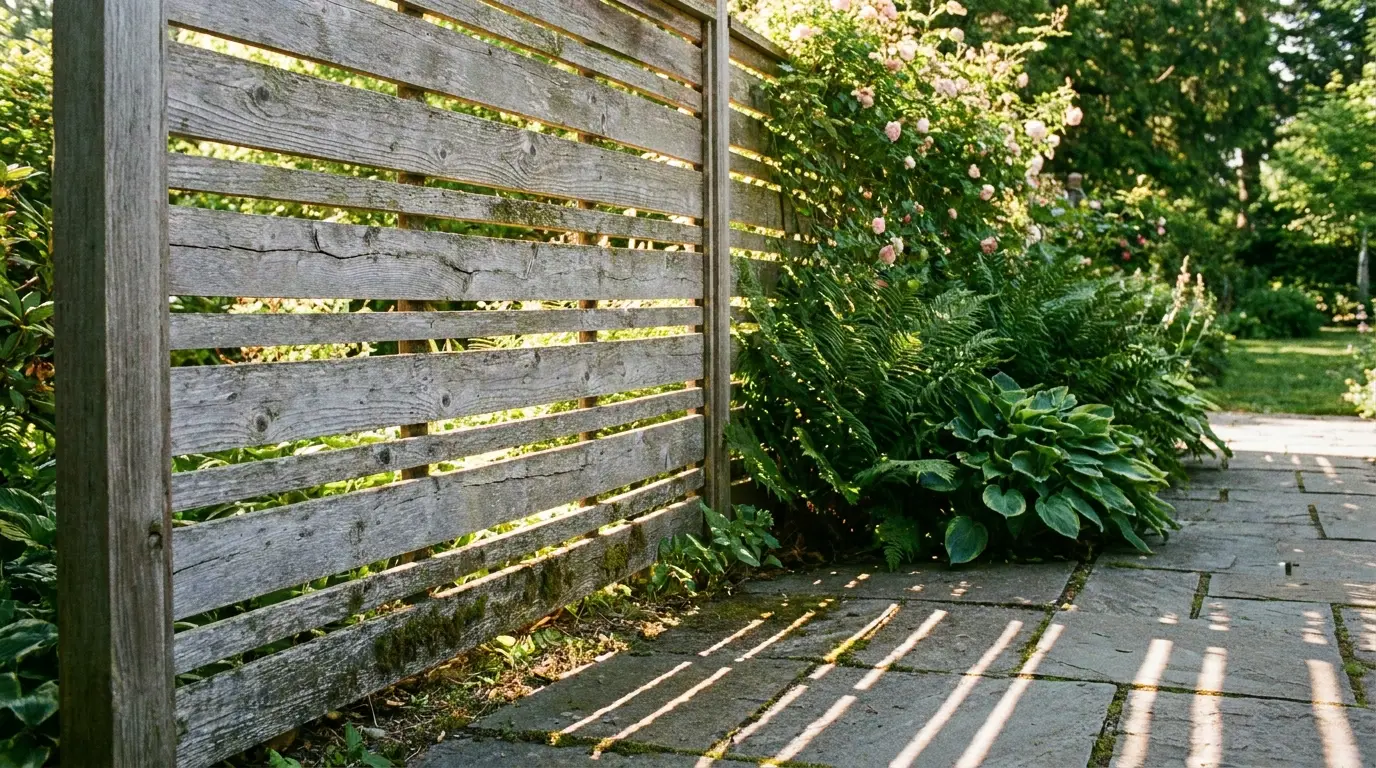
Privacy does not always require a solid wall. Screens, planting, angled blades and carefully placed shade structures can interrupt direct views while retaining openness.
Start by locating the exact sightline. A narrow screen positioned close to the viewing source may be more effective than covering an entire boundary. Angled battens can also block views from one direction while preserving garden outlooks from another.
Practical options include:
- Vertical garden screens
- Slatted timber or aluminium panels
- Tall planting in selected positions
- Adjustable outdoor blinds
- Decorative screening around seating zones
- Part-height fencing
- Strategic furniture placement
- Pergolas with side panels or climbing plants
Avoid creating a tunnel-like space by surrounding every side with solid screening. Mix open and protected areas so natural light and airflow can still move through the property.
Account for Seasonal Sun Angles
The sun sits higher in the sky during summer and lower during winter. A fixed shade solution may block high summer sun effectively but also reduce the warmth and daylight available during cooler months.
Adjustable products respond more easily to these seasonal changes. A retractable awning can remain open on a cool winter morning, then extend during a hot summer afternoon. Tilting blinds can make smaller adjustments as the sun moves across a room.
A seasonal routine might involve:
- Extending outdoor shade earlier during summer
- Retracting cover to admit winter sunlight
- Changing blind angles during morning and afternoon
- Moving outdoor furniture with seasonal shadows
- Trimming plants before they block winter light
- Checking sensors before hotter weather begins
- Cleaning fabric and mechanisms after periods of heavy use
Review the settings every few months. A solution that worked well in January may need a very different position in July.
Choose Fabrics, Colours and Materials Carefully
Colour affects appearance, brightness and perceived enclosure. Light fabrics can create an open feeling, while darker fabrics may provide stronger visual definition and glare control. Actual performance depends on the material’s construction, openness and manufacturer specifications.
Privacy fabrics also vary. Some permit outward views during the day but become less private when interior lighting is brighter than the surroundings. Others provide stronger screening but reduce the view and available daylight.
Compare materials based on:
- UV resistance
- Colour stability
- Fabric openness
- Outward visibility
- Day and night privacy
- Water and mould resistance
- Cleaning requirements
- Suitability for coastal exposure
- Compatibility with the home’s finishes
- Availability of replacement parts or fabric
View full-size samples at the property if possible. Small swatches may look very different when stretched across a wide patio or large bank of windows.
Plan for Wind, Weather and Safe Operation
External shade systems are exposed to conditions that indoor blinds never face. Wind can place pressure on fabric, brackets and folding arms, especially on elevated or open properties. Retractable products should be closed during weather outside their stated operating limits.
Some motorised awnings can be connected to wind or sun sensors. These features improve convenience, but occupants should still understand how to operate the system manually and when it should remain retracted.
Before installation, ask:
- What wind exposure can the awning tolerate?
- Is the fabric designed for light rain?
- What pitch is needed for water runoff?
- Should the product be closed when unattended?
- Is manual override available?
- How often should moving parts be serviced?
- Does the site need special brackets?
- What actions could affect the warranty?
Correct installation is equally important. The mounting surface must support the awning’s weight and the forces created when it is fully extended.
Coordinate Colour and Style Across the Property
Shade products occupy a large visual area, so their colour and form can influence both the interior and exterior appearance. Matching every product is unnecessary, but a small group of repeated finishes can create a more settled result.
The awning frame might relate to window frames, while the fabric could repeat a tone found in paving, roofing or outdoor furniture. Inside, blind colours can connect with flooring, cabinetry or timber details.
Create consistency through:
- Repeated hardware colours
- Related warm or cool colour families
- Similar slat and architectural lines
- Fabric tones drawn from exterior finishes
- Timber colours that complement indoor joinery
- Simple patterns that do not compete with the building
Good coordination makes each product feel like part of the property rather than a later addition.
Create a More Adaptable Home
Balancing privacy, light and outdoor shade is not about finding one permanent setting. Homes change throughout the day, and their coverings should respond just as easily. Morning light may be welcome, afternoon heat may need stronger control, and evening privacy may call for another layer.
Study the property before selecting products, identify the strongest sightlines and record when direct sun reaches each space. Then combine external shade, adjustable internal coverings and targeted privacy features. A thoughtful plan can create a home that feels open when you want connection, protected when you need privacy and comfortable through changing weather.
Frequently Asked Questions About Retractable Awnings
Do Retractable Awnings Provide Privacy?
Retractable awnings mainly provide overhead shade, but they can improve privacy from upper-storey windows and neighbouring balconies by interrupting downward sightlines. Their effectiveness depends on the awning’s projection, angle and mounting position.
For privacy from adjoining properties or the street, combine the awning with side screens, outdoor blinds or planting. This layered approach can block selected views without enclosing the entire outdoor area.
Can Retractable Awnings Reduce Indoor Glare?
Retractable awnings can reduce glare by shading windows and glazed doors before direct sunlight reaches the glass. This may improve comfort around televisions, computer screens and indoor seating near exposed windows.
Results depend on orientation and sun angle. Low western sunlight may pass beneath shallow overhead cover, so a larger projection, suitable mounting angle or added drop valance may be needed for stronger late-afternoon protection.
Will Retractable Awnings Make Indoor Rooms Too Dark?
Retractable awnings give homeowners control over when shade is present. They can be extended during intense sunlight and withdrawn when more daylight or winter warmth is wanted.
This flexibility can protect adjoining rooms without creating permanent shade. Before selecting the awning, check its width, projection and effect on nearby windows at different times of day. Light-coloured interior finishes can also help distribute remaining daylight.
Are Motorised Retractable Awnings Better for Daily Use?
Motorised retractable awnings can make frequent adjustments faster and easier, particularly for wide installations. Wall switches, remote controls and compatible sensors allow the shade to respond more readily to daily changes in sunlight.
Manual models may still suit smaller spaces or lower budgets. The better choice depends on awning size, frequency of use, accessibility, available power and whether smart controls or weather sensors are desired.
How Should Retractable Awnings Be Maintained?
Retractable awnings need periodic fabric cleaning, removal of leaves and inspection of arms, brackets and controls. Follow the manufacturer’s instructions because cleaning methods vary between fabrics and finishes.
Allow wet fabric to dry before leaving it rolled away for long periods. Retract the awning during strong wind or severe weather, and arrange servicing if movement becomes noisy, uneven or unusually slow.