Art Deco Interior Design for Your Home: What to Know
If you’ve ever walked into a room and felt an immediate sense of order and drama, there’s a good chance Art Deco had something to do with it.
You don’t need a 1920s property to use the style. A few well-placed pieces in the right materials can bring Art Deco character into almost any modern US home.
This guide covers the defining features of the style, its color palettes, materials, furniture, lighting, room-by-room ideas, and practical ways to create an Art Deco house without overloading every surface.
What is Art Deco Interior Design?
Art Deco interior design is a decorative style closely tied to the 1920s and 1930s. It is built on geometric forms, strict symmetry, bold color, rich ornamentation, and an open embrace of new materials.
Its formal starting point is often traced to the 1925 Exposition Internationale des Arts Décoratifs et Industriels Modernes in Paris.
That exposition brought together designers, architects, and craftspeople working in a new visual language that valued both fine craftsmanship and ideas drawn from modern cities, machines, and new forms of production.
The result was a style that felt structured yet decorative. Precise yet glamorous. Art Deco interiors are not accidental – every element tends to have a place, a finish, and a relationship to the pieces around it.
What Defines Art Deco: Core Elements

Art Deco is not defined by a single color or one type of furniture. Its identity comes from several design choices working together at once.
The main characteristics include:
- Symmetry and balanced arrangements across a room
- Strong geometric forms as the foundation of furniture and decor
- Repeated patterns that carry through multiple surfaces
- Clear contrast between light tones and dark accents
- Decorative surfaces with visible ornament
- Smooth, polished, or reflective finishes
- Rich materials used as deliberate visual focal points
The most recognizable motifs are chevrons, zigzags, triangles, trapezoids, sunbursts, and fan-like forms.
Geometric decoration was central to the movement, though historical Art Deco also drew from plants, animals, Egyptian imagery, and human figures.
What holds it together is the sense of intention. Every pattern, finish, and proportion is there on purpose.
Art Deco Interior Design: Colors and Materials
Color and material choices carry much of the richness in Art Deco rooms. Strong shades are almost always balanced with neutrals, dark accents, or reflective finishes rather than competing for attention all at once.
Color Palette
Art Deco palettes tend to use deep, jewel-toned colors as the primary accent rather than relying on pale neutrals throughout. Common choices include:
|
Color |
Tone | Best Used As |
|---|---|---|
| Emerald or jade green | Deep, rich | Wall accent or upholstery |
| Sapphire and deep blue | Bold, cool | Statement furniture or drapes |
| Burgundy or rich red | Warm, intense | Cushions, rugs, or a feature wall |
| Black | High contrast | Trim, lacquered surfaces, frames |
| Cream and beige | Soft neutral | Base walls or balanced backgrounds |
| Gold and silver | Metallic accent | Hardware, lighting, decorative details |
Jewel tones, glossy black, and metallic details are the shades most closely associated with the style. You don’t need to use every bold color in one room.
Picking one or two rich tones as the main accents gives the palette room to breathe without losing its character.
Materials and Finishes
Materials are where Art Deco interiors gain their shine, texture, and contrast. The originals leaned heavily on expensive choices, but the approach translates to modern homes with a more practical mix.
| Material | Finish Type | Where It Works Best |
|---|---|---|
| Brass and chrome | Metallic, reflective | Lighting, hardware, table legs |
| Glass and mirrors | Clear or tinted | Coffee tables, wall mirrors, cabinet doors |
| Lacquered surfaces | High-gloss | Side tables, cabinets, decorative objects |
| Marble | Polished or veined | Tabletops, flooring, bathroom surfaces |
| Rich wood finishes | Warm, deep-toned | Furniture frames, shelving, paneling |
| Velvet and upholstery | Soft, textured | Sofas, armchairs, headboards, cushions |
Historical Art Deco interiors prized costly and unusual materials, with craftsmanship playing a major role in furniture and decorative objects.
In a modern Art Deco house, you can reference the original spirit without using expensive materials on every surface. A lacquered side table, a brass fixture, and a velvet armchair can do a great deal of work on their own.
How to Create a Modern Art Deco Look?
You can use Art Deco interior design without recreating a complete 1920s room. A modern approach keeps the strongest features of the style while giving the room more space to breathe.
- Start with one focal piece. Choose a sofa, mirror, rug, headboard, or light fixture that immediately reads as Art Deco.
- Choose a controlled palette. Combine one or two bold colors with black, cream, or another neutral rather than layering all your rich tones together.
- Repeat geometric forms. Carry similar lines through rugs, furniture, mirrors, or artwork to create visual connections across the room.
- Add metallic details in small amounts. Brass, chrome, or silver used sparingly looks intentional; used everywhere, it starts to compete.
- Mix polished and soft surfaces. Balance glass, metal, or lacquer with rugs and upholstery so the room doesn’t feel cold.
- Leave some areas simple. Not every surface needs pattern, shine, or decoration. Breathing room makes the bold elements read as choices rather than clutter.
How to Add Art Deco Interior Design Room by Room
The structural system symmetry, contrast, and reflection stays consistent throughout an Art Deco house. What changes is how each room applies those principles without breaking the home’s overall balance.
Some rooms carry the full weight of the style, while others need only one strong anchor element. Some rooms carry the full weight of the style. Others need just one anchor element for it to register.
1. Living Room
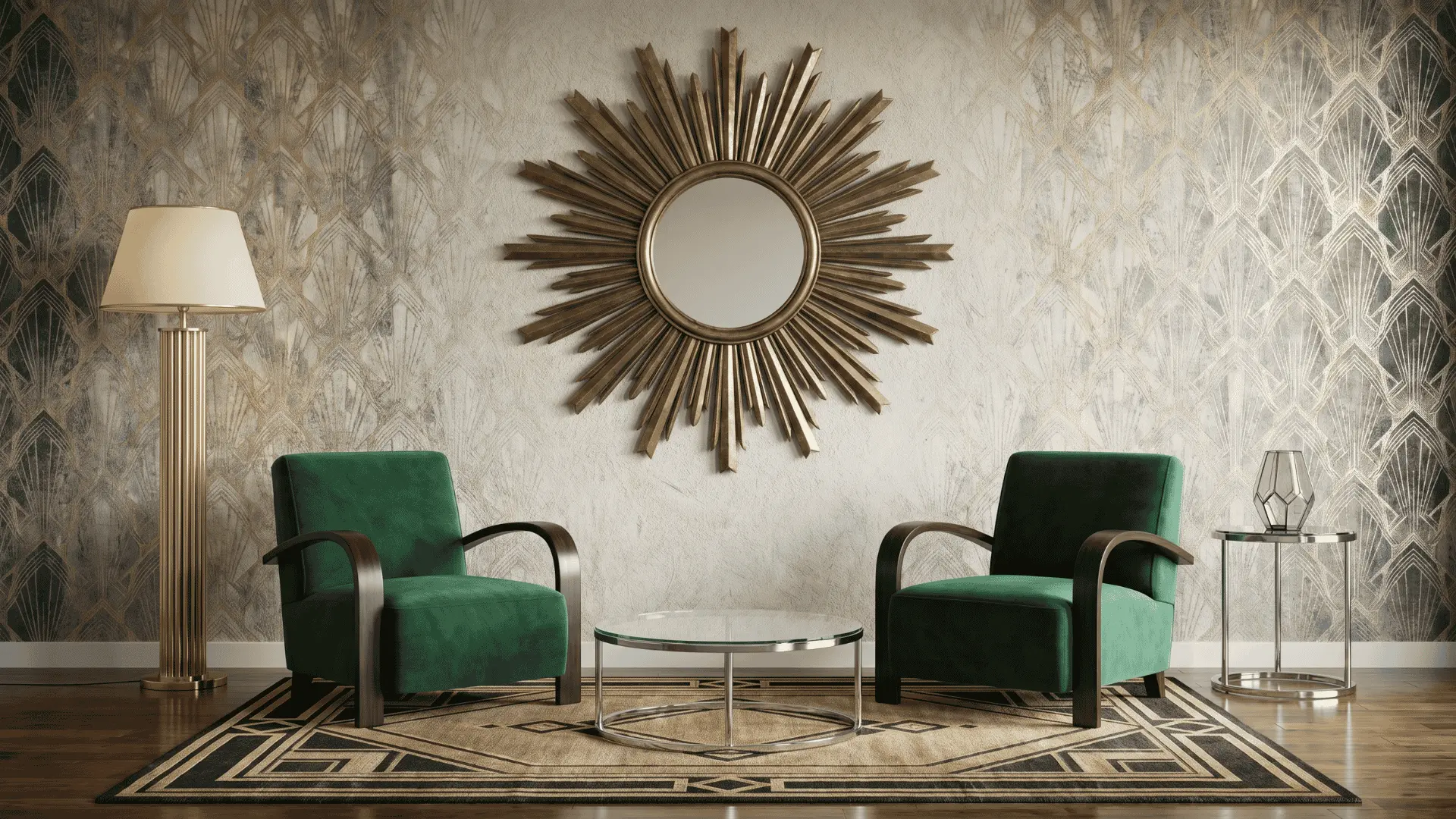
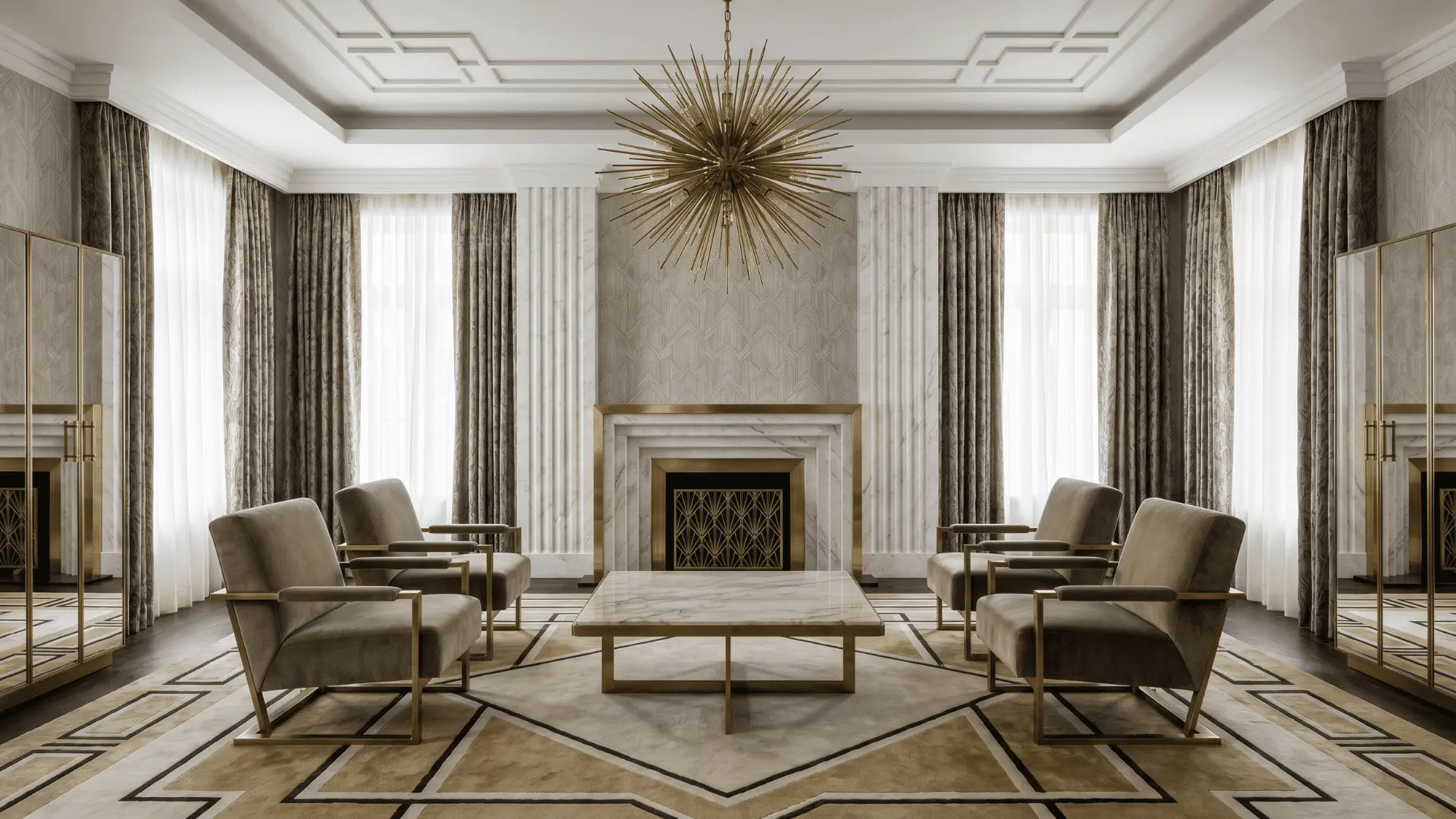
The living room is where Art Deco does its most visible work. It can carry the full combination of symmetry, contrast, and reflection without feeling overdone because it sets the visual direction for the rest of the home.
One statement piece per category is enough.
- Symmetry anchor: Matching seating on either side of a focal point – fireplace, console, or statement wall
- Contrast anchor: A dark lacquered surface or deep jewel-tone sofa against a lighter wall or floor
- Reflection anchor: A sunburst mirror, chrome side table, or brass floor lamp positioned to catch and scatter light
2. Bedroom
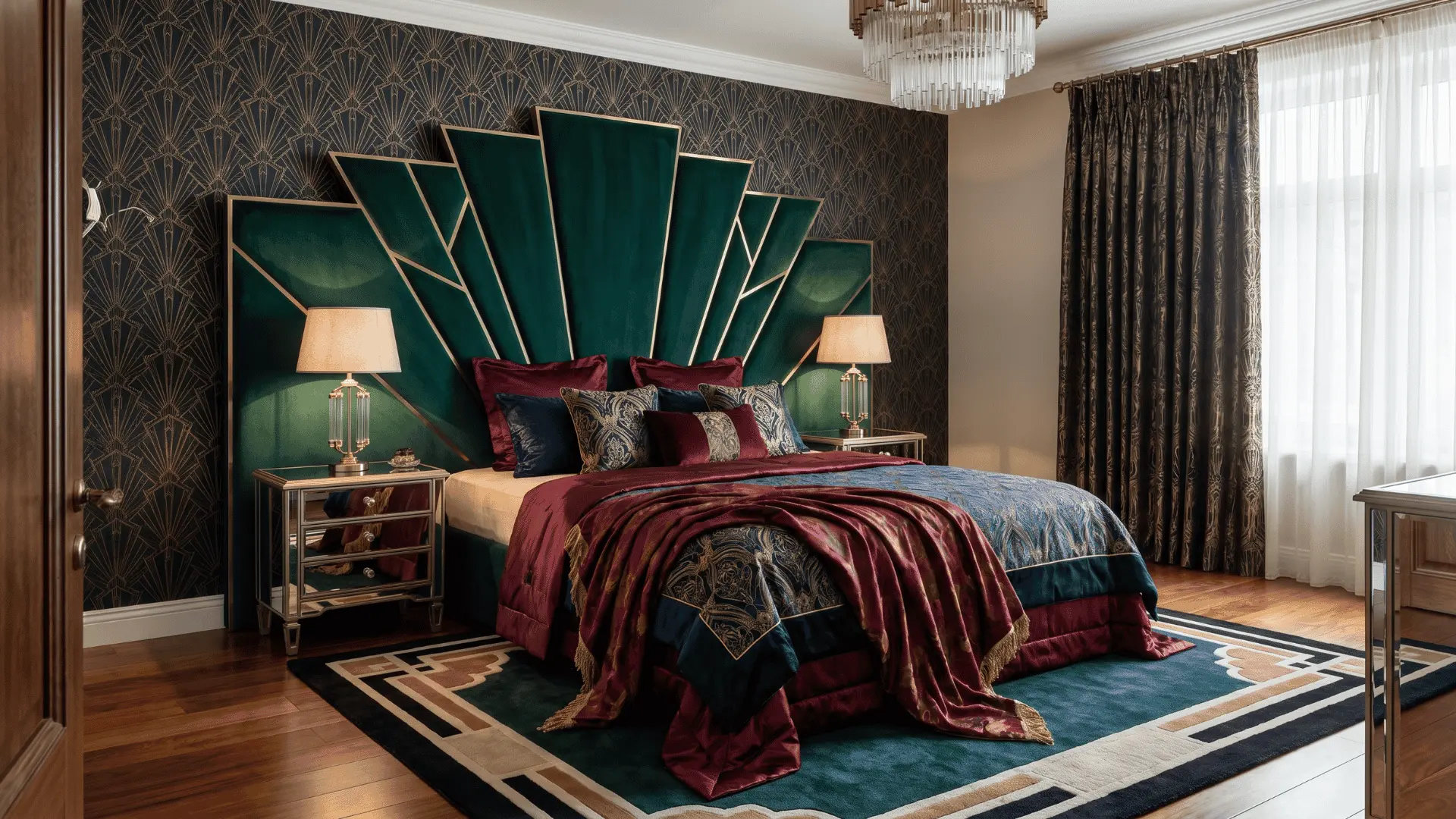
The bedroom works best with restraint. Full Art Deco expression in a sleeping space can feel too charged.
The goal is structured, not stimulating – one strong anchor establishes the system while everything else supports it quietly.
- Symmetry anchor: A geometric or fan-shaped upholstered headboard paired with matched sconces on either side
- Contrast anchor: Velvet bedding or a jewel-tone throw that introduces richness without visual noise
3. Kitchen
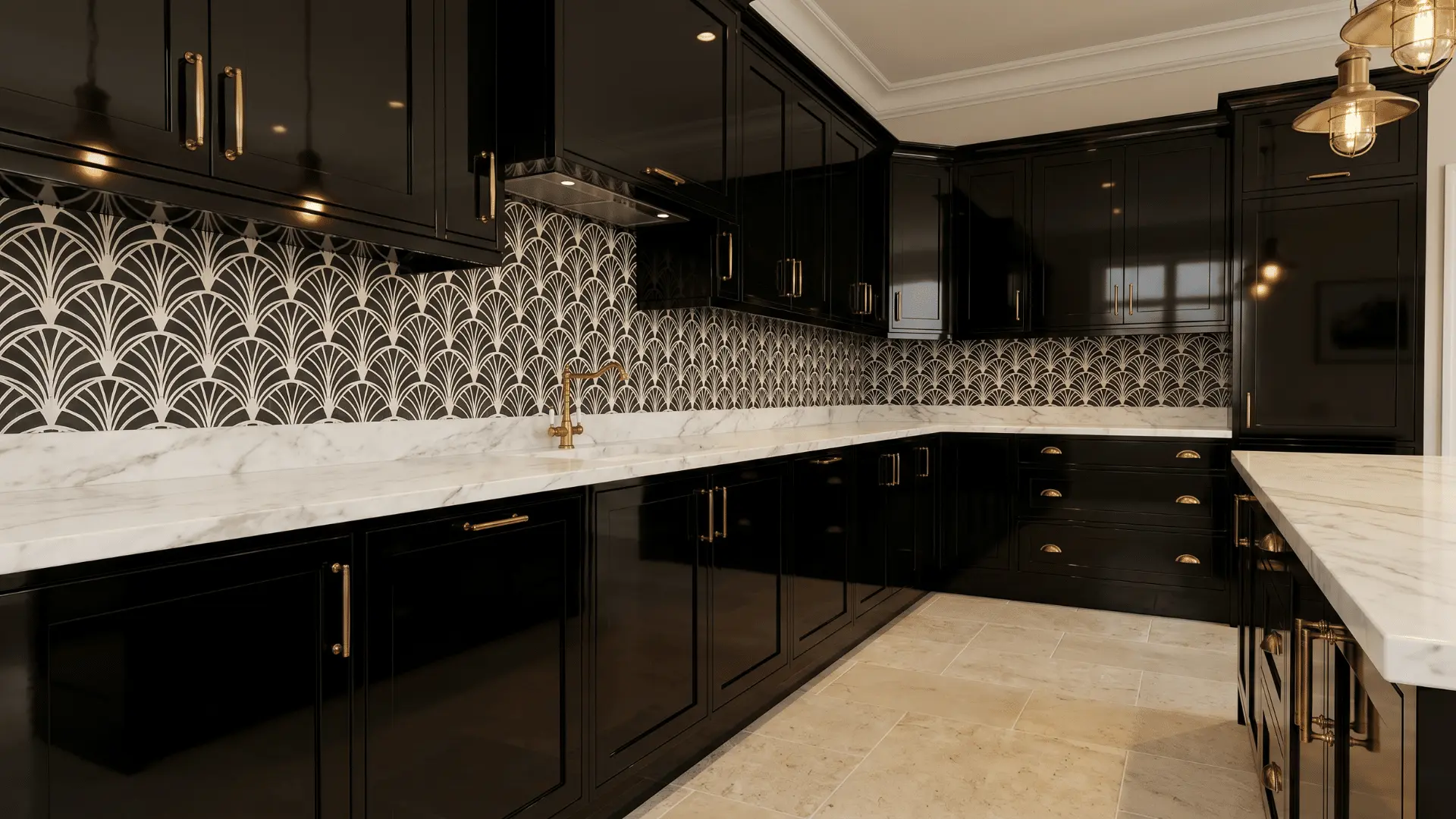
The kitchen applies Art Deco through surface and hardware rather than furniture. Small material choices carry the style into a functional space without requiring a full redesign.
High-gloss black cabinetry with brass pulls and marble is one of the clearest ways to run the contrast system through a kitchen.
- Surface layer: Marble countertops handle reflection and contrast simultaneously
- Hardware and pattern layer: Brass or unlacquered cabinet pulls introduce the metallic element; geometric tile – chevron, hexagon, or fan – activates the pattern layer on the backsplash
4. Bathroom
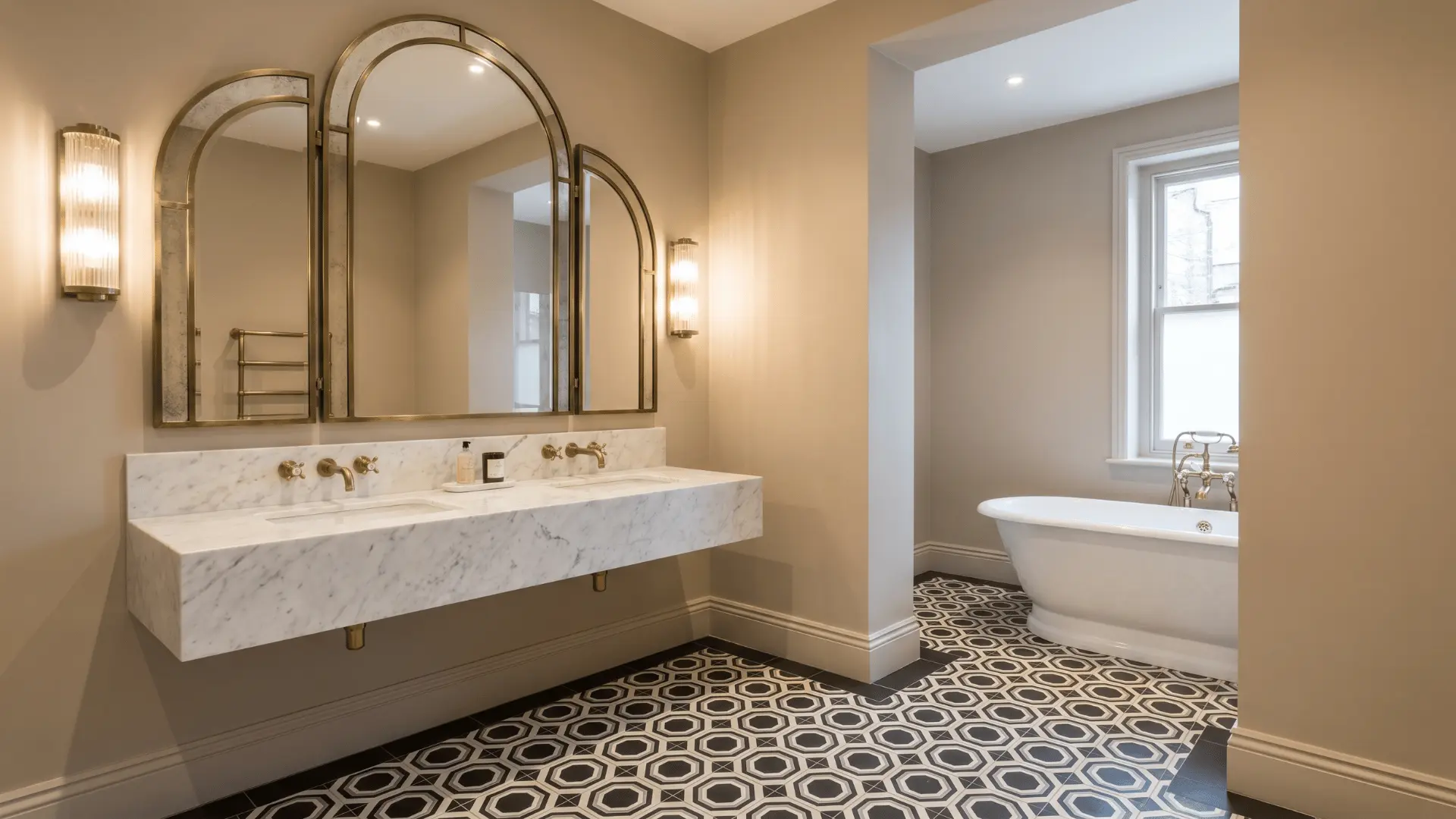
The bathroom is the easiest room to execute Art Deco correctly.
Surfaces are small, hard, and reflective by nature, so the style’s light-amplifying quality comes through more intensely here than almost anywhere else in the home.
- Pattern and contrast: Black and white geometric floor tile establishes both layers with one decision
- Reflection and material: A beveled or geometric-framed mirror anchors the wall; chrome or brass fixtures complete the material contrast
5. Dining Room
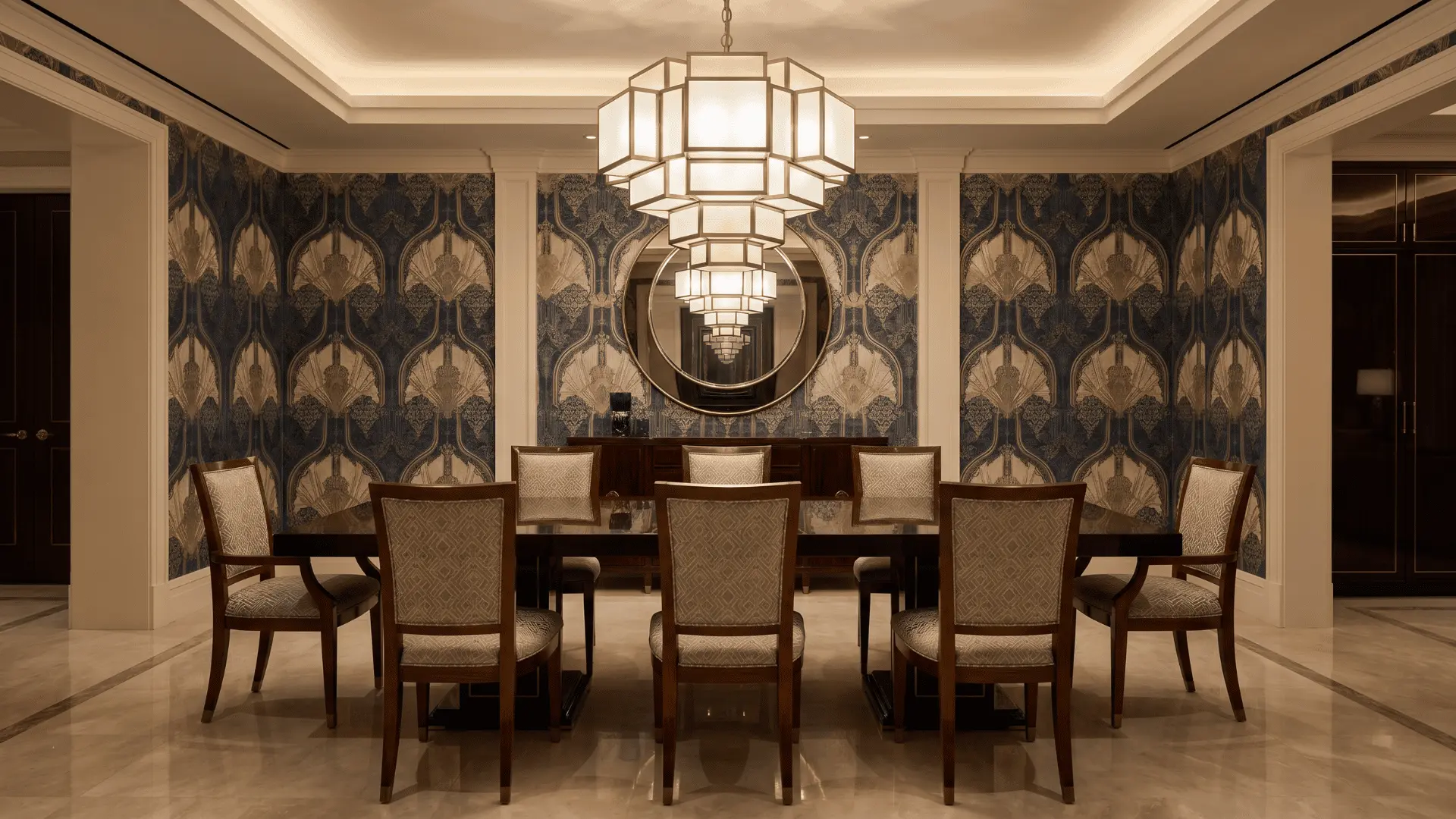
The dining room centers on one dominant element – the chandelier – and works outward from there. Over-layering is the most common mistake in this space. Three well-chosen pieces are all the room needs.
- Lighting anchor: A tiered geometric pendant or fan chandelier handles both structure and reflection above the table
- Surface and seating: A dark wood or lacquered dining table with clean lines provides contrast; matched chairs in even numbers complete the axis
Where Art Deco Gets ConfusedwWith Other Styles
Many interiors borrow Art Deco materials without following its structure – the velvet, the brass, the mirror – but without the geometry and symmetry holding it together, it reads as a different style entirely. Three styles cause the most confusion.
| Style | What It Shares With Art Deco | Where It Differs |
|---|---|---|
| Modern Glam | Velvet, brass, and mirror surfaces | Glam prioritizes softness and rounded forms; Art Deco prioritizes geometry, clean edges, and structured contrast |
| Modern Minimal | Clean lines and uncluttered spaces | Minimalism removes ornamentation entirely; Art Deco uses geometric ornament as a deliberate structural tool |
| Vintage Eclectic | Draws from the same era and materials | Eclectic spaces mix periods freely; Art Deco is disciplined – every element serves the symmetry and contrast system |
Common Decorating Mistakes to Avoid
The bold nature of Art Deco makes it easy to add too many competing elements. A few basic limits keep the room clear and connected.
- Using too many geometric patterns at once. Choose one dominant pattern and repeat smaller shapes carefully rather than stacking multiple bold designs on the same walls, floors, and upholstery.
- Adding metallic finishes to every surface. Shine works as an accent. When it covers everything, it reads as excess rather than intention.
- Mixing too many strong colors. Build the palette around two or three main shades with neutrals doing the supporting work.
- Choosing only decorative pieces. Furniture still needs to function for everyday use. A beautiful chair that no one sits in isn’t serving the room.
- Ignoring symmetry. Balanced placement helps strong patterns and colors feel deliberate rather than accidental.
- Making every room identical. Repeat selected colors, shapes, or finishes across an Art Deco house instead of copying the exact same setup in every room.
Art Deco works best when bold details are supported by order and balance. That combination is what keeps the style from tipping into visual noise.
Conclusion
Art Deco interior design gives you a clear set of tools: strong geometry, rich color, polished materials, and statement pieces. You don’t need to recreate a historic interior to use any of them successfully.
I’d suggest starting with one recognizable feature – a fixture, a mirror, a rug – and repeating that material or shape in two or three other spots in the room.
That repetition is what makes the style read as intentional rather than assembled.
Keep the arrangement balanced, leave some surfaces open, and let the few bold choices carry the room. That approach works whether you’re decorating one space or building a complete Art Deco house over time.
Frequently Asked Questions
Is Art Deco Suitable for Small Rooms?
Yes. Mirrors, metallic finishes, and a single bold piece can create strong Art Deco impact without overwhelming a smaller space.
What Flooring Works Best in an Art Deco Interior?
Black-and-white geometric tile, dark hardwood, or marble are the most natural fits for the style.
Can Art Deco Work with an Open-Plan Layout?
Yes. Use rugs, lighting, and symmetrical furniture groupings to define zones while keeping the overall system consistent.
What Lighting Works Best in An Art Deco Room?
Geometric chandeliers, tiered pendants, and brass or chrome wall sconces are the strongest choices for the style.