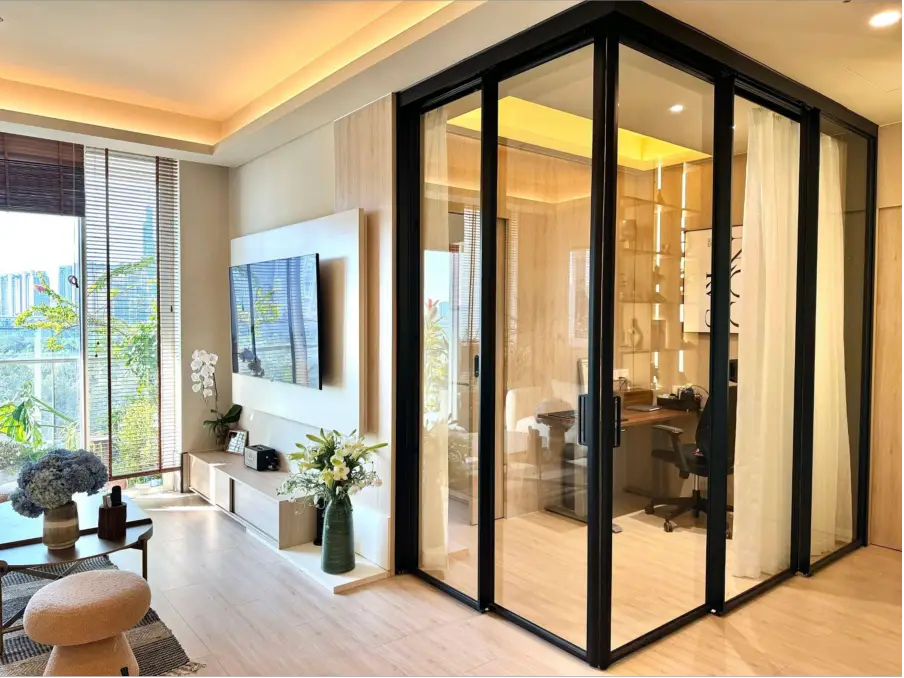
Work From Home, Work Like a Pro: Your Setup Guide
Table of Contents
- The Home Office Problem Nobody Talks About
- What Is an Office Pod and Do You Actually Need One
- Types of Office Pods for Home Use
- What to Check Before You Buy
- Why the Factory Behind Your Furniture Matters
- Price Ranges at a Glance
- FAQs
- Conclusion
The Home Office Problem Nobody Talks About
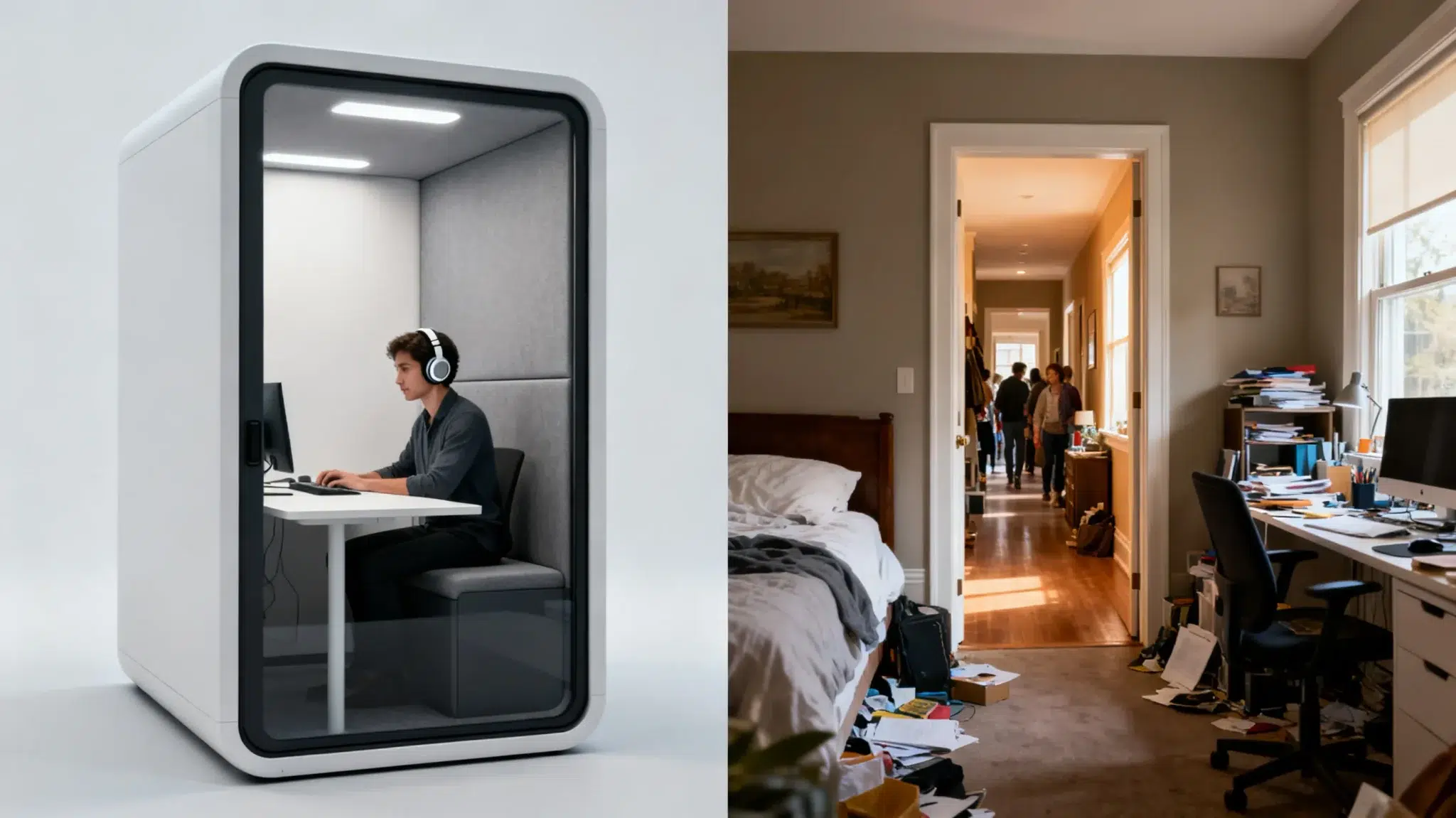
Working from home sounds ideal until your dining table becomes your desk, your couch becomes your conference room, and household noise takes over every client call.
As of 2025, approximately 32.6 million Americans work remotely, making up 22% of the entire US workforce. Another 52% follow a hybrid schedule. That is a massive number of people trying to get serious work done from spaces never designed for it.
Stanford research confirmed that remote workers are on average 13% more productive than their in-office counterparts. But that figure assumes a proper workspace exists. Without one, that productivity advantage disappears quickly.
This guide covers exactly how to fix that, starting with the right office pod for your home and ending with what to look for in the source of your furniture.
What Is an Office Pod and Do You Actually Need One
An office pod is a self-contained, enclosed workspace unit placed inside or just outside your home. It includes built-in soundproofing, ventilation, lighting, and power access, giving you a private, professional environment without tearing down walls or adding a room.
The global office pod market was valued at $723.92 million in 2025, growing at 12.9% annually. That growth is not a trend. It is a direct response to millions of remote workers who need real separation between their work life and home life.
You likely need one if:
- You share your home with family, roommates, or children
- You take frequent video calls that require a quiet, professional background
- Household distractions regularly break your focus during working hours
- You have no spare room to convert into a dedicated office
Types of Office Pods for Home Use
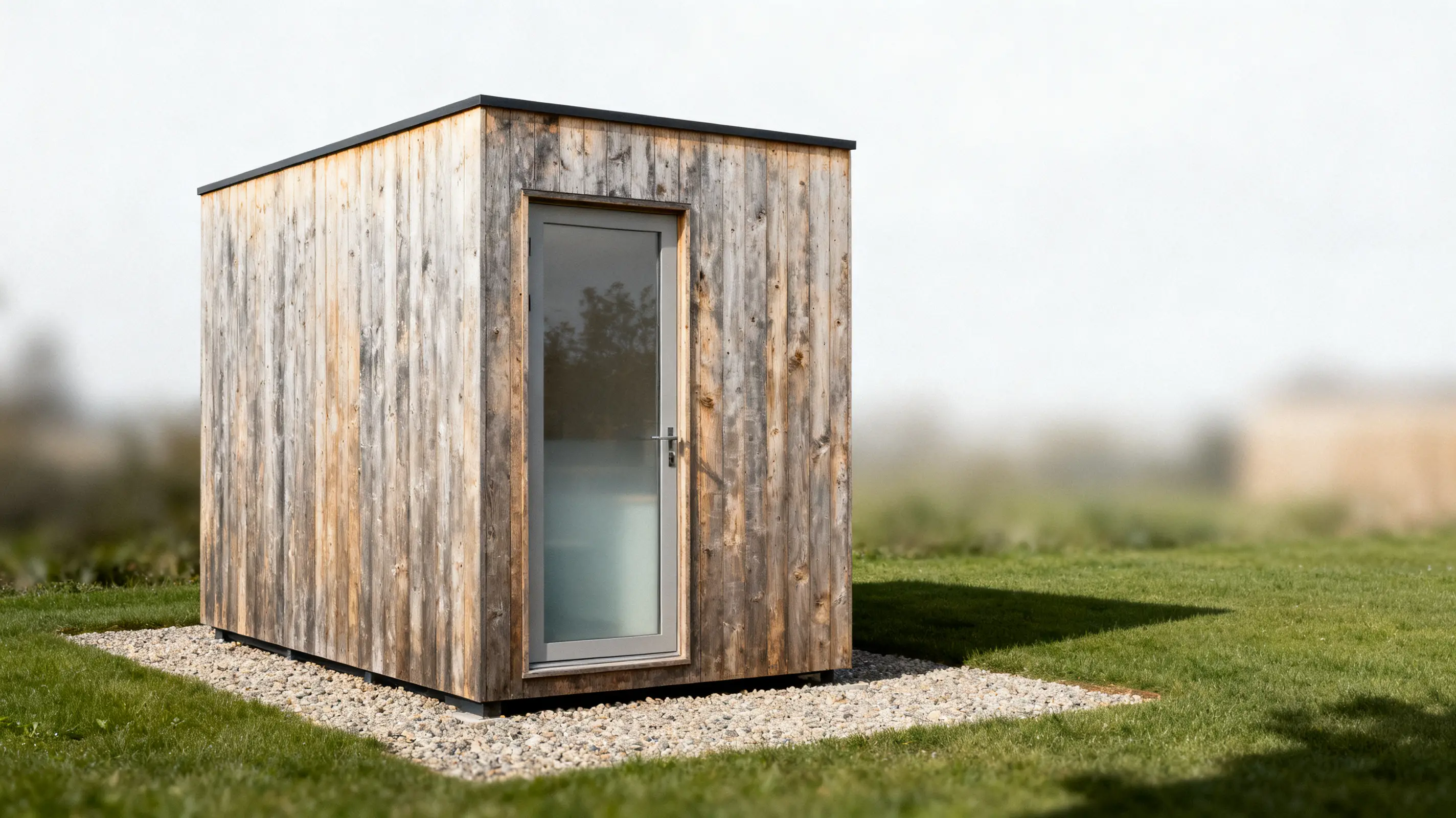
Knowing which type fits your situation saves you from buying the wrong product at the wrong price.
Phone Booth Pods Compact single-person units built for calls and short focused sessions. Smallest footprint available, typically 3 to 4 feet wide. Best for apartments or homes with limited floor space.
Work Pods Larger than phone booths with a proper desk surface, full power integration, and room to work comfortably for a full day. This is the most popular category among full-time remote workers in the US.
Portable and Modular Pods Flat-pack structures you assemble yourself and can relocate when needed. No professional installation required. Best for renters or anyone who moves frequently.
Garden and Backyard Pods Standalone outdoor units installed in your yard. Much larger than indoor options and feel closest to a real separate office. Require a foundation, electrical connection, and weatherproofing. Higher cost but highest level of separation from home.
What to Check Before You Buy
The pod market has grown fast and so has the number of low-quality options filling that demand. Use this before spending anything.
Feature What to Look For Why It Matters
- Acoustic Rating
- STC 30 or above Blocks conversational noise and household sounds
- Ventilation System
- Built-in quiet fan with active air circulation
- Pods overheat within 30 minutes without proper airflow
- Power Access
- Pre-wired outlets and USB ports Add-ons purchased separately cost more and look messy
- Assembly Tool-free or simple panel connection
- Complex builds raise the risk of structural errors
- Footprint Measured against your actual space
- Most pods need 4 to 6 feet of clearance on all sides
- Warranty Minimum 2 years on structure and components
- Shorter coverage signals low confidence in build quality
One tip most buyers skip: check your ceiling height before ordering. Several pods designed for commercial settings are too tall for standard US residential ceilings of 8 feet. Confirm clearance before any purchase.
Why the Factory Behind Your Furniture Matters
The product you receive is only as good as the place that made it. For enclosed spaces like
office pods, this matters more than most people realize. Material quality, structural accuracy, and air safety inside a sealed pod all trace back directly to factory standards.
When evaluating Meet&Co Office Furniture Factory for your home setup, four things separate credible manufacturers from low-quality ones:
Production control: Factories that manufacture entirely in-house maintain consistent quality across every order. Those relying on third-party assembly introduce variation that shows up after delivery, not before.
Material certification: Look for FSC-certified wood and low-VOC finishes. In an enclosed pod where air is concentrated in a small space, material off-gassing is a real health consideration, not just a preference.
Compliance standards: ISO 9001 certification confirms a factory maintains documented quality management processes. BIFMA compliance confirms structural performance has been independently tested under real use conditions.
Customization capability: A capable factory adjusts size, finish, and configuration without dramatically inflating lead time or cost. If a supplier offers no flexibility on dimensions or materials, they are reselling stock, not manufacturing to order.
For office pod for home purchase, buying from a verified factory-direct source removes the retail markup entirely. For home office setups where you are often buying a pod, a desk, seating, and storage together, that saving adds up meaningfully across the full order.
Always ask a supplier directly: where is this made, what certifications does the factory hold, and can you provide material safety documentation? Any credible source answers these questions without hesitation.
Price Ranges at a Glance
Pod Type Price Range (USD)
Best For
- Phone Booth Pod $3,000 to $6,000 Calls and short sessions in small spaces
- Work Pod (Indoor) $6,000 to $15,000 Full working days at home
- Portable Modular Pod $2,500 to $7,000 Renters and people who relocate
- Garden or Backyard Pod
- $15,000 to $40,000 Permanent separate home office
Mid-range indoor work pods in the $6,000 to $10,000 range offer the best long-term value for most full-time remote workers. With a lifespan of 8 to 12 years, the daily cost works out far lower than it looks at first glance.
FAQs
What Is an Office Pod for Home Use?
A home office pod is a self-contained enclosed workspace that sits inside or outside your home. It includes soundproofing, ventilation, lighting, and power access, creating a private professional environment without renovation costs or building permits in most US states.
How Much Does a Home Office Pod Cost in the US?
Prices range from around $2,500 for basic portable units to over $40,000 for permanent
outdoor pods. Most full-featured indoor work pods for daily use fall between $6,000 and $15,000 in 2025. Always confirm whether delivery and installation are included before finalizing any purchase.
Are Office Pods Worth the Investment for Remote Workers?
For full-time remote workers dealing with household distractions, yes. Stanford research shows remote workers with proper dedicated workspaces are up to 13% more productive. A pod creates that environment without the cost or disruption of a home renovation.
What Certifications Should an Office Furniture Factory Have?
Look for ISO 9001 for quality management, ISO 14001 for environmental responsibility, FSC for sustainable material sourcing, and BIFMA compliance for structural performance testing. These are independently verified and not self-reported claims.
Can a Home Office Pod Fit in an Apartment?
Phone booth pods start at 3 to 4 feet wide and work in apartments with sufficient clearance. Always measure your available floor space and ceiling height before ordering. Most reputable manufacturers provide exact dimensions and can advise on fit before you commit.
How Long Do Office Pods Last?
A well-built indoor pod with quality acoustic panels and a solid frame typically lasts 8 to 12 years. Outdoor garden pods built with weatherproof materials can last 15 to 20 years with basic annual maintenance. Check that the warranty covers both structure and internal components separately.
Conclusion
Working from home is not a temporary arrangement. More than 75% of the US workforce now works remotely or in a hybrid setup in some form. The question is no longer whether you work from home. It is whether your home is actually set up to let you perform at your best.
Key Takeaways:
- An office pod solves the distraction and privacy problem without renovation costs
- Match pod type to your daily use pattern, available space, and budget
- Acoustic rating, ventilation, and pre-wired power are the three specs that matter most
- Factory certifications like ISO 9001, BIFMA compliance, and FSC sourcing are non-negotiable quality signals
- Mid-range indoor work pods offer the best value for full-time remote workers
- Factory-direct sourcing removes markup and gives you access to real customization
Your home office should work as hard as you do. Build it right once and you will not have to think about it again.
External References
- Stanford University Economics Research on Remote Work Productivity — https://nbloom.people.stanford.edu/sites/g/files/sbiybj4746/f/wfh.pdf
- Gallup State of the Global Workplace Report 2025 — https://www.gallup.com/workplace/349484/state-of-the-global-workplace.aspx
- US Bureau of Labor Statistics on Remote Work and Productivity — https://www.bls.gov/osmr/research-papers/2024/pdf/ec240060.pdf
- BIFMA Commercial Furniture Standards Overview — https://www.bifma.org/page/standardsoverview
- Fortune Business Insights, Office Furniture Market Growth Report — https://www.fortunebusinessinsights.com/office-furniture-market-106234
- OSHA Computer Workstation Ergonomics Guidelines — https://www.osha.gov/etools/computer-workstations
- EPA Indoor Air Quality Guidelines for Enclosed Spaces — https://www.epa.gov/indoor-air-quality-iaq