Can You Finish a Basement With Foundation Cracks? What Homeowners Need to Know First
You’ve been dreaming about that finished basement for years. The contractor’s quote is finally affordable, you’ve got a Pinterest board full of built-ins and a cozy media corner, and then you see it.
A hairline crack running down the foundation wall, right where the new drywall is supposed to go.
Stop. Don’t panic, but don’t grab a paintbrush either. The honest answer to “can I finish over this?” is sometimes yes and sometimes absolutely not, and the gap between those two outcomes is the difference between a basement you love and a teardown in three years.
Here’s what to figure out before anything gets framed.
First, Understand What You’re Looking At
Not every crack is a crisis. Concrete is going to crack. It shrinks as it cures, shifts as the ground settles, and much of what you see on a foundation wall is cosmetic.
The trick is knowing which kind you’re dealing with, because the type of crack tells you almost everything about whether you can move forward.
There are four you’ll run into most often.
- Hairline and shrinkage cracks are thin, often spidery, and show up in the first year or two as the concrete cures. These are usually harmless.
- Vertical cracks run straight up and down or lean slightly. Many are minor, but keep an eye on the width and whether water seeps through during heavy rain.
- Horizontal cracks are the ones that should get your attention. A crack running sideways across the wall often means soil pressure is pushing in from outside, and that’s a structural conversation, not a cosmetic one.
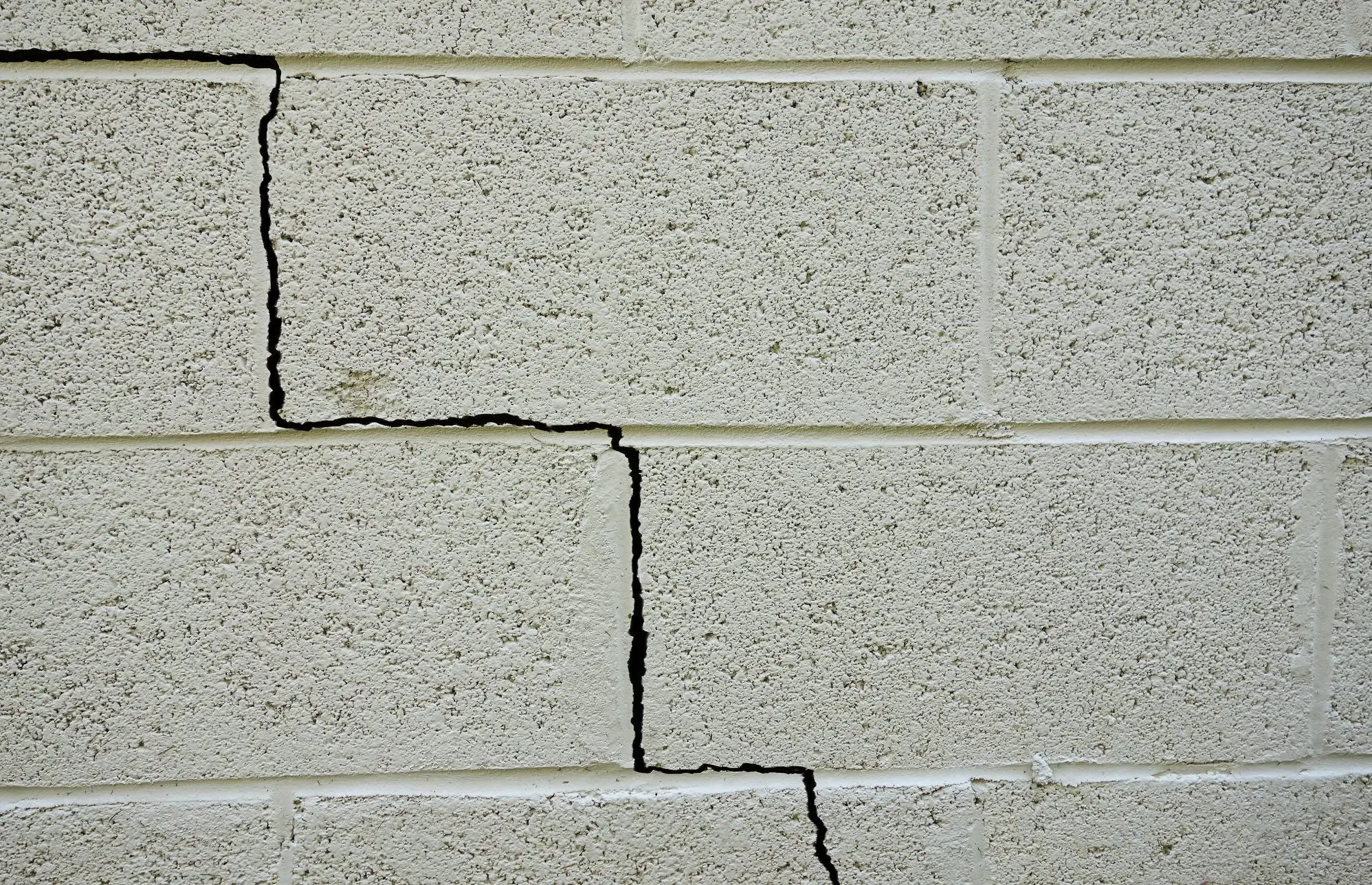
- Stair-step cracks zigzag along the mortar joints in block walls. They point to settlement or movement and need a professional eye before you do anything else.
| Crack Type | Typical Cause | Cosmetic or Structural? | What to Do |
|---|---|---|---|
| Hairline/shrinkage | Normal concrete curing | Usually cosmetic | Monitor, seal if it leaks |
| Vertical | Minor settling | Usually minor | Watch width and water |
| Horizontal | Soil or water pressure | Structural warning | Get it assessed before finishing |
| Stair-step (block) | Settlement or movement | Structural warning | Get it assessed before finishing |
Cosmetic or Structural? The Line That Decides Everything
A few quick screening questions will tell you a lot before a pro ever shows up.
How wide is it? A rough rule of thumb: anything under about 1/8 inch is often cosmetic, while wider gaps deserve a closer look.
Is it growing? Mark the ends with a pencil and a date, and check back in a few weeks. A crack that’s moving is active.
Does it leak? Water coming through is a problem, no matter how thin the crack looks.
Is the wall bowing, leaning, or bulging anywhere? That’s a stop-everything sign.
This is a screening guide, not a diagnosis. It helps you decide whether you’re probably fine or whether you need someone to look before you spend a dime on finishing.
Why Finishing Over a Problem Backfires
It’s tempting to cover it up. The crack is small, the quote is good, and out of sight feels like out of mind. Here’s why that math doesn’t work.
You Trap Moisture Where You Can’t See It
Frame a wall, add insulation, hang drywall, and any water still finding its way in now has a dark, enclosed space to sit in. That’s how you get mold behind a wall that looked perfect on move-in day.
You Lose Your Early Warning System
A bare foundation wall shows you everything. Cover it, and the next sign of movement might be a door that won’t close or a floor that’s gone uneven, long after the cheap fix window has closed.
You Can Void Your Warranties
Finishing over a known structural issue can nullify your contractor’s coverage and complicate your homeowner’s insurance. And when something does go wrong, you’re not just repairing the foundation. You’re tearing out the basement you just paid to build.
The Right Sequence: Assessment, Repair, Waterproofing, Finishing
There’s an order to this, and it can’t be reshuffled. Every step assumes the one before it is done.
Step 1: Get It Assessed
Before any decisions, have the foundation evaluated so you know what you’re actually dealing with. A real diagnosis turns guesswork into a plan.
Step 2: Repair What Needs Repairing
If the assessment reveals a structural issue, fix it now while the wall is open and accessible. This is the moment repairs are cheapest and easiest.
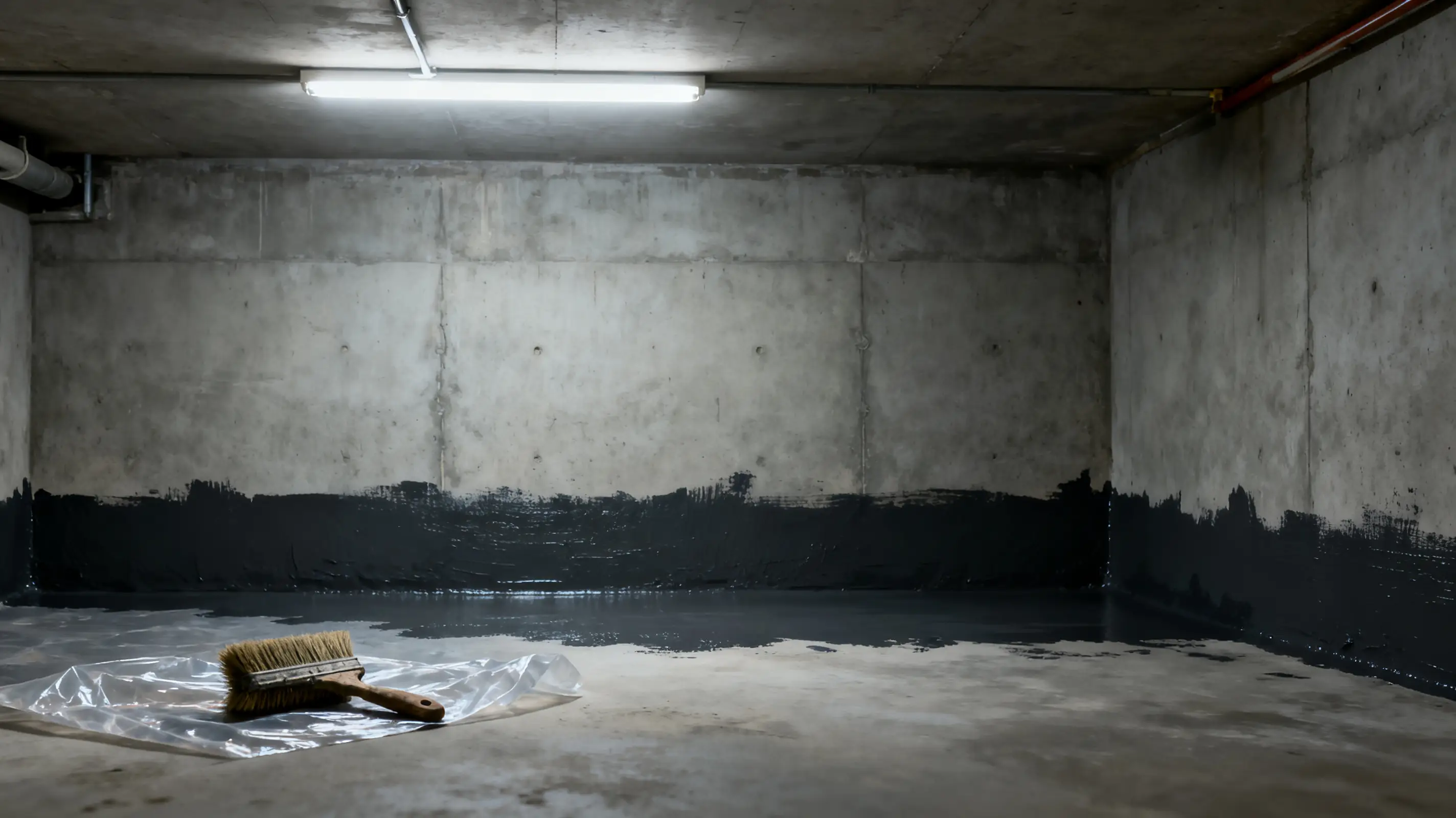
Step 3: Waterproof Before You Close the Walls Up
Even a sound wall benefits from proper waterproofing once you’re committing to a finished space. Do it before the framing goes in, not after the carpet’s down.
Step 4: Then Finish
Now you build. Frame, insulate, drywall, and decorate, knowing the structure underneath is solid and dry. This is where the fun starts, from picking wall textures to planning recessed lighting.
What a Professional Foundation Assessment Actually Includes
If you’ve never paid for one, here’s what you’re getting. A good foundation evaluation measures and documents each crack, then establishes monitoring to determine whether it’s active. It checks for moisture and water entry, since a dry crack and a leaking one are different problems. It evaluates the cause, whether that’s soil pressure, settlement, or hydrostatic pressure from groundwater. And it ends with a clear repair recommendation and scope, so you know exactly what’s needed and what it costs.
Chris Watkins, who owns Advanced Basement Solutions in Pittsburgh and spent nearly two decades inspecting foundations before buying the company, puts it simply: “Most of the cracks we look at turn out to be minor,, but that’s not something you want to guess at. The expensive ones are almost always the ones somebody covered up first.”
The reassuring part: an assessment is cheaper than a redo. You’re spending a little now to avoid spending a lot later.
Look First, Then Build
A foundation crack isn’t necessarily a dealbreaker. It’s a checkpoint. Some cracks are the concrete just being concrete, and some are the wall asking for help, and the only way to know which is to look before you build.
So get it assessed, fix what needs fixing, waterproof, and then build the basement you’ve been picturing all along, right down to where the couch goes. Do it in that order, and the crack becomes a footnote. Skip a step, and it becomes the story.