How to Stop Water Leaking from the Side of a Shower Door
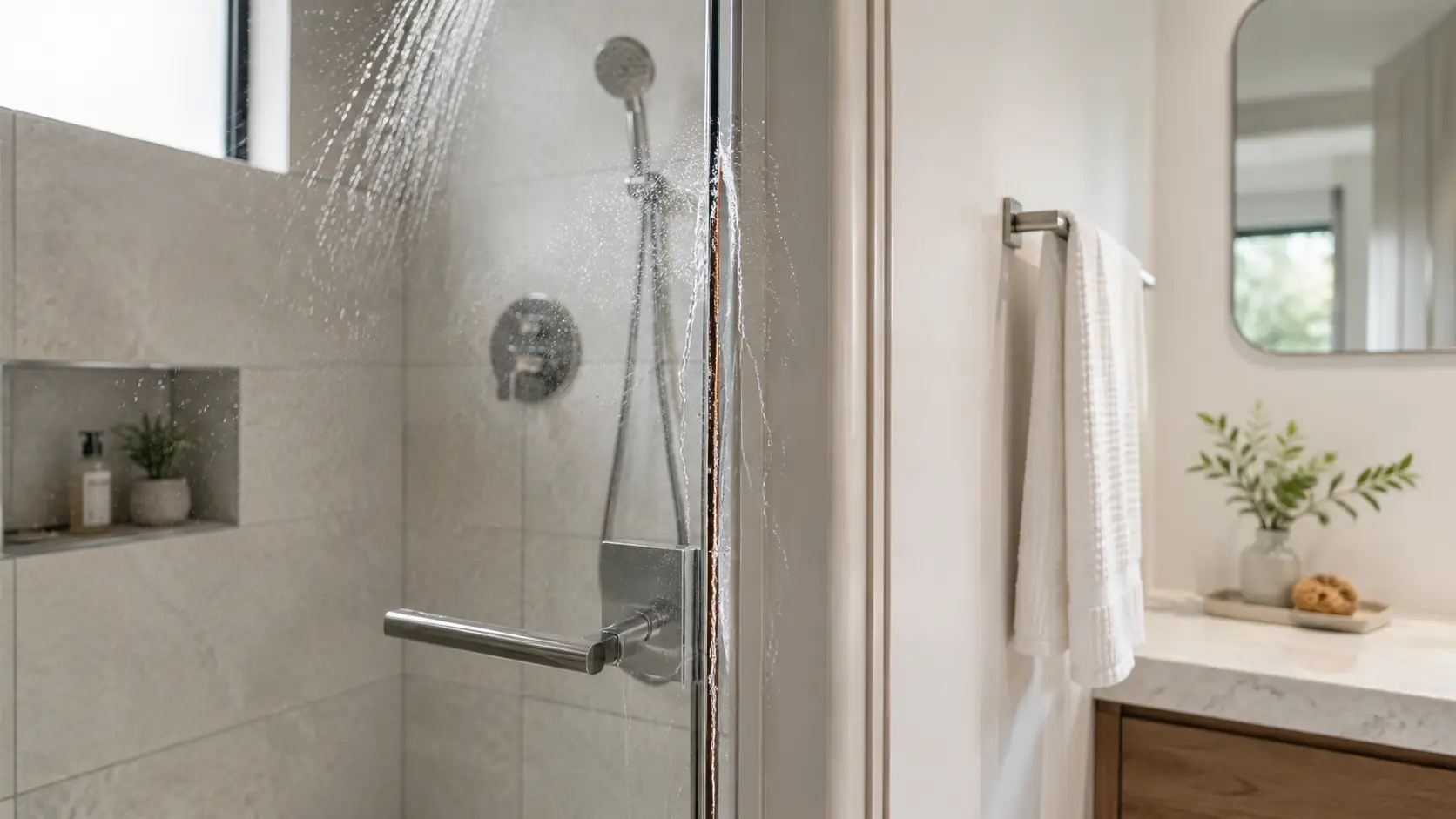
Some bathroom problems creep up on you. At first, it might just be a damp line on the tiles beside the shower door. Then you notice water running down the edge of the frame. After a few showers, a pattern becomes obvious: whenever the spray hits one side of the door, water finds its way out through a small gap.
It is easy to misread this kind of leak. Water naturally runs downwards, so by the time you notice it, it may already be near the lower part of the door. That does not automatically mean the bottom seal is the problem. With side leaks, the useful question is where the water first escapes, not where it ends up. Once you know that, it becomes much easier to decide whether you are dealing with a worn seal, a door alignment issue, or simply water being aimed at the wrong spot.
When to Check the Side Seal
Start with the area dry. Wipe the shower door, frame and surrounding tiles, then run the shower for a minute or two while watching the side of the door. Instead of looking straight at the bottom edge, watch the vertical closing edge, the magnetic side, the hinge side, and the point where any fixed glass panel meets the wall.
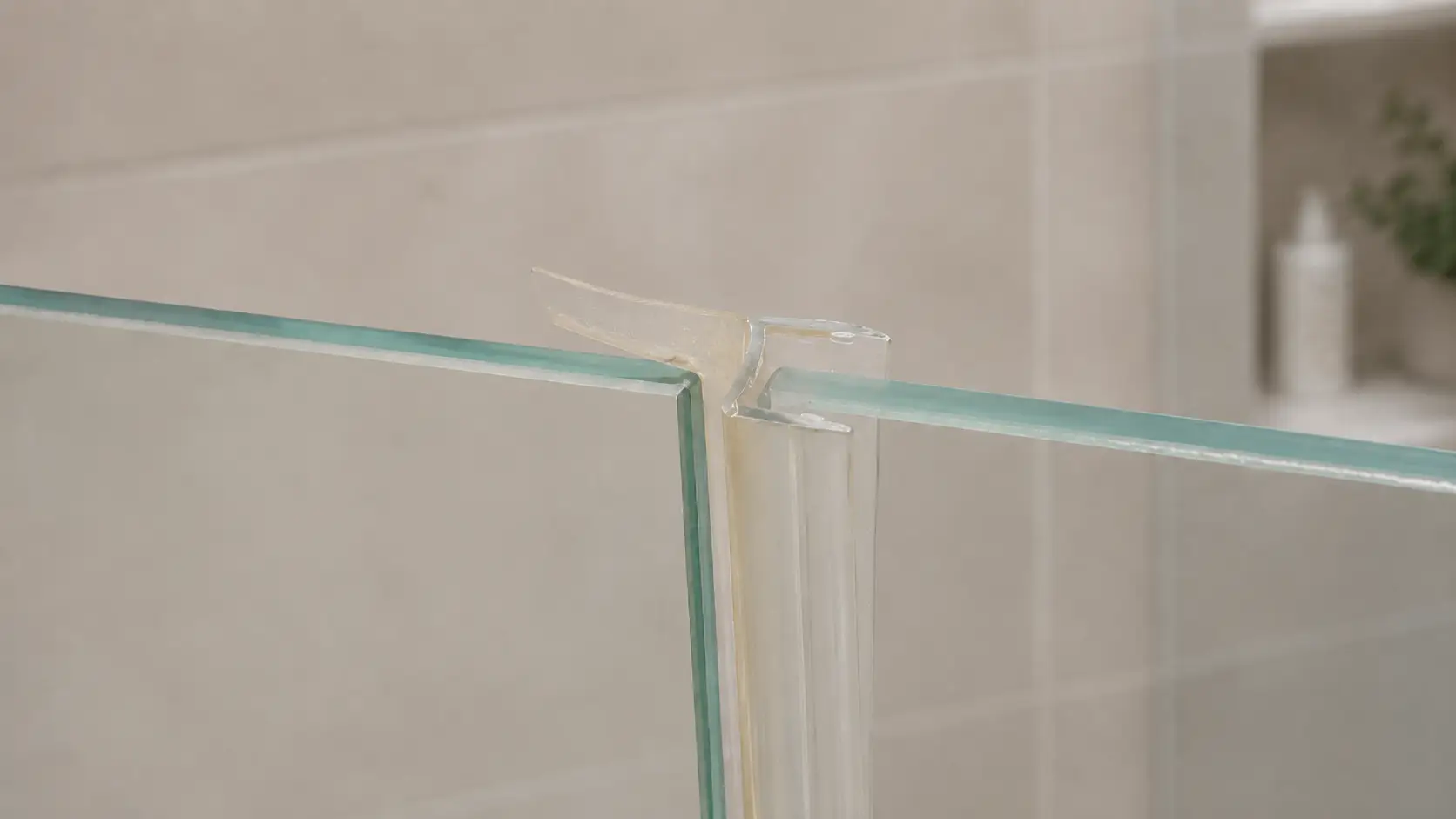
If water appears along the vertical edge when the door is closed, the side seal is worth a closer look. An old PVC seal does not always fail dramatically. It may still be clipped onto the glass, but the soft edge can become stiff, curled, discoloured or slightly too loose to cover the gap properly. In that situation, it is usually better to compare the old profile and glass thickness before choosing a suitable shower door vertical seal strip, rather than buying a generic strip that only looks similar in a photo.
If the water comes from the same vertical closing edge each time, then it is reasonable to ask whether the existing seal is no longer doing its job. This is where a site such as Simba Seal can be useful: pages that organise seals by glass thickness, gap coverage and profile shape give you more to work with than a single product image.
That said, a side leak is not always just a seal problem. The door position, the age of the enclosure and even the direction of the shower spray can all play a part.
Why Water Starts Escaping from the Side
In many cases, the seal is still there, but it has stopped working properly. Shower doors get used every day, especially in family bathrooms, shared houses, rental properties and holiday lets. Over time, hot water, limescale and cleaning products can make a seal harder and less flexible. The door may look closed, but a narrow side gap can still remain.
If the seal looks intact, check whether the door has shifted slightly. A hinged door can drop a little over time. A sliding door track can loosen. A magnetic edge can stop lining up cleanly. These small changes are not always obvious at first glance, but they can be enough for water to escape when the spray hits the side of the door. In that case, adding a thicker seal may only make the door harder to close.
The direction of the shower spray is another thing people often overlook. Frameless and semi-frameless shower doors are not designed to behave like sealed boxes. If strong water pressure is aimed directly at a gap for long enough, water can still get out even when the seal is in reasonable condition. In a small bathroom, a walk-in shower, or any layout where the shower head sits close to the glass, simply changing the spray angle can make a noticeable difference.
Once the problem looks more like a worn seal than a spray or alignment issue, the next step is choosing a replacement. This is where guessing often causes trouble.
Do Not Choose a Replacement by Guesswork
Before buying a replacement, check three things: the glass thickness, the side gap and the shape of the existing seal.
Glass thickness matters because the seal needs to grip the glass firmly. Common sizes include 6mm, 8mm and 10mm, and each needs the right channel size. The side gap matters because the fin or soft edge has to cover the opening without getting crushed when the door closes. A longer fin is not automatically better; too short and it will miss the gap, too long and it may bend out of shape.
Most PVC side seals that clip onto the glass edge can be removed and trimmed at home, provided the size is right and the door itself is not badly out of line.
The profile shape matters too. Some seals are made for magnetic closing edges, some sit between a fixed glass panel and a moving door, and others are used where sliding doors overlap. Two seals can look almost the same online but fit very differently once they are on the door.
This matters for landlords, tenants and anyone tidying up an older bathroom. Many side leaks do not call for a whole new shower door. They simply need the old seal to be matched properly to the glass and the gap. The right seal should let the door close naturally while covering the side opening, not force the door into position.
Not Every Side Leak Needs a New Seal Immediately
If the seal is mainly dirty, try cleaning the glass edge and the inside of the seal first. Let everything dry, then press the seal back into place. If the leak only happens when the shower spray is aimed straight at the gap, adjust the shower head before replacing anything. If the door is visibly out of line, deal with the alignment first.
But if the seal is cracked, stiff, no longer grips the glass, or still leaves a visible side gap when the door is closed, replacing it is usually a cleaner fix than repeatedly adding sealant. This is especially true on the moving edge of the door. Sealing that edge shut with silicone may seem like a quick answer, but it can stop the door opening and closing properly and make the next repair more awkward.
If you still cannot see a clear water path, or the water seems to be coming from behind a fixed part of the enclosure, it is worth widening the inspection beyond the seal.
When to Call a Professional
If the water appears to come from the side but the real source is behind the frame, at the wall connection, or where the shower tray meets the wall, the side seal may not be the main issue. The problem could involve the installation angle, failing silicone, or waterproofing behind the surface.
A simple way to separate the two is this: if water crosses the edge of the moving door, start with the door, seal and spray direction. If it slowly appears from behind a fixed part of the enclosure, bring in someone who can inspect the installation properly.
A side leak in a shower door is often easier to deal with once you stop chasing the water at its lowest point. Find where it first gets out, then work through the likely causes in order: alignment, seal condition, spray direction and fixed edges. That approach makes it less likely that you will replace the wrong part, and much more likely that a small leak stays a small repair.