Crane-Assisted Tree Removal: The Safest Solution for Large and Dangerous Trees
Removing large or hazardous trees is a high-risk operation that demands precision, planning, and the right equipment. Many property owners underestimate the dangers involved until they face issues such as falling branches or safety hazards.
That is where advanced solutions like Crane Tree Removal Cheshire come into play. This method offers a safer and more efficient approach, especially when dealing with large trees in confined or sensitive areas.
Understanding how crane-assisted removal works can help you make better decisions when safety and efficiency matter most.
Why Traditional Tree Removal Methods Are Not Always Enough
Traditional tree removal techniques rely heavily on manual cutting and controlled dropping. While effective in open spaces, these methods often fall short in more complex scenarios.
Key limitations include:
- Limited control over falling branches
- Increased risk of property damage
- Difficulty accessing tight or obstructed areas
- Greater physical risk for workers
In urban or residential environments, these risks multiply. Trees located near homes, driveways, or power lines require far more precision than traditional methods can offer.
What Is Crane-Assisted Tree Removal and How Does It Work?
Crane-assisted tree removal is a specialized method that uses heavy machinery to lift and remove sections of a tree safely. This approach becomes essential when trees are too large to be safely dropped using traditional methods or when surrounding structures restrict movement and limit safe working space.
To ensure precision and control, professionals rely on advanced equipment such as hydraulic cranes for heavy lifting. Moreover, it includes rigging systems for securing tree sections, chainsaws for controlled cutting, and safety harnesses to protect workers throughout the operation.
Types of Trees Best Suited for Crane Removal
Certain trees require crane-assisted removal due to their condition, size, or location. These trees present higher risks and demand controlled handling to avoid accidents or damage.
Dead or Decaying Trees
Dead or rotting trees often become structurally weak and unpredictable. Sections can break off without warning, making crane assistance necessary for safe dismantling.
Storm-Damaged Trees
Trees affected by storms usually have compromised stability. Cranes help remove damaged sections carefully without causing further hazards.
Overgrown Trees Near Buildings
Trees growing too close to homes or structures pose a serious risk during removal. Crane lifting ensures precise handling without impacting nearby property.
Trees with Uneven Weight Distribution
Trees with heavy or imbalanced branches are difficult to cut safely. Cranes stabilize and support sections during removal, reducing the chance of sudden shifts.
Step-by-Step Process of Crane-Assisted Tree Removal
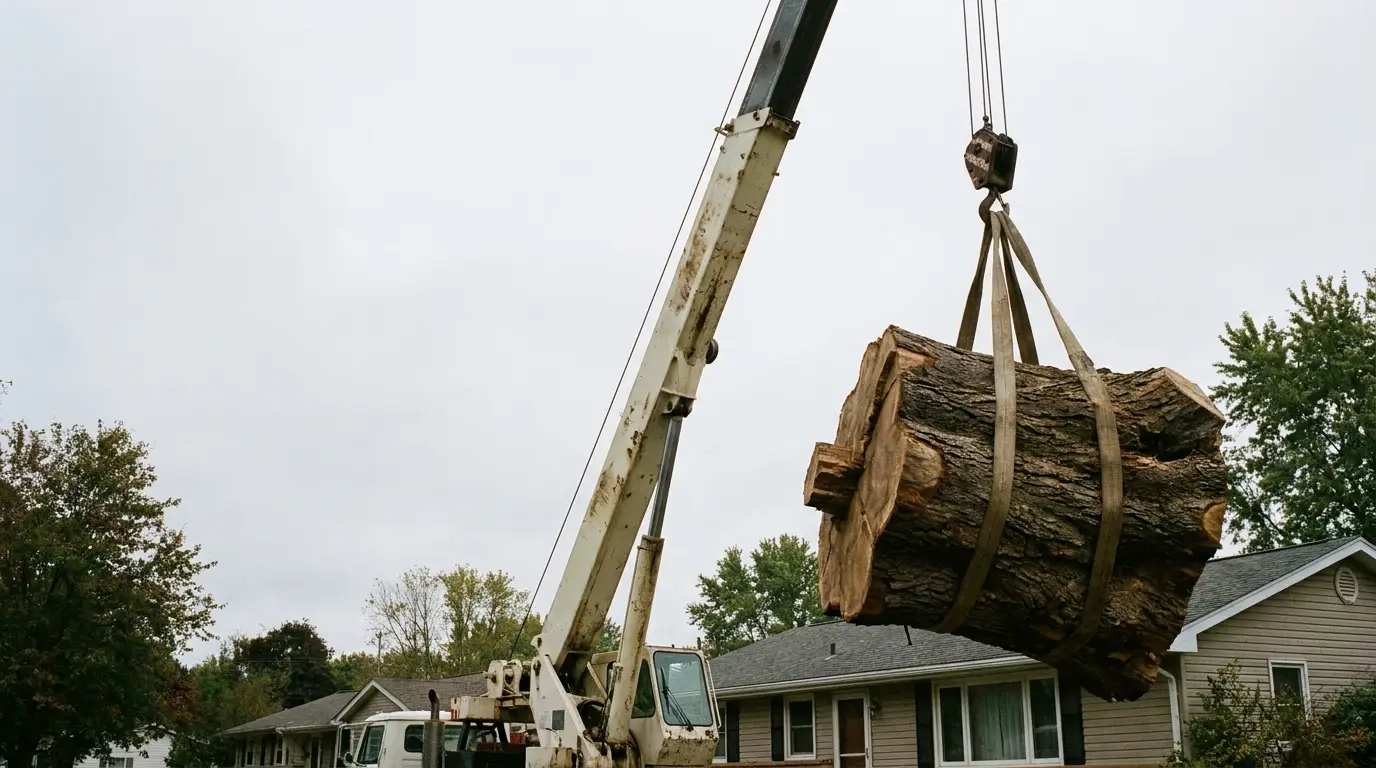
A systematic process ensures that every stage of the removal is safe, efficient, and controlled.
Step 1: Site Inspection and Planning
Professionals begin with a detailed assessment of the site. They evaluate tree condition, surrounding obstacles, and potential risks to develop a safe removal strategy.
Step 2: Crane Positioning
Then the crane is carefully positioned to maximize reach and maintain balance. Proper placement is critical for smooth and controlled lifting.
Step 3: Cutting and Securing Tree Sections
After careful positioning, workers cut the tree into manageable sections while securing each piece with rigging systems. This prevents uncontrolled falls.
Step 4: Controlled Lifting and Removal
The crane lifts each section safely and transports it away from the site. This minimizes impact on the surrounding area.
Step 5: Debris Clearance
Once the tree is removed, the team clears debris efficiently, leaving the area clean and safe.
Key Benefits of Using a Crane for Tree Removal
Understanding the process highlights why crane-assisted removal offers clear advantages in safety and efficiency.
Enhanced Safety for Workers and Property
Crane-assisted removal significantly reduces uncontrolled movement. Each section is lifted with precision, minimizing risk.
Faster and More Efficient Operations
Projects that would take days using traditional methods can often be completed in hours.
Ideal for Restricted or Urban Environments
Cranes allow access to areas where manual methods fail, such as:
- Backyards with limited entry
- Narrow streets
- Dense residential zones
Reduced Environmental Impact
Controlled removal prevents unnecessary damage to surrounding vegetation and soil.
When Should You Consider Crane Tree Removal?
Knowing the benefits also helps identify when crane-assisted removal becomes essential.
- Trees located near buildings or power lines require careful handling because their proximity increases the risk of structural damage or safety hazards. Crane-assisted removal ensures each section is controlled and safely moved away from sensitive areas.
- Storm-damaged or unstable trees often become unpredictable due to weakened structures. Crane removal provides the precision needed to handle these trees safely while eliminating guesswork during the process.
- Large or mature trees with structural risks tend to develop internal weaknesses over time. Crane-assisted methods allow professionals to dismantle these trees in sections, ensuring safe and controlled removal.
- Limited access areas make traditional tree removal difficult or unsafe due to restricted space. Cranes offer the reach and flexibility needed to operate efficiently in tight or confined environments.
Common Misconceptions About Crane Tree Removal
“It Is Only for Extreme Cases”
While ideal for high-risk situations, crane removal is also beneficial for efficiency and precision in standard scenarios.
“It Is Too Expensive.”
Although upfront costs may seem higher, reduced labor time and lower risk of damage often make it cost-effective.
“It Damages the Landscape”
In reality, controlled lifting minimizes ground disturbance compared to heavy manual operations.
How Professional Tree Services Ensure Safety and Compliance
Professional tree services follow strict safety standards to manage risks and ensure full compliance.
Risk Assessments
Experts evaluate every aspect of the site before beginning work.
Certified Operators
Qualified professionals handle cranes and cutting equipment with precision.
Insurance and Liability Coverage
Professional services protect both workers and property owners.
Environmental Considerations
Responsible teams ensure minimal ecological disruption.
Professional Crane Tree Removal Services You Can Trust
SKJ Tree Removal provides expert crane-assisted tree removal services designed to handle complex and high-risk tree felling with precision and safety. The company focuses on delivering efficient solutions for large, hazardous, or difficult-to-access trees by using advanced equipment and skilled professionals.
With a strong commitment to safety, careful planning, and minimal property disruption, SKJ Tree Removal ensures that every project is completed smoothly. SKJ is a reliable choice for homeowners and property managers facing challenging tree removal needs.
Conclusion
Tree removal is more than just cutting wood. It involves risk management, technical expertise, and careful execution. Crane-assisted tree removal stands out as the safest and most efficient solution for complex situations.
If you are facing a challenging tree removal project, investing in the right method can save time, protect your property, and ensure everyone’s safety. Making informed decisions today can prevent costly and dangerous outcomes tomorrow.