How to Unclog a Toilet Without a Plunger: 8 Methods That Work
A clogged toilet always seems to happen at the worst possible time, and usually when there’s no plunger around. Knowing how to fix a clogged toilet without a plunger means you’re never stuck waiting for a tool you don’t have.
Most blockages can be cleared with items you already have at home, such as dish soap or a plastic bottle. Some fixes take five minutes, others need a short wait, and a few require a basic tool from the hardware store.
The right move depends on what’s causing the blockage, not just how bad it looks. Soft clogs respond very differently from solid ones, and the method matters.
Start from the simplest fix and work up to the more heavy-duty solutions. Most clogs won’t make it past the first few attempts.
Immediate First Step: Prevent Overflow
Before you try anything else, stop the water. This keeps a bad situation from getting worse.
Turn off the shut-off valve first. It’s the small knob or oval handle on the wall behind your toilet, close to the floor. Turn it clockwise until it stops. This cuts the water supply and prevents more water from entering the bowl.
- If the valve is stuck or won’t budge, don’t force it; it can snap or leak.
- Instead, lift the toilet tank lid and manually push the rubber flapper down.
- The flapper sits at the bottom of the tank. Pressing it down seals the drain and stops water from flowing into the bowl.
This buys you time to unclog without water spilling onto your floor.
The valve method works in almost every case. Manual flapper sealing is your backup when the valve is damaged or too stiff to turn. Either way, getting the water under control is always your first move, not the plunger.
How to Fix a Clogged Toilet Without a Plunger?

When you need to unclog a toilet with no plunger in sight, the right method depends on what is causing the blockage, not just how severe it looks. Here are the fixes to try:
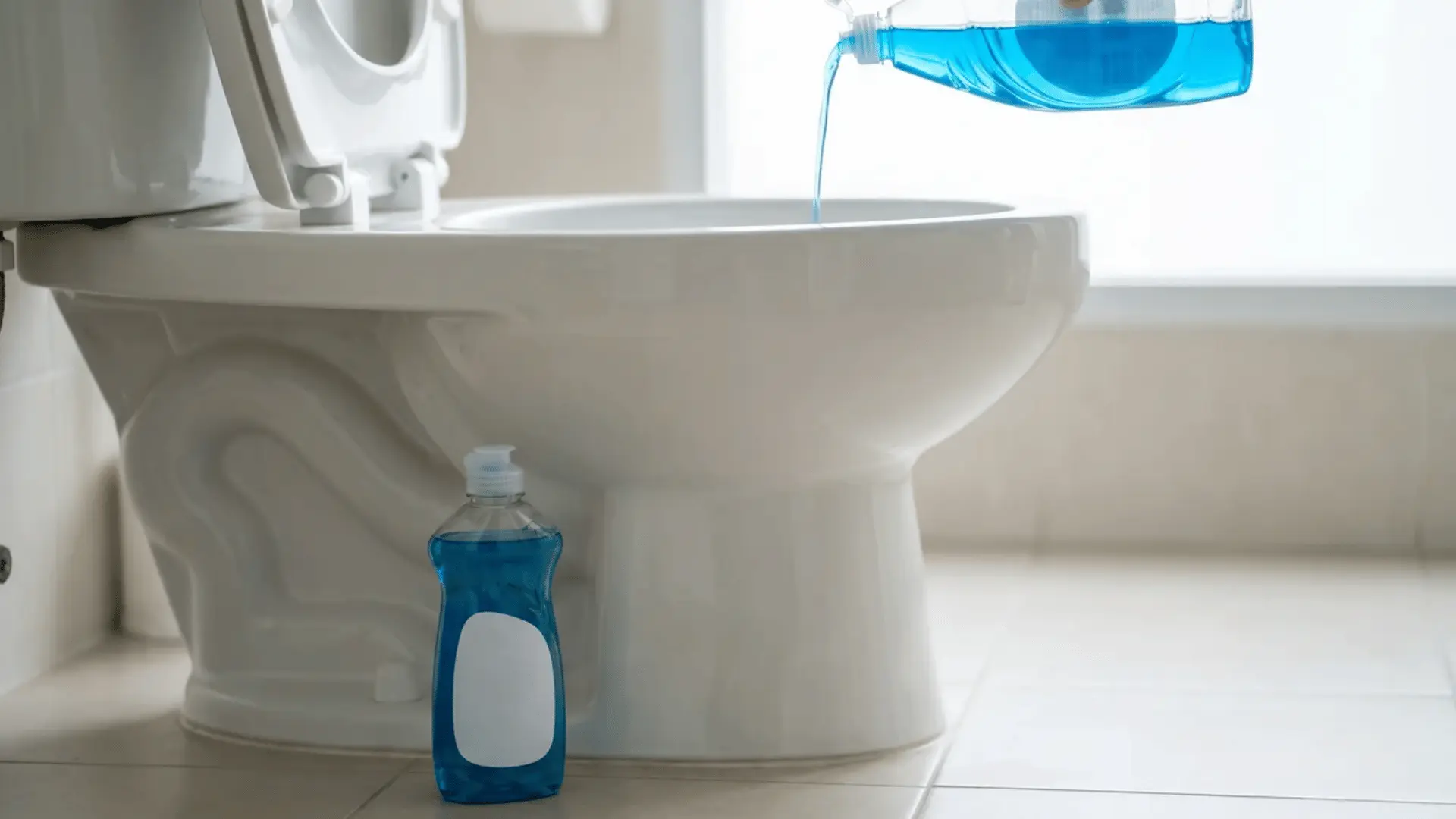
Method 1: Dish Soap and Hot Water
Squeeze about ½ cup of dish soap directly into the bowl and let it sit for 20–30 minutes.
The soap coats the clog, making it slippery enough to pass through. While waiting, heat a bucket of water to a hot but not boiling temperature.
Once ready:
- Pour the hot water from waist height for natural downward pressure
- Watch the water level drop steadily as the clog clears
- Repeat once more if needed after a 10-minute wait
This works best on soft, organic blockages like paper buildup or compacted waste.
💡 Tip: Adding a few drops of baby oil alongside the dish soap increases lubrication and helps stubborn soft clogs slide through faster.
Method 2: Baking Soda and Vinegar Reaction
Pour 1 cup of baking soda directly into the bowl, getting it as close to the drain as possible.
Then slowly add 2 cups of white vinegar to avoid fizzing over the rim. The bubbling reaction breaks down organic buildup and loosens the clog from the pipe walls.
Once the mixture is in:
- Let it sit and fizz for at least 30 minutes without flushing
- Pour a bucket of hot but not boiling water from waist height
- Check if the water level drops after the hot water flush
This method works well on soft, compacted blockages but will not move solid objects.
💡 Tip: Use fresh baking soda straight from a sealed box for the strongest reaction. An open box that has been sitting out for weeks loses its potency and produces a noticeably weaker fizz.
Method 3: Wire Hanger Makeshift Snake
Unwind a standard wire hanger completely into one long piece, then bend one end into a small hook.
Before inserting it, wrap the hooked end with an old cloth or rubber bands to protect the porcelain from scratches.
Once it is ready:
- Feed the wrapped hook slowly into the drain opening
- Push forward to break the clog apart or rotate and pull back to hook onto it
- Work the wire in small circles around any resistance rather than jabbing aggressively
This method works best on blockages sitting close to the drain opening where the wire can reach.
💡 Tip: Wear rubber gloves before handling the wire hanger. The bare metal edges can be sharp once unwound, and working near toilet water without hand protection is an easy way to pick up bacteria through a small cut or nick.
Method 4: Toilet Brush Plunger Alternative
Your toilet brush can generate enough pressure to shift a minor clog when nothing else is available.
Push the brush head firmly into the drain opening and move it up and down rapidly to create alternating pressure and suction.
For better results:
- Wrap the brush head tightly in a plastic bag before inserting it
- Hold or tie the bag firmly at the base so it does not slip off mid-use
- Keep strokes firm and steady for 15–20 seconds before checking the water level
This works well on fresh, soft clogs that have not fully set in yet.
💡 Tip: After using the brush this way, soak it in a bucket of hot water mixed with a small amount of disinfectant before returning it to its holder. The drain contact makes standard rinsing insufficient for proper cleaning.
Method 5: Plastic Bottle Pressure Trick
Remove some water from the bowl first so it is not overfull. Fill a large plastic bottle with warm water, press your thumb firmly over the opening, and position the bottle mouth directly over the drain before squeezing hard and fast.
For maximum pressure:
- Press the bottle mouth as close to the drain opening as possible before squeezing
- Squeeze hard and fast in two or three quick bursts back to back
- Use the largest bottle available since more water volume means more force behind each push
This works best on soft, partial clogs sitting near the top of the drain.
💡 Tip: Slightly warming the plastic bottle under hot tap water before use makes it more flexible and easier to squeeze with full force, giving each burst a little more pressure than a stiff, room-temperature bottle would allow.
Method 6: Using a Wet/Dry Vacuum (if Available)
A wet/dry vacuum pulls the clog out rather than pushing it through, making it one of the more controlled options available.
Switch it to liquid mode first before doing anything else, as a dry setting will damage the motor on contact with water.
To get the best results:
- Press the hose attachment firmly over the drain opening for the tightest seal possible
- Hold the hose steady throughout without breaking the seal
- Keep the vacuum running for 20–30 seconds before checking the bowl
This method works particularly well for soft clogs or objects that should not be forced deeper into the pipe.
💡 Tip: Wrap the hose attachment with an old towel or rag before pressing it over the drain. It fills the gaps around the hose more effectively than the hard plastic alone, creating a noticeably tighter seal and stronger suction with each attempt.
Method 7: Using a Toilet Auger (Manual Snake)
A toilet auger is the right tool when every other method has failed and the blockage sits deeper than surface fixes can reach.
Feed the cable slowly into the drain until you feel resistance, then twist the handle clockwise while applying steady forward pressure.
Once you hit the blockage:
- Twist and push to break the clog apart so it can flush through
- Or rotate and pull back to hook into it and remove it completely
- Dispose of anything that comes out directly rather than flushing it back down
The protective sleeve at the base prevents porcelain scratches while working.
💡 Tip: After pulling the cable back out, wipe it down with a disinfectant cloth before retracting it fully into the sleeve. Pulling a dirty cable back through the sleeve makes it harder to clean and shortens the tool’s lifespan over time.
Method 8: Plumber’s Secret – DIY Chemical Solution (for Organic Blockages)
Pour 2 cups of washing soda into the bowl, followed by 2 cups of white vinegar, and let the fizzing reaction work for a full 30 minutes without flushing.
Follow up with a bucket of hot but not boiling water poured from waist height.
This works because:
- Washing soda breaks down organic matter and grease as a strong alkali
- Vinegar adds an acidic reaction that loosens buildup along the pipe walls
- The hot water follow-up adds pressure and carries dissolved material through
This method only works on organic blockages and will not affect solid objects.
💡 Tip: Washing soda and baking soda are not the same product despite similar names. Washing soda is significantly stronger and produces a more effective reaction for drain blockages. Using baking soda as a substitute here will give noticeably weaker results.
Methods to Avoid: What Not to Do for a Clogged Toilet

Not every fix you find online is safe to try. Some methods can crack your toilet, corrode your pipes, or create a bigger problem than the clog itself.
- Boiling water can crack the porcelain bowl; hot water works, but never take it to a full boil.
- Drano and similar drain chemicals are too harsh for toilets and can corrode pipes and seals over time.
- Bleach-based cleaners poured in large amounts can damage rubber components inside the tank and bowl.
- Caustic chemical combinations, like mixing bleach with vinegar, release toxic fumes and should never be used in an enclosed bathroom.
- Wire hangers without any padding or covering can scratch and gouge the porcelain inside the drain.
When in doubt, stick to mechanical methods or mild DIY solutions. A cracked bowl or corroded pipe will cost far more to fix than a stubborn clog.
When to Call a Professional Plumber?
If none of the methods clear the blockage after several solid attempts, the clog is likely sitting deeper in the drain line than any DIY tool can reach.
Multiple slow drains elsewhere in the house, gurgling sounds, or a toilet that keeps blocking within days of clearing are all signs that professional help is needed.
Conclusion
Knowing how to fix a clogged toilet without a plunger turns a stressful moment into a manageable one.
From dish soap and hot water to baking soda reactions, wire hangers, and a toilet auger, each method targets a different type of blockage at a different depth.
The softer the clog, the simpler the fix. The deeper it sits, the more reach you need. Starting simple and stepping up only when needed saves time and avoids unnecessary mess.
When you need to unclog a toilet with no plunger, the method you choose matters more than the effort you put in.
Already tried one of these fixes? Drop your experience or favorite method in the comments below!
Frequently Asked Questions
Can a Toilet Unclog Itself Overnight?
Sometimes. Minor, soft clogs can dissolve or shift with time, but solid blockages won’t clear on their own and need active intervention.
Is it Safe to Flush a Partially Clogged Toilet?
No. Flushing a partially clogged toilet can cause an overflow. Wait until the water drains fully before attempting another flush.
How do I Know if The Clog is in The Toilet or Further Down the Pipe?
If other drains in the house are also slow or gurgling, the blockage is likely in the main line, not the toilet itself.