
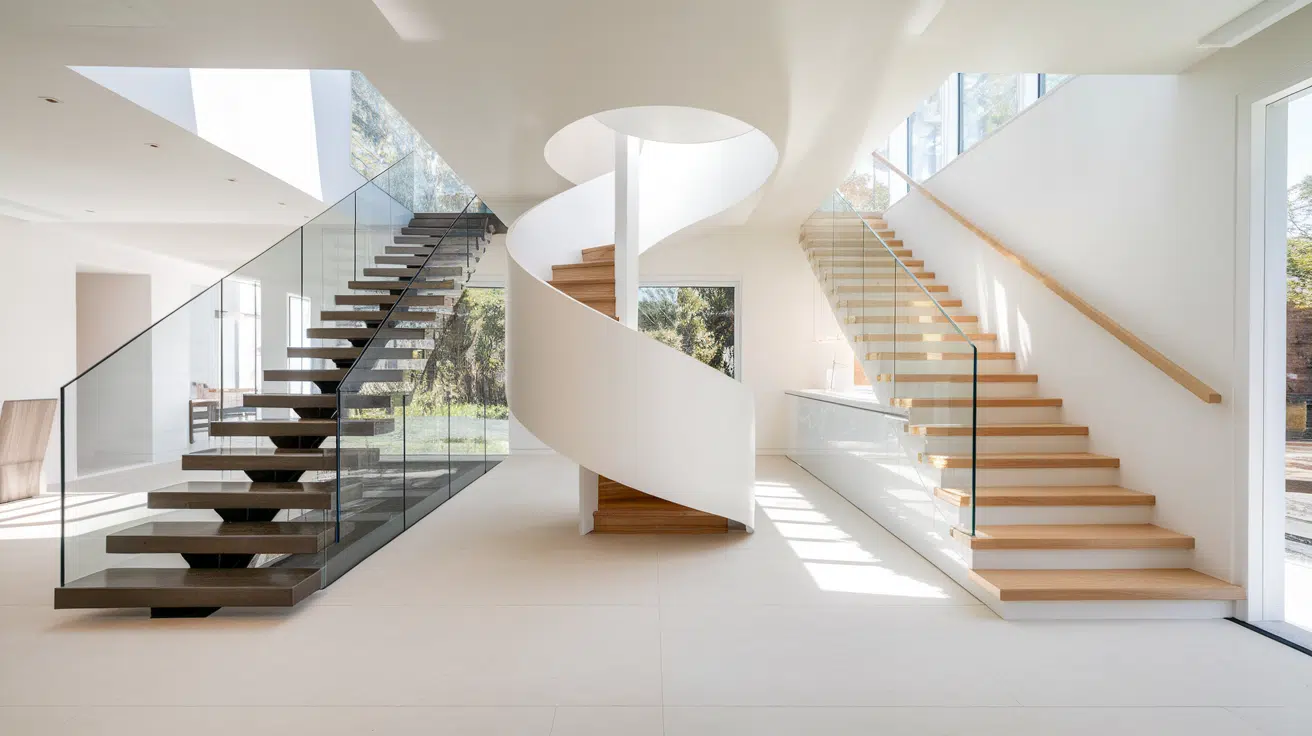
13 Staircase Designs: Which One Fits Your Space?
Staircases do more than move you between floors. They shape how your space looks and feels.
Pick the wrong design, and you waste money, space, or safety. Pick the right one, and you get a functional feature that adds real value to your home.
But with different types, multiple materials, and constantly changing trends, how do you choose?
Most people feel overwhelmed by options or stick with basic designs simply because they don’t know what else exists.
This guide breaks down every staircase type with clear pros, cons, and best uses. You’ll learn which designs fit tight spaces, what materials last longest, and which trends are worth the investment.
By the end, you’ll have the knowledge to make a smart, confident choice for your project.
Key Factors to Consider Before Choosing a Staircase
Picking the right staircase is more than just style. You need to think about space, safety, budget, and how often people will use it. A staircase that works in one home might fail in another.
Here are the main things to check before you decide:
- Available Space (Footprint, Vertical Clearance): Measure your floor area and ceiling height first. Tight spaces need compact designs like spiral or winder stairs, while open areas can handle straight or curved options.
- Traffic & Frequency of Use (Main Stairs, Secondary, Service): Main stairs need wider treads and strong handrails. Secondary or service stairs can be narrower and steeper since fewer people use them daily.
- Building Codes, Safety & Accessibility (Risers, Treads, Handrails): Local codes set strict rules for step height, depth, and railing placement. Always check these before building to avoid costly fixes or failing inspections.
- Structural Support / Engineering Constraints: Heavy materials like concrete need strong foundations. Floating stairs require hidden steel beams, and older homes may need reinforcement before installation.
- Style & Material Compatibility: Your staircase should match your interior design. Wood suits traditional homes, metal and glass fit modern spaces, and mixed materials can bridge both styles.
- Budget & Maintenance: Simple, straight stairs cost less to build and maintain. Custom curved or floating designs look great but come with higher price tags and upkeep needs.
How Much Do Staircases Cost?
Before we dive into specific numbers, it’s important to understand which factors drive up the price.
| Type | Avg. Cost (USD) | Install Difficulty | Maintenance Tip |
|---|---|---|---|
| Straight | 1.8K–8K | ★★☆☆☆ | Clean weekly; refinish wood every few years. |
| L-Shaped | 4K–12K | ★★★☆☆ | Inspect landings; reseal or repaint as needed. |
| U-Shaped | 6K–15K | ★★★★☆ | Lubricate joints; touch up finishes regularly. |
| Spiral | 1.5K–20K | ★★★☆☆ | Tighten bolts; apply anti-slip strips. |
| Curved / Helical | 15K–80K+ | ★★★★★ | Gentle cleaning; professional inspections yearly. |
| Floating | 10K–40K+ | ★★★★☆ | Check anchors; clean glass railings. |
| Space-Saving / Ladder | 800–5K | ★★☆☆☆ | Add grip tape; retighten fasteners. |
| Bifurcated / Circular | 12K–100K+ | ★★★★★ | Dust treads; refinish high-traffic zones. |
Types of Staircases
Every staircase design serves a different purpose. Some save space, others make a bold statement. Knowing your options helps you pick what fits your home and lifestyle best.
Below are 13 common staircase types with their strengths, weaknesses, and where they work best.
1. Straight Staircase

A simple, single-flight staircase without turns or landings. It’s clean, efficient, and timeless in design. This is the most common type found in homes and buildings.
| Pros | Cons |
|
|
Ideal Use: Best for modern or minimalist homes with open layouts.
2. L-Shaped Staircase (Quarter Turn)

The design turns 90° at a landing, adding visual interest and privacy between floors. The landing breaks the climb and creates a natural resting point.
| Pros | Cons |
|
|
Ideal Use: Great for compact homes with corner stair positioning.
3. U-Shaped Staircase (Half Turn)

Two flights parallel to each other, with a 180° turn and landing in between. This design is compact and fits well in smaller footprints while maintaining safety.
| Pros | Cons |
|
|
Ideal Use: Perfect for duplex homes or office stairwells.
4. Winder Staircase

A variation of L-shaped stairs using pie-shaped steps instead of a flat landing. It saves space by replacing the landing with wedge-shaped treads at the turn.
| Pros | Cons |
|
|
Ideal Use: Ideal for small homes and corner transitions.
5. Spiral Staircase

Compact circular stairs winding around a central pole. It’s efficient and eye-catching, making it a popular choice for tight spaces.
| Pros | Cons |
|
|
Ideal Use: Perfect for lofts, studios, or tight urban spaces.
6. Curved Staircase

Sweeps in a smooth arc without a central pole, offering fluid motion and grace. This design creates a soft, flowing transition between floors with no sharp turns.
| Pros | Cons |
|
|
Ideal Use: Great for grand entrances or luxury interiors.
7. Helical Staircase

Spiral-like design without a central column, forming a continuous helix shape. Unlike spiral stairs, these have no center pole and appear to float in space.
| Pros | Cons |
|
|
Ideal Use: Best for premium spaces like showrooms or modern villas.
8. Bifurcated Staircase

A wide lower flight that splits into two narrower flights midway up. This grand design is often seen in historic mansions and luxury hotels.
| Pros | Cons |
|---|---|
|
|
Ideal Use: Ideal for hotels, mansions, and public buildings.
9. Floating Staircase (Cantilevered)

Each tread appears to float, usually supported from one side or by hidden beams. This modern design creates an open, airy feel with minimal visual bulk.
| Pros | Cons |
|
|
Ideal Use: Perfect for modern and contemporary interiors.
10. Space-Saving (Alternating Tread) Staircase

Uses alternating treads to reduce footprint, ideal for tight vertical spaces. Each step alternates left and right, allowing for a steeper climb in less space.
| Pros | Cons |
|
|
Ideal Use: Great for lofts, attics, or mezzanine access.
11. Ladder Staircase

Almost vertical stairs resembling ladders. It’s minimalist and highly practical for spaces where regular stairs won’t fit.
| Pros | Cons |
|
|
Ideal Use: Best for storage lofts, cabins, or secondary access points.
12. Split Staircase

Starts as one flight, then divides midway into two directions. Different from bifurcated stairs, this design can be split into various configurations to suit the layout.
| Pros | Cons |
|
|
Ideal Use: Perfect for lobbies or open-plan homes needing design variation.
13. Circular Staircase

A full circular or oval staircase, often grand and continuous in form. This design offers a smooth, uninterrupted climb with a dramatic visual impact.
| Pros | Cons |
|
|
Ideal Use: Great for classic or luxury homes emphasizing style.
Staircase Materials & Finishes
The material you choose affects how your staircase looks, feels, and lasts. Each option brings its own style, strength, and maintenance needs. Pick materials that match your design goals and budget.
Here are the most popular staircase materials and what they offer:
- Wood (Classic Warmth): Wood brings natural beauty and warmth to any space, works with traditional or modern designs, and can be stained or painted to match your interior style.
- Steel (Industrial Strength): Steel offers exceptional strength and durability, supports modern and industrial looks, and requires minimal maintenance while lasting for decades.
- Concrete (Durable and Versatile): Concrete is highly durable and can be molded into any shape, works well for both indoor and outdoor stairs, and can be polished, stained, or covered with other materials.
- Glass (Modern Transparency): Glass creates an open, airy feel and lets light flow through spaces. It pairs beautifully with metal or wood frames and adds a sleek, contemporary touch to any home.
- Mixed Materials for Style Contrast: Combining materials like wood treads with steel railings or glass panels creates visual interest, balances warmth with modern style, and lets you customize the look to fit your space perfectly.
Trending Staircase Designs
Modern staircase designs blend style with smart technology and sustainability. Floating glass stairs create an airy, light-filled look with transparent treads.
LED-lit risers add safety and ambiance with soft glowing strips along steps. Smart stairs with motion lighting use sensors to illuminate automatically, saving energy while preventing falls.
Sculptural steel helical forms turn stairs into bold art pieces with twisted metal shapes.
Sustainable reclaimed wood designs bring warmth and character while supporting eco-friendly building practices. building practices.
Wrapping It Up
Choosing the right staircase comes down to understanding your space, budget, and lifestyle needs. From compact spirals to grand curved designs, each type serves a specific purpose.
The staircase designs we covered give you plenty of options, whether you’re building new or renovating an existing home.
Remember to check building codes, measure your space carefully, and pick materials that match your style and maintenance preferences. Don’t rush the decision; your staircase will be there for decades.
Ready to start your staircase project? Take measurements of your space, set a realistic budget, and consult with a qualified contractor or structural engineer.
They can help turn your vision into a safe, beautiful reality. Have questions about staircase designs? Drop them in the comments below, we’d love to help you find the perfect fit.


