Building Plan for Shed: Start to Finish Guide
Thinking about building a shed, but don’t know where to start? I’ve been there.
It’s easy to feel stuck trying to figure out sizes, tools, materials, or even if you need a permit. That’s exactly why having a clear plan makes all the difference.
In this blog, I’ll walk you through everything you need to know. You’ll learn how to pick the right shed plan for your space, gather materials, and build with confidence even if you’ve never done a DIY project before.
I’ll also share tips to help you avoid common mistakes, stay on budget, and tackle permits without stress. Let’s break it all down step by step, no fluff, no stress, just real help for your shed build.
What to Know Before You Start Building
Think about what you’ll store, how much space you have, and whether your yard is flat enough for a solid foundation. Then scroll down for help choosing the best shed size.
The Cost to Build a Shed
Costs can change based on size and material. A small wooden shed might cost around $800. A bigger one can be $2,000 or more.
Buying tools or hiring help adds to the price. Save more by doing the work yourself, but only if you have the right tools and time.
Do You Need a Permit?
In many areas, you’ll need approval if your shed is large or includes electrical wiring. Local rules vary, so it’s best to check with the authorities before you begin construction.
Skipping approval can lead to fines or even removal, so a quick call to your city office is worth it.
Should You Build or Buy a Shed?
Building saves money and gives you control over design. But it takes time and effort. Buying is faster and easier, especially if you’re not used to tools.
Think about your budget, schedule, and comfort level. If you’re unsure, buying a ready-made shed might be the better choice for now.
Step-by-Step Building Plan for a Shed
Follow a clear step-by-step plan to build your shed, from prepping the site and laying the foundation to framing, roofing, and finishing the interior, in simple steps for a sturdy, useful space.
Tools and Materials You’ll Need
- Pressure-treated wood (4x4s, plywood)
- Siding panels (T1-11)
- Screws and nails
- Asphalt shingles
- PVC trim
- Paint and caulk
- Circular saw
- Framing nailer
- Drill
- Tape measure
- Framing square
- Ladder
- Safety gear (gloves, goggles)
Step 1: Build the Base and Wall Frames
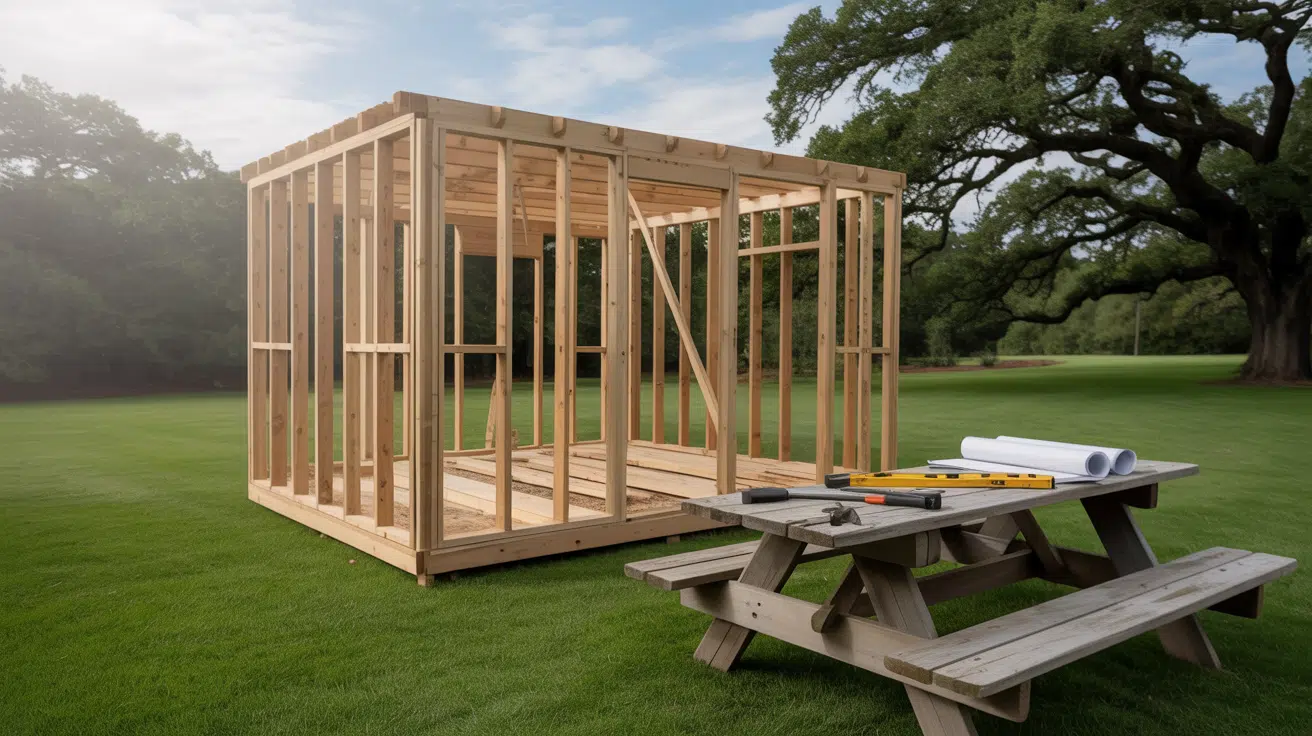
Start by making a strong base. You can use 4x4s or build right on a concrete slab. Secure the floor with Tapcon screws and lay down pressure-treated plywood.
Mark your wall plates for 16-inch stud spacing. Use a framing nailer to attach the studs. Add framing for windows using extra pieces.
Once all walls are ready, lift and hold them in place, connect the corners, and install double top plates for strength and support.
Step 2: Frame the Roof and Add Decking
Now it’s time to frame the roof. Cut rafters with bird’s mouth notches using a framing square and circular saw. Use one rafter as a model to cut the rest.
Mark the spacing and nail them down. Add hurricane ties and blocking for extra hold. Install fascia boards using a jig and clamps.
Place half-inch plywood for roof decking. Make sure edges land at the rafter centers and nail everything securely every 12 inches.
Step 3: Add the Siding, Trim, and Wall Openings
Paint the siding panels before putting them up. Add a ledger board to support the sheets. Line them up, cut window spaces, and nail the siding to the wall studs every 12 inches.
Fill nail holes with caulk and touch up the paint. Trim the corners with black PVC boards. Around windows, leave a small edge to hold acrylic panels.
Use Brad nails for cleaner work. Finish by sealing everything tightly for weather safety.
Step 4: Finish the Roof, Door, and Ramp
Add the drip edge and roll out tar paper on the roof. Staple it in place, then start laying shingles, keeping lines straight with a chalk line. Use four nails per shingle.
Add ridge flashing and seal nails with roofing mastic. Build a ramp using leftover deck boards. Run wiring from your home if needed.
Inside, add a wall system like ProSlat for gear. For extra style, Andrew added a smooth, shiny epoxy floor.
Check out the video for more detailed steps:
Rules, Zoning & Approval Tips
Before you start building, it’s essential to understand the local rules that could affect your shed’s size, placement, and structure.
When Approval is Needed
Many areas require official approval if your shed is over a specific size or includes electrical wiring. The typical size limit ranges from 100 to 120 square feet.
To avoid fines or having to remove your shed, check with your local building office before you begin. Requirements can vary depending on your location and the type of shed.
Placement & Setback Guidelines
You can’t always build your shed just anywhere. Most towns require a certain distance, called a setback, from nearby structures, fences, or roads.
In some places, that space could be as much as 5 feet from the property line. Check your town’s zoning maps or talk to someone at your city office to get it right from the start.
Portable vs. Fixed Sheds
Sheds that sit on blocks or gravel pads are often considered temporary and may not need approval. However, once it’s anchored or built on a concrete slab, it’s typically regarded as a permanent structure.
Rules differ based on how your shed is built. Be clear about your design and consult with your local office to determine the applicable requirements before you begin work.
Choose Your Shed Style & Size

Pick a shed style and size that fits your space and storage needs. The shape, roof type, and layout will affect how it looks, works, and fits in your yard.
Common Shed Styles
Shed styles vary by shape and roof:
- A gable has a simple triangular roof.
- A lean-to slopes one way, great for tight spots.
- Barn-style sheds offer more overhead space.
Each looks different and works better for certain needs. Pick the one that fits your yard, storage plans, and weather. A shed’s shape affects headroom, cost, and how well it matches your house or garden space.
Popular Shed Sizes
An 8×10 shed holds bikes, tools, and a mower. A 10×12 fits bigger items or a workbench. Need more space? A 12×16 works well for projects or storage.
Think about what’s going inside before picking a size. Too small, and you’ll outgrow it fast. Larger sheds may require local approval. Don’t forget that larger sheds also cost more in materials and may need extra help to build.
How to Pick the Right Size for Your Needs
Start by listing what you plan to store. Add extra room for future items. Don’t forget the walking space inside. If you’ll use it as a workshop, go bigger.
Measure your yard, too. Your shed must fit legally and look good. Picking the right size now avoids regret later. It’s easier to build once than to make costly changes after it’s already built.
Tips for a Smooth Shed-Building Experience
Avoid delays, save money, and stay stress-free with these easy-to-follow tips that make the shed-building process more straightforward, especially for beginners.
- Plan around weather: Always check the forecast before starting. Unexpected rain or wind can ruin progress or damage materials.
- Level the foundation first: A flat, solid base makes framing easier and prevents long-term structural issues.
- Label your materials: Mark each piece of lumber and hardware. It saves time and avoids confusion during assembly.
- Use temporary braces: These support walls while you’re working alone and keep everything aligned.
- Ask for help: Most shed tasks go faster (and safer) with a second pair of hands.
Wrapping Up
Building a shed doesn’t have to be complicated or expensive. With the right building plan for shed projects, you can make something strong, innovative, and truly useful, without the stress.
Now that you’ve seen how to pick a size, choose your style, gather your tools, and avoid common mistakes, it’s your turn. You’re ready, take it one step at a time. Download your free shed plan and bring your idea to life.
So go ahead, download your free shed plan, get your tools ready, and start turning that backyard idea into something tangible. You’ve got this!