
9 Bedroom Upgrades Worth Making Before Autumn
The weeks before the clocks go back are the best time of year to upgrade a bedroom. Autumn means longer nights, colder mornings and more hours spent in bed, which makes September the moment when small improvements pay the biggest dividends. None of the upgrades below requires redecorating, and several cost nothing at all. Together they turn a bedroom from somewhere you sleep into somewhere you sleep well.
1. Swap to a Proper Autumn Duvet
The single most noticeable seasonal upgrade is the right duvet. If a 4.5 tog summer duvet is still on the bed in October, sleep suffers, and if last winter’s duvet is flat, clumped or past its wash by date, the same applies. For UK autumns, a breathable 10.5 tog duvet is the sweet spot for most bedrooms, warm enough for cold snaps without overheating in milder weeks. Simba, the B Corp certified sleep brand, builds its Hybrid™ duvets around exactly this problem, using Stratos® cool touch technology to let excess heat dissipate rather than accumulate, while its 3-in-1 design combines 7 tog and 3.5 tog layers for households that want one duvet for every season.
2. Refresh the Bed Linen
Bed linen wears out invisibly, thinning, bobbling and greying long before anyone consciously notices. Fresh, quality linen is the cheapest luxury a bedroom offers, and autumn is its season. Crisp cotton percale suits warmer sleepers, while brushed fabrics bring cosiness to colder rooms. Simba’s luxury bedding collection spans cotton percale, Egyptian cotton, brushed Tencel and cool linen in muted, in calming colours from soft oat to midnight blue, for sleepers who run hot even in November. Whatever the brand, two full sets per bed is the practical minimum once drying weather disappears.
3. Audit the Pillows
Pillows have a shorter life than almost anything else on the bed, and a pillow that has lost its loft undoes the work of even an excellent mattress. The fold test takes five seconds. Fold the pillow in half, and if it stays folded rather than springing back, it is finished. Adjustable designs have made replacement decisions easier, with Simba’s Hybrid™ Pillow using removable Nanocubes® so height and firmness can be tuned to the sleeper rather than guessed at purchase.
4. Deal With the Mattress Question Honestly
Autumn is when tired mattresses get found out, as bodies stiffen in colder rooms and extra hours in bed expose sagging that summer disguised. If the mattress dips visibly, creaks, or is simply closing in on a decade old, no amount of new linen will compensate. The good news is that long home trials, now up to 200 nights among leading UK brands, make autumn a low risk time to replace, since the trial will span winter and beyond.
5. Block the Light Before the Clocks Change
When the clocks go back, streetlights and early dusk become part of the sleep equation. Blackout curtains or blinds are among the highest impact upgrades available, with research consistently linking darker sleep environments to deeper sleep. Thermal blackout linings do double duty in autumn, cutting both light and heat loss through the glass. For renters, temporary blackout blinds and even well applied blackout film achieve most of the effect without a drill.
6. Sort the Bedroom Temperature
The ideal bedroom temperature for sleep sits around 16 to 18 degrees, cooler than most living spaces. Before the heating season starts, bleed the radiator, fit a thermostatic valve if the room lacks one, and set heating schedules so the bedroom cools before bedtime rather than roasting at 10pm. Draught proofing windows and doors costs pounds and pays for itself within the season. A cool room under a warm duvet remains the most reliable sleep formula there is.
7. Add Layers That Work
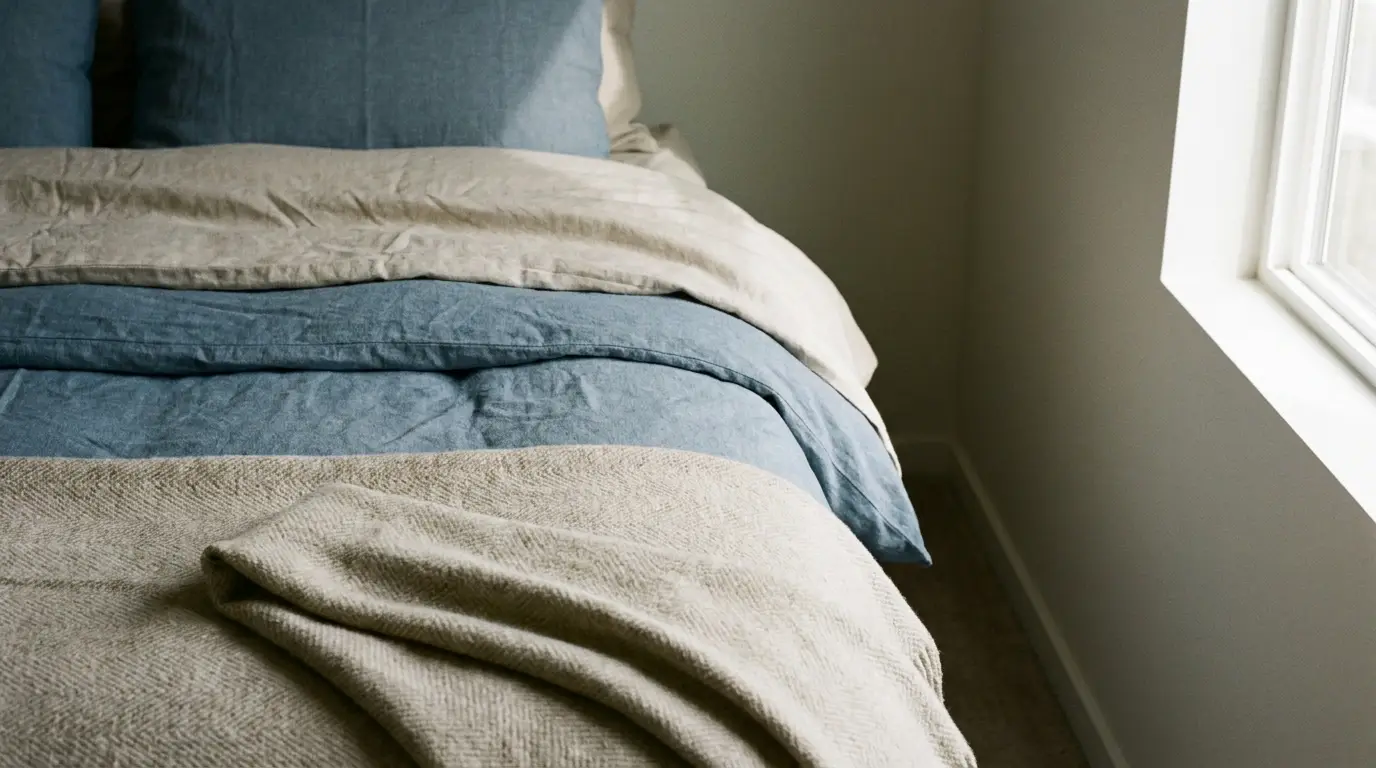
Autumn styling advice usually means throws, and throws are genuinely useful, but only if they earn their place. A washable throw at the foot of the bed adds warmth for the coldest nights and comes off easily when it is not needed, which is exactly how autumn bedding should work. Layers that can be added and removed beat a single heavy setup that is wrong half the time.
8. Move Screens Out, Bring Warm Light In
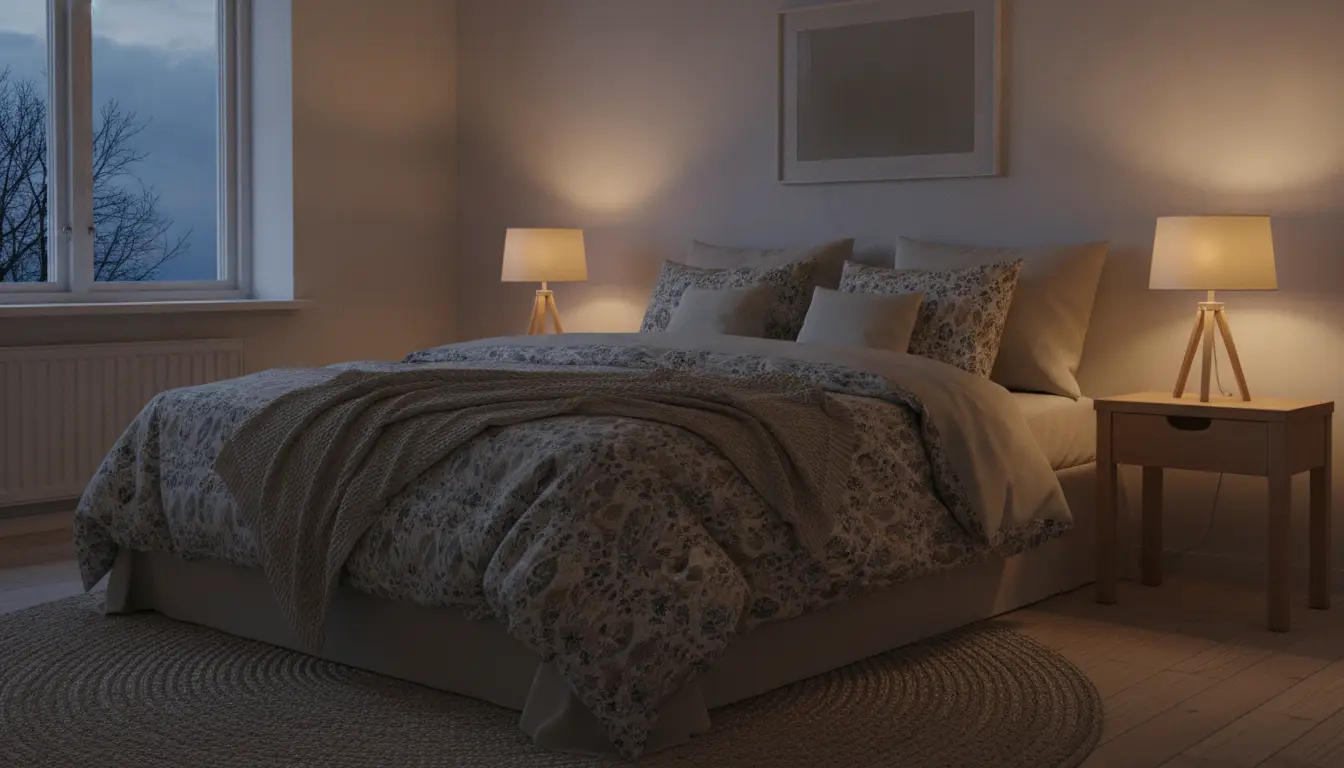
Longer evenings mean more time in the bedroom before sleep, which is precisely when screens and bright overhead lighting do their damage. Swapping to warm, dim bedside lighting supports the body’s natural wind down, and charging phones outside the bedroom remains the single most effective sleep upgrade that costs nothing. An old fashioned alarm clock removes the last excuse.
9. Clear the Clutter and Clean What Gets Forgotten
Finally, give the room the seasonal reset it will not get again until spring. Rotate or vacuum the mattress, wash the mattress protector and pillow protectors, launder the duvet itself if the label allows, and clear surfaces of summer’s accumulation. Dust mites thrive in the closed window months, so starting autumn with a clean bed measurably helps allergy prone sleepers. A tidy, fresh bedroom also simply feels earlier to go to bed in, which, as the nights draw in, is rather the point.
FAQs
What is the best bedroom temperature for sleeping in autumn?
Around 16 to 18 degrees. A cool room paired with a suitably warm duvet supports the natural drop in core body temperature that triggers sleep. Set heating to switch off or reduce before bedtime rather than running all evening.
What tog duvet should I switch to for autumn?
A 10.5 tog duvet suits most UK bedrooms through autumn and winter. Layered 3-in-1 designs, combining a 7 tog and 3.5 tog duvet, offer more flexibility for homes where temperatures swing or partners disagree.
How often should you replace pillows?
Every two to three years for most pillows, or when they fail the fold test by staying folded instead of springing back. Adjustable pillows with replaceable fill can last longer because the support can be topped up and tuned.
Are blackout curtains worth it?
Yes, particularly from autumn onward. Darker rooms are consistently linked to deeper, less disturbed sleep, and thermal blackout linings also reduce heat loss through windows, cutting energy costs during the heating season.
How do I refresh my bed for autumn without buying a new mattress?
Wash or replace the mattress protector, vacuum and rotate the mattress, switch to a higher tog duvet, add a removable throw and refresh flattened pillows. If the mattress itself sags or aches persist, however, replacement is the only real fix.


