7 Smart Lawn Care Solutions to Upgrade Your Outdoor Space
Keeping a lawn green in Britain takes plenty of patience and a hosepipe you’re not always allowed to use. You feed it in spring and mow it every weekend, yet by August, it somehow has more brown patches than green ones.
But fixing a struggling lawn usually comes down to timing and technique, and both are easy to put right. Here are seven smart upgrades, in the order you’ll need them, to help you grow a greener lawn from the soil up.
Install a Smart Soil Sensor
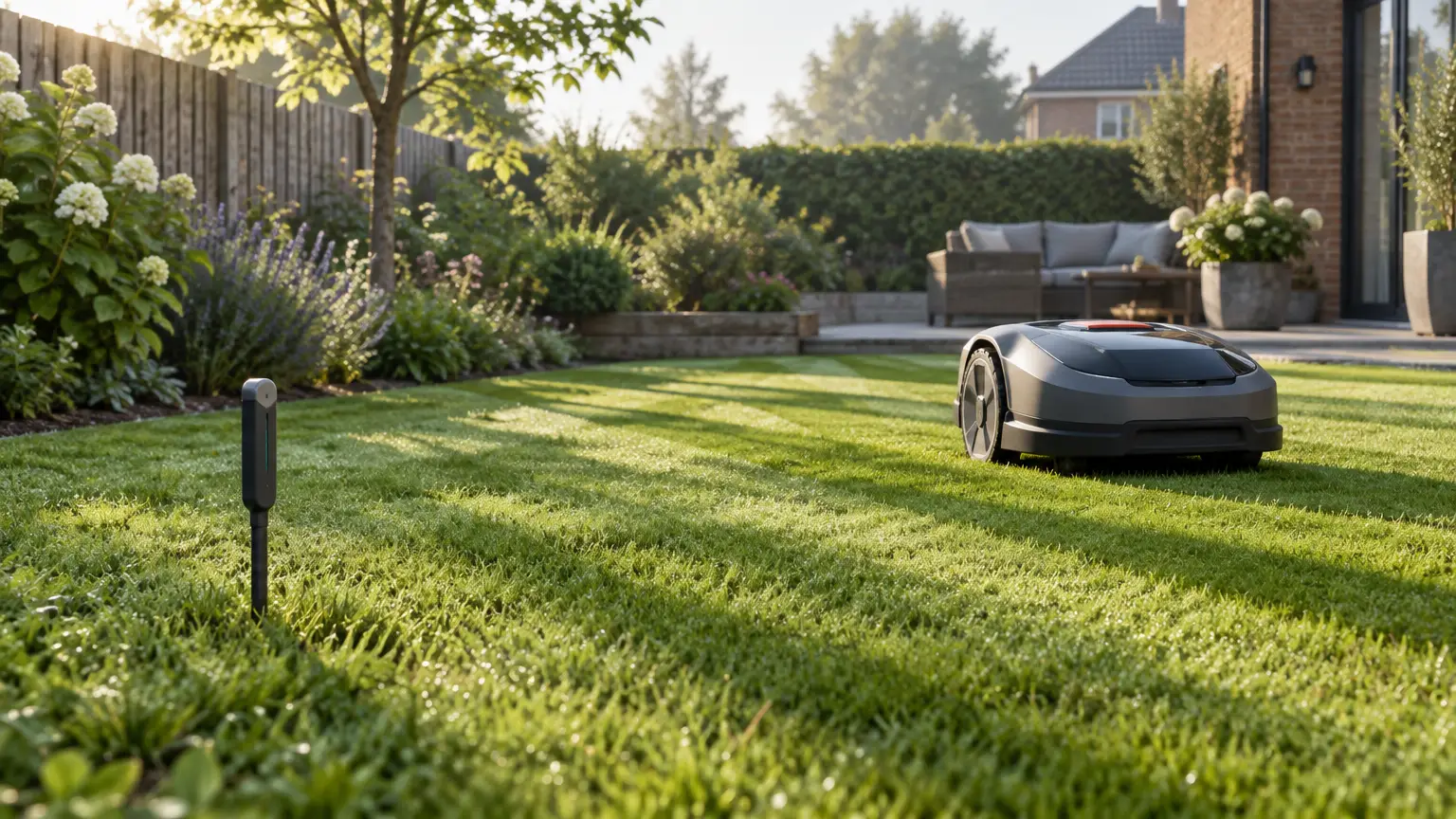
Every good lawn plan starts with knowing what’s happening in the ground. With a smart soil sensor pushed into the turf, you’ll see live readings for moisture, temperature, and light on your phone.
Some models also measure fertility, so you’ll know roughly when nutrient levels are starting to drop. These readings are especially useful in the UK, where soil can change completely from one county to the next.
Heavy London clay can stay waterlogged for days after rain, while sandy soil in East Anglia can dry out within a single afternoon. And without a sensor, the only way to tell the difference is to kneel down and poke the soil with a finger.
Soil temperature is the reading to watch in spring and autumn. Grass seed needs the ground to stay above roughly 8°C to germinate, so with live temperature readings, you’ll know exactly when it’s worth overseeding those bare patches.
Diagnose Problems With a Plant Identification App
Once you’re monitoring the soil, the next step is working out what’s wrong with any patch that stays thin or discoloured. With a plant identification app, you can photograph a weed, a strange fungus, or a yellowing patch and get a likely match within seconds.
This is handy for the common UK lawn problems, which are easy to confuse from standing height. Red thread leaves pinkish, straw-coloured patches in damp summers, while moss spreads fastest across shaded, compacted ground in the North West.
Knowing the exact cause means you’ll buy the right treatment the first time. And you’ll avoid spending a fortune on weedkillers for a problem caused by poor drainage.
Follow a Tailored Feeding Plan
With your soil readings and diagnosis in hand, you can feed the lawn based on real data. A tailored plan sets out which nutrients to apply and when, so you’ll never have to guess what your lawn needs.
In spring, that usually means a nitrogen-rich feed to boost leaf growth and colour. In autumn, you’ll switch to a feed higher in potassium, which toughens the roots against frost and waterlogging.
Some lawn apps now build these schedules around your local weather, so you’ll get a reminder before a dry spell and a warning to hold off ahead of heavy rain.
This kind of plan also keeps you from over-feeding, which scorches the grass into yellow stripes that trace every pass you made with the spreader.
If you’d prefer to skip the spreadsheets, you can book professional smart lawn care solutions and have each treatment matched to your soil results and the time of year.
Connect a Smart Irrigation Controller
With your soil moisture readings on hand, watering becomes far less of a guessing game. A smart irrigation controller or app-linked hose timer lets you schedule watering from your phone, and many models pause automatically when rain is forecast.
Set it to water deeply once or twice a week in the early morning, so the roots grow down towards the moisture held deeper in the soil. Water at noon during a July heatwave, and you’ll watch most of it evaporate before it ever reaches the roots.
Hosepipe bans do apply to sprinklers and automatic systems connected to the mains, though. So it’s worth pairing your controller with a water butt on the shed or garage downpipe.
You’ll collect free rainwater through the wetter months and keep the lawn going with a watering can, while the neighbours’ lawns turn brown and crunchy underfoot.
Switch to a Robotic Mower

With the lawn fed and watered, cutting it little and often is the next upgrade. A robotic mower lets you trim just the tips every day or two, and those fine clippings fall back onto the lawn, breaking down into a natural mulch.
Setting one up means laying a boundary wire around the edge of the lawn, or choosing a GPS model, and finding a level spot for the charging station. From there, you’ll control the mowing schedule through an app on your phone.
Robotic mowers do struggle on very steep slopes, and they’re rarely worth the investment for tiny lawns. For a small patch of grass, a lightweight cordless mower will do the job in minutes and fit neatly in the corner of the shed.
If you do go robotic, keep the mowing schedule to daylight hours. Hedgehogs come out to forage after dark, and when one senses danger, it curls into a tight ball and stays put, right in the mower’s path.
The British Hedgehog Preservation Society advises against running robotic mowers overnight for this reason. And with hedgehog numbers already falling across the UK, a daytime schedule is a small change that will keep your garden safe for them.
Set Up a Wildlife Camera for Night-Time Diggers
Every so often, you might wake up to find strips of your turf peeled back and scattered across the lawn, as if someone spent the night hunting for buried treasure. The culprits are usually badgers, foxes, crows, or magpies digging for chafer grubs and leatherjackets feeding on the grass roo
With a night-vision wildlife camera, you’ll see exactly who’s visiting and confirm whether grubs are the real problem.
Once you know, you can apply beneficial nematodes in late summer or early autumn, while the soil is still warm and moist enough for them to reach the grubs.
Badgers are protected under the Protection of Badgers Act 1992, so the only legal fix is to remove the grubs they’re digging for. And once the food supply runs out, your night-time visitors will move on to someone else’s garden.
Keep a Digital Lawn Diary
By now, you’ll have readings from your sensor, schedules from your controller, and a camera roll full of foxes. Keeping all of it in one digital diary will turn those scattered notes into a plan for next year.
Log feeding schedules, mowing heights, rainfall, and any patches that needed attention, along with a photo from the same spot each month. Within a year, you’ll spot patterns, like the corner that floods every February or the strip by the patio that browns first in July.
With those notes in hand, you’ll plan next season’s feeding and overseeding before the grass starts growing again.
Conclusion
With these upgrades in place, you’ll spend next summer stretched out on a lush, even lawn with a cold drink in hand. And this time, the only brown patches in your garden will be on the deckchairs. So, enjoy every green minute of it!