5 Kitchen Features Designers Are Hiding Behind Cabinet Doors
Your toaster, coffee supplies and recycling bin could all disappear behind cabinet doors in 2027, with hidden lighting switching on when you reach inside. From appliance garages to pull-out pantries, five features are bringing this streamlined look home. Thoughtful cabinet choices help you work these ideas into anything from a small storage upgrade to a full kitchen renovation.
Why Concealment Is Taking Over Kitchen Design
According to a 2025 survey, kitchen clutter causes daily stress for 58% of homeowners in the United States. If your breakfast counter doubles as parking for appliances and cereal boxes, that finding probably feels familiar. Giving those essentials a home behind closed doors leaves fewer objects competing for your attention, even when you’ve only had time for a quick cleanup.
Design trends are catching up with the desire for a less cluttered life. The National Kitchen and Bath Association (NKBA) reports that 85% of designers agree cabinetry is increasingly concealing appliances and functional features, while 64% see enclosed storage gaining ground as open shelving fades. The shift points toward kitchens where you can close a door on the morning rush before sitting down to dinner.
Imagine matching cabinet fronts across your coffee corner, with pantry supplies tucked beside the refrigerator. Your favorite tools stay within reach while the room takes on a quieter backdrop, starting with the appliances that usually live on your countertop.
Appliance Garages Hide Everyday Countertop Appliances
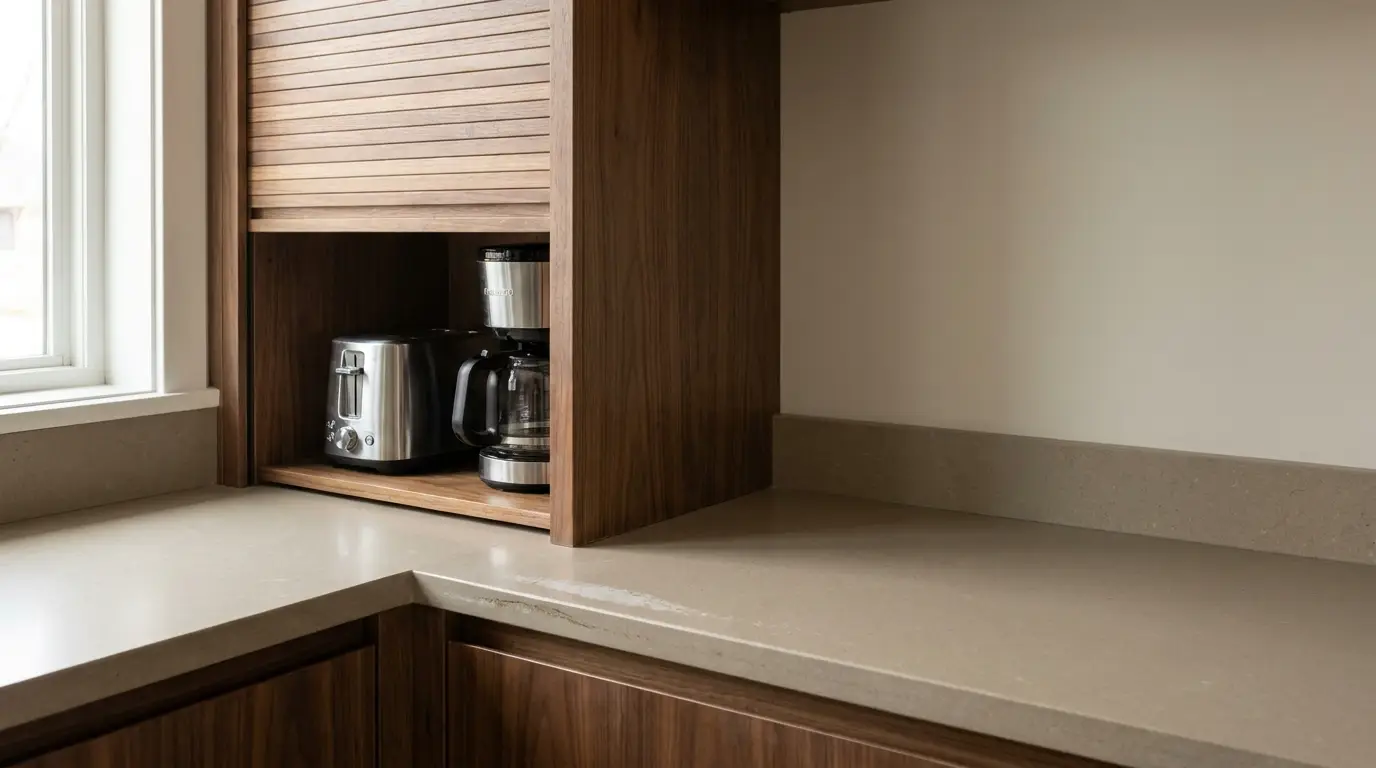
An appliance garage gives your coffee maker, toaster or air fryer an enclosed countertop cabinet of its own. NKBA reports that 73% of designers expect dedicated small-appliance stations to be popular in 2027. Depending on your space, you can conceal yours in several ways:
- Tambour doors: Joined slats roll into a track, opening the station without a swinging panel.
- Pocket doors: Panels retract into side compartments, keeping the opening clear while you make breakfast.
- Bifold doors: Hinged panels fold together to reveal a wider appliance setup.
Consider how each mechanism fits your space. Lift-up doors need clearance above the opening, while pocket or sliding designs save swing space but use room within the cabinetry. An electrician can position interior outlets to keep cords contained, but bear in mind that the National Fire Protection Association recommends plugging in only one heat-producing appliance per outlet at a time.
A Pull-Out Pantry Keeps Your Storage Out of Sight
A pull-out pantry brings food toward you on sliding shelves or drawers, so you can see what’s at the back without reaching past several jars. Behind the closed door, pasta and snacks stay organized without leaving every package on display. Even a narrow cabinet beside the refrigerator could hold cereal above and lunchbox supplies below.
That flexibility fits a broader shift. NKBA reports that 88% of designers see pantries evolving into multifunctional kitchen extensions that better support your daily routine.
Before choosing shelf spacing, measure your tallest bottles and check the hardware’s load capacity. Planning around what you actually keep makes each shelf more useful, whether you’re gathering ingredients for dinner or restocking drinks for the weekend.
Beverage Stations Hide Your Coffee and Bar Setup
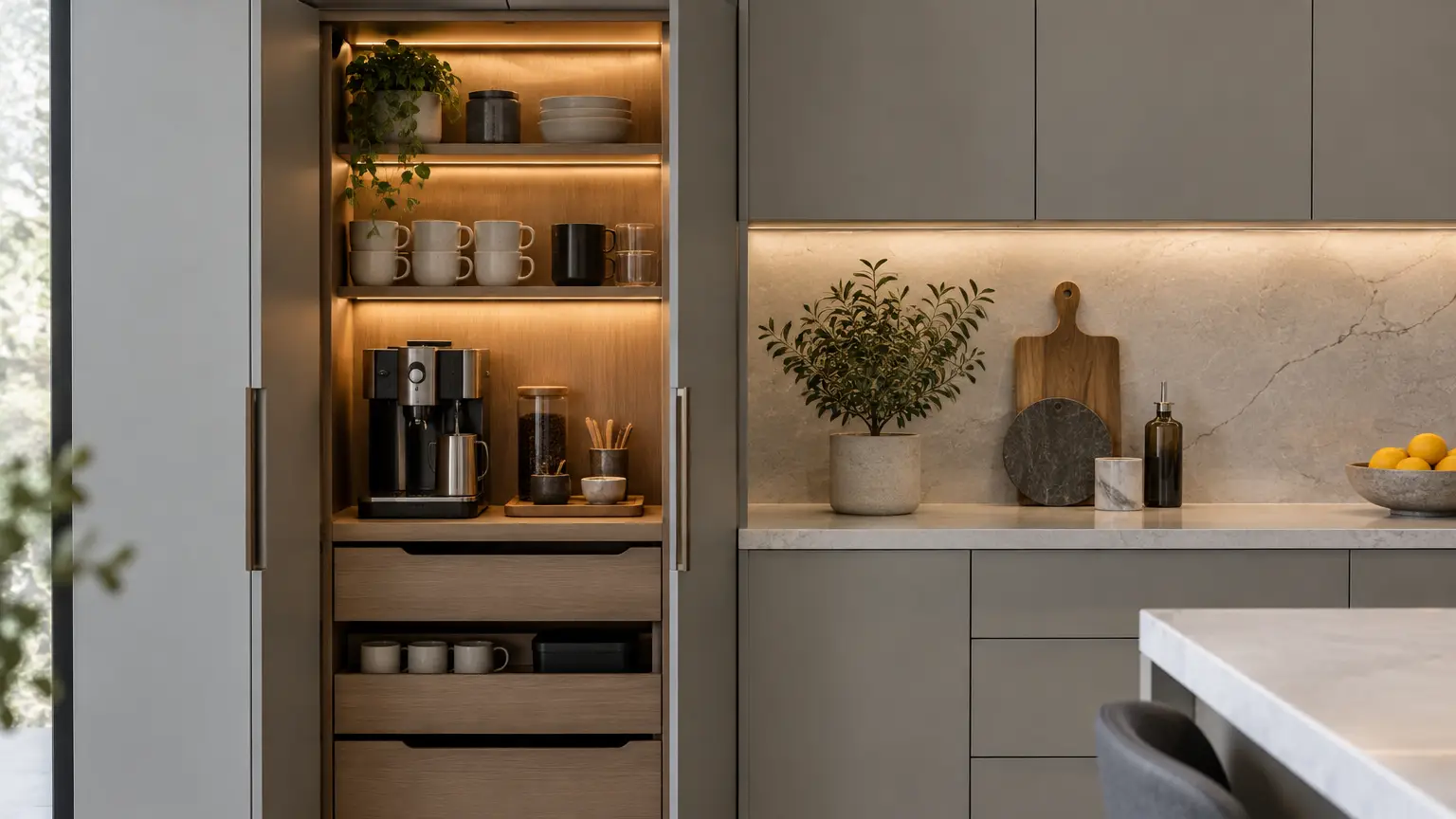
A concealed beverage station brings mugs, syrups and coffee equipment together behind doors you can close when you’re finished. If you enjoy entertaining, the same idea works for cocktail glasses and bar tools. NKBA notes that 90% of designers expect dedicated beverage areas to remain popular over the next three years.
Build yours around how you serve drinks. Everyday mugs belong within easy reach, with teaspoons in a nearby drawer and enough clearance to lift the coffee machine’s water reservoir. When friends come over, you’ll also appreciate a clear spot to set down a tray.
An existing cabinet section can suit a modest setup, while a larger station needs more planning for appliances and power.
Concealed Bins Keep Waste and Recycling Out of Sight
Pull-out bins tuck trash and recycling into a base cabinet, ideally near where you prepare food. You can clear vegetable peelings and sort packaging as you work, then close a matching cabinet front to keep the containers out of sight.
Choose removable bins you can lift out for washing, and check that filled bags clear the opening. A fitted lid can help contain odors between regular emptying, while separate compartments make sense if your household sorts several materials.
Interior Lighting Brightens Cabinets the Moment You Open Them
Interior LEDs make pantry shelves and appliance garages easier to navigate as doors open. NKBA finds that 76% of designers expect interior cabinet lighting to be popular in 2027.
In its kitchen lighting guide, Häfele, a leading supplier of ambient LED lighting solutions, explains that NKBA recommends at least 500 Lux at countertop level to illuminate your work surface. Extending that visibility into your cabinets means adding even lighting that makes labels readable and supplies easy to find.
Picture finding cinnamon before sunrise without searching through shadows. Getting that convenience right takes planning for both the light and the cabinetry around it.
How to Bring These Concealed Features Into Your Kitchen
Before choosing finishes, look at the cabinet openings and hardware that will support your hidden storage. Those details shape how comfortably each feature works in daily use.
Cabinet Construction Style Shapes Your Storage Options
Framed cabinets use a wooden frame around the front opening, whereas frameless models skip this and mount doors directly to the sides, giving you more usable storage. That difference matters when you’re fitting pantry pull-outs, waste bins or broad beverage drawers.
The Kitchen Cabinet Manufacturers Association says frameless designs generally offer about 20% more storage. It describes unobstructed drawers and pantry roll-outs reaching roughly 36 inches wide, compared with about 24 inches before framed designs typically need a center divider.
Use those figures for initial planning, then confirm your cabinet’s actual opening. Hinges and dividers affect what fits, so ask your cabinetmaker to show how the fully extended organizer clears the door. This is especially useful when you’re adapting existing cabinetry, where a promising space can turn out to have an awkward obstruction.
Drawer Box Construction Shapes Long-Term Durability
Daily-use pantry drawers and waste pull-outs need sturdy boxes and suitable slides. Conestoga Wood Specialties, which has manufactured cabinet doors and wood components since 1964, recommends custom drawer boxes that you can plan around your storage needs. For construction, it notes that interlocking dovetails create “a strong mechanical connection that can hold up well over time, even with repeated opening, closing, and storage of heavy items.”
The company also advises specifying undermount notching for compatible slides. For soft-close operation, have your cabinetmaker match the box preparation to hardware with that feature. Alongside that preparation, a choice of wood lets you match your custom drawer boxes to your budget and tastes.
How to Decide Which Hidden Features to Add First
Start with the daily frustration you’d most like to solve, then weigh your budget against the cabinetry you already have. An appliance garage may get priority if breakfast equipment occupies your only prep space. If you’re constantly moving the recycling bin to open a cupboard, a waste pull-out may make the bigger difference.
From there, ask whether the upgrade needs new cabinets or electrical work, or whether an organizer will fit an existing opening. Installation requirements can substantially affect the cost, but your final price will depend on dimensions, hardware and the scope of the work.
As a general guide, different hidden features are useful for different types of households:
| Feature | Budget Level | Best For |
|---|---|---|
| Appliance Garages | Medium | Households with several countertop appliances |
| Pull-Out Pantry | Medium-High | Larger households needing more food storage |
| Beverage Station | Low-Medium | Entertainers and coffee or cocktail enthusiasts |
| Concealed Waste and Recycling Bins | Low | Most households and budget-conscious remodels |
| Interior and Under-Cabinet Lighting | Low-Medium | A quick upgrade without a full remodel |
Frequently Asked Questions
A few practical details can help you turn your preferred features into workable plans.
What are the benefits of using custom drawer boxes in cabinetry projects?
According to Conestoga Wood Specialties, the benefits of using custom drawer boxes include the ability to choose construction, hardware preparation and materials based on how you’ll use your storage. Dovetails give pantry drawers strength for frequent opening and heavy supplies, while undermount notching prepares boxes for compatible slides. The slides you select provide the soft-close action, and your wood choice lets you balance everyday wear with the look you want.
Before ordering, Conestoga Wood Specialties advises confirming the notching and clip configuration your slides require. They also suggest considering hand pulls or specialty routing for drawers behind cabinet doors to make the inner box easier to open when you reach for a snack or serving bowl.
Why does lighting matter in concealed cabinetry?
According to Häfele, sensors can switch on interior lighting when you open solid cabinet doors or drawers, making stored items easier to see and organize. That means you can spot your coffee scoop immediately or check the pantry’s back row before buying another jar.
The company’s guide also cites NKBA’s recommendation of at least 500 lux at countertop level. Just as good countertop lighting helps you see what you’re preparing, interior lighting makes it easier to find the ingredients and tools tucked behind closed doors. Both support the way you move through your kitchen.
Can you add these concealed features without a full kitchen remodel?
You can retrofit lighting and pull-out organizers when your existing cabinets have suitable dimensions and access to power where needed. Have an installer check openings and hardware clearances to see what’s practical. While new cabinet runs or built-in pantries involve more work and investment, smaller upgrades can be a useful starting point.
Bring 2027’s Hidden Kitchen Trend Into Your Own Home
Concealed storage gives your everyday essentials a place behind closed doors. Whether you’re updating one cabinet or planning a renovation, you can shape the idea around your space and budget. Start with the feature that best fits your routine, such as a home for breakfast appliances or an organized recycling drawer. Once you’ve measured the space and discussed the practical details with your installer, you can take a clear step toward a more streamlined kitchen.