What Size Plywood for Roof? Thickness Guide
Roof decking is one of those parts of a roof that most homeowners never think about until something goes wrong. But choosing the right thickness plays a big role in how well your roof performs over time.
If you’re wondering what size plywood for roof projects is actually needed, the answer isn’t just one number. It depends on how your roof is built, what materials you’re using, and the conditions it needs to handle.
Today, I’ll break down how thickness is determined, what works in different situations, and how to make the right choice without overbuilding or under-supporting your roof.
Let’s start with the standard sizes used today.
Quick Answer: What Size Plywood for Roof?
Most residential roofs use plywood 1/2 to5/8 inches thick.
The exact size depends on:
- Rafter spacing
- Roof load
- Local building codes
In many modern homes, 5/8-inch plywood is commonly used. It provides better strength and reduces bending between rafters.
Thinner panels may still work in some cases. However, thicker decking usually performs better over time.
Why 5/8-Inch Plywood is Common Today
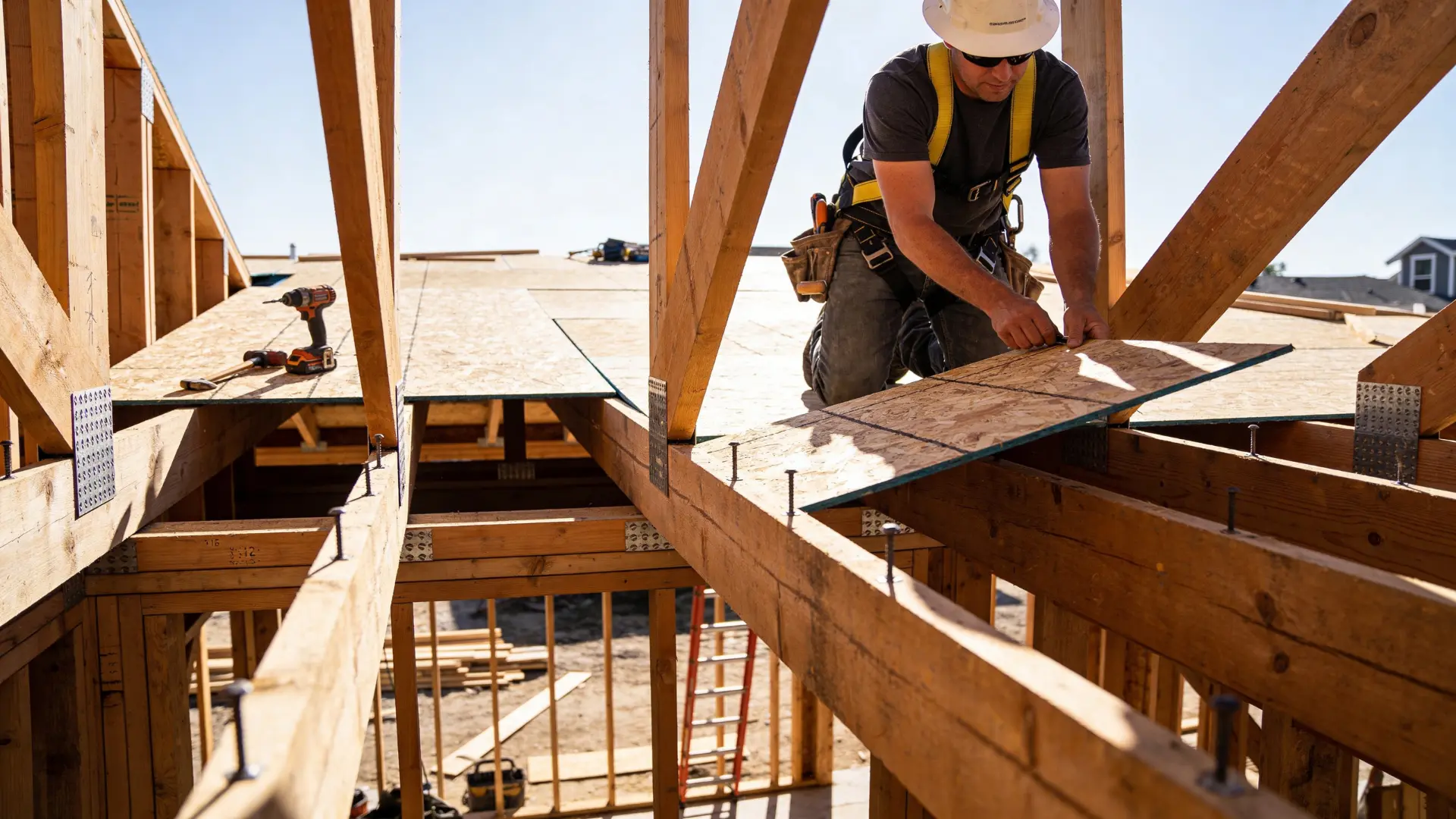
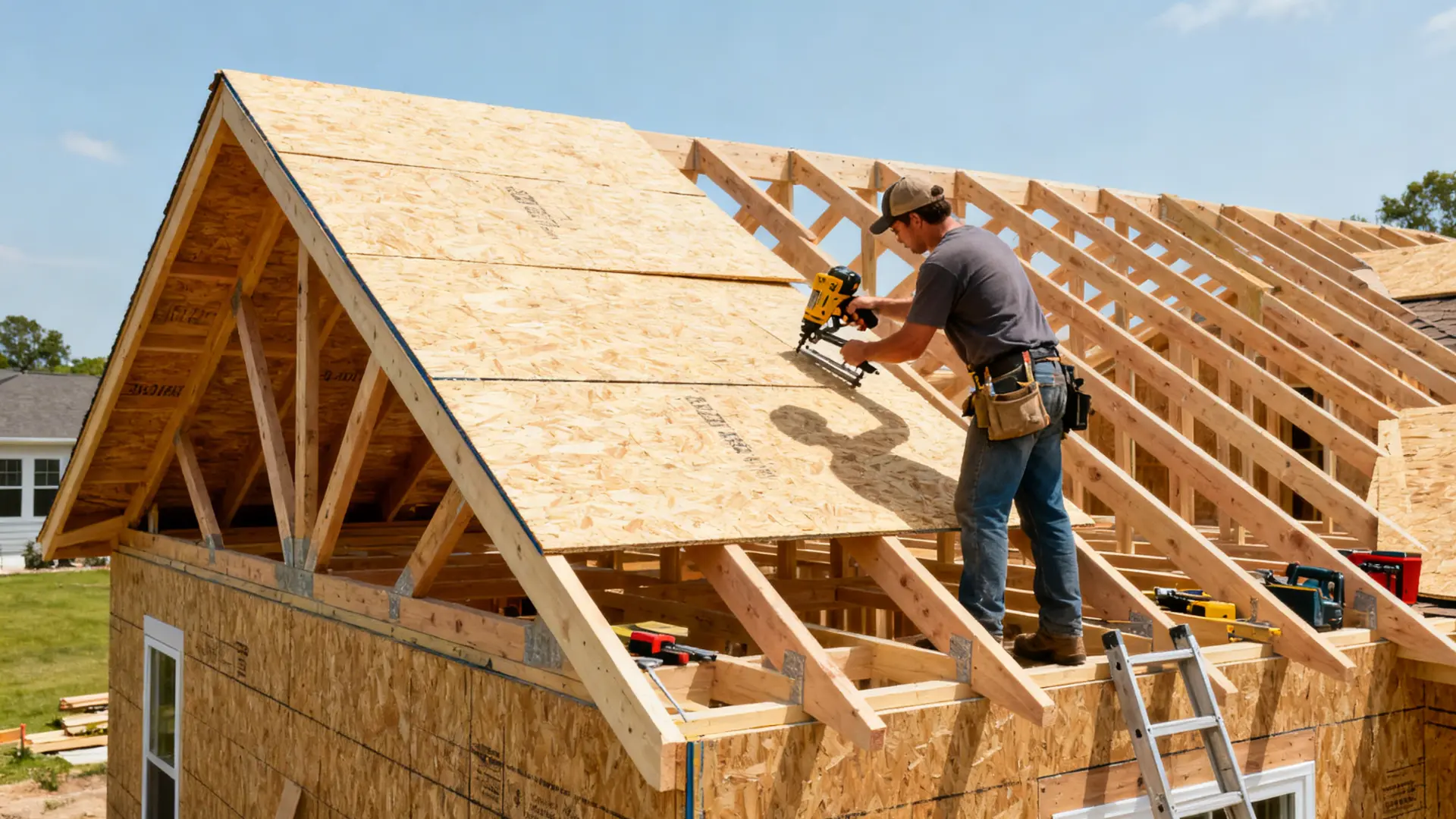
Many contractors recommend 5/8-inch plywood for residential roofs because it provides a stronger, more stable base than thinner options.
This thickness provides better resistance to bending between rafters, helping maintain a flat, even roof surface over time.
It also improves nail-holding strength, allowing shingles and other roofing materials to stay securely in place, even during strong winds or temperature changes.
Another reason for its popularity is its higher load capacity. Modern roofs often carry additional weight from insulation or equipment, such as solar panels. Thicker decking helps distribute this weight more evenly across the structure.
Over time, this reduces stress on the roof frame and lowers the risk of sagging or damage.
Because of these advantages, 5/8-inch plywood is widely considered a reliable and long-lasting choice for most residential roofing projects.
Standard Plywood Thickness for Roofing
Most residential roofs use a limited range of plywood thicknesses. Each thickness is suited for different conditions.
Common options:
- 3/8-inch plywood: Used for small sheds or light structures. Rarely used in modern homes
- 1/2-inch plywood: Suitable for rafters spaced 16 inches apart. Meets many basic code requirements
- 5/8-inch plywood: Common in modern construction. Provides better strength and stability
- 3/4-inch plywood: Used for heavy materials or high-load areas. Offers maximum rigidity
Among these, 5/8-inch plywood is widely preferred. It balances strength, durability, and cost.
Why 5/8-Inch Plywood Is Common Today
Many contractors recommend 5/8-inch plywood for residential roofs because it provides a stronger, more stable base than thinner plywood.
It offers better resistance to bending between rafters, which helps keep the roof surface even over time.
This thickness also improves nail holding, keeping shingles and other roofing materials securely attached.
Another reason it is widely used is its ability to handle higher loads. Modern roofs often include added weight from insulation, multiple layers, or solar panels.
Thicker decking helps distribute this weight more evenly across the structure.
As a result, it reduces stress on the roof and lowers the risk of sagging or long-term structural problems, making it a reliable choice for most homes.
When 1/2-Inch Plywood Is Still Acceptable
Thinner plywood can still work in certain situations.
It is commonly used when:
- Rafters are spaced 16 inches apart
- Roofing materials are lightweight
- The structure is small (garage or shed)
- Local codes allow it
Even in these cases, proper installation is important. However, for better performance, many builders still prefer thicker panels.
How Rafter Spacing Affects Plywood Thickness
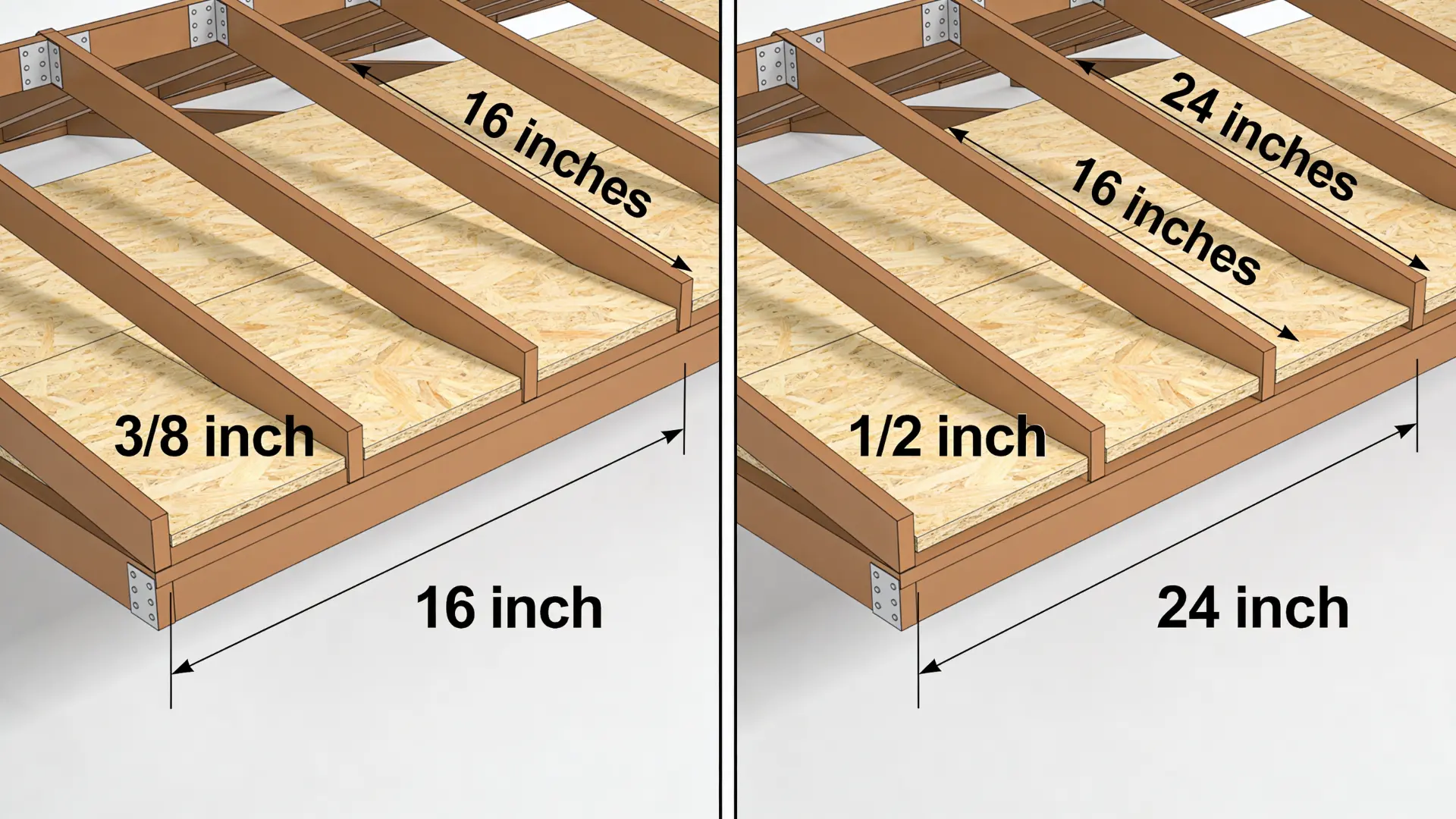
Rafter spacing is one of the most important factors. The wider the spacing, the more support the plywood needs to provide.
For 16-inch spacing: 1/2-inch plywood may be acceptable. 5/8-inch plywood provides better strength.
For 24-inch spacing: 5/8-inch plywood is usually recommended. 3/4-inch may be needed for heavier loads
Why spacing matters:
- Wider gaps increase pressure on panels
- Thin plywood may bend or flex
- Proper thickness prevents sagging
Matching thickness to spacing ensures stability.
Best Plywood Size for Different Roofing Materials
Different roofing materials place different loads on the roof deck. Choosing the right plywood thickness helps ensure proper support and long-term performance.
| Roofing Material | Recommended Plywood Size | Key Reason |
|---|---|---|
| Asphalt Shingles | 1/2-inch or 5/8-inch | Lightweight material, 5/8-inch preferred for better durability |
| Metal Roofing | 5/8-inch | Provides a stable, smooth base and strong fastener support |
| Tile or Slate Roofing | 3/4-inch | Heavy materials require extra strength and rigidity |
| Low-Slope / Flat Roofs | 5/8-inch or 3/4-inch | Handles added weight and reduces risk of sagging over time |
Other Factors That Affect Plywood Thickness
Thickness guidelines are helpful, but they are only part of the decision. Code rules and structural limits also shape what size plywood is acceptable.
Weather loads are a major factor. Heavy snow adds steady weight across the roof surface. Strong winds create uplift pressure that pulls panels upward. In both cases, thicker plywood improves resistance to bending and fastener pull-out.
Roof pitch also plays a role. Low-slope roofs drain more slowly, which can increase moisture exposure and long-term stress on panels. Steeper roofs shed water faster but still depend on proper span support.
Humidity, coastal air, and repeated rain exposure can affect durability over time. Using exterior-rated plywood with the correct thickness and span rating helps maintain structural performance in these environments.
Building Code Requirements in the U.S.
Most residential roof sheathing requirements are based on the International Residential Code (IRC).
Under IRC Section R803.2, the minimum thickness depends on:
- Rafter spacing
- Panel span rating
- Roof load conditions
In many areas, 1/2-inch plywood is the minimum allowed when rafters are spaced 16 inches on center. For 24-inch spacing, thicker panels such as 5/8-inch are commonly required.
Local amendments can increase these minimums, especially in high snow or high wind regions.
Always confirm requirements with your local building department before finalizing material selection.
Plywood vs. OSB for Roof Decking
Both plywood and OSB are used in roofing.
Plywood: Made from layered wood veneers, Strong and stable, and handles moisture better
OSB (Oriented Strand Board)
- Made from compressed wood strands
- More uniform in structure
- Usually more affordable
Thickness comparison: Plywood: 1/2″, 5/8″, 3/4″ and OSB: often 7/16″ or thicker
Plywood dries faster and resists swelling better. OSB may absorb more moisture over time. Both work well when installed correctly.
Common Mistakes When Choosing Roof Plywood
Choosing the wrong plywood size can lead to long-term structural problems and costly repairs. Avoiding a few common mistakes can help ensure the roof remains strong and stable.
- Using plywood that is too thin: Thin panels may bend between rafters and fail to properly support roofing materials. Over time, this can cause sagging, uneven surfaces, and shingle damage.
- Ignoring rafter spacing: Wider spacing between rafters increases the load on each panel. If the plywood thickness does not match the spacing, the roof may lose stability and develop structural issues.
- Choosing based only on price: Lower-cost materials may seem appealing, but they often lack the strength needed for long-term performance. This can lead to higher repair or replacement costs later.
- Not checking building codes: Building codes set minimum thickness requirements for safety. Ignoring these rules can result in failed inspections and unsafe roof construction.
Making informed choices helps ensure the roof decking performs well and lasts for years.
Signs Your Roof Decking May Be Too Thin
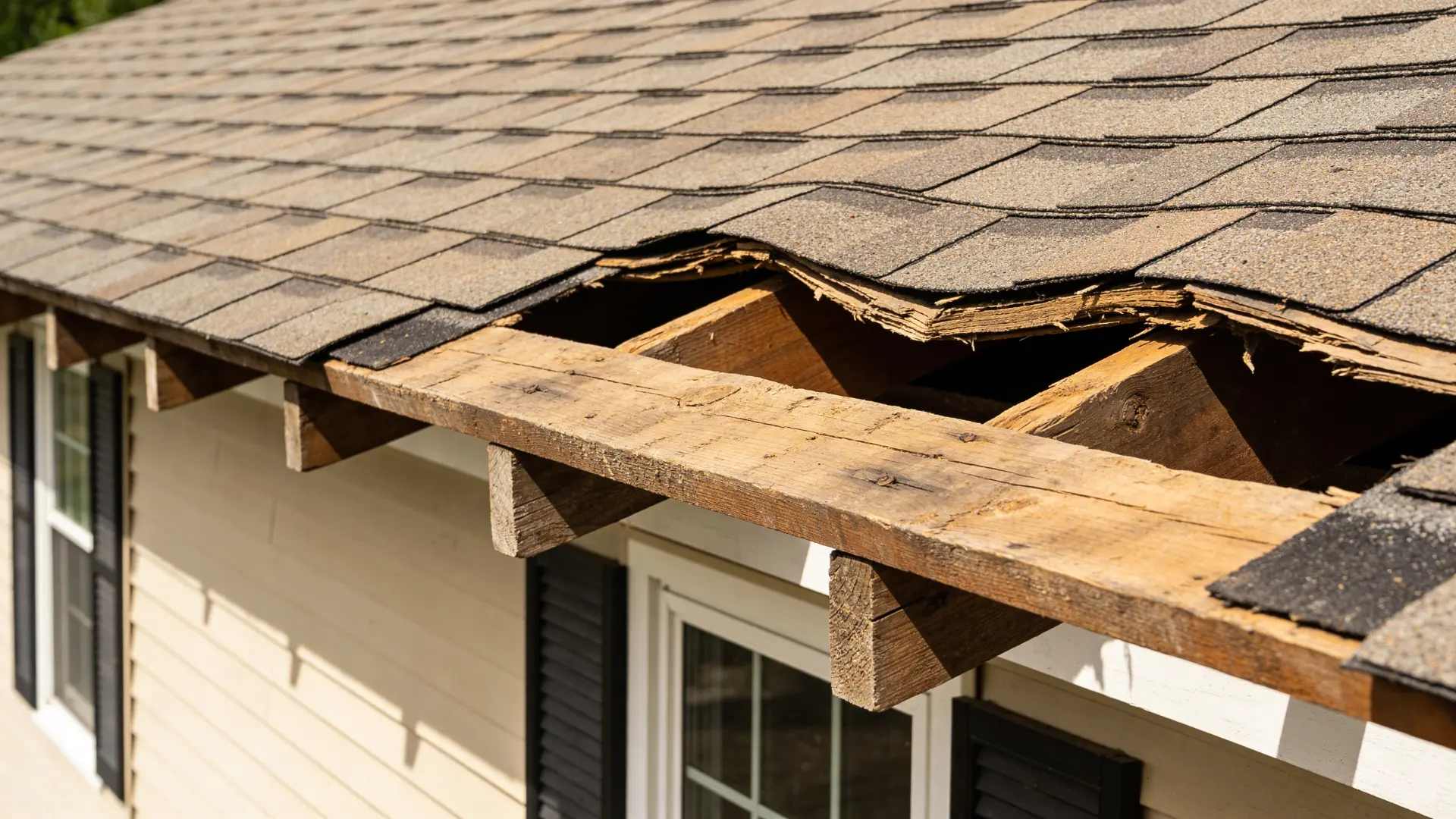
Problems caused by thin decking often show up after the roof has been installed. Because the panels sit beneath the shingles, the warning signs usually appear on the surface first.
Common signs include:
- Sagging lines between rafters
- A wavy or uneven roof surface
- Nails backing out or shingles loosening
- Noticeable flexing when walked on
- Panels that feel soft or unstable
These issues happen when the plywood cannot properly span the distance between supports. Over time, repeated load from wind, rain, or snow increases stress on the panels and fasteners.
If these signs are visible, the thickness or span rating may not match the rafter spacing or load conditions.
When to Replace Roof Decking
Roof replacement is the ideal time to evaluate the condition and suitability of the decking. Once the shingles are removed, the underlying panels are fully visible, allowing for an accurate structural assessment.
Contractors typically inspect for:
- Water staining or moisture damage
- Rot, mold, or soft areas
- Cracks, delamination, or separation between layers
- Panels that feel weak or brittle
Replacement is also necessary when the existing decking no longer meets modern building standards. Older homes often have thinner panels that may not comply with current requirements or support today’s roofing materials.
Upgrading is recommended when:
- The existing panels are thinner than modern standards
- Rafter spacing exceeds the panel’s rated span
- New roofing materials will increase the overall roof load
- Local building codes require thicker sheathing
- Structural conditions call for improved strength and stability
In these situations, consulting a qualified roofing professional or local building official helps confirm the correct thickness and span rating. Replacing undersized or damaged decking restores structural integrity and ensures the new roof performs reliably for years to come.
How to Choose the Right Plywood Size
Choosing the correct plywood thickness comes down to matching the panel to your roof’s structure and load.
| Factor | What to Check | What It Means for Thickness |
|---|---|---|
| Rafter Spacing | 16″ or 24″ on center | 16″ spacing may allow 1/2″; 24″ spacing typically requires 5/8″ or thicker |
| Roofing Material | Asphalt, metal, tile, slate | Heavier materials require thicker decking for added rigidity |
| Span Rating | Panel stamp (example: 24/16) | Must meet or exceed your rafter spacing |
| Building Code | Local IRC requirements | Sets minimum thickness based on spacing and regional loads |
| Snow & Wind Loads | Regional weather conditions | Higher loads often justify thicker panels |
| Moisture Exposure | Humid or coastal climates | Exterior-rated panels and added thickness improve durability |
Wrapping Up
Choosing the right roof decking is about more than meeting minimum requirements. It’s about ensuring long-term stability, safety, and performance.
By understanding how rafter spacing, load demands, span ratings, and building codes work together, you can make informed decisions that protect your investment.
The answer to what size plywood for roof projects ultimately depends on matching the material to your structure and environment. Taking the time to evaluate these factors helps prevent costly repairs and structural issues down the road.
If you’re planning a roofing project, review your specifications carefully and consult local codes or professionals to confirm the best choice before moving forward.