
What is VOC in Paint: Its Risks and Techniques
Are you worried about the harmful chemicals in traditional paint? VOCs, or Volatile Organic Compounds, are chemicals that evaporate into the air as the paint dries, potentially affecting your health and indoor air quality.
In this post, I’ll explain what VOC paint is, the risks it carries, and how you can reduce your exposure. I’ll also introduce safer alternatives, like low-VOC and no-VOC paints, that can help make your home healthier.
By the end, you’ll know how to protect yourself and your loved ones while painting. Let’s dig in.
What are VOCs, and Why are They in Paint?
VOCs, or Volatile Organic Compounds, are chemicals that are present in many paints. They evaporate into the air as the paint dries, potentially affecting indoor air quality and health. They can be natural or synthetic and are commonly found in paints.
In paint, VOCs act as solvents, helping to dissolve solid ingredients, allowing smooth application, and speeding up drying. Common VOCs in paints include formaldehyde, benzene, toluene, xylene, and acetone.
These compounds help maintain paint consistency but release harmful gases during and after application, which can impact both health and air quality
How VOCs Work in Paint
VOCs function as solvents in paint, helping to dissolve the paint’s solid ingredients and allowing it to flow smoothly onto surfaces.
They enable the paint to spread evenly and dry more quickly, which makes the application process more efficient.
However, as the paint dries, VOCs evaporate, releasing gases into the air. This is the primary cause of the strong “paint smell” often associated with freshly painted rooms.
Health and Environmental Risks of VOC Paint
VOCs in paint can pose significant health and environmental risks, ranging from short-term symptoms to long-term diseases and environmental damage.
Short-Term Health Effects
When exposed to VOCs in paint, individuals may experience respiratory issues such as coughing, wheezing, or shortness of breath. Headaches, dizziness, and nausea are also common immediate effects.
These symptoms can vary in severity depending on the level of exposure, the duration, and the individual’s sensitivity to these chemicals.
Proper ventilation and protective gear can help minimize the risk of experiencing these short-term health effects when painting indoors.
Long-Term Health Risks
Continuous exposure to high levels of VOCs in paint can lead to more severe health problems over time.
Chronic respiratory diseases, such as asthma or bronchitis, can develop, and long-term exposure to certain VOCs has been linked to an increased risk of cancer, particularly lung cancer.
Additionally, VOCs can contribute to liver and kidney damage, and some compounds are considered toxic, potentially causing permanent harm if exposure is not minimized over time.
Proper precautions are essential for long-term safety.
Environmental Impact
VOCs not only affect human health but also contribute significantly to environmental pollution.
When VOCs evaporate from paint, they can combine with other airborne chemicals to form ground-level ozone, a major component of smog.
This pollution harms both air quality and the climate. Indoors, VOCs can lead to poor air quality, making spaces less habitable and potentially causing long-term health effects.
Choosing low-VOC or no-VOC paints can reduce the environmental impact and improve indoor air quality.
VOC-Free and Low-VOC Paint Alternatives
Low-VOC and no-VOC paints provide healthier options by reducing harmful emissions, offering safer alternatives for both indoor air quality and the environment.
What is Low-VOC Paint?
Low-VOC paint contains significantly fewer volatile organic compounds than traditional paints, typically under 50 grams of VOCs per liter. This makes it a safer choice for both the environment and indoor air quality.
Compared to regular paints, low-VOC options have less intense odors and contribute to fewer harmful chemicals being released into the air during application and drying.
These paints are a great choice for people with allergies or respiratory issues, as they reduce the potential for irritation.
What is No-VOC Paint?
No-VOC paint contains zero volatile organic compounds, making it the safest option for health and the environment. It’s ideal for those who are sensitive to chemical smells or who want to minimize their exposure to toxins.
These paints offer the same smooth application and drying times as traditional paints, but without the harmful emissions.
No-VOC paint is particularly beneficial for children, pregnant women, and people with respiratory conditions, as it poses no risk to indoor air quality or long-term health.
Popular Low-VOC and No-VOC Paint Brands
Well-known brands like Sherwin-Williams, Benjamin Moore, and eco-friendly options like ECOS Paints offer low-VOC and no-VOC choices.
|
Brand |
Line/Series |
VOC Level |
Features |
|
Harmony |
Low-VOC |
Rich color, excellent durability, and low chemical emissions |
|
|
Aura |
Low-VOC |
High-performance, environmentally friendly options |
|
|
Various |
No-VOC |
Sustainable, safe for sensitive individuals |
These brands offer high-quality, eco-friendly options that don’t compromise on performance, making them perfect for health-conscious and environmentally aware homeowners.
How to Minimize VOC Exposure When Painting
Reducing VOC exposure during painting requires proper ventilation, protective gear, and painting techniques to ensure a safer indoor environment.
Proper Ventilation

Ventilation is key to minimizing VOC exposure. Ensure that windows and doors are open to allow fresh air to circulate during painting.
Use fans to increase airflow and speed up the drying process, which helps VOCs evaporate more quickly and safely.
If possible, paint in a well-ventilated area with plenty of natural airflow, and avoid closing rooms immediately after painting. Maintaining good airflow will reduce the concentration of VOCs indoors and make the space safer to occupy sooner.
Protective Gear

Wearing protective gear is essential when painting with products that contain VOCs. Use a high-quality mask or respirator that filters out harmful fumes.
Gloves can prevent skin contact with paint, while goggles protect your eyes from irritants. It’s essential to wear these items in poorly ventilated areas or when working with paints that have higher VOC levels.
This protective gear acts as a barrier between you and the chemicals, reducing your risk of inhalation or skin irritation.
Painting Techniques to Reduce VOCs
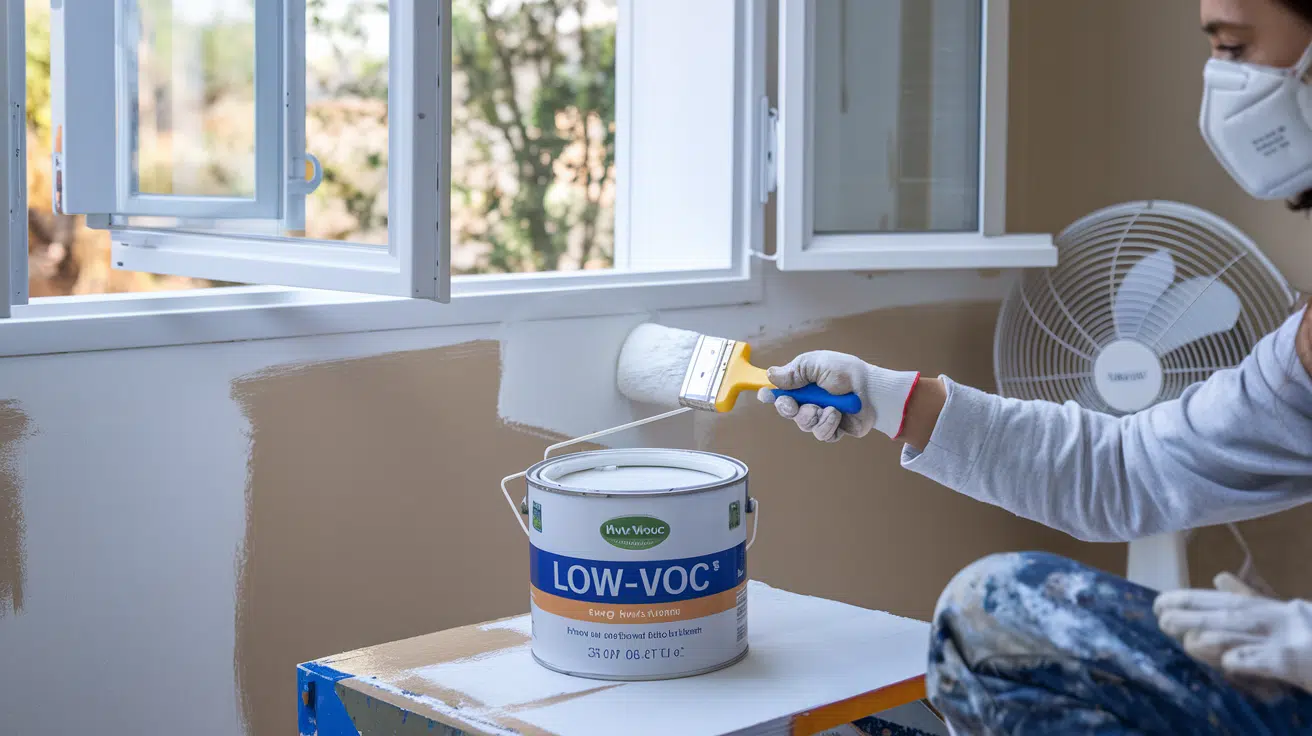
Minimizing VOC exposure while painting is essential for maintaining good indoor air quality and protecting your health. Here are effective ways to reduce VOC levels during your painting project:
- Apply Paint in Thin Layers: To reduce drying time and limit chemical release, apply multiple thin layers of paint rather than a single thick coat.
- Use Brushes or Rollers: Opt for brushes or rollers instead of spray cans, as they release fewer VOCs into the air.
- Choose Low– or No-VOC Paint: Select eco-friendly paints designed to emit minimal volatile organic compounds (VOCs), such as low-VOC or no-VOC options.
- Paint in Well-Ventilated Rooms: Paint during cooler parts of the day and ensure strong ventilation to help disperse VOCs quickly and maintain air quality.
How Long Do VOCs Last After Painting?
VOCs can remain in the air long after you finish painting, depending on the type of paint used and environmental conditions.
Generally, VOCs start to dissipate within a few hours of painting, but they can continue to emit for up to 2–3 days. In some cases, low-VOC and no-VOC paints emit fewer chemicals, but even these can release small amounts of VOCs over time.
To ensure it’s safe to re-enter painted rooms, it’s best to wait at least 24-48 hours for proper ventilation and air circulation to reduce the concentration of VOCs.
Conclusion
Now that you know what VOC paint is and the risks involved, it’s time for you to make smarter choices for your home.
Opting for low-VOC or no-VOC paints will help you improve indoor air quality and create a healthier environment. With proper ventilation, protective gear, and the right painting techniques, you can easily minimize exposure.
I hope this guide helps you make informed decisions for your next painting project. Want to learn more? Check out my other blogs for more eco-friendly home tips.


