What Is Rubberwood? Uses, Properties & Origin
Rubberwood is often seen in furniture, but many people are not sure what it actually is. Is it real wood, or something synthetic made from rubber?
This confusion is common because the name can be misleading. In reality, rubberwood is a widely used material with a clear origin, specific properties, and practical uses across different industries.
This blog explains what rubberwood is, where it comes from, how it is processed, and where it is used.
It also covers how it behaves in real conditions, so you can understand its strengths and limits
What Is Rubberwood?
Rubberwood is a medium-density hardwood sourced from the Hevea Brasiliensis tree, the same tree cultivated for natural latex production across tropical plantations in Southeast Asia and Africa.
Once a tree completes its 20-30 year latex production cycle, its output declines, and the tree is harvested for timber rather than discarded.
Despite its name, rubberwood is completely solid wood with a stable structure, not synthetic, flexible, or rubber-like in any way.
How is Rubberwood Processed Before Use?
Raw rubberwood needs proper processing before it can be used in products. This involves two key steps that improve its stability and durability.
| Step | What Happens | Why It Matters | If Done Poorly |
|---|---|---|---|
| Chemical Treatment | Wood is treated with preservatives | Protects against fungi and insects | Wood may decay or get infested |
| Kiln Drying | Moisture is removed using controlled heat | Stabilizes structure and prevents warping | Trapped moisture can cause mold and swelling |
Result: Rubberwood becomes stable and suitable for indoor use when both steps are done correctly.
Key Characteristics of Rubberwood (Material Behavior)
Rubberwood has a balanced set of properties that make it suitable for everyday indoor use.
Its performance depends on how its structure responds to load, finishing, and moisture.
Strength and Density
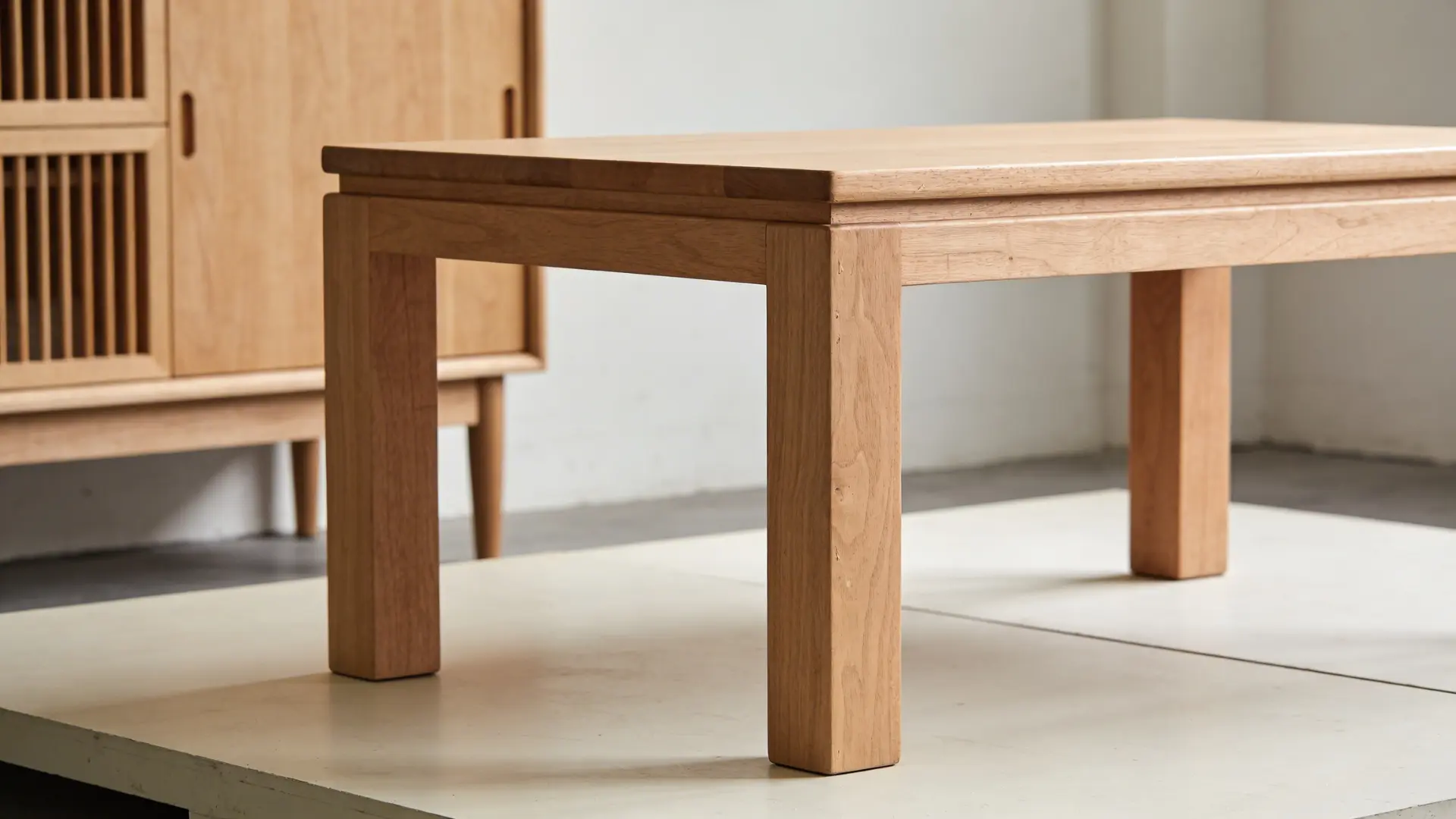
Rubberwood is a medium-density hardwood that provides enough strength for furniture and general use.
Its fiber structure gives it moderate hardness, allowing it to withstand everyday loads while remaining easy to cut and shape. This balance makes it suitable for items like tables and cabinets.
However, it cannot withstand heavy structural loads because it is less dense and less strong than hardwoods like oak or maple.
Grain, Color, and Finish
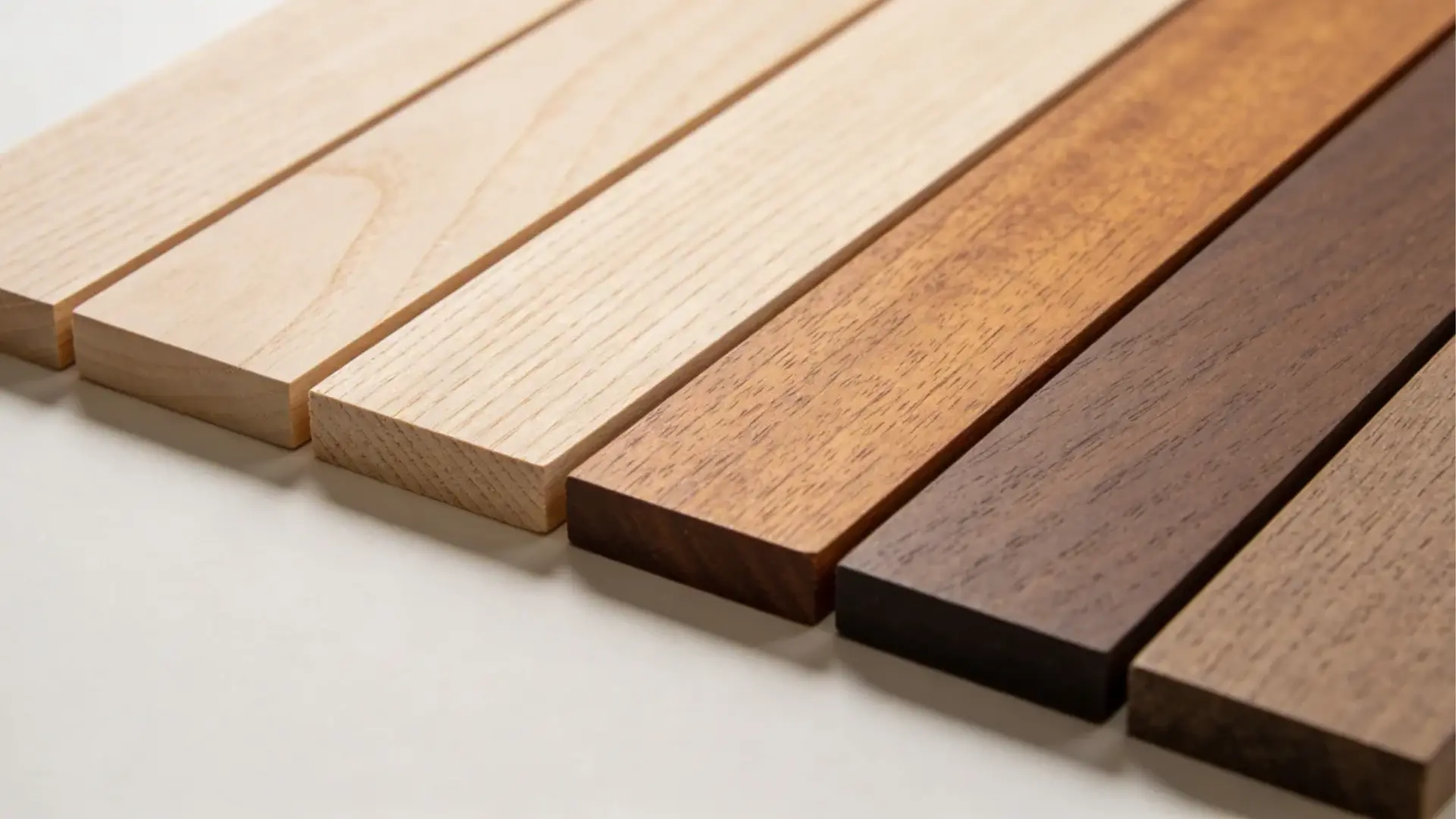
Rubberwood has a straight grain and a light, uniform color, which makes it visually simple and consistent.
It accepts stains and paint easily, allowing it to match different finishes and styles. This works because its open grain structure absorbs finishes evenly across the surface.
As a result, the final look appears smooth and uniform, without patchy areas, making it suitable for a wide range of indoor furniture and decorative products.
Stability and Moisture Sensitivity
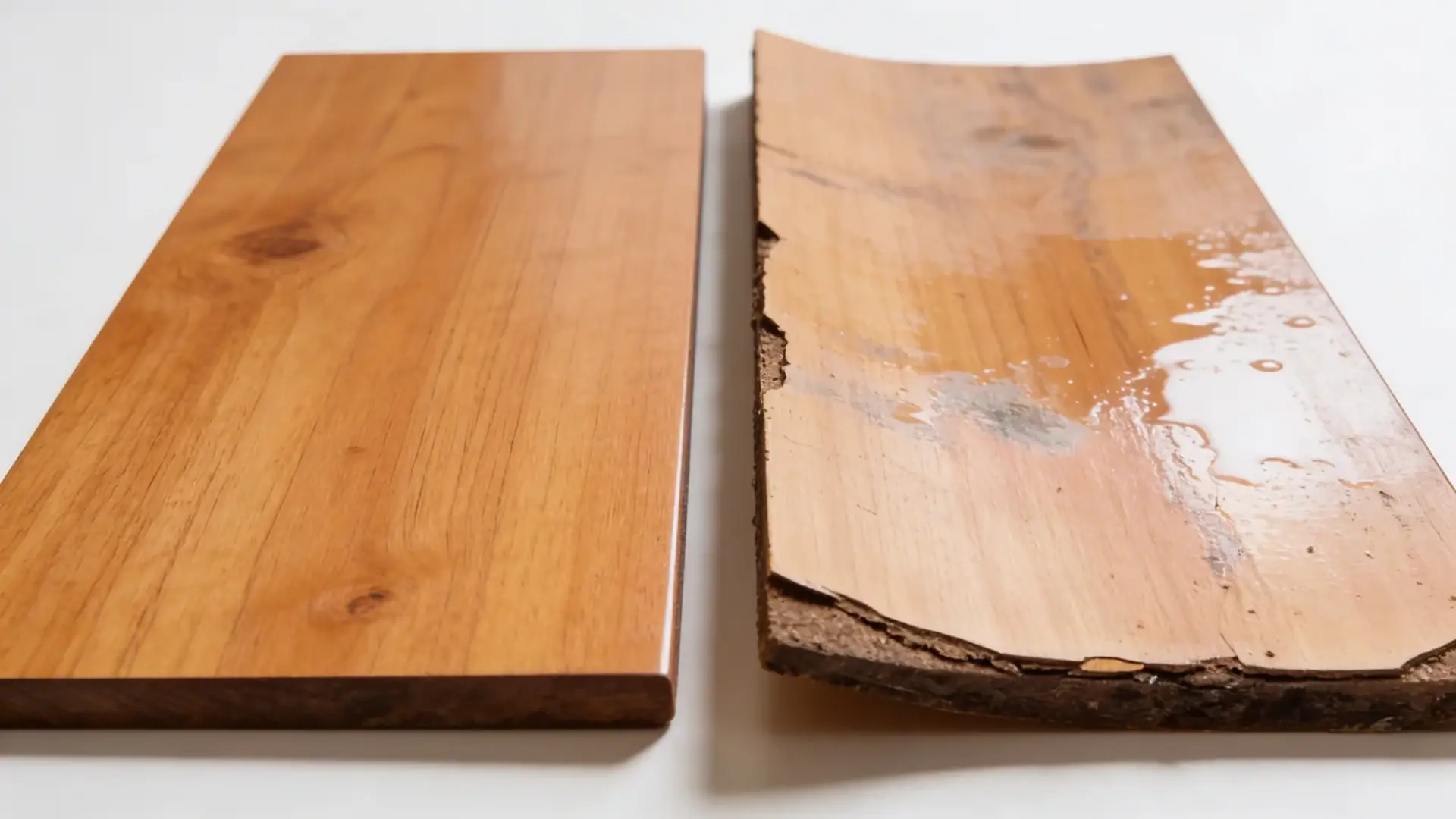
Rubberwood remains stable when it is properly dried during processing. This helps it maintain its shape under normal indoor conditions.
However, it reacts to moisture and changes in humidity. Its structure absorbs moisture from the surrounding air, which can lead to expansion or slight warping over time.
Because of this, it does not perform well in damp areas or outdoor environments where moisture exposure is constant.
Pros and Cons of Rubberwood
Rubberwood performs well in the right conditions, but like any material, it comes with trade-offs worth knowing before you buy.
| Aspect | Pros | Cons |
|---|---|---|
| Workability | Easy to cut, shape, and machine without cracking during production | Can dent or scratch under heavy impact over time |
| Finish | Accepts paint and stain evenly due to open grain structure | Requires proper sealing to maintain appearance long-term |
| Moisture | Stable under normal indoor conditions when properly dried | Absorbs moisture easily, making it unsuitable for outdoor or damp areas |
| Sustainability | Sourced as a by-product of latex production, reducing waste | Limited to plantation regions, restricting global availability |
| Cost | More affordable than traditional hardwoods like oak or maple | Quality varies depending on how well it was treated and dried |
Why Rubberwood Is Considered Eco-Friendly?
Rubberwood is often seen as an eco-friendly option because of how it is sourced and used. Its sustainability comes from both its lifecycle and plantation-based supply.
- Trees are harvested only after their latex production cycle ends
- This ensures the wood is reused instead of being discarded
- Rubberwood comes from plantation-grown trees
- New trees are planted regularly to maintain supply
- This reuse reduces overall waste from rubber production
- Continuous planting supports a renewable cycle
As a result, rubberwood has a lower environmental impact compared to traditional hardwoods that depend on forest logging.
Uses of Rubberwood
Rubberwood’s workability and finish quality make it a practical choice across furniture, interiors, and everyday products particularly where consistency and cost matter.
Here are the most common applications where rubberwood is widely used:
- Tables and dining sets: Handles everyday load well and takes stain evenly for a clean, uniform finish.
- Chairs and seating units: Easy to shape and assemble, making it efficient for both custom and mass production.
- Cabinets and storage units: Machines cleanly without cracking, supporting precise cuts needed for fitted storage pieces.
- Bed frames and headboards: Provides enough strength for standard indoor use while accepting paint and finish smoothly.
- Ready-to-assemble furniture: Lightweight and easy to process, making it a popular choice for flat-pack production lines.
- Wall paneling and decorative surfaces: Uniform grain and light color make it visually consistent across large surface areas.
- Moldings and trims: Cuts and shapes cleanly, delivering smooth edges needed for detailed interior finishing work.
- Interior frames and light woodwork: Suitable for dry indoor environments where moisture exposure remains consistently low.
Where Rubberwood Does Not Perform Well (Practical Limits)
Rubberwood has certain limitations that affect where it can be used effectively.
It does not perform well in outdoor conditions because exposure to moisture can lead to swelling, decay, and long-term damage.
It is also not suitable for load-bearing or heavy structural applications, as its moderate density limits its ability to handle high stress.
In addition, it can develop dents and surface wear in high-impact areas.
These issues occur because rubberwood has a porous structure that absorbs moisture easily and offers limited resistance to heavy force.
Conclusion
Rubberwood is one of those materials that gets overlooked simply because people don’t fully understand what it is. Now that you do, the picture is pretty clear.
It starts as a by-product of latex production, goes through a careful treatment and drying process, and comes out as a stable, workable hardwood used across furniture, interiors, and everyday products.
It’s not the strongest wood available, and moisture will always be its weak point but for indoor use, it delivers consistent results at a price that makes sense.
Understanding what is rubberwood means knowing exactly when it works and when to look elsewhere. That knowledge alone saves time, money, and a few regrettable furniture decisions.
Got a question or experience with rubberwood? Drop it in the comments below; we’d love to hear from you!