

What is Brutalist Interior Design?
Brutalist interior design is making a strong comeback. This bold style celebrates honest materials, clean lines, and minimalist expression.
What started as stark concrete buildings in the 1950s has now found its way into modern homes. It’s raw, real, and surprisingly beautiful.
In this guide, you’ll learn the origins of brutalist design and how it moved from large structures to intimate interiors.
We’ll cover the materials, colors, and lighting that define this style. You’ll also see how furniture becomes part of the architecture itself.
Plus, we’ll show you eight practical ideas to bring brutalism into your space without a total redesign. Ready to see how imperfection can look this good?
Let’s get started.
The Origins of Brutalist Design
Brutalism started in the 1950s, right after World War II. The world needed affordable, strong buildings fast.
The style gets its name from “béton brut,” a French term that means “raw concrete.” Designers like Le Corbusier and the Smithsons led the way. They believed in honest materials and function first.
What began as large public buildings slowly made its way indoors. Today, brutalist interiors bring that same bold, grounded feel into homes. It’s raw. It’s real. And it works.
Materials and Textures That Define Brutalism
Brutalist interiors celebrate what’s real and unfinished. Here are the materials that make this style stand out:
- Concrete: This is the heart of brutalism, showing up on floors, walls, and countertops with its raw, honest look.
- Steel and Metal: These bring an industrial edge and add strong, clean lines to the space.
- Stone and Brick: They offer texture and a sense of history that never goes out of style.
- Wood: It brings warmth to balance the cool, hard surfaces and makes the space feel livable.
The Brutalist Color Palette and Lighting

Brutalism keeps color simple and lets the materials do the talking.
Typical Brutalist Palette:
- Shades of gray, beige, and off-white – These neutral tones create a calm, understated base for the space.
- Accents of black, charcoal, or muted brown – They add depth and contrast without being too bold.
- Occasional touches of earthy tones for contrast – Warm browns or tans bring balance and keep the space from feeling too cold.
Lighting Should Highlight the Structure, Not Overpower It:
- Choose sculptural pendant lamps or bare-bulb fixtures – These act as both light sources and visual statements.
- Embrace natural daylight to soften rigid forms – Sunlight brings life to hard surfaces and makes the room feel more open.
- Use track or recessed lighting to cast subtle shadows – This adds dimension and brings out the texture in walls and furniture.
What Makes Brutalist Design Unique
So what sets brutalist design apart from other interior styles? It comes down to a few core ideas.
| Element | Description | Design Tip |
|---|---|---|
| Material Honesty | Exposed concrete, brick, steel, and unfinished wood | Leave materials raw instead of covering them up |
| Geometric Shapes | Bold lines, monolithic forms | Use symmetry and strong angles in furniture |
| Muted Palette | Grays, blacks, taupes, and whites | Add warmth with textiles or natural wood |
| Minimal Ornamentation | Function-first approach | Focus on simplicity and proportion |
| Play of Light | Contrast between shadows and surfaces | Use natural light to enhance textures |
Choosing Furniture for Brutalist Interiors

In brutalist interiors, furniture isn’t just something you sit on. It becomes part of the structure itself. Every piece feels intentional, solid, and built to stay.
Key Characteristics:
- Heavy, low-profile pieces with clean geometry. Brutalist furniture sits close to the ground and uses straight lines and bold angles. It feels stable and strong, like it’s rooted in place.
- Materials such as concrete, wood, leather, or stone are chosen for their weight and texture. Concrete tables, wooden benches, leather seating, and stone accents all fit naturally into this style.
- Minimal decorative accessories. Less is more here. You won’t find cluttered shelves or extra trinkets. Every object has a reason to be there.
- Consider using large-scale wall art or abstract sculptures for visual balance. Big, bold art pieces work well in brutalist spaces. They add interest without disrupting the clean, open feel of the room.
Example: A slab-style concrete coffee table, paired with a neutral linen sofa and steel-frame chair, captures the essence of brutalist living. It’s functional, timeless, and quietly powerful.
Creative Ideas to Bring Brutalism into Your Home
You don’t need to live in a concrete fortress to enjoy brutalist style. Try these ideas to bring the look into your space.
1. Concrete Accent Wall

Create a feature wall with exposed concrete or textured plaster. It adds instant visual weight and becomes the focal point of the room. If real concrete isn’t an option, use microcement or textured paint for a similar effect.
2. Monolithic Furniture
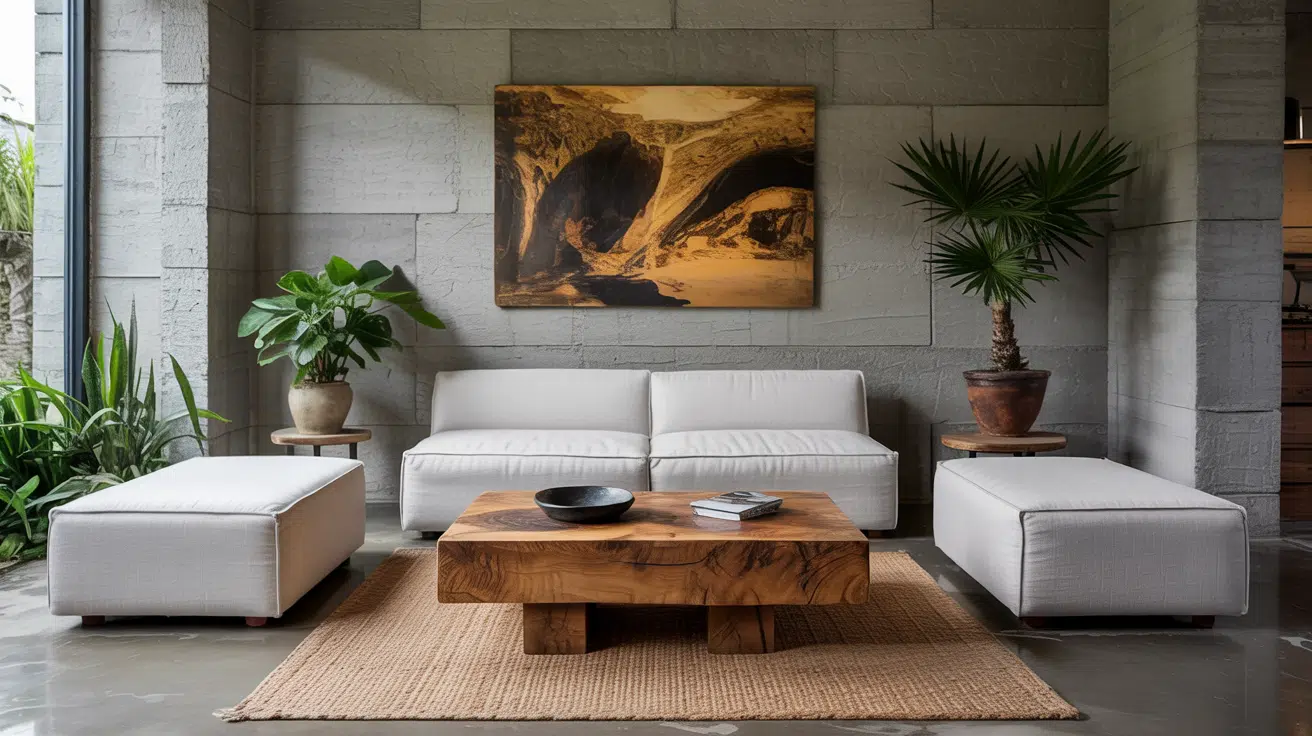
Choose block-style furniture that feels sculptural and heavy. Think low-profile sofas, slab coffee tables, or chunky wooden benches. These pieces ground the room and make a bold statement without extra decoration.
3. Industrial Lighting

Add metal pendant lamps or minimalist track lighting. Bare bulbs and exposed fixtures fit the brutalist vibe perfectly. They provide light while also acting as design elements that highlight the raw materials around them.
4. Textural Layering

Pair raw materials with soft fabrics like linen cushions or wool throws. This contrast softens the hard surfaces and makes the space feel more comfortable. It’s how you add warmth without losing the brutalist edge.
5. Open Layouts

Emphasize negative space and avoid clutter to let form and function shine. Brutalism thrives on simplicity, so keep only what you need. Open spaces allow the architecture and furniture to speak for themselves.
6. Geometric Decor

Incorporate cube or cylinder-shaped planters, stools, and shelves. These simple shapes echo the clean lines of brutalist design. They add interest without complicating the visual flow of the room.
7. Muted Artwork

Use abstract art in grayscale or earth tones. Large-scale pieces work best in brutalist interiors. They fill wall space without adding color that clashes with the neutral palette.
8. Natural Accents
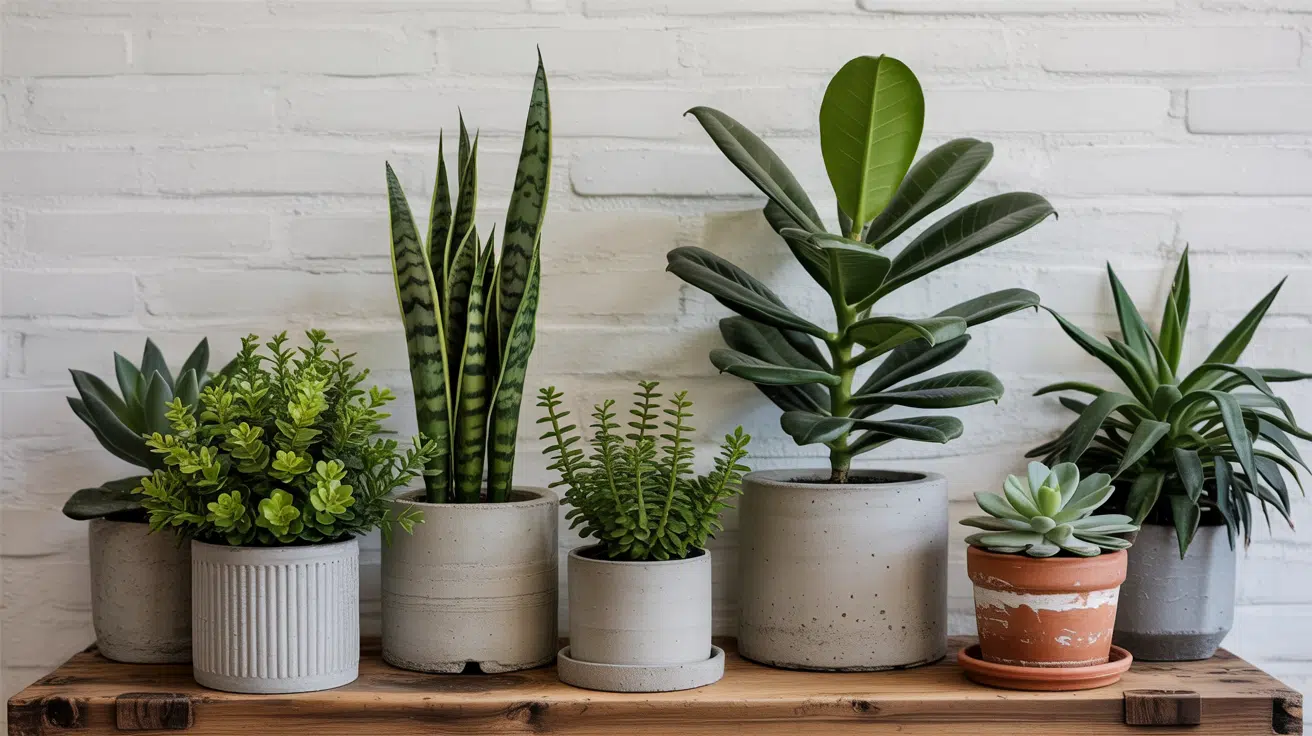
Introduce potted greenery in concrete or clay planters for balance. Plants bring life and softness to raw, industrial spaces. They’re one of the easiest ways to make brutalism feel more livable and fresh.
The Rise of “Soft Brutalism”
Brutalism is changing. Designers are now creating what they call Soft Brutalism. It keeps the bold, honest look but makes it easier to live in every day.
Here’s how it differs:
- This design adds textiles and organic elements (linen, wool, plants). Soft fabrics like linen throws and wool rugs bring warmth to hard surfaces. Plants add life and color, making the space feel less industrial and more inviting.
- The design introduces rounded furniture edges and layered lighting. Instead of sharp angles everywhere, soft brutalism uses curves on chairs and tables. Layered lighting from floor lamps, pendants, and candles creates a cozy glow instead of harsh brightness.
- Mixes industrial and Scandinavian design influences. This style borrows the raw materials from brutalism and the simplicity from Scandinavian design. The result is a space that feels both strong and calm.
Soft brutalism allows homeowners to enjoy the structure and strength of brutalism without sacrificing comfort or coziness. It’s the best of both worlds.
How to Start with Brutalist Design at Home?
You can embrace brutalism in stages without overhauling your entire space. Begin with a single concrete or stone element, like a tabletop or lamp base.
Paint your walls in neutral tones and swap in industrial lighting fixtures. Then layer with textiles for softness and add plants for freshness. Balance is key.
Brutalism works best when it feels intentional, not overwhelming. Start small, see what fits your style, and build from there.
Key Takeaways
Brutalist interior design isn’t about perfection. It’s about honesty, structure, and simplicity.
From its roots in post-war architecture to today’s softer, more livable version, this style continues to prove that beauty lies in the raw and real.
You don’t need a complete home makeover to enjoy brutalism. Start with a concrete accent wall, add sculptural lighting, or choose geometric furniture.
Layer in textiles and plants to balance the hard surfaces. The key is intention, not excess. Brutalism invites you to celebrate authenticity and form, one bold surface at a time.
Ready to bring this timeless style into your home? Start small, stay true to the materials, and let your space speak for itself. What will you try first?


