
What Is a Portico? Purpose, Designs, and How It Differs From a Porch
A portico is a columned, covered entrance on homes that combines practical weather protection with timeless architectural appeal.
But what makes it different from a porch, and are all porticos designed the same way?
Whether you’re thinking about adding one to your home or just curious about this classic feature, understanding what porticos do and the various styles available helps you appreciate why they’ve remained popular for centuries.
In this blog, we will discuss what is a portico, its purpose, comparisons, and design options for this luxury entrance element.
What is a Portico on a House?
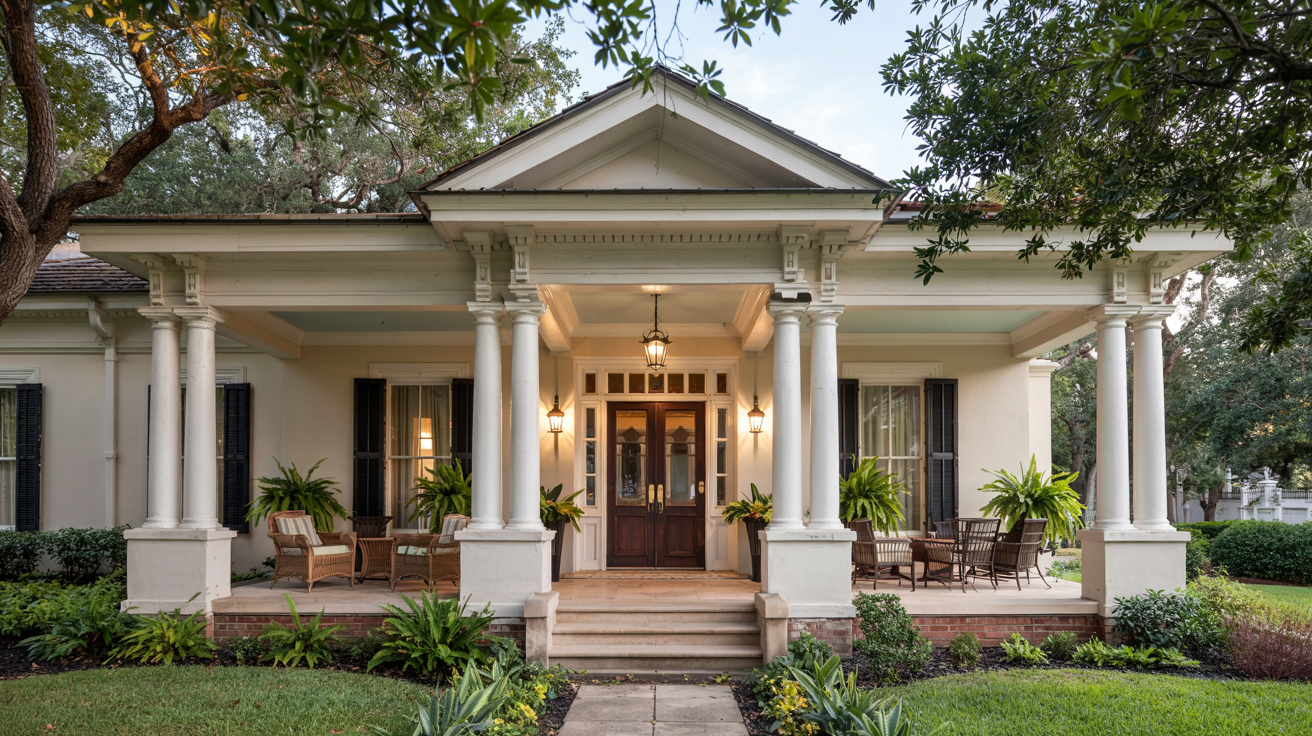
A portico is a covered entrance structure with a roof supported by columns or pillars.
It’s essentially a graceful, sheltered entrance to your home that adds both style and function.
On a house, a portico sits at the front door, extending outward to create a small roofed area.
Unlike a full porch that runs along the house, a portico is compact and focuses just on the entryway. The roof rests on columns, creating an open-sided structure that frames your entrance.
Porticos offer real benefits beyond looks. They protect your front door from rain, snow, and sun damage, helping preserve the door’s finish.
They also give visitors a dry place to wait and create a smooth transition between outdoors and indoors.
What Does a Portico Look Like?
A portico is a roof supported by columns that projects from your home’s entrance.
Key Elements
- Columns: Two to four columns or pillars frame the doorway. Styles include simple square/round posts or classical designs (Doric, Ionic, and Corinthian). Made from wood, brick, stone, or composite materials.
- Roof: Either flat (horizontal overhang) or gabled (peaked triangle with pediment).
- Size: Ranges from minimal coverage just wider than the door to larger structures extending 6-10 feet.
- Details: May include trim, moldings, finished ceilings, steps, or railings.
The appearance varies from simple, basic posts with a plain roof to elaborate posts with ornate columns and decorative elements. All porticos stay open-sided, framing the entrance.
What Is the Purpose of a Portico?
A portico is a covered structure at a building’s entrance with a roof supported by columns. It extends outward from the main building to create a sheltered entry area.
Weather protection
It keeps you dry while unlocking the door, shields packages left on the porch, and prevents rain and snow from damaging your doorway. No more getting drenched while fumbling with keys.
Marks the entrance
It clearly defines where people should enter, which is especially helpful on larger homes or buildings with multiple doors.
The visual weight draws your eye to the main entry point.
Adds architectural appeal
Porticos create depth and shadow on the facade, making the entrance more visually interesting and impressive.
They’re rooted in classical Greek and Roman architecture, so they bring that timeless, elegant look.
Boosts curb appeal
A well-designed portico makes your home look more finished and polished, which can increase property value. It’s often one of the first features people notice.
Creates usable space
Depending on size, it can accommodate a bench, plants, or serve as a covered spot to set down bags while you open the door.
Porticos range from simple overhangs with basic columns to elaborate structures with detailed trim and decorative elements.
The style typically matches the home’s overall architecture; you’ll see them on Colonial, Greek Revival, and Southern-style homes most commonly.
Types of Portico Designs
Porticos come in various architectural styles, each offering distinct visual appeal and functionality to complement different home designs.
1. Classical Portico

Features traditional columns in Doric, Ionic, or Corinthian styles with proportions inspired by ancient Greek and Roman architecture.
Porticos are commonly found on Colonial, Georgian, and Greek Revival homes, providing formality and beauty.
2. Gabled Portico
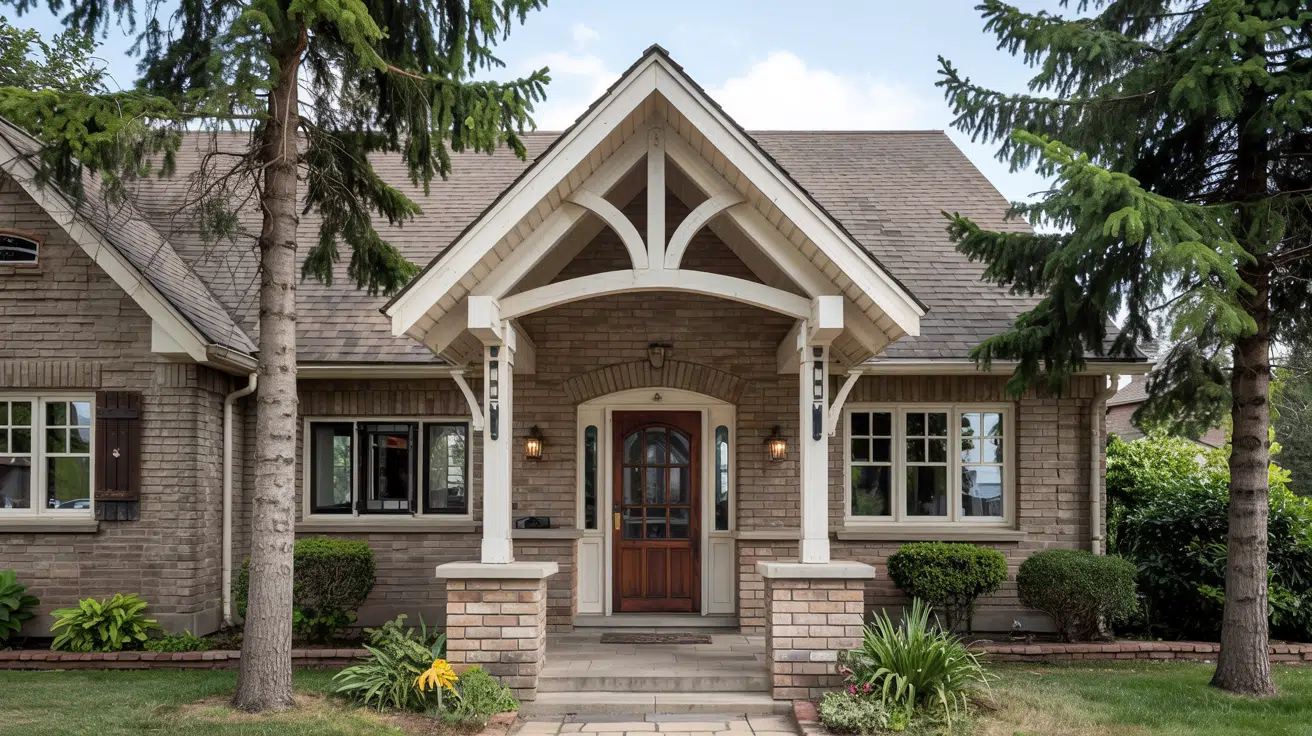
Has a peaked, triangular roof that matches the main house’s roofline.
The sloped design improves drainage and adds vertical interest, popular on Cape Cod, Craftsman, and farmhouse-style homes.
3. Flat Roof Portico
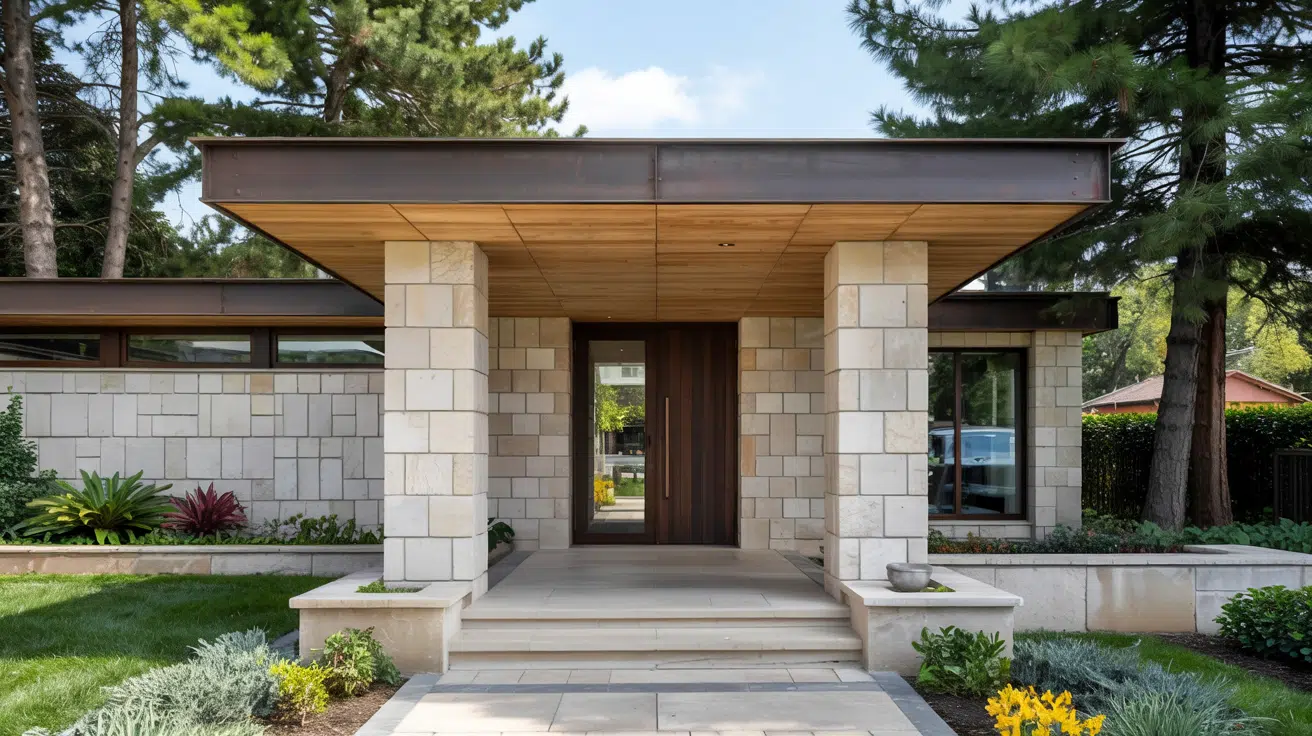
Features a horizontal roof without slopes or peaks for clean, modern lines.
Commonly seen on mid-century modern, ranch, and contemporary homes, emphasizing minimalist design.
4. Pedimented Portico
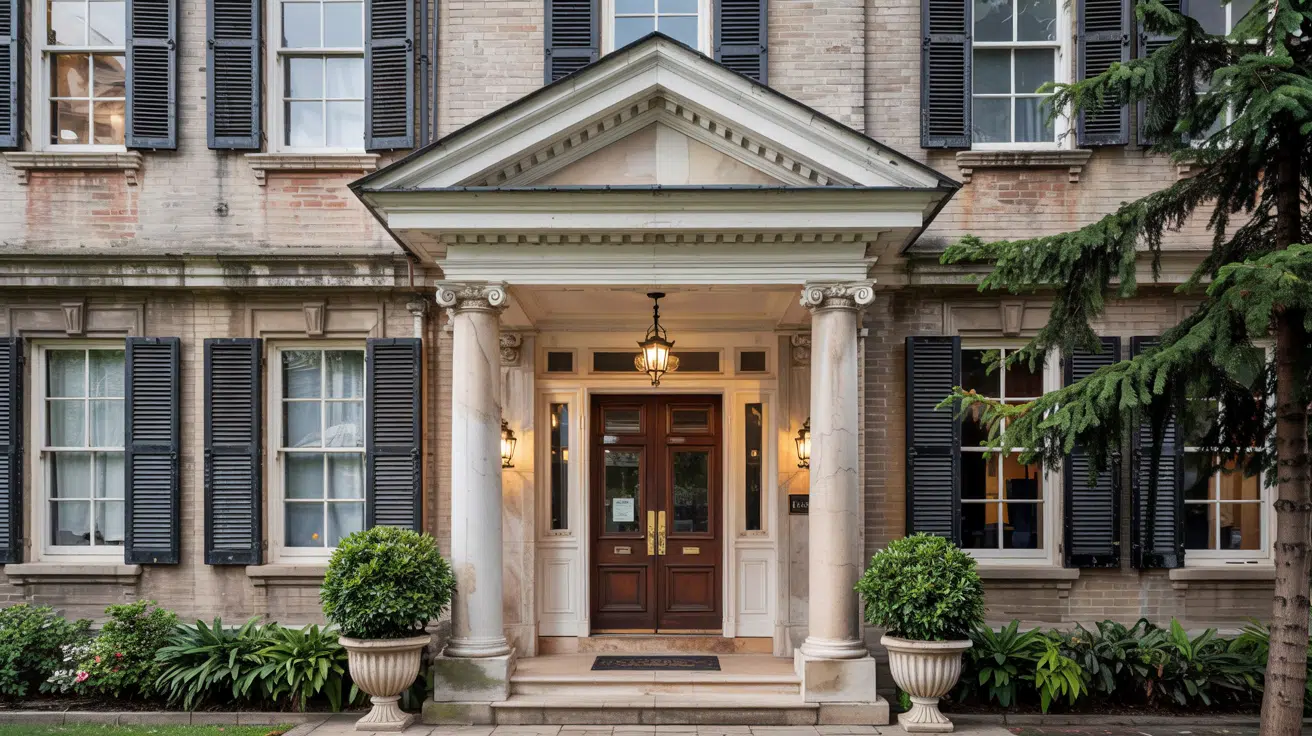
Distinguished by a decorative triangular gable above the columns, adding grandeur to the entrance.
The pediment can include moldings or ornate details, typical of Colonial and Neoclassical architecture.
5. Columned Entry Portico

Focuses on prominent columns as the main feature without elaborate pediments or gables.
Works across various styles, from Southern plantation homes to modern designs with sleek, simplified columns.
6. Interior Portico

A columned passage inside a building that connects rooms or creates dramatic transitions between spaces.
Found in grand estates, museums, and historic buildings for architectural impact.
Portico vs. Porch: What’s the Difference?
| Feature | Portico | Porch |
|---|---|---|
| Size | Small, covers doorway and steps | Large, extends along the house front or side |
| Depth | 4-6 feet from the house | 8-12+ feet, room for furniture |
| Purpose | Shelter’s entrance adds architectural appeal | Provides outdoor living and relaxation space |
| Usability | Just enough space to stand at the door | Room for chairs, swings, and lounging |
| Columns | Always has columns or pillars | May have columns, posts, or other supports |
| Enclosure | Always open on three sides | Can be open, railed, or screened |
| Style | Classical, Greek Revival, Colonial, Georgian | Versatile, works with most architectural styles |
| Placement | Front entrance only | Front, side, back, or wraparound |
| Cost | Less expensive | More expensive due to size |
If you can only stand there while unlocking the door, it’s a portico. If you can set up furniture and hang out, it’s a porch.
Is a Portico the Same as a Porch, Veranda, or Portico?
While often confused, porticos, porches, verandas, and pergolas are distinct outdoor structures with different purposes and designs.
Portico
- Purpose: Highlights and shelters the main entrance
- Size: Small and entry-focused
- Structure: Roof supported by columns or pillars
- Use: Transitional space (not for seating or gathering)
- Common Look: Formal, symmetrical, architectural
A portico frames the front door rather than extending living space.
Porch
- Purpose: Adds usable outdoor living space
- Size: Larger; may stretch across part or all of the façade
- Structure: Roofed; may or may not have columns
- Use: Sitting, relaxing, socializing
- Common Look: Casual and functional
A porch is meant to be occupied, not just passed through.
Veranda
- Purpose: Outdoor living and circulation
- Size: Large; often wraps around the house
- Structure: Roofed and open on the sides
- Use: Leisure, airflow, shade
- Common Look: Informal, especially common in warm climates
A veranda emphasizes comfort and climate adaptation.
Where Did Porticos Originate?
Porticos originated in ancient Greece around the 5th century BCE.
Greek architects created these columned structures for temples and buildings to provide shelter while maintaining open spaces.
They established the classical column styles, Doric, Ionic, and Corinthian, still used today.
The Romans adopted portico designs around the 1st century BCE, using them extensively and spreading the style throughout their empire across Europe, North Africa, and the Middle East.
Porticos revived during the Renaissance and gained widespread popularity through the 18th-19th-century Neoclassical movements. They spread globally through British colonial architecture and American Federal and Greek Revival styles.
Today, porticos remain common in traditional and classical residential architecture worldwide.
Conclusion
A portico is more than decorative; it’s a practical feature that protects your entrance and boosts curb appeal with timeless style.
Understanding what is a portico and the differences between porticos, porches, and similar structures helps you choose the right design for your home.
Whether you prefer classical grace or modern simplicity, the right portico creates a welcoming entrance that combines function with lasting visual impact.


