Types of Bed Sizes: What You Need to Know
Picking the wrong bed size is a mistake you’ll live with every night. Too small and you wake up cramped. Too large and it overwhelms your room and leaves no space for anything else.
Most people shop by feel or guess, but the different types of bed sizes follow exact standard dimensions, and knowing those numbers makes the decision much easier.
Whether you’re buying for a child’s room, a guest room, or a master bedroom, this guide covers every standard bed size.
You’ll find exact dimensions in inches, centimetres, and feet, plus clear advice on which size works best for your room, your height, and how many people are sleeping in it.
Types of Bed Sizes and Their Exact Dimensions Guide
Not all beds are built the same. The wrong bed size affects your sleep, your room layout, and your budget. Here is everything you need to know before you buy.
Get the dimensions right once, and you will never have to second-guess a mattress purchase again.
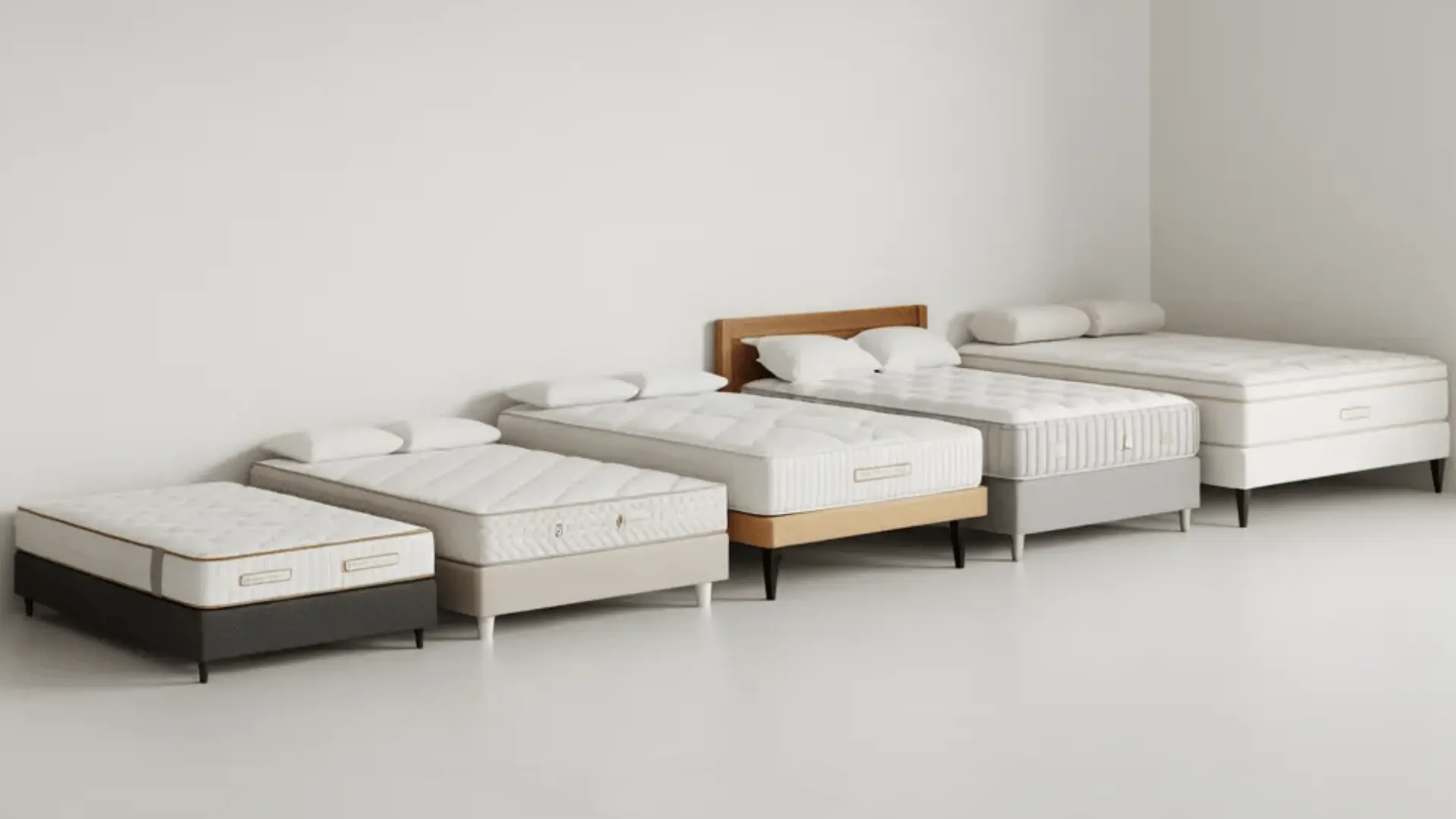
Here’s a quick overview of all standard bed sizes, their dimensions, and who they work best for:
| Size | Inches | Centimetres | Feet | |
|---|---|---|---|---|
| Twin | 38″ × 75″ | 97 × 191 cm | 3.2 × 6.3 ft | |
| Twin XL | 38″ × 80″ | 97 × 203 cm | 3.2 × 6.7 ft | |
| Full | 53″ × 75″ | 135 × 191 cm | 4.4 × 6.3 ft | |
| Queen | 60″ × 80″ | 152 × 203 cm | 5 × 6.7 ft | |
| King | 76″ × 80″ | 193 × 203 cm | 6.3 × 6.7 ft | |
| California King | 72″ × 84″ | 183 × 213 cm | 6 × 7 ft |
Bed sizes are standardised, so a Queen mattress from one brand will always fit a Queen frame from another.
Always confirm frame compatibility before buying older or imported frames that use slightly different internal measurements, even if they share the same size label.
Twin Size Bed
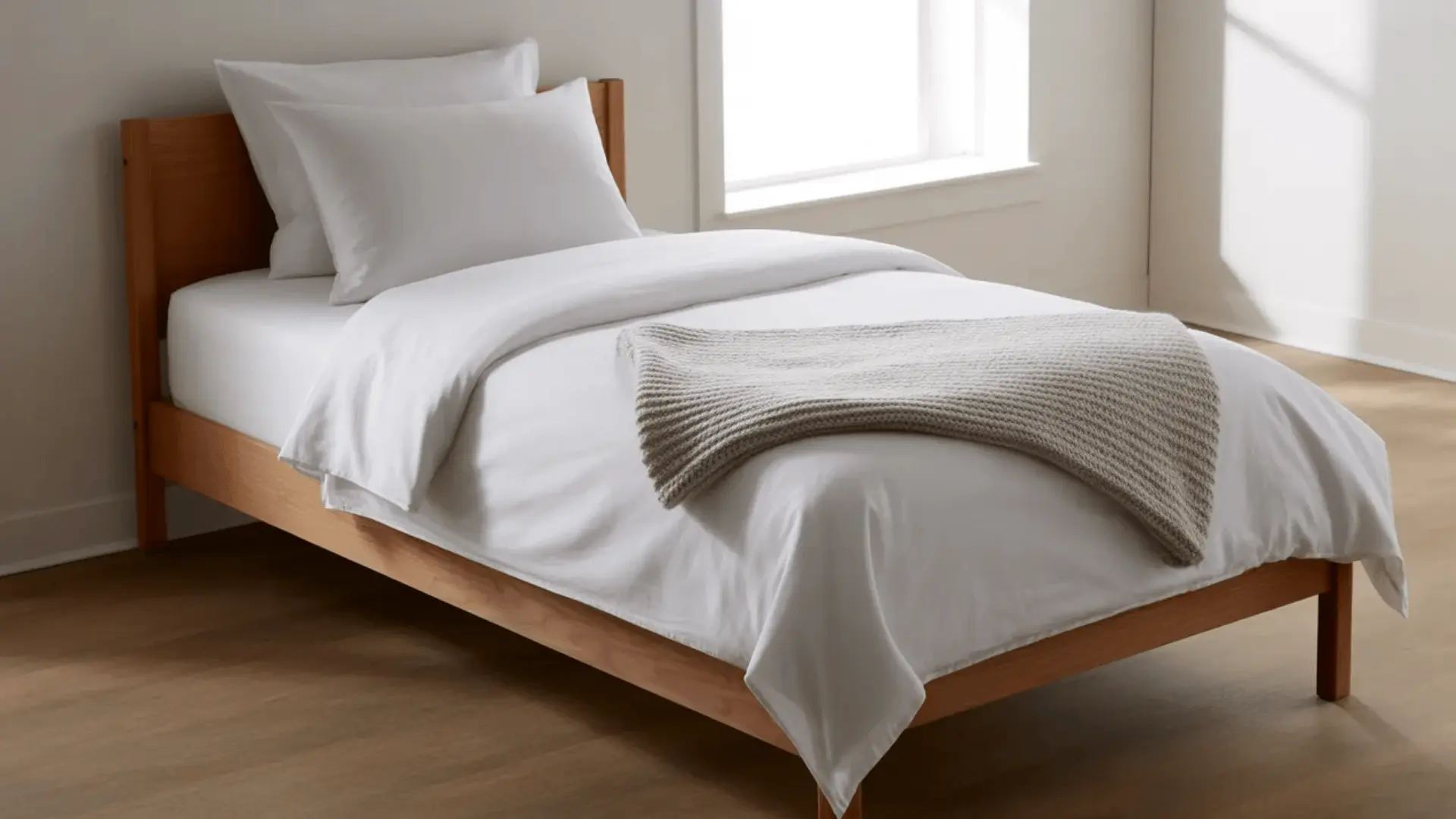
The most compact and affordable standard bed size available, the Twin is designed for children, single sleepers, and smaller rooms that need to make the most of limited space.
- Mattress: 38″ × 75″
- Room size: 7 × 10 ft minimum
- Best for: Children under 12, bunk beds, single sleepers
- Room fit: Small and shared bedrooms
- Bedding: Most affordable and widely available in any size
- Note: Too short for anyone near or above 6 feet
A practical starting point for most kids and average-height adults, with a slim footprint that fits easily into shared bedrooms without overcrowding the space.
Twin XL Bed: Why the Extra Length Matters
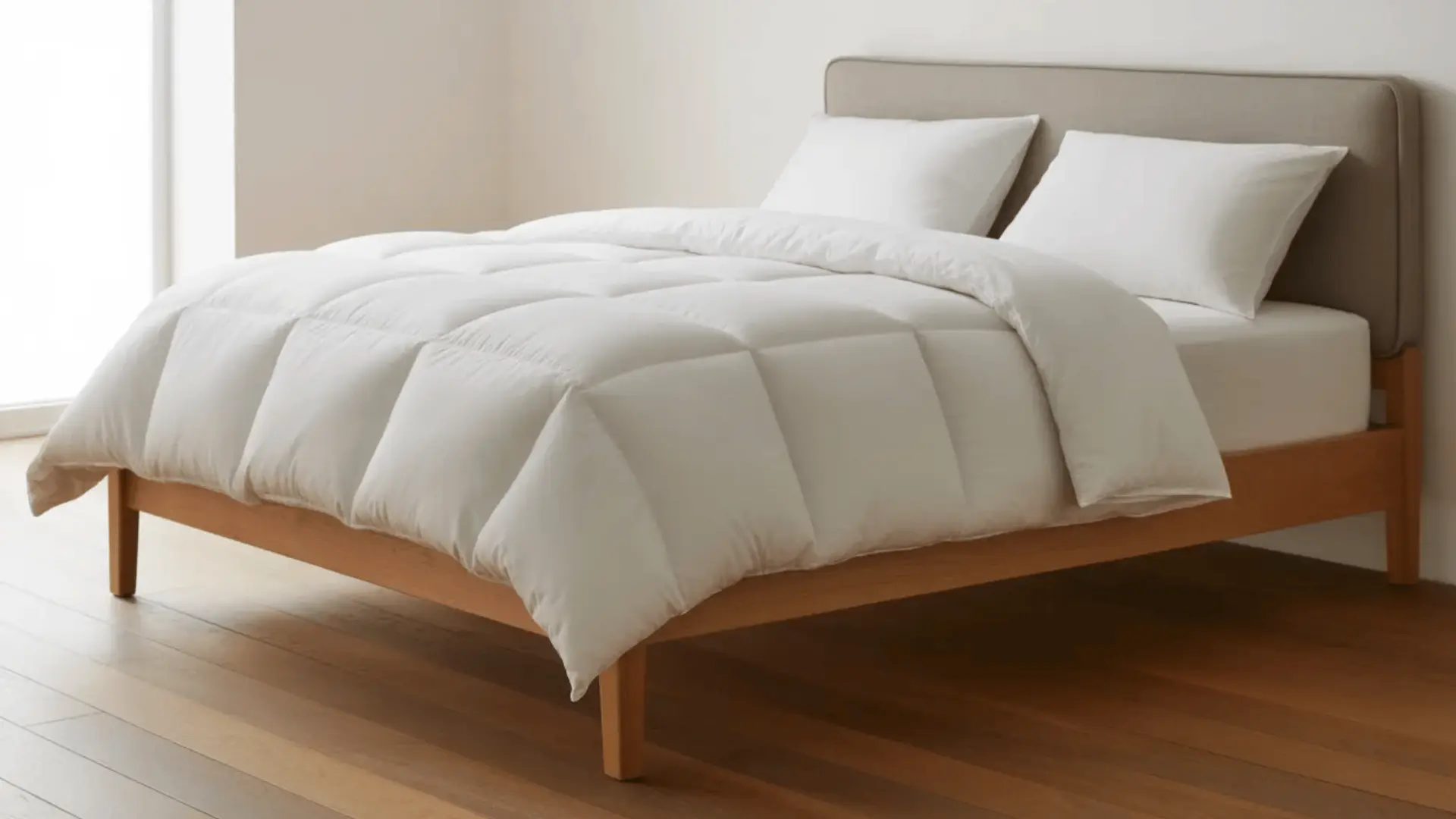
Five inches longer than a standard Twin, the Twin XL is the smarter choice for taller sleepers, college students, and growing teenagers who need more length without a bigger room.
- Mattress: 38″ × 80″
- Room size: 8 × 10 ft minimum
- Best for: Taller singles, college dorms, growing teenagers
- Height: Ideal for sleepers approaching or above 6 feet
- Room fit: Same footprint as a standard Twin
- Bedding: Slightly more limited than standard Twin
Five inches longer than a Twin, it eliminates foot overhang and is the standard size in most college dorms. A smarter buy for any teenager still growing.
Full Size Bed: What You Need to Know
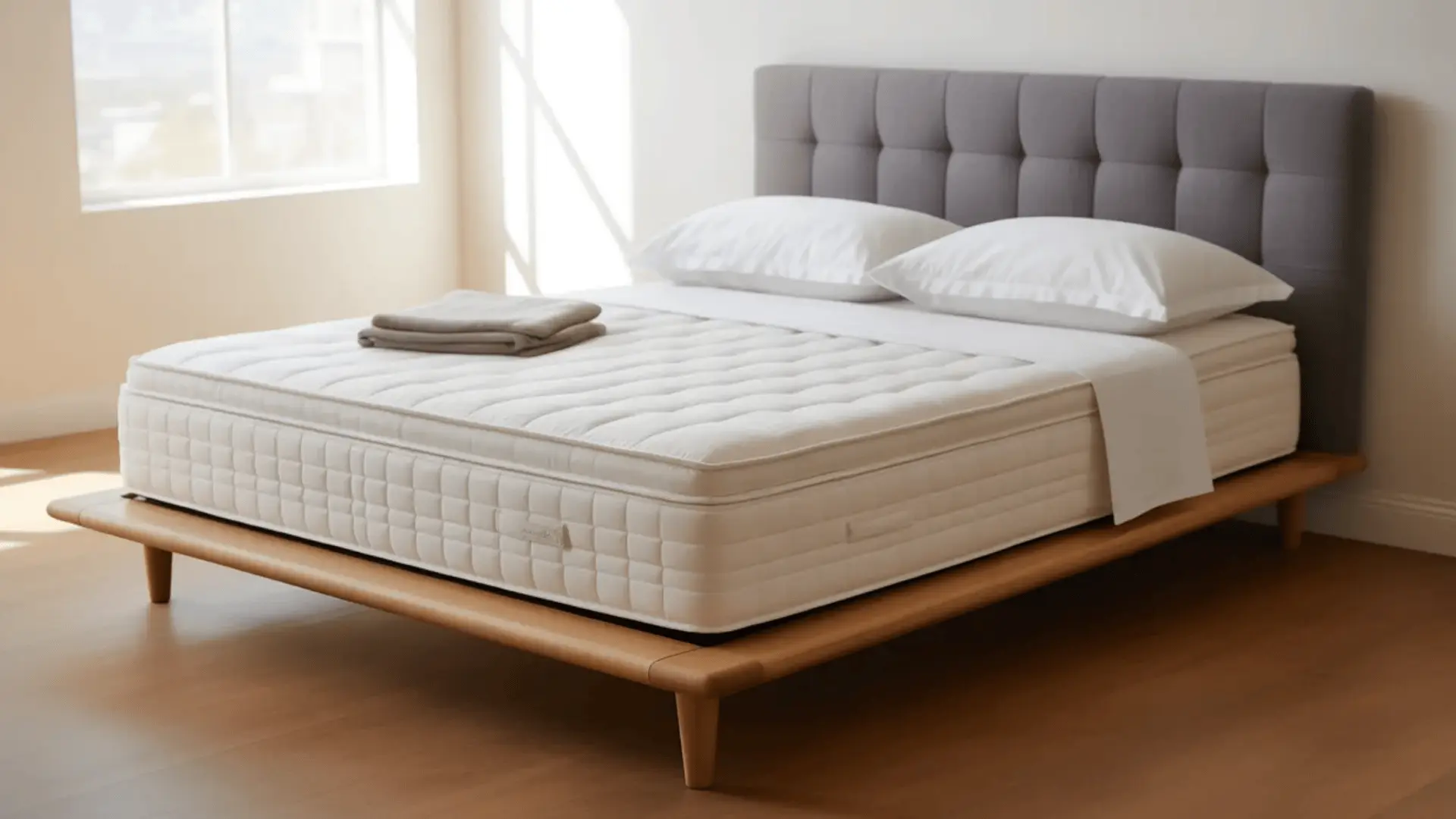
Wider than a Twin but narrower than a Queen, the Full is a practical middle-ground option for solo sleepers and guest rooms, but falls short for couples sharing long-term.
- Mattress: 53″ × 75″
- Room size: 9 × 10 ft minimum
- Best for: Solo adults, guest rooms, smaller bedrooms
- Also known as: Double in some markets
- Personal space: 26.5 inches per person when shared
- Bedding: Fits most standard bedroom furniture
Wider than a Twin but narrower than a Queen, it sits in a tricky middle ground. Two people sharing a Full each get just 26.5 inches of space, less than a single Twin.
For couples, spending a little more on a Queen from the start is almost always the better call.
Queen Size Bed: Why It’s the Most Popular Choice

The most widely sold bed size for good reason, the Queen strikes the perfect balance between personal space and room fit, making it the default choice for most bedrooms.
- Mattress: 60″ × 80″
- Room size: 10 × 10 ft minimum, 10 × 12 ft recommended
- Best for: Couples, solo sleepers, master bedrooms
- Height: Comfortably fits sleepers up to 6’4″
- Room fit: Works well in most standard master bedrooms
- Bedding: Widest range of frames and accessories across all budgets
Each sleeper gets about 30 inches of width, roughly the same as sleeping on a Twin alone, making it comfortable for two without overwhelming the room.
Anything smaller limits furniture placement and makes the room feel cramped.
Standard King Bed: What You Need to Know

The widest standard bed size available, the Standard King delivers maximum personal space for couples and anyone who shares their bed regularly.
- Mattress: 76″ × 80″
- Room size: 12 × 12 ft minimum, 13 × 13 ft recommended
- Best for: Couples, families sharing the bed, solo sleepers wanting maximum space
- Room fit: Square or wide rooms
- Bedding: Costs noticeably more than Queen across most brands
Each sleeper gets Twin-width space to themselves, making it a significant upgrade from a Queen and the best choice for anyone wanting maximum width.
Note: Can be difficult to move through narrow hallways and doorways
California King Bed: What You Need to Know
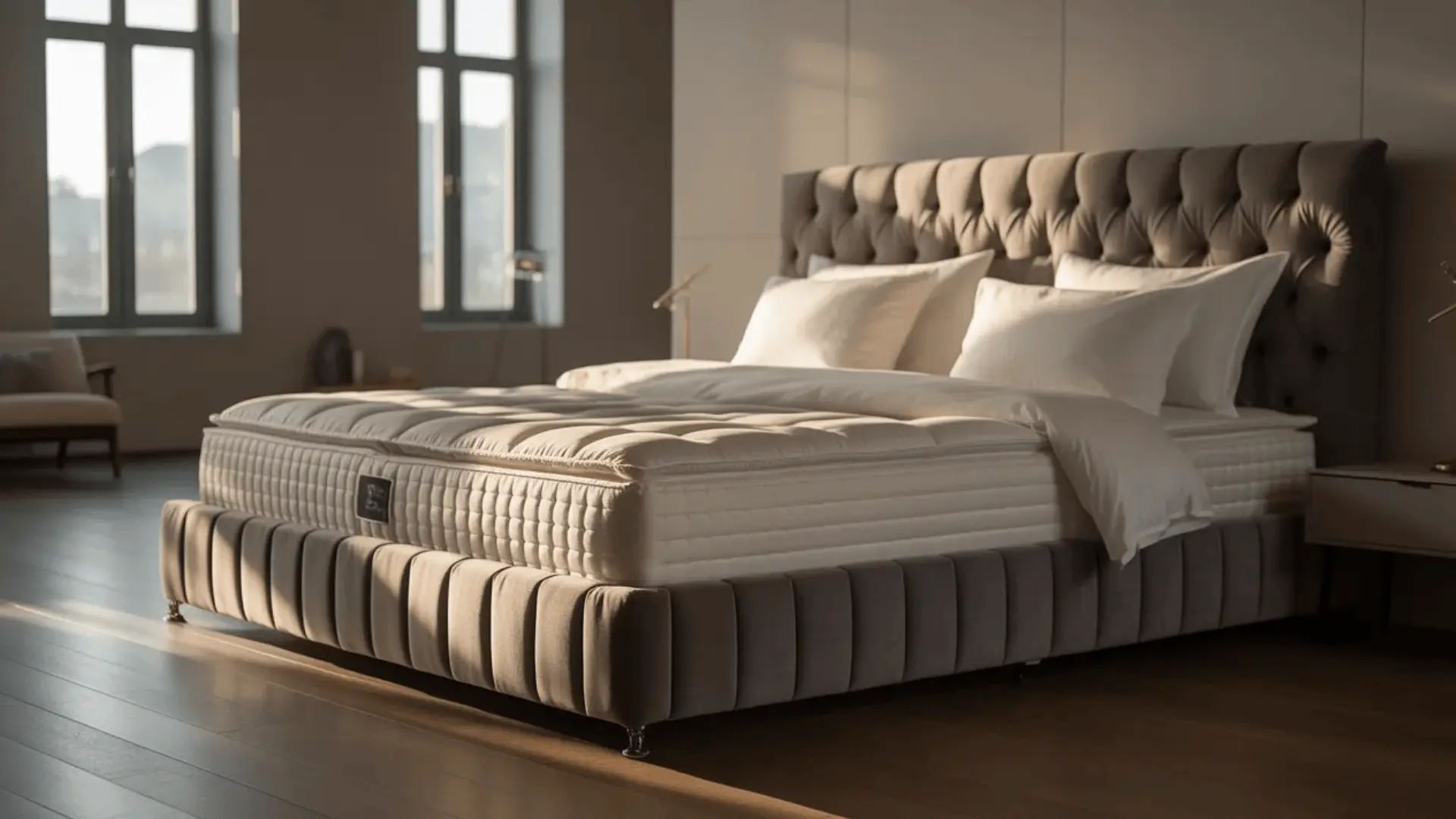
The longest standard bed size available, the California King is built specifically for taller sleepers who need extra length without compromising on comfort.
- Mattress: 72″ × 84″
- Room size: 12 × 12 ft minimum, 12 × 14 ft recommended
- Best for: Sleepers over 6’4″, long and narrow rooms
- Room fit: Long, narrow rooms
- Bedding: Less widely available than Standard King
Four inches narrower than a Standard King but four inches longer, it is built for tall sleepers, not bigger ones. If width matters more than length, a Standard King is the better choice.
Note: Requires California King-specific frames and accessories
All Bed Sizes Compared at a Glance
Not sure which size fits your room and sleep needs? Here is every bed size compared side by side.
| Feature | Twin | Twin XL | Full | Queen | Standard King | California King |
|---|---|---|---|---|---|---|
| Mattress | 38″ × 75″ | 38″ × 80″ | 53″ × 75″ | 60″ × 80″ | 76″ × 80″ | 72″ × 84″ |
| Room Size | 7 × 10 ft | 8 × 10 ft | 9 × 10 ft | 10 × 12 ft | 12 × 12 ft | 12 × 14 ft |
| Best For | Kids, singles | Taller singles, dorms | Solo adults, guests | Couples, master bedrooms | Couples, families | Sleepers over 6’4″ |
| Personal Space | 38″ per person | 38″ per person | 26.5″ per person | 30″ per person | 38″ per person | 36″ per person |
| Height Limit | Up to 6 ft | Up to 6’7″ | Up to 6 ft | Up to 6’4″ | Up to 6’4″ | 6’4″ and above |
| Bedding Cost | Lowest | Low | Moderate | Moderate | High | Highest |
| Availability | Widest | Wide | Wide | Widest | Wide |
Limited |
Use this as your starting point, then read each size breakdown below for more detail.
How to Choose the Right Bed Size for Your Room
Choosing the right bed size starts with measuring your room, not browsing mattress options. Aim for at least 24 to 30 inches of clearance on the sides and at the foot of the bed.
This gives you enough space to move around, open drawers, and access wardrobes comfortably.
Here are the three key factors to consider:
- Room size: This sets the hard limit. A bed that doesn’t leave enough clearance will make the room feel smaller and harder to use.
- Number of sleepers: Single sleepers can choose anything from a Twin to a King. Couples need at least a Queen for comfortable long-term sleep.
- Height: Sleepers over 6 feet should avoid Twin and Full sizes due to foot overhang. Twin XL, Queen, King, and California King all offer enough length.
A bigger bed doesn’t always mean better sleep. The right size for your room and your needs will always win.
Conclusion
Choosing the right type of bed size comes down to three things: your room size, the number of sleepers, and your height. Get those right, and the rest falls into place.
A Queen works for most couples. A Twin or Full suits solo sleepers and smaller rooms. If you need extra width, go with a Standard King.
If you need extra length, a California King is the better call.
Don’t forget to measure your room before you decide on a bed that doesn’t fit your space will always feel wrong, no matter how comfortable it is.
Frequently Asked Questions
What Is The Difference Between A Full And A Double Bed?
They’re the same size. “Full” and “Double” are two names for the same 53″ × 75″ mattress, used interchangeably across different markets.
What Is the Most Common Bed Size?
Queen is the most widely sold bed size. It balances personal space, room fit, and affordability better than any other size, making it the default choice for most bedrooms.
What Bed Size Fits In A 10 × 10 Room?
A Queen can fit in a 10 × 10 room, but a 10 × 12 room gives better clearance. A Full or Twin is a more comfortable fit if the room is on the smaller side.