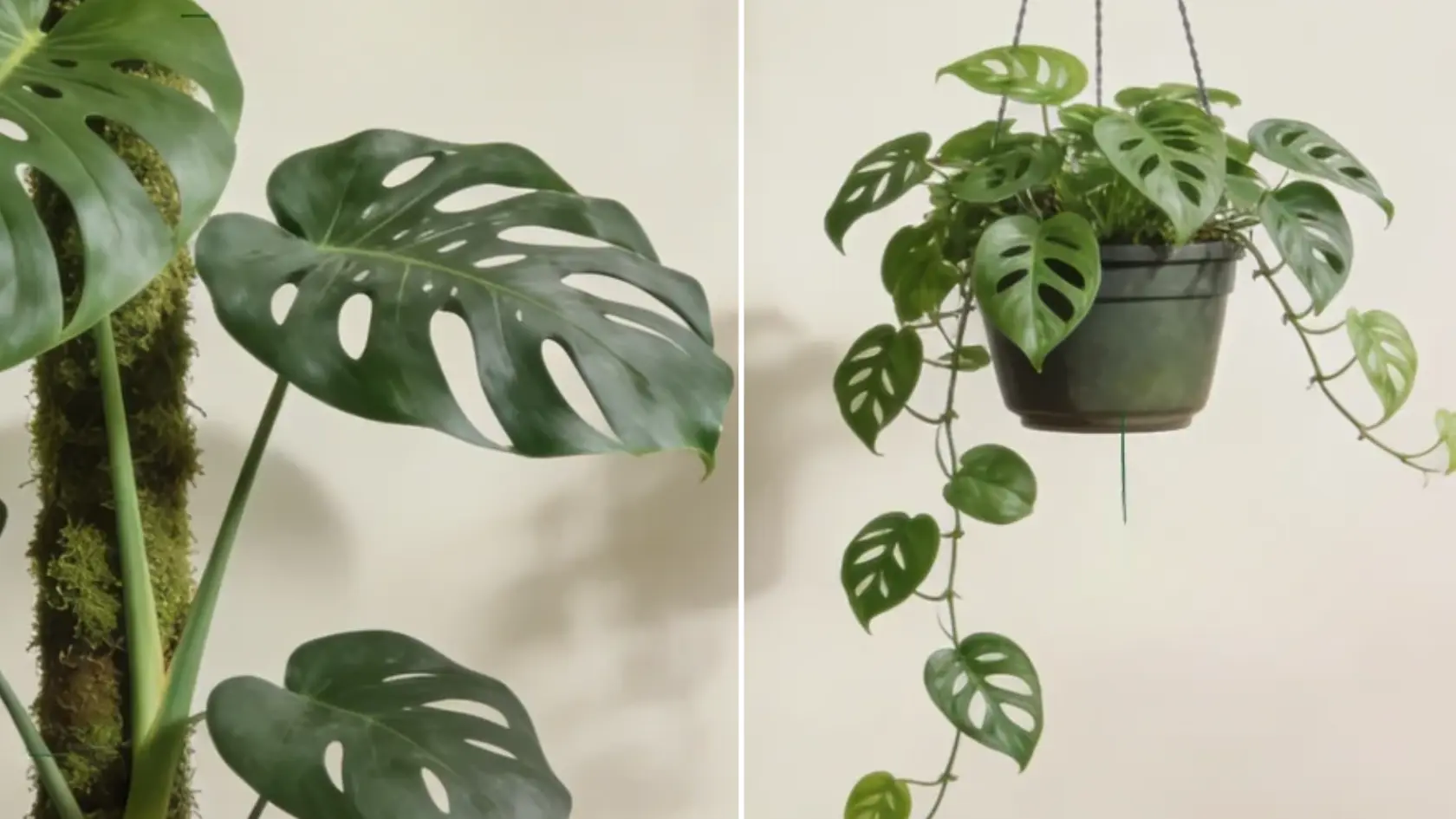
Swiss Cheese Plant vs Monstera: What’s the Difference?
Many houseplant owners do not realize that “Swiss cheese plant” is not an official plant category.
The confusion behind “Swiss cheese plant vs monstera” mostly comes from common nicknames being used loosely across different Monstera varieties.
In practice, this leads to mislabeled plants, mixed care advice, and unrealistic expectations about leaf size or growth. The problem becomes more noticeable when immature plants have not yet developed their mature fenestrations.
Understanding how the leaf holes form and how each plant grows helps separate the most commonly confused varieties.
Is a Swiss Cheese Plant the Same as a Monstera?
Monstera is the official plant genus, not a single plant.
Swiss cheese plant is a common nickname for certain species in that genus, and the two terms are related but not interchangeable.
The problem is that the nickname has never been tied to one specific species, which means different sellers use it for different plants.
That inconsistency is where most of the confusion around identification, labeling, and care advice actually starts.
What “Monstera” Actually Means?
Monstera is a group of tropical plants known for their large leaves and natural holes called fenestrations.
The most common species associated with the Swiss cheese plant are Monstera deliciosa and Monstera adansonii.
- Monstera deliciosa is the larger plant with broad leaves that develop deep splits as it matures.
- Monstera adansonii is smaller and has thinner leaves with oval-shaped holes across the surface.
Monstera Deliciosa vs Monstera Adansonii
The biggest confusion around Swiss cheese plants usually comes from Monstera deliciosa and Monstera adansonii.
Both belong to the Monstera family and develop holes in their leaves, but they look very different as they mature:
Leaf Shape and Fenestration Differences
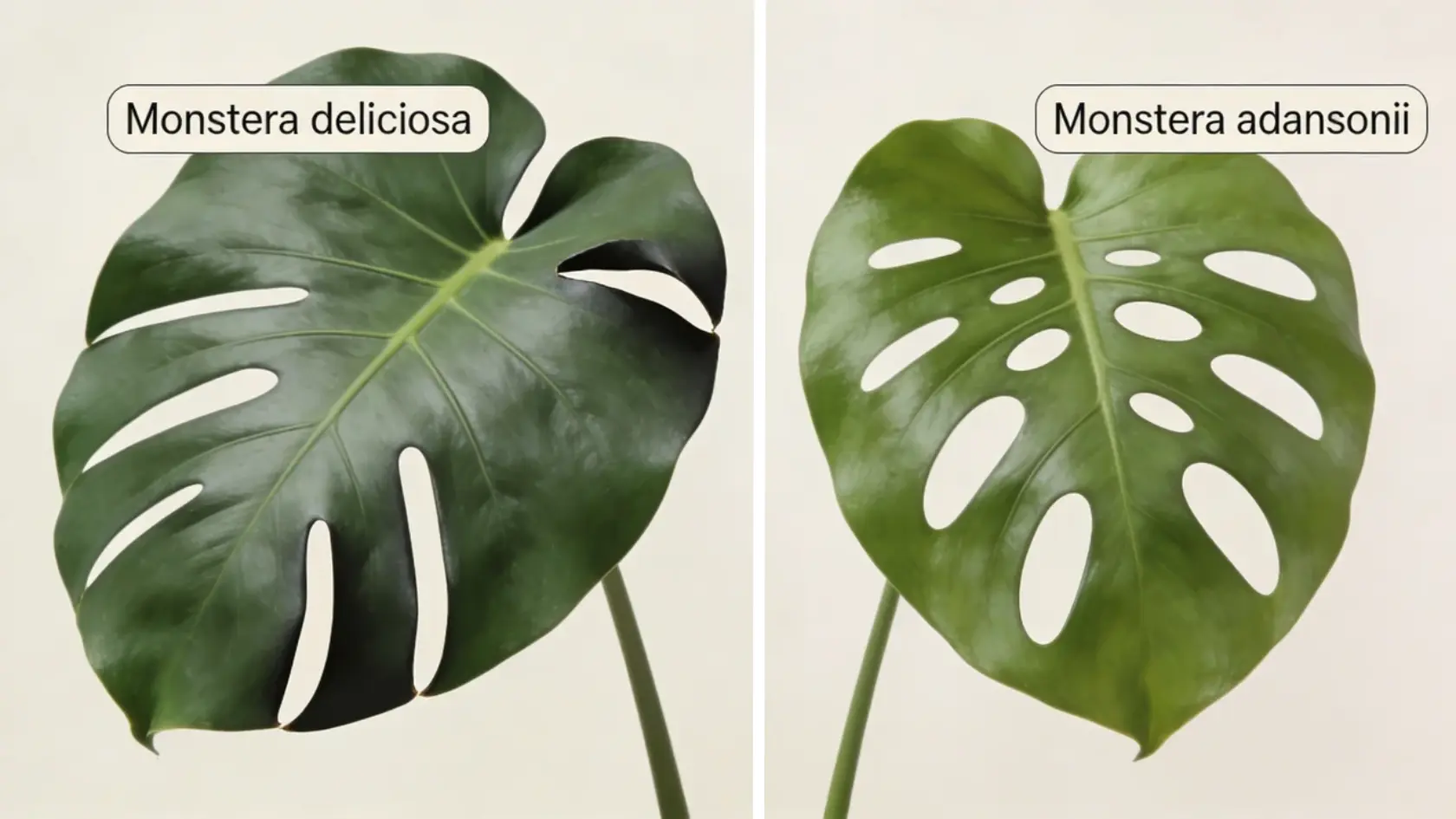
Monstera deliciosa has large, broad leaves that eventually develop deep splits along the edges. Mature leaves may also form a few inner holes, but the dramatic edge splits are the main feature.
Monstera adansonii looks lighter and more vine-like. Its leaves stay smaller and develop oval-shaped holes across the leaf surface much earlier. Unlike deliciosa, the edges usually stay solid instead of deeply split.
Size and Growth Habit
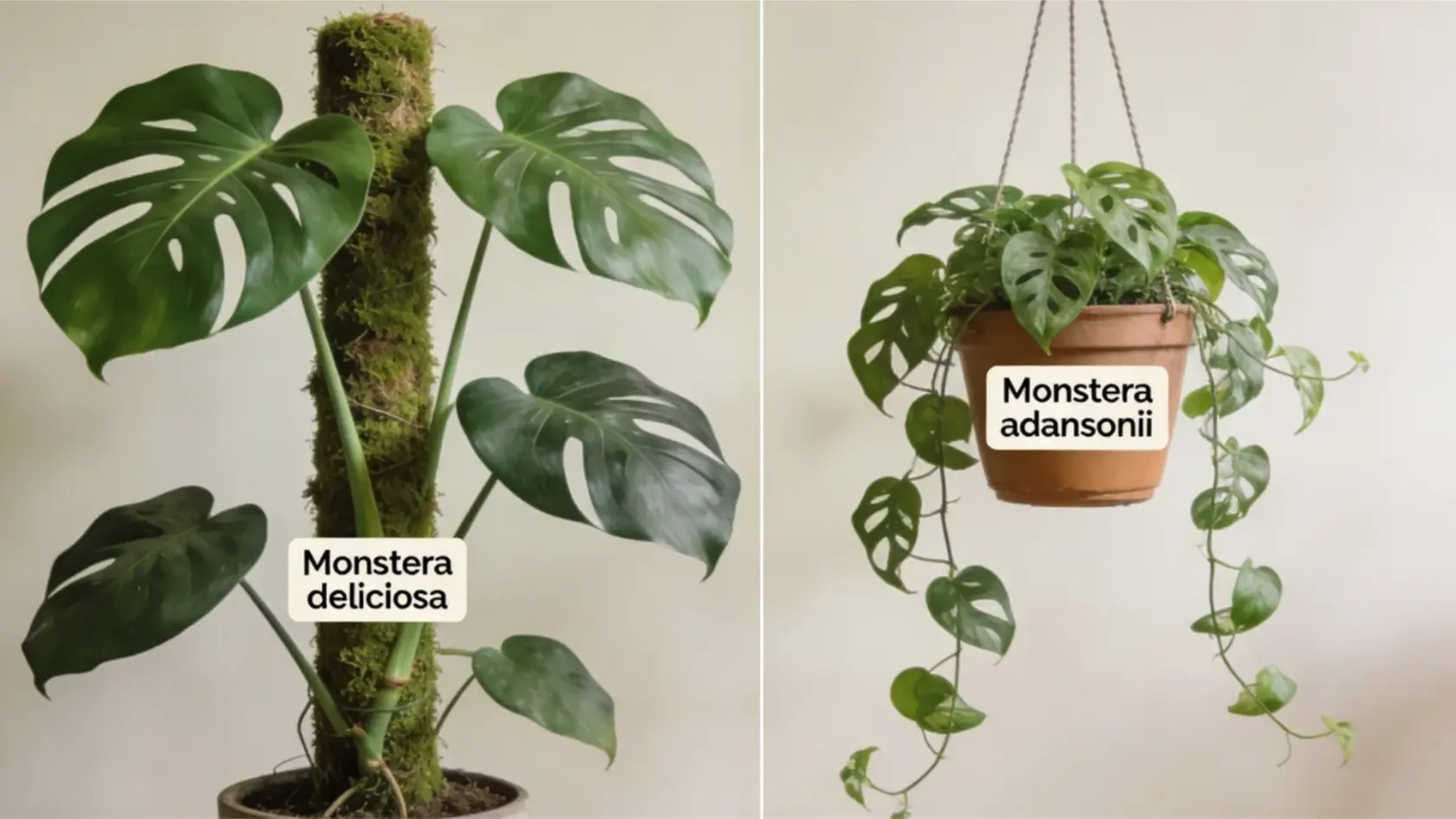
Monstera deliciosa grows much larger indoors and often needs strong support as it matures. Its leaves can become very wide under the right conditions.
Monstera adansonii stays more compact and grows like a climbing vine. Many people let it trail from hanging baskets or train it up a moss pole.
Tip: If your plant is still young and the leaves look similar across both species, check the stem thickness. Deliciosa tends to have noticeably thicker, sturdier stems even at an early stage, while adansonii stays thinner and more flexible from the start.
Where Does the Name “Swiss Cheese Plant” Come From?
The nickname comes from the holes in the leaves, which resemble Swiss cheese. The confusion arises because the name is not tied to a single species.
Some sellers use the Swiss cheese plant for Monstera deliciosa, while others use it for Monstera adansonii.
In many modern plant shops, Monstera adansonii is more commonly labeled as the Swiss cheese plant because its leaf holes appear earlier and look more dramatic.
Swiss Cheese Plant vs Monstera

The two terms are often used interchangeably, but they refer to different things.
Here is how they actually compare across the key areas that matter most to plant buyers:
1. Naming and Classification
Monstera is a botanical genus containing around 50 recognized species. Swiss cheese plant is an informal nickname for species in that genus whose leaves develop visible holes.
One is a scientific classification, the other is a descriptive label. The distinction matters because the nickname has no fixed definition, while the genus name always points to a specific group of plants.
2. Leaf Appearance
Monstera leaves vary significantly across species, from solid and hole-free in younger plants to deeply split or heavily perforated in mature ones.
The Swiss cheese plant label only gets applied once those holes become visible. A young Monstera without fenestrations would never be called a Swiss cheese plant in a shop, even though it belongs to the same genus and will eventually develop them.
3. Growth and Size Range
The Monstera genus includes both large upright growers and compact trailing vines, depending on the species.
The Swiss cheese plant label tends to apply to the smaller, more holey varieties because their visual resemblance to Swiss cheese is more immediate.
Larger species like deliciosa are sometimes included under the nickname, but less consistently across sellers and online listings.
4. Care Expectations
Care needs vary by species, not by nickname. Two plants, both labeled Swiss cheese plant, can require different light, water, and support setups if one is a deliciosa and the other an adansonii.
Following care guides based solely on the common name often leads to overwatering, incorrect light placement, or the wrong support structure for the plant you actually have.
Tip: Always check the botanical name on the label before buying. If the tag only says “Swiss cheese plant” without a species name, ask the seller directly.
Common Monstera Species Linked to the Swiss Cheese Plant Name
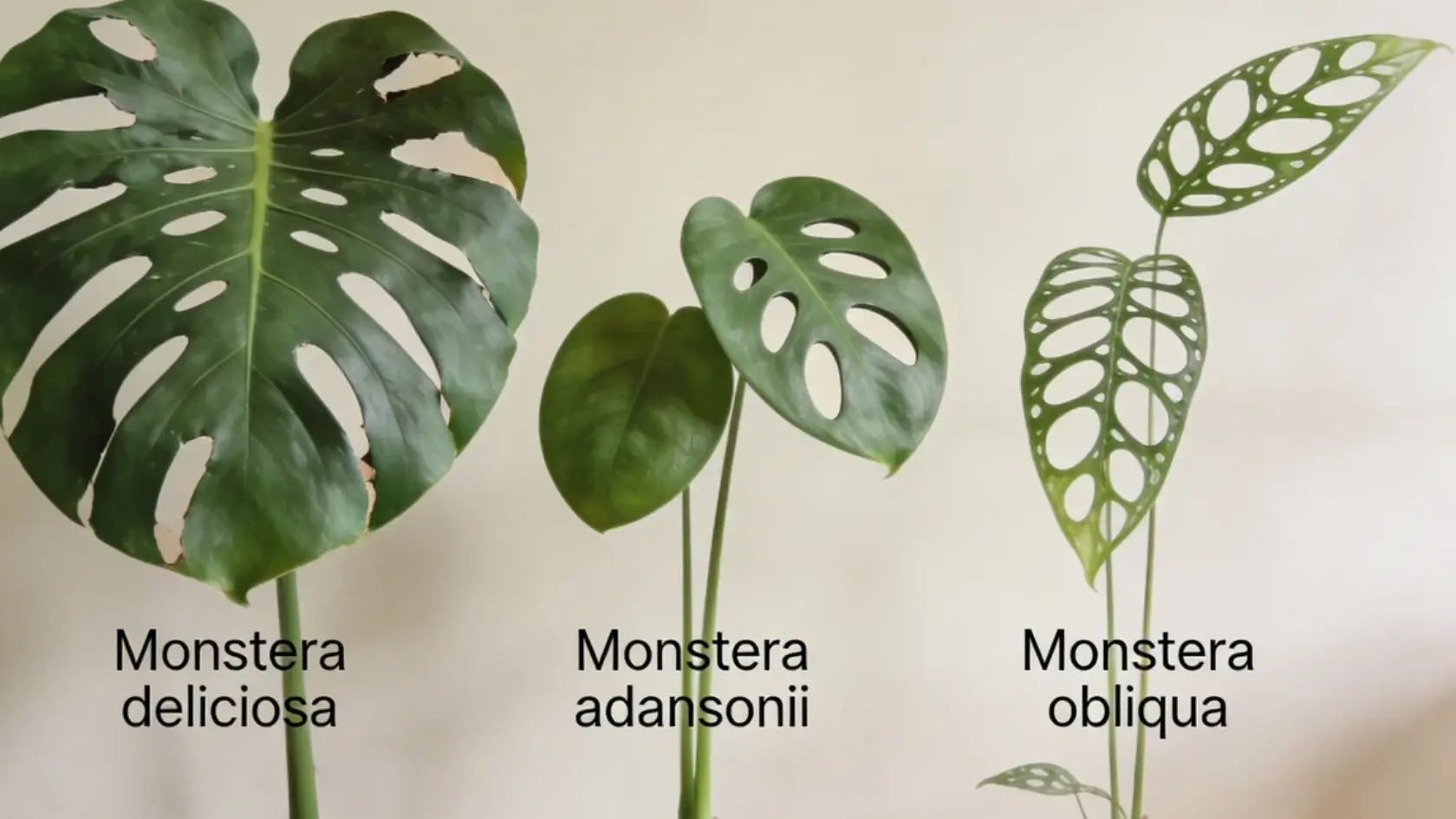
Several Monstera species are connected to the Swiss cheese plant name, but a few are responsible for most of the confusion among plant buyers.
| Species | Leaf Features | Growth Habit | Availability |
|---|---|---|---|
| Monstera deliciosa | Large leaves with deep edge splits and occasional inner holes | Broad, upright climber | Widely available |
| Monstera adansonii | Smaller leaves with oval-shaped holes across the surface | Vine-like, trails or climbs | Widely available, most commonly sold as Swiss cheese plant |
| Monstera obliqua | Extremely thin, delicate leaves with heavy fenestrations | Similar to adansonii but far more fragile | Rare, uncommon in regular plant shops |
Understanding how these Monstera species differ makes it much easier to identify the right plant and avoid misleading labels online or in stores.
Conclusion
Swiss cheese plant and Monstera are closely connected, but the names are not always used in the same way.
In most cases, people are referring to either Monstera deliciosa or Monstera adansonii.
The easiest way to tell them apart is by looking at the leaf size, hole pattern, and growth style. Once you know what to check, identifying them becomes much simpler.
If you recently bought a Swiss cheese plant and are still unsure which type you have, drop your plant’s name or leaf description in the comments below.
Frequently Asked Questions
Is Monstera Deliciosa a Swiss Cheese Plant?
Yes, Monstera deliciosa is one of the plants commonly called a Swiss cheese plant because of its split and hole-filled leaves. However, the nickname is also widely used for Monstera adansonii, which is why the terms often cause confusion.
Why Does Monstera Adansonii Have More Holes?
Monstera adansonii develops oval-shaped holes across its leaves much earlier than Monstera deliciosa. Its fenestrations are also more visible and spread across the leaf surface instead of forming deep edge splits.
Is Swiss Cheese Vine the Same as Monstera Adansonii?
In many plant shops, Swiss cheese vine is another common name for Monstera adansonii because of its climbing, vine-like growth pattern and hole-filled leaves.