Signs Your AC Unit Needs Professional Repair
An air conditioner rarely fails without warning. Changes in airflow, temperature, sound, or drainage often reflect strain inside the equipment, long before cooling stops completely. Families who catch those shifts early can reduce indoor heat exposure, avoid longer outages, and limit wear on expensive parts. A careful review of common symptoms helps homeowners judge whether the system requires simple maintenance or a professional repair.
Weak Airflow
Weak airflow often appears early, before a larger breakdown becomes obvious. After several warm evenings, many households start looking for air conditioning repair in Portland, OR, when vents produce little movement, rooms feel heavy, sleep becomes harder, and indoor temperatures keep climbing despite long cooling cycles. The reason could be a clogged filter, yet crushed ductwork, blower failure, or a weakened motor can create the same pattern.
Warm Air
Cool air should reach the room soon after the system starts. If the discharge feels lukewarm, then the heat is not leaving the home as it should. Low refrigerant, thermostat faults, or compressor trouble can each interrupt that transfer process. Continued operation under those conditions places additional strain on internal parts. Timely testing helps identify defects before insulation, wiring, or mechanical assemblies absorb excessive stress.
Strange Noises
Most cooling systems produce a steady, familiar hum. New grinding, buzzing, clanking, or rattling sounds suggest internal friction, loose hardware, or electrical instability. Grinding may indicate worn bearings. Buzzing can indicate voltage issues or a failing contactor. Clanking sometimes means a part has shifted inside the cabinet. Early attention matters because vibration transmits force to nearby components and can accelerate damage.
Frequent Cycling
Short cycling means the unit starts, stops, then restarts before the home reaches a stable temperature. That pattern increases wear on relays, motors, and capacitors with every restart. A poorly placed thermostat can trigger this behavior. Dirty coils, restricted airflow, or an oversized system may also contribute. Over time, repeated cycling raises utility use and leaves indoor comfort uneven during the hottest time of the day.
Moisture Near the Unit
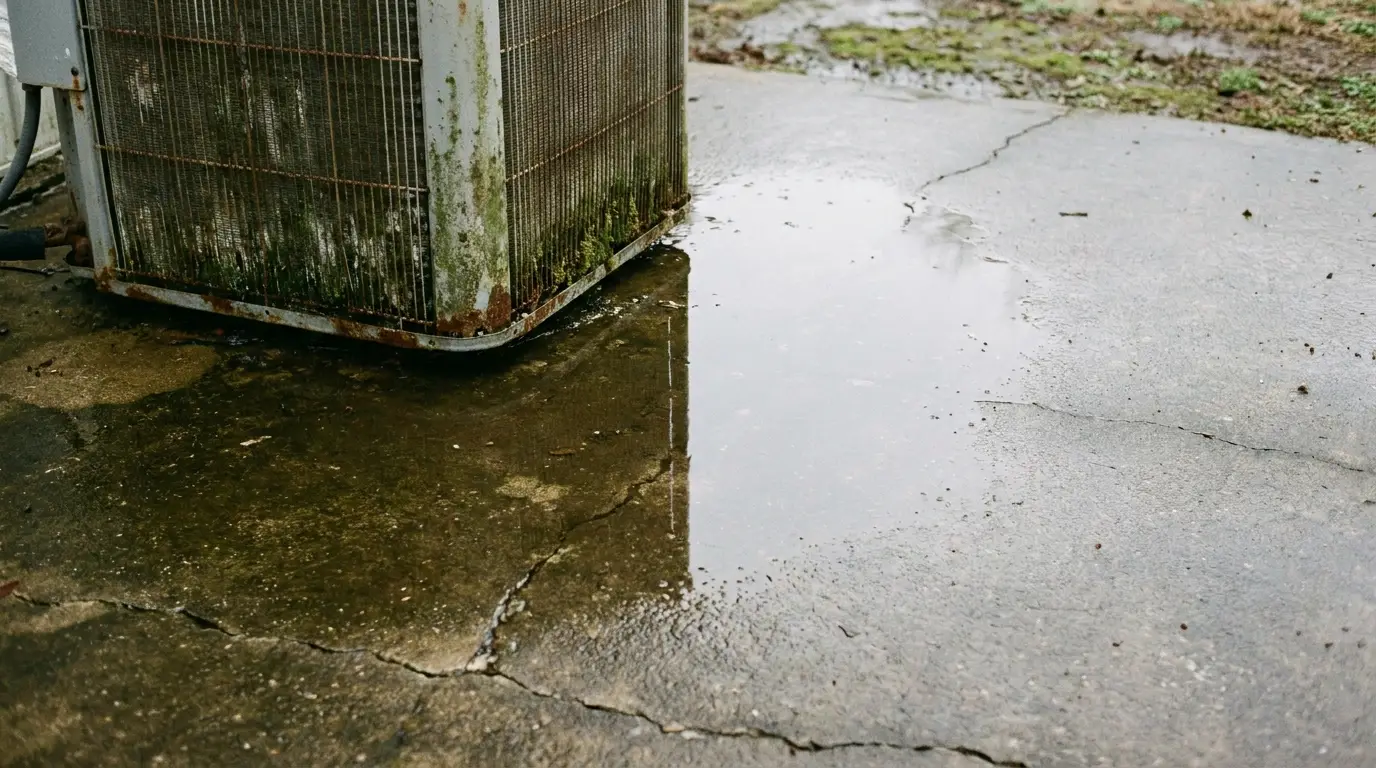
Moisture around the equipment should never be ignored. A blocked condensate line can overflow slowly and soak trim, flooring, or drywall before anyone notices the spread. Refrigerant loss may also lead to coil icing, followed by puddling when frost melts. Water near electrical connections adds a safety concern. Prompt service protects surrounding materials and reduces the chance of mold growth in damp, enclosed areas.
Rising Energy Bills
A sudden increase in cooling costs often signals declining system efficiency. Worn components, dirty coils, poor airflow, or refrigerant loss can lead to longer run times without an immediate shutdown. Many households first notice the problem on a utility statement, rather than at the thermostat. If weather patterns and daily habits remain similar, a higher bill often means the equipment is working harder than it should.
Uneven Cooling
Uneven cooling usually reflects poor air delivery through the house. One bedroom may stay warm for hours while another feels comfortable within minutes. Duct leakage, blocked registers, weak blower output, or control problems can all disturb temperature balance. Insulation differences may add to the effect, yet persistent hot spots should not be dismissed. When the pattern continues, repair is often needed to restore consistent circulation.
Odors That Linger
Air from the vents should smell clean and neutral. A musty odor can suggest trapped moisture, microbial growth, or wet insulation near the drain system. Burning smells may point to overheating wires, a failing motor, or dust collecting on hot surfaces. Either condition deserves quick evaluation. Because circulated air reaches every room, a single odor source can affect comfort, cause respiratory irritation, and compromise household safety.
Repair Timing Matters
Repair timing directly affects cost and equipment survival. Small faults are usually easier to correct before they damage compressors, fan assemblies, or control boards. Summer demand can also make appointments harder to secure, which leaves families waiting in unhealthy indoor heat. Early service reduces that risk. Faster attention often preserves operating life and prevents a routine problem from becoming an urgent failure.
System Age Counts
System age changes how technicians interpret these warning signs. An older unit with weak airflow, recurring noise, and higher operating costs may be showing cumulative wear rather than a single isolated fault. Efficiency often declines as seals harden, surfaces collect residue, and moving parts loosen. Replacement is not always necessary. Still, a careful assessment can show whether continued repair remains practical, or whether ongoing service has become too costly.
Conclusion
Cooling equipment usually gives clear warning signs before complete failure occurs. Weak airflow, warm discharge, unusual sounds, moisture, stubborn odors, uneven temperatures, and rising utility costs all suggest that a trained repair professional may be needed. Quick action can reduce strain on the system, protect indoor air conditions, and restore dependable comfort sooner. When several symptoms appear together, professional evaluation is often the safest and most cost-conscious next step.