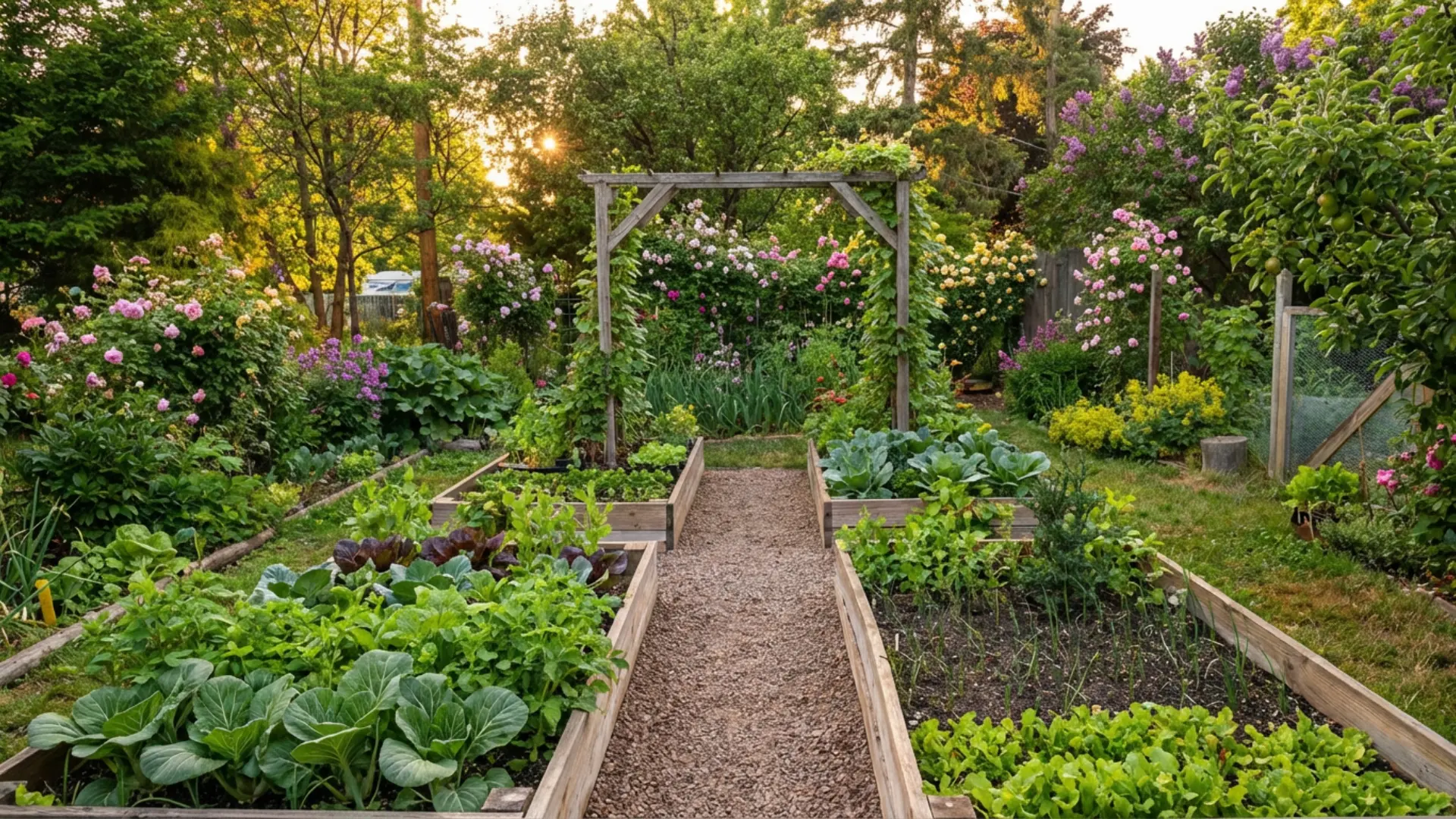
Outdoor Herb Garden Ideas: Creative Designs for a Flavorful Yard
A backyard herb garden does more than feed your kitchen. It scents the air, pulls in bees and butterflies, and turns a plain corner of your yard into something beautiful.
The best part? You don’t need a green thumb or a big budget to start one.
These outdoor herb garden ideas pull from real designs that gardeners use every day. Some are classic. Some are creative. All of them work well outside, whether you’ve got a sprawling lawn or a tidy patio.
So if you cook every night or just love the smell of fresh basil drifting through your yard, the right setup makes herbs feel like a hobby, not a chore. Let’s dig in.
Popular Outdoor Herb Garden Designs
Every herb garden starts with a design choice. Some folks go traditional with rows. Others get clever with shapes, stacks, and walls.
The setup you pick shapes how you water, harvest, and enjoy your herbs all season long.
1. Raised Bed Herb Gardens
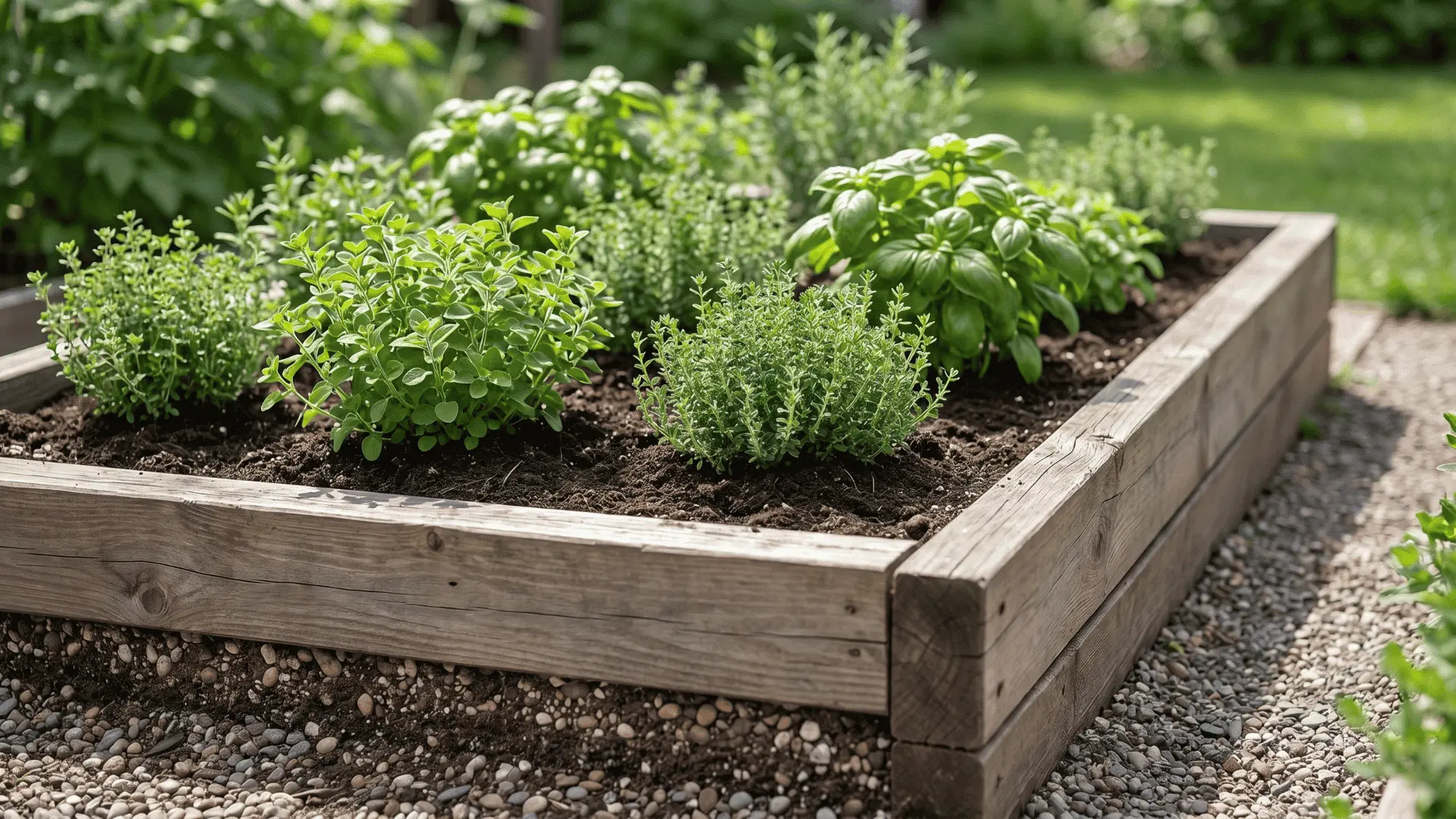
Raised beds are the gold standard for outdoor herbs. They give roots loose soil, sharp drainage, and easier access for your back.
Here’s what makes them shine:
- Soil warms faster in spring for earlier planting
- Weeds and grass stay out of your beds
- Easy to mix custom soil for picky herbs
- Less bending and kneeling during harvests
Most raised beds run 4 feet wide, so you can reach the middle from either side. Fill yours with a blend of compost, topsoil, and a little sand for the perfect herb home.
2. The Classic Herb Spiral

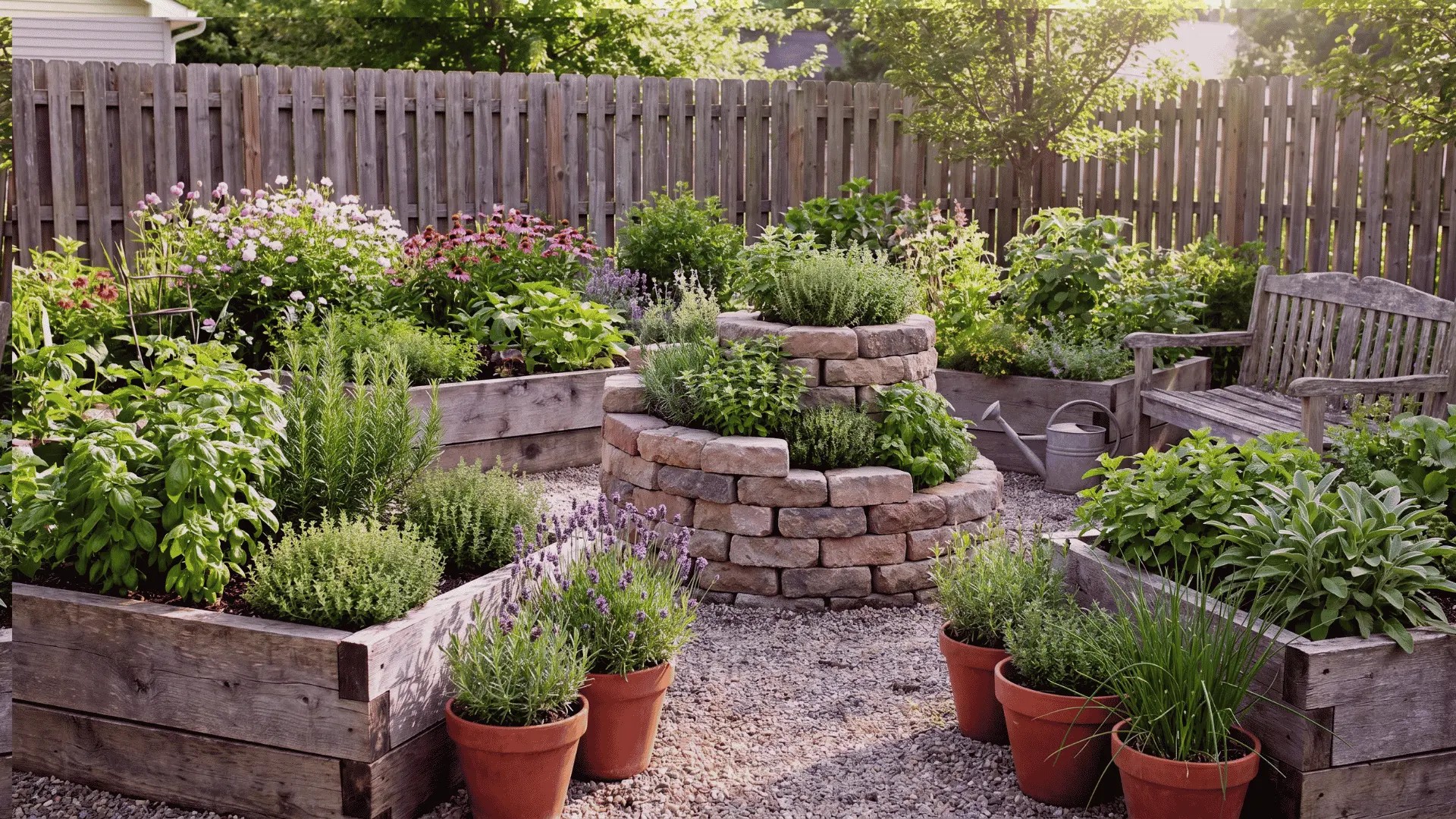
An herb spiral packs many growing zones into one tight footprint. The design has been around for decades, and it still works like magic.
How it works: The center sits higher than the edges. Water flows down with gravity. The top stays dry and sunny. The bottom stays cool and damp. That means you can grow herbs with very different needs in one bed.
| Spiral Position | Best Herbs |
|---|---|
| Top (dry, sunny) | Lavender, rosemary |
| Middle | Thyme, oregano |
| Bottom (moist) | Mint, cilantro |
Build yours from stones, bricks, or recycled blocks for a charming centerpiece in your yard.
3. Container and Patio Pots
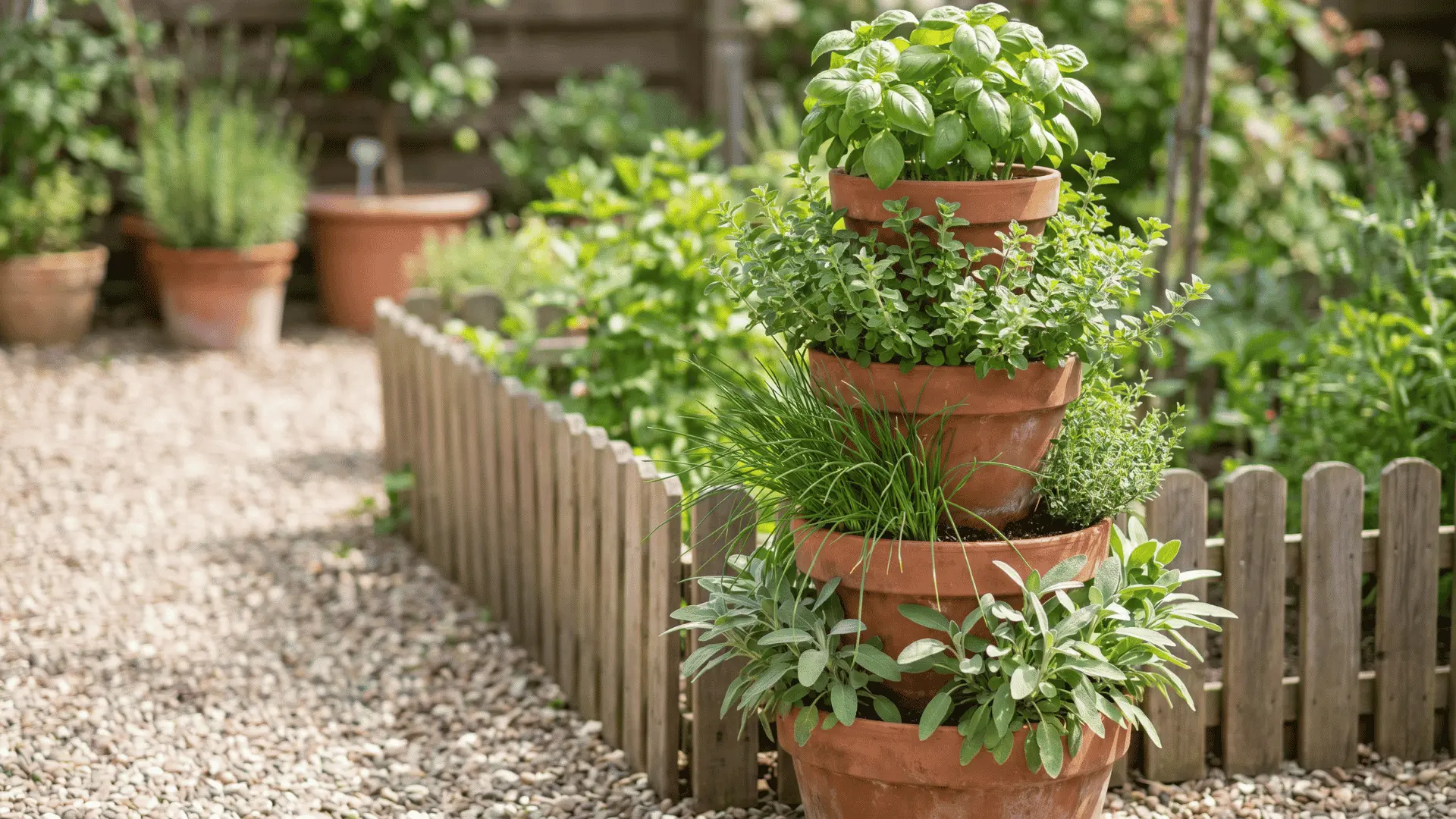
Pots give you full control outdoors. Move them to chase the sun. Group them by the grill. Swap herbs in and out as the seasons change.
Stacked pots also look stunning on patios. Each layer holds a different herb, and the tower shape adds height to flat outdoor spaces.
These compact herbs do best in containers:
- Basil
- Oregano
- Chives
- Sage
Skip deep-rooted plants like rosemary in stacked setups. They tend to dry out fast or run out of root room.
4. Vertical Garden Walls
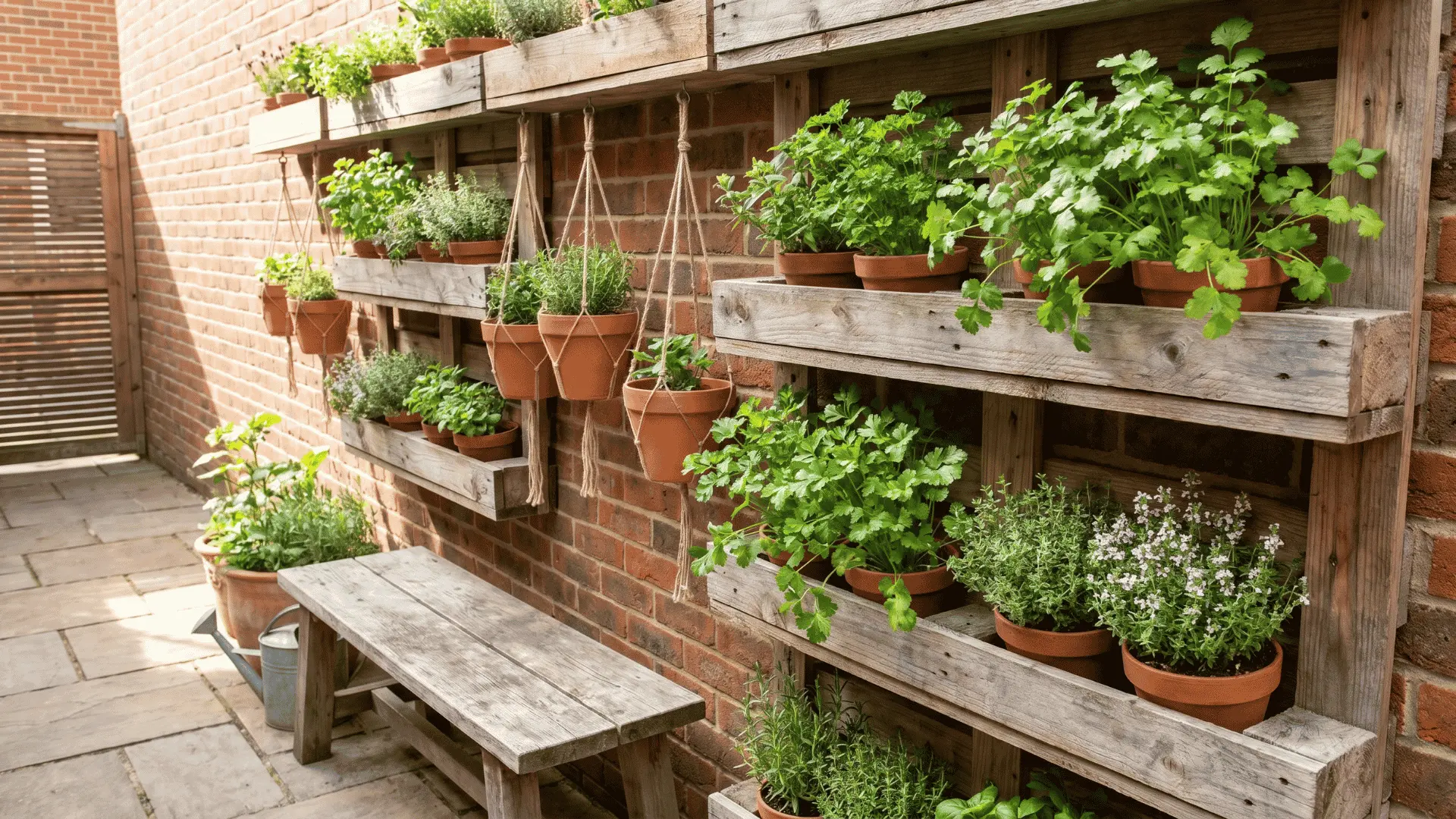
Vertical gardens grow plants upward against fences, sheds, or sunny outdoor walls. Think wall-mounted shelves, hanging planters, or living wall panels.
They turn an empty fence into a living spice rack. Many setups even include built-in irrigation, so water reaches the roots with no fuss. A vertical setup against a sunny fence makes every inch of your yard productive.
These herbs love the vertical life:
| Herb | Why It Works |
|---|---|
| Cilantro | Shallow roots, fast harvest |
| Parsley | Compact and bushy |
| Thyme | Spreads sideways, not deep |
| Mint | Loves contained spaces |
Creative Themed Herb Garden Ideas
Themed gardens turn a plain patch into something fun. Pick a theme that matches how you cook or entertain. Suddenly, gardening feels like a creative project, not a chore.
5. Pizza Garden

A pizza garden grows everything you need for a homemade pie. It’s a hit with families, especially kids who help plant it. Plant herbs in a circle or wedge shape, like real pizza slices.
| Herb | Flavor |
|---|---|
| Basil | Classic Italian aroma |
| Oregano | Bold, peppery |
| Thyme | Earthy warmth |
| Parsley | Fresh, bright |
| Garlic chives | Mild kick |
Add a tomato plant or two in the center. Now you’ve got a full topping bar growing right outside your back door.
6. Cocktail Garden
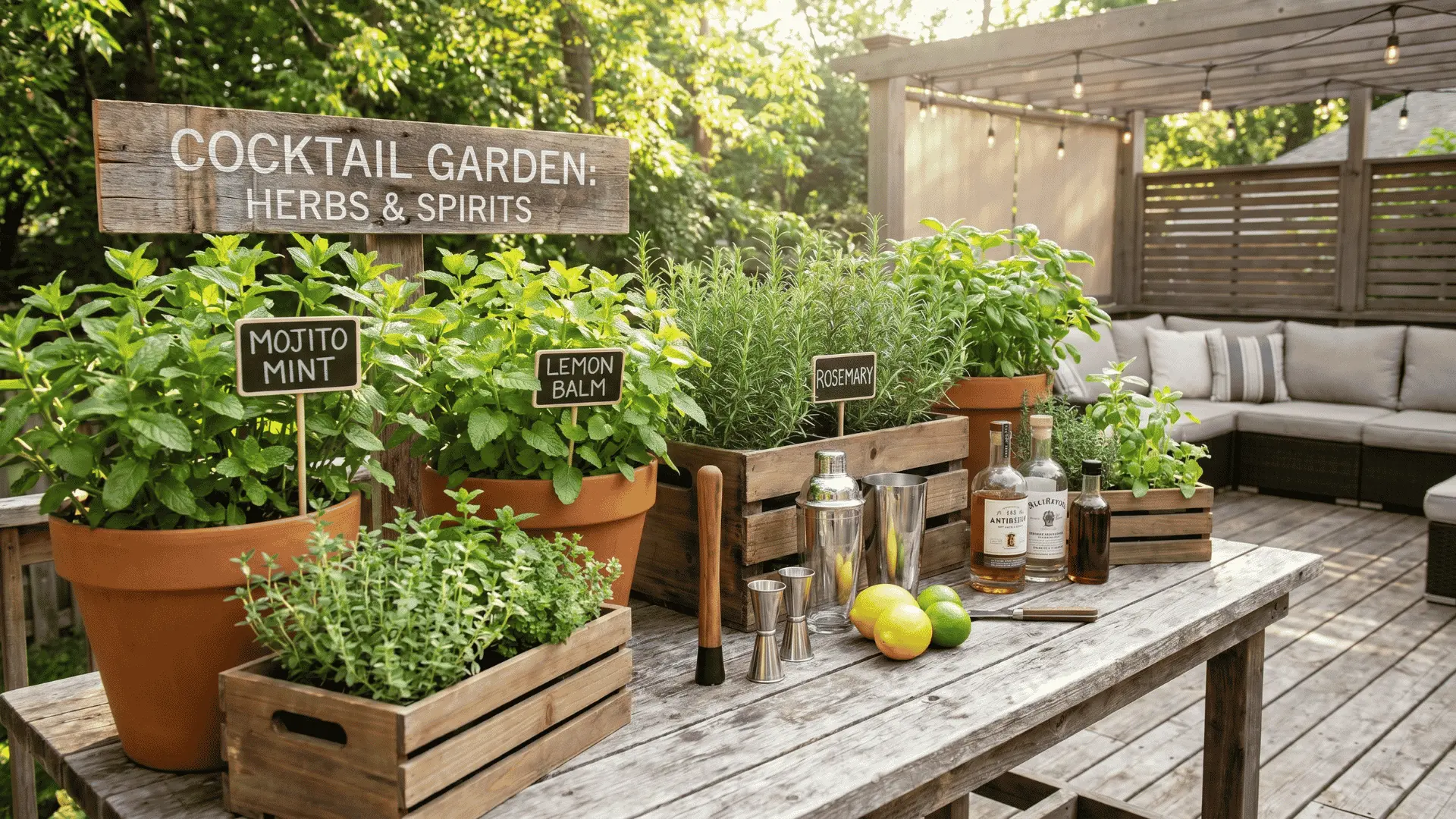
A cocktail garden brings the bar to your backyard. Fresh herbs make every drink taste sharper and brighter.
| Herb | Best For |
|---|---|
| Mint | Mojitos and juleps |
| Lemon balm | Citrusy spritzers |
| Basil | Gin cocktails |
| Rosemary | Whiskey drinks |
| Lavender | Floral notes |
NOTE: Plant mint in its own container. It spreads like wildfire and will take over any bed it touches.
7. Tea Garden
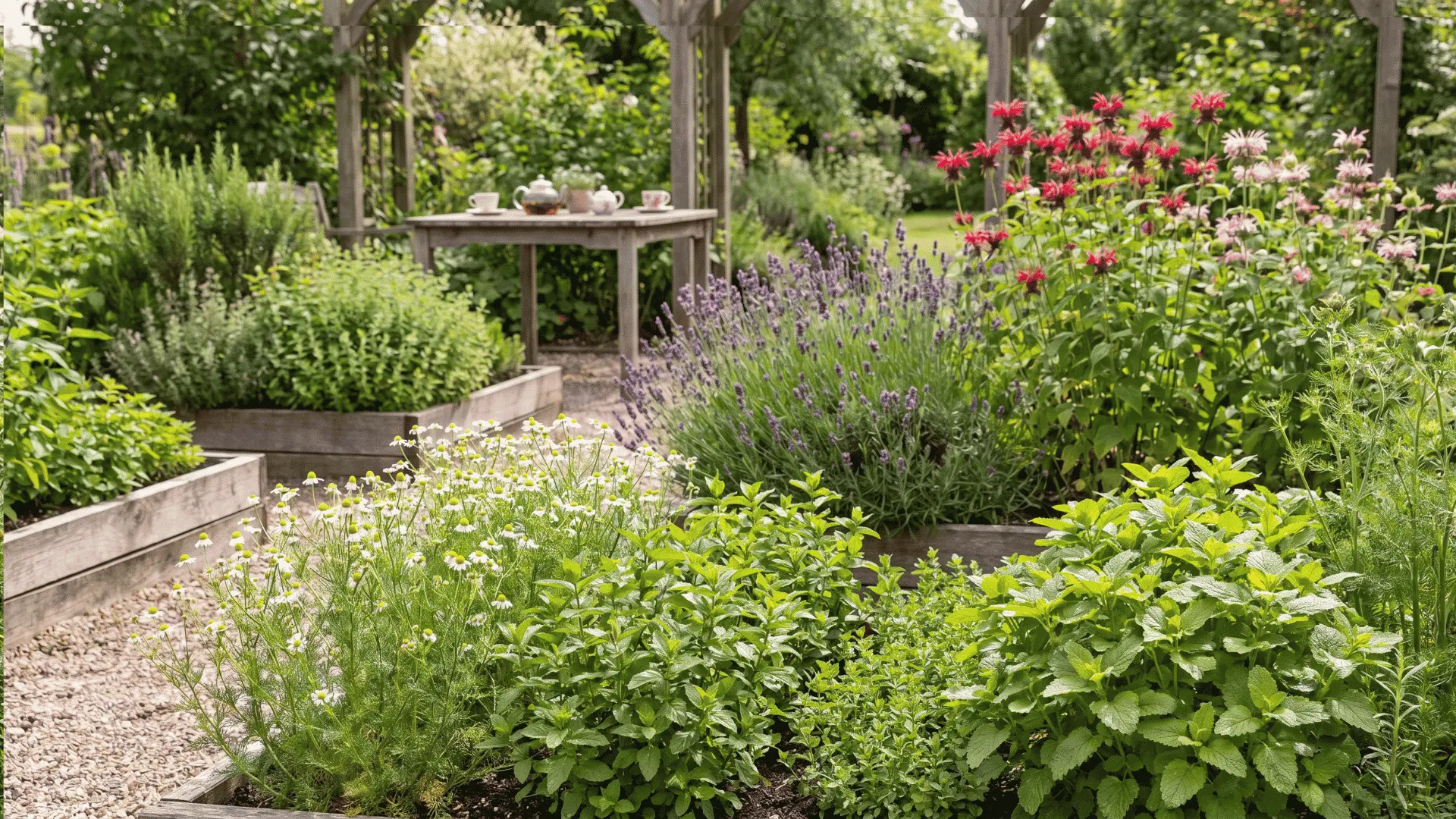
A tea garden is a peaceful, fragrant idea for slow mornings. Pick herbs that brew into soothing cups any time of day.
Try planting these tea-friendly options:
- Chamomile for relaxing nights
- Peppermint for fresh wake-up brews
- Lemon balm for citrusy calm
- Lavender for floral notes
- Bee balm for spicy, bold flavor
Snip a handful, steep in hot water for five minutes, and your homegrown tea is ready.
How to Plan Your Outdoor Herb Garden
A great herb garden starts with smart planning, not luck. Get the basics right, and your harvests grow bigger all season.
Pick the Right Spot
Most herbs need 6 to 8 hours of direct sun each day. That’s the secret behind their bold flavor and rich scent. Look for these signs of a great planting spot:
- Soil that drains within an hour after rain
- South or west-facing exposure
- Shelter from strong winds
- Close to your kitchen door for easy harvests
I’ve seen too many gardens fail in shady corners. Even a few extra hours of sun change everything.
Group Herbs the Smart Way
Smart grouping keeps every herb happy. Plants with similar needs share the same bed without fighting for resources.
Two main groups guide your planning:
- Mediterranean herbs (dry-loving): rosemary, thyme, oregano, sage, and lavender. These come from rocky, sunny hillsides and prefer sandy soil with less water.
- Moisture-loving herbs: basil, parsley, cilantro, and chives. These need richer soil and steady watering.
Group them together, and you’ll water once instead of running around the yard.
Keeping Your Herb Garden Healthy All Year
A herb garden needs steady care to keep producing. Most herbs ask for very little once you learn their rhythm.
Trimming and Harvesting
Regular trimming makes herbs bushier and more flavorful. Skip it, and they turn leggy and bitter fast.
Follow these simple rules:
- Snip just above a leaf pair to spark new growth
- Take no more than one-third of the plant at a time
- Harvest in the morning for the strongest flavor
- Use sharp scissors instead of pulling leaves
Pinch off flower buds on basil and cilantro the moment they show. Once the herbs flower, the leaves turn tough and lose flavor fast.
Winter Care for Outdoor Herbs
Cold weather changes everything for your herb garden. Some herbs sleep through winter while others give up completely.
Know which type you’re growing:
- Perennial herbs like rosemary, thyme, sage, and mint come back each spring
- Annual herbs like basil and cilantro die after one season
Mulch hardy herbs with 2 to 3 inches of straw or leaves. This blanket protects roots from freezing temperatures and harsh winds.
I’ve seen rosemary survive surprisingly cold winters with just a burlap wrap and a thick layer of mulch. A little protection goes a long way outside.
Common Problems and Quick Fixes
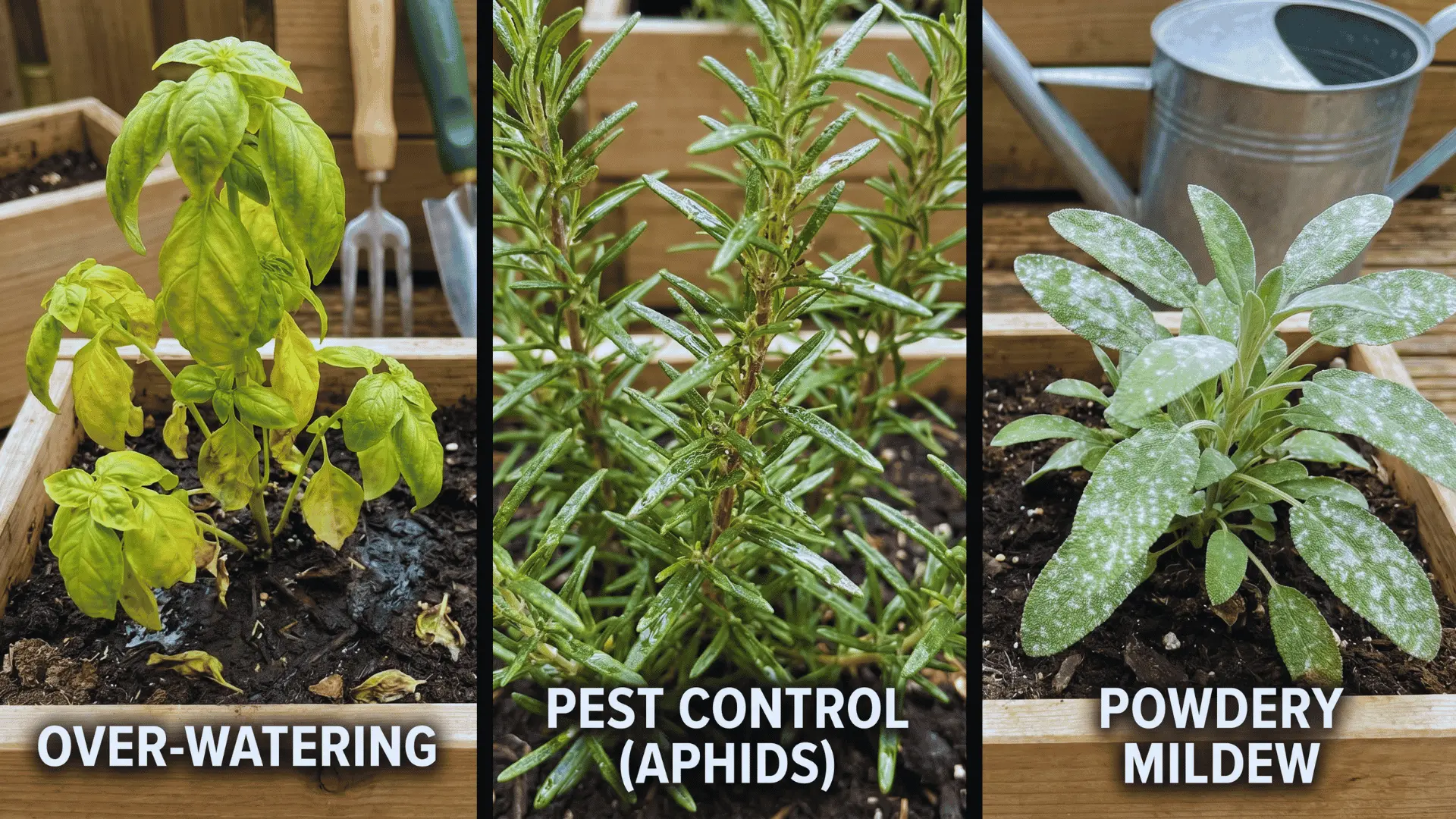
Most herb troubles come from too much love. Spotting issues early saves your whole crop.
| Sign | Likely Cause |
|---|---|
| Yellow leaves | Overwatering or poor drainage |
| Sticky residue | Aphids hiding underneath |
| White powder on leaves | Powdery mildew |
| Wilting in damp soil | Root rot |
Spray aphids off with a strong jet of water, or mix a teaspoon of dish soap with a quart of water for a gentle bug spray. Beat mildew with better airflow and dry leaves. Stop root rot by checking drainage and easing up on the watering can.
Conclusion
Building an outdoor herb garden is one of the most rewarding small projects you can take on. It saves money over time, cuts food waste, and brings real flavor to everyday meals. Plus, tending a few green friends has a calming side effect that no app can match.
The herb garden ideas above give you plenty of starting points. Start small with two or three easy plants. Watch what works in your yard, then expand based on what you actually use in the kitchen. Pay attention to light, drainage, and grouping, and the rest falls into place naturally.
Ready to plant your first sprig? Grab a few pots, pick your favorite herbs, and start growing this weekend!
Frequently Asked Questions
What is the best layout for an outdoor herb garden?
The best layout fits your sun and soil. Raised beds and herb spirals work great for bigger yards. Patio gardeners love stacked pots, vertical wall planters, or simple in-ground borders.
What are the easiest herbs to grow outdoors for beginners?
Basil, mint, chives, parsley, oregano, and thyme are the easiest herbs to grow. They forgive small mistakes and thrive in pots or beds with steady sun.
How much sunlight does an outdoor herb garden need?
Most herbs need 6 to 8 hours of direct sunlight each day. Mediterranean herbs love full sun, while parsley, mint, and cilantro handle partial shade just fine.
When is the best time to start an outdoor herb garden?
Spring is the best time to start an outdoor herb garden, right after the last frost. Warmer soil and longer days help seedlings root fast and grow strong.
Do outdoor herbs come back every year?
Some do. Perennial herbs like thyme, rosemary, sage, oregano, and mint return each spring. Annuals like basil, cilantro, and dill need replanting every year.