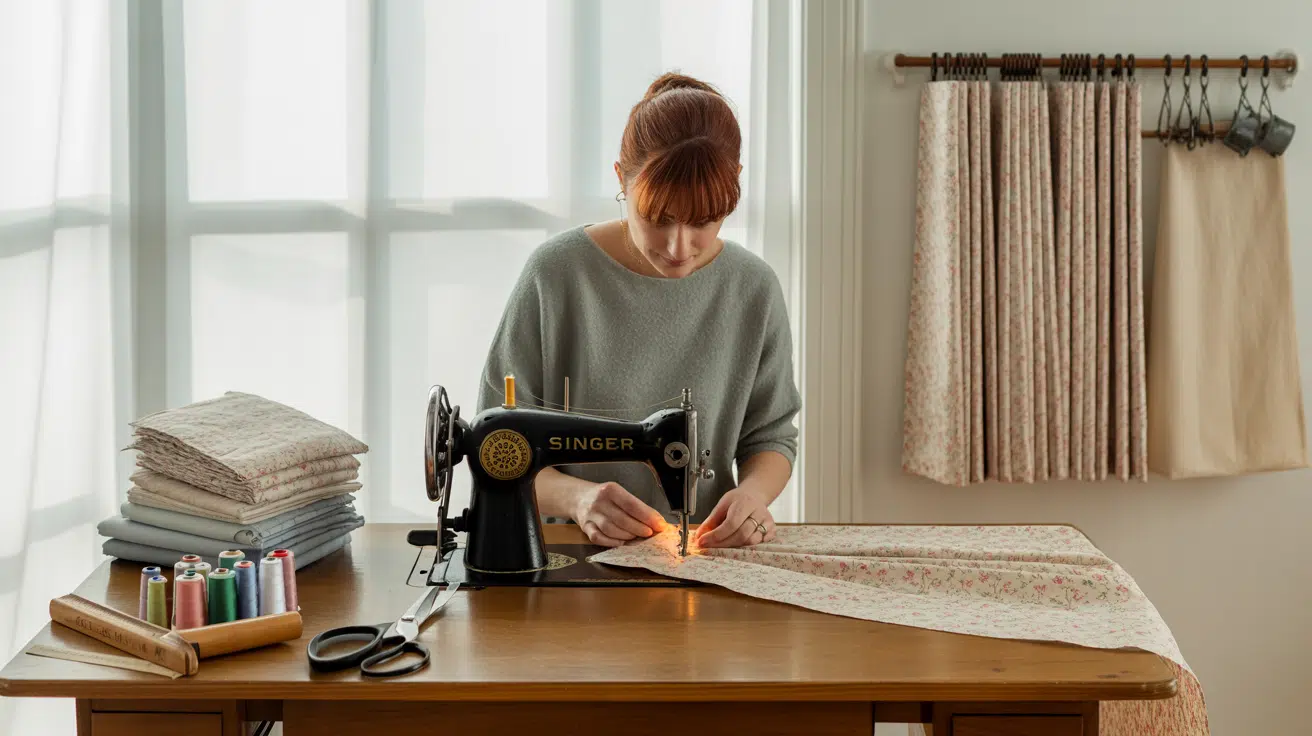
How to Sew Curtains: A Simple DIY Guide for Beginners
New curtains can freshen up a space, but the price adds. How to sew curtains at home without spending a lot, you’re in the right place. You don’t need special tools or prior sewing experience to get started.
In this guide, I’ll walk you through the whole process: picking a style, gathering your supplies, and sewing step by step.
You’ll learn to make rod pocket, tab top, back tab, and tie top curtains. I’ll also cover no-sew and hand-sew methods if you want to skip the machine.
Want to save money and still hang something you made yourself? Let’s cover the basics and get started with your curtain project.
What You’ll Need
Before you begin sewing, gather the necessary tools and materials. Having everything ready makes the process smoother and helps you avoid mistakes or unnecessary delays.
Tools and Materials List for Sewing Curtains
- Sewing machine
- Thread (matching your fabric)
- Fabric scissors or rotary cutter
- Measuring tape
- Pins or clips
- Iron and ironing board
- Fabric chalk or marker
- Curtain fabric
- Curtain lining
Optional Curtain Add-Ons for Style and Function
- Decorative trim (like pom-poms or ribbon)
- Curtain weights (to help fabric hang neatly)
- Fabric tie-backs
- Grommets and grommet kit
- Fabric loops or tabs for hanging
- Fusible hem tape (for no-sew options)
- Contrast fabric for design accents
How to Sew Curtains: A Step-by-Step Guide for Beginners
Making your curtains is easier than it sounds, especially when you break it down into simple steps. This guide covers everything you need, from prepping your fabric to sewing four classic curtain styles.
You’ll even learn a no-fail method for perfect seams and hems.
Step 1: Sew the Side Seams

Before you begin, ensure that the side seams are clean and free of debris. These sides give your curtain a smooth, finished look and prevent fraying.
If you’re sewing rod pockets or tie tops, all styles share the same side seam method. It’s easy to follow and sets the foundation for a professional-looking result.
Start by pre-washing and pressing your fabric to shrink it and smooth out wrinkles. Trim the edges so the fabric is square and straight on all sides.
Step 2: Bottom Hem

You’ll actually sew the bottom hem last, but planning for it early helps you get the length just right. This is especially helpful if your curtain top style changes your finished length.
A double-fold hem adds weight and helps the curtain hang straight and look polished. Hang your curtain after sewing the top, and mark where you want it to end.
Fold the fabric up, and press it flat. Then fold it again, press it, and pin it in place. Use a sewing gauge to make sure it’s even.
Step 3: Choose Your Curtain Style
Now that you’re ready to sew, it’s time to pick the curtain style you want to make. This step helps shape the overall look and how the curtain hangs.
Style 1: Rod Pocket Curtain

Rod pocket curtains are a simple choice for many rooms. To sew one, fold the top edge down 4 inches and press it flat.
Then fold it again another 4 inches, press, and pin it in place. Sew a seam along the lower folded edge to create the pocket.
If you’d like a gathered look at the top, mark 1.5 inches from the upper edge and sew across that line. This creates space for a soft, fabric ruffle.
Style 2: Back Tab Curtain

Back tab curtains give your window a clean, straight look from the front. To begin, cut tabs that are 6 inches high and 4.5 inches wide.
Fold each tab in half with the right sides together, sew an Inch seam, and turn them right side out. Press flat, then fold each short end in by 1 inch.
Fold the curtain top down twice, pressing in between. Tuck the tabs into the folds, pin them in place, and sew a inch seam around the top.
Style 3: Tab Top Curtain

To sew a tab top curtain, start by cutting tabs that are 9 inches high and 5 inches wide. Fold each one in half, right sides together, and sew a ½-inch seam.
Turn them right-side out and press them flat. Fold the tabs in half again and align the raw edges with the top of the curtain. Space them every 5 to 6 inches.
Sew a ¼-inch seam across the top, then finish with a back strip to cover the stitching.
Style 4: Tie Top Curtain

Tie top curtains are simple to make and easy to adjust. Cut fabric strips 2.5 inches high and 21 inches long, two for each tab.
Fold each strip in half lengthwise with wrong sides together, then fold the long edges toward the center and press.
Sew along the open edge using an inch seam. Pair the ties together, matching the raw edges to the curtain top, and space them evenly. Sew a ¼-inch seam.
Still feeling unsure? This tutorial might help clear things up.
No-Sew and Hand-Sew Options
You don’t need a sewing machine to make curtains. If you’re short on tools or time, these simple methods help you get the job done with basic supplies.
- Use hem tape: Fold the fabric where needed, place the tape between layers, and press with a hot iron. The tape bonds the fold in place. It’s great for hems and side seams, especially on cotton or linen. While not as strong as sewing, it’s quick and perfect for light-duty curtains.
- Try curtain clips or rings: Cut or fold the fabric to your desired length. Then clip along the top edge using curtain rings. Slide the clips onto your curtain rod. This no-sew method is perfect for testing fabrics, renters, or anyone who changes curtains.
- Hand sew with backstitch: Use a needle and thread to create strong seams by hand. The backstitch is best for hems and edges. Pin or clip the fold first, then sew using small, even stitches. It takes more time but gives you complete control over each seam.
Curtain Mistakes to Avoid
Even small errors can affect how your curtains hang or hold up over time. Paying close attention to measuring, folding, and sewing will help you get better results from the start.
Uneven Length
Panels that don’t hang evenly are often caused by cutting before checking the finished length. Always hang or hold the curtain at the window before sewing the bottom hem.
Use a measuring tape to mark a straight fold across the width. Press and pin the fabric carefully, and sew slowly to stay on track. Taking a moment here will help your curtain hang properly.
Tight Rod Pocket
A rod pocket that’s too snug will make it hard to open or close the curtain. This can happen when the top fold is too small or the seam is stitched too high.
Always measure your rod and leave extra space for movement. When you sew, stay close to the bottom edge of the fold. Slide the rod in as a test before finishing the panel.
Visible or Skipped Stitches
If your stitches show too much or don’t catch the fabric well, it may be due to tension or setup. Test everything on scrap fabric first.
Choose a thread that matches your curtain fabric. Keep your hands steady while sewing and go slowly, especially near folds. If skipping continues, check your needle or re-thread the machine before trying again.
How to Care for Them Properly After Washing
Your curtains should be cleaned and stored properly to help them remain in good condition. These simple care tips will make sure they last longer, stay wrinkle-free, and look just as nice after every wash or season.
- Wash cotton or linen curtains in cold water using a gentle cycle. Check labels before washing, especially if the fabric has lining or trim. When in doubt, hand wash or spot clean to prevent damage.
- Iron curtains while slightly damp using a low heat setting. For delicate fabric, use a pressing cloth or flip the panel over. A fabric steamer also works well while the curtains are already hanging.
- Fold curtains neatly and store them in breathable fabric bags. Avoid plastic, which traps moisture.
Frequently Asked Questions
How much fabric is needed for each curtain panel?
Measure the width of your window and multiply it by 1.5 to 2 for fullness. Then add extra inches for side hems and the top and bottom hems. For length, measure from the rod to your desired curtain length and add seam allowances.
What is the best thread tension for sewing curtains?
Start with a medium tension setting (usually around 4). Always test on scrap fabric before sewing the curtain. If the fabric puckers or the stitches are too loose, adjust slightly until it looks even and smooth.
Can I use blackout fabric as a lining?
Yes, blackout fabric can be used as a lining to block light and provide insulation. It’s thicker than regular lining, so use a heavier needle and pin it carefully to prevent slipping while sewing.
How do I keep curtain panels from twisting or shifting when sewing?
Lay the fabric flat on a large table or floor and pin frequently along the edges. Sew slowly and avoid pulling the fabric. Keeping your fabric supported helps reduce shifting and stretching.
Do I need to prewash my curtain fabric before sewing?
Yes. Always prewash and iron your fabric before cutting and sewing. This removes sizing and helps prevent shrinkage after your curtains are finished.
Final Thoughts
Now that you know the basics, sewing your own curtains doesn’t feel so tricky anymore, right? You’ve got the tools, the steps, and a few style options to choose from, all the pieces you need to get going.
No matter if you’re using a sewing machine, stitching by hand, or even skipping the sewing part, you can still make something that fits your space.
Just take it slow. Focus on neat folds, clean seams, and double-check your measurements. Trust me, a little patience now makes a big difference later.
Wash your fabric first, do a test run, and don’t stress about being perfect.
If this guide helped, check out the others I’ve put together. There’s more to try, and I’m here to help.