How to Prevent Moisture Problems With Insulated Metal Panels
The management of water is a primary factor in the design and maintenance of a building envelope. Wall and roof systems are susceptible to damage if water enters the structure, if vapor becomes liquid on surfaces or if humidity remains in the air.
Prevention of these issues is necessary to protect structural parts, maintain the effectiveness of insulation plus ensure the building lasts for a long time. It is important to understand why moisture accumulates when using insulated metal panels and similar systems.
Sources of Moisture
Water enters a building through rain, air leaks and the movement of vapor. External weather is often a source of stress for the building envelope, particularly in areas with high rainfall, snow or large changes in temperature. Risk is lower when designers identify these sources during the planning phase.
Humidity also originates from activities inside the building. Machinery, industrial processes but also heating systems create moisture that moves through the walls and roof. Condensation is possible when warm air meets surfaces that are cold. An effective strategy for prevention is dependent on the recognition of the internal sources.
Design & Planning
Control of moisture is possible through careful design – Architects and engineers are responsible for evaluating the climate, the use of the building as well as environmental factors before they choose wall and roof parts. Details at corners, holes, joints and transitions are important to lower the chance of water entry.
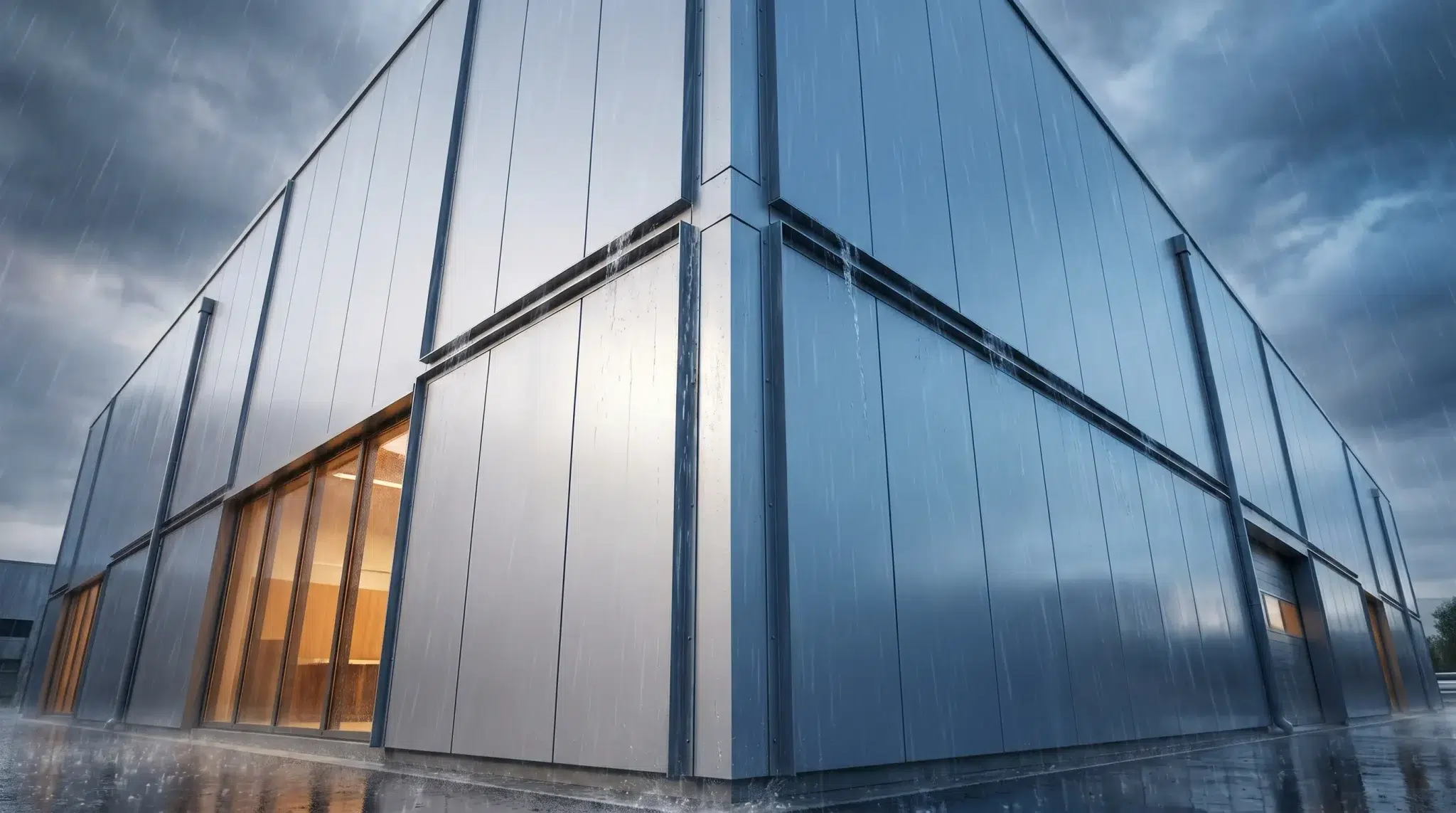
Paths for drainage are also necessary – Water on the exterior must have a way to leave the system so it does not stay inside the assembly. Flashing systems or water management details are useful to prevent the accumulation of water over time and to lower the risk of damage that is not visible behind the panels.
Installation Practices
Performance is poor if installers do not follow the correct procedures. Contractors are responsible for ensuring that all parts are in place according to the instructions of the manufacturer. Correct alignment of panels and proper fastening are methods that maintain the strength of the building envelope.
Sealing at joints next to connections is a priority – Small errors during installation are often the cause of paths for water or air. Many problems start at openings that are not sealed – high quality work is a primary factor for the performance of the building over many years.
Air Barrier Performance
The restriction of air movement is an effective method to prevent moisture issues. Leaking air often carries vapor into wall and roof assemblies where it can become liquid. A continuous air barrier system is helpful to lower this risk – stopping air that is not controlled.
Continuity at joints and transitions is important when insulated metal panels are part of the envelope. Integration with other construction materials is necessary so that the air barrier is effective across the whole structure plus moisture concerns are low.
Management of Condensation
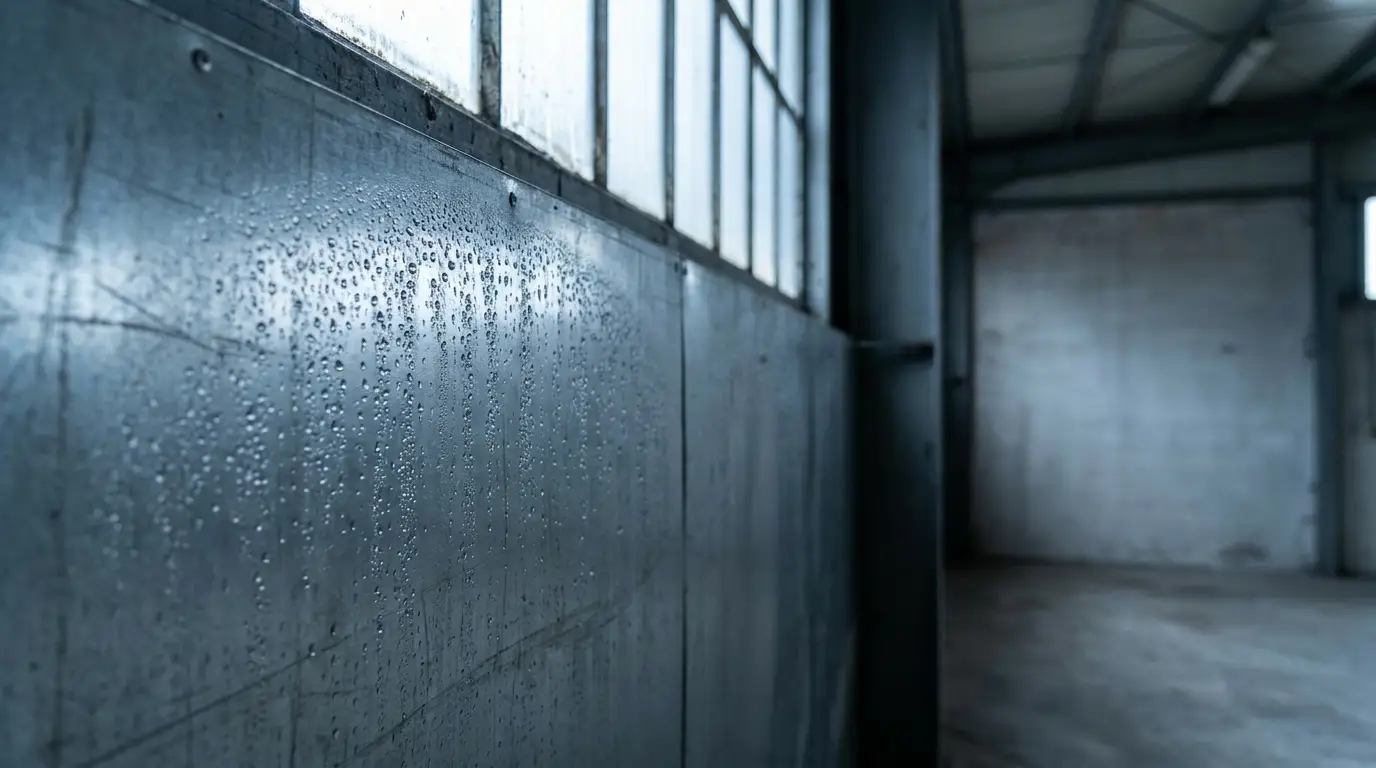
Condensation is the result of warm air touching a surface that is at or below the temperature where vapor becomes liquid – this process is a cause of water accumulation within building parts if it is not managed. Designers are able to determine where this risk is high – studying local weather conditions.
Insulation levels are important for the prevention of condensation. Surfaces on the inside stay at a temperature that is close to the room temperature when insulation is present, which makes it less likely that moisture will turn into liquid – this method is beneficial for both energy use and the protection of the building from water.
Sealing of Joints
Panel joints are the most important areas for the protection of the building from water. Gaskets and other materials are chosen based on the environment but also how much the building is expected to move. Joints that are sealed correctly are a barrier against both water and air.
Regular checks of these parts are necessary because sealants can break down. Performance is often lower over time because of sunlight, temperature shifts and weather. Repairs are possible before moisture problems occur if wear is identified early.
Maintenance & Inspection
Routine maintenance is a requirement to keep the building envelope effective. Owners of buildings are responsible for a schedule to inspect roofs, walls, flashings as well as sealants. Early detection of small issues is a way to avoid repairs that are large and expensive.
Visual inspections are focused on marks from water, rust, sealants that are broken or panels that have moved. Evaluations at regular intervals for facilities with IMP panels confirm that the system is working as intended and that the methods to control moisture are still effective.
Conclusion
Prevention of moisture problems is the result of careful design, correct installation, air control or continuous maintenance. Building performance and durability are better when moisture risks are addressed before they become serious. Owners and professionals can make choices that lower damage – understanding how water next to vapor moves through a building. Constant attention to the details of design and regular inspections are the reasons why insulated metal panels provide protection for a long time.