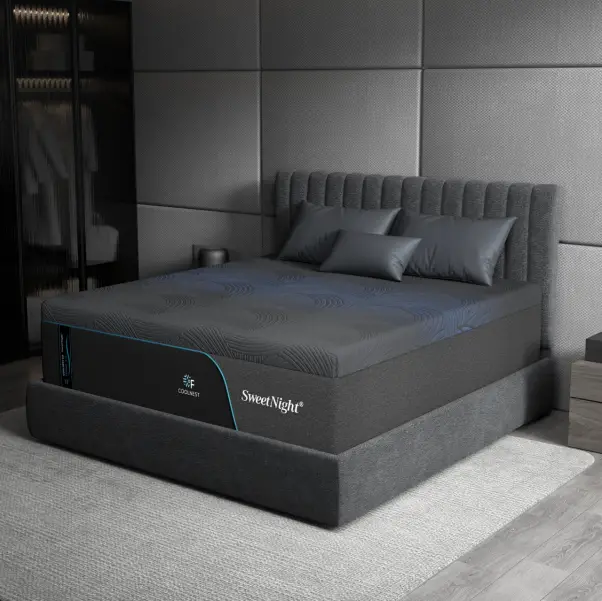
Best Cooling Mattress Types for Hot Sleepers: Foam or Hybrid?
Hot sleepers often face a choice between all-foam and hybrid mattresses. Foam is known for close contouring and motion isolation, while hybrids use coils to add responsiveness and internal open space. Neither category is automatically cooler, because the materials above the support core determine how heat reaches and leaves the sleep surface.
The better question is which construction matches the sleeper’s preferred feel while also using a credible temperature-management system. Firmness, body weight, sleep position, bedding, and room conditions can change the result as much as the category name.
How All-Foam Mattresses Manage Heat
Conventional dense memory foam may hold warmth because it conforms closely and limits air movement. Newer designs can reduce that tendency with breathable covers, phase-change materials, gel infusion, perforations, and open-channel structures. The effectiveness depends on how much of the mattress is designed around ventilation rather than on the presence of one cooling additive.
All-foam mattresses often provide stronger motion isolation, which may appeal to couples and light sleepers. They also tend to feel less bouncy and more enveloping. A sleeper who likes that feel should compare how deeply the comfort layers allow the body to sink, since greater contact can affect perceived warmth.
How Hybrid Mattresses Create Airflow
A hybrid places foam comfort layers over a coil core. The open space around the coils can support airflow, and pocketed coils can add responsiveness while reducing some movement transfer. However, a thick or poorly ventilated foam package above the coils may still retain heat. Coil space is an advantage, not a guarantee.
When comparing the best cooling mattress, hybrids may also feel easier to move on and can offer stronger perimeter structure when reinforced edges are part of the model. These features vary, so shoppers should confirm the actual coil design, edge system, and comfort layers rather than relying on the word “hybrid.”
Comparing the Two for Hot Sleepers
The strongest choice is not necessarily the one with the most open interior or the coldest first touch. It is the one that balances preferred surface feel, sufficient ventilation, suitable firmness, and realistic trial terms. Someone who dislikes bounce may prefer ventilated foam, while someone who wants a more responsive surface may favor a hybrid. Couples should weigh motion isolation against ease of movement and edge support.
SweetNight’s cooling collection includes both all-foam and hybrid designs, allowing shoppers to compare contouring foam with coil-supported airflow rather than assuming one structure is automatically best. Model-level specifications remain important because different products use different cooling layers and support systems.
An All-Foam Example: CoolNest® Ultra
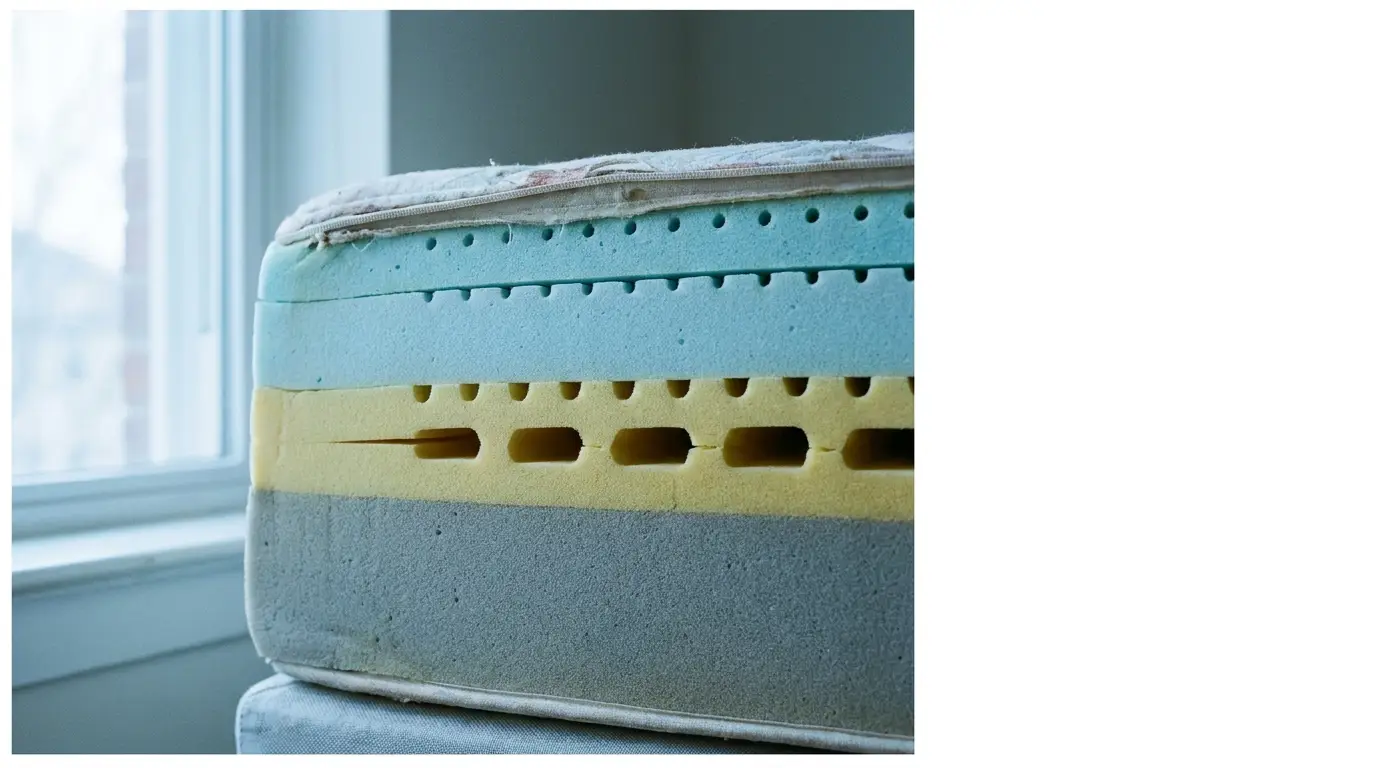
The SweetNight CoolNest® Ultra Memory Foam Mattress is a useful example for sleepers who prefer foam but do not want cooling to stop at the cover. Its Advanced CoolNest® Ultra System combines a Gradient Cooling Ice Silk Cover, PCMflux® High Resilience Foam, AirMesh™ Breathable Memory Foam, ventilated gel memory foam, and a 3D open-channel breathable structure. SweetNight states that the system may feel up to 11° cooler and that the AirMesh™ layer provides up to six times greater breathability than traditional memory foam. The refined 7-zone support design is intended to distribute contouring and support across different body areas.
For someone comparing the best cooling memory foam mattress for hot sleepers, this model represents the all-foam side of the decision: closer contouring, lower bounce, and a stronger motion-isolation tendency, combined with several dedicated airflow and heat-management layers. It should not be described as automatically sleeping as cool as every hybrid, since perceived temperature depends on the entire construction and the user’s environment. The 100-night trial allows at-home comparison, and the 10-year warranty should be read for current eligible coverage.
When a Hybrid May Fit Better
A hybrid may be the stronger match for sleepers who prioritize responsiveness, easier repositioning, and open space through the core. It can also suit people who prefer less of a “hugging” sensation. Cooling performance still depends on the cover and foam layers, so shoppers should look for ventilation or heat-management features above the coils rather than assuming the coil core does all the work.
When Foam May Fit Better
Foam may suit sleepers who value close pressure relief, quiet performance, and reduced movement transfer. A modern ventilated design can address many of the airflow limitations associated with older dense foam. The ideal firmness should still reflect sleep position and body weight so that the mattress does not create either excessive sinkage or insufficient cushioning.
Final Decision
Foam and hybrid mattresses manage heat in different ways, but neither wins by category alone. The better choice is the one that matches the sleeper’s preferred feel, support needs, movement preferences, and approach to temperature management. Compare the complete layer structure and use the trial period to confirm how the mattress performs in the actual bedroom.