How to Clean Leather Furniture Properly at Home
Is your leather furniture starting to look dull or sticky? Dust, spills, and oils can slowly damage chairs, sofas, recliners, and other leather pieces if they are not cleaned the right way.
Learning how to clean leather furniture properly helps keep the surface soft, clean, and crack-free without harsh products. Simple DIY methods and smart leather furniture care habits can make a big difference.
This guide shares easy cleaning tips, homemade solutions, and quick stain removal methods that actually work.
Why Leather Furniture Needs Gentle Care
Leather is different from fabric furniture. It can absorb oils, lose moisture, and dry out over time. Using harsh chemicals or excessive water may damage the finish and make the surface rough.
Regular cleaning keeps leather looking smooth and fresh. It also helps stop dirt from settling into the material. Simple leather couch care habits can make furniture stay comfortable and clean for years.
Cleaning Supplies that Work Best
Cleaning leather furniture does not require strong chemicals or expensive tools. A few gentle household items are enough for regular care and stain removal.
For basic cleaning, you will need:
- Microfiber cloths: for wiping and drying
- Vacuum with brush attachment: for dust and crumbs
- Mild dish soap and warm water: for gentle cleaning
- White vinegar: for DIY leather cleaner solutions
- Spray bottle: for mixing homemade cleaners
- Soft dry towel: for removing extra moisture
- Baking soda: for grease and odor removal
These simple items work well for everyday cleaning and DIY leather cleaner methods.
How to Clean Leather Furniture Properly
Cleaning leather furniture is easier when each step is done in the right order. Always work gently, use less moisture, and test any cleaner on a hidden spot first.
Step 1: Remove Loose Dust

Start with dry cleaning before using any liquid. Dust and crumbs can scratch leather if rubbed into the surface.
Use these quick steps:
- Vacuum seams, corners, and cushion gaps
- Use a soft brush attachment
- Wipe the surface with a dry microfiber cloth
This Prepares Leather Furniture for Safe Cleaning.
Step 2: Make a Mild DIY Leather Cleaner
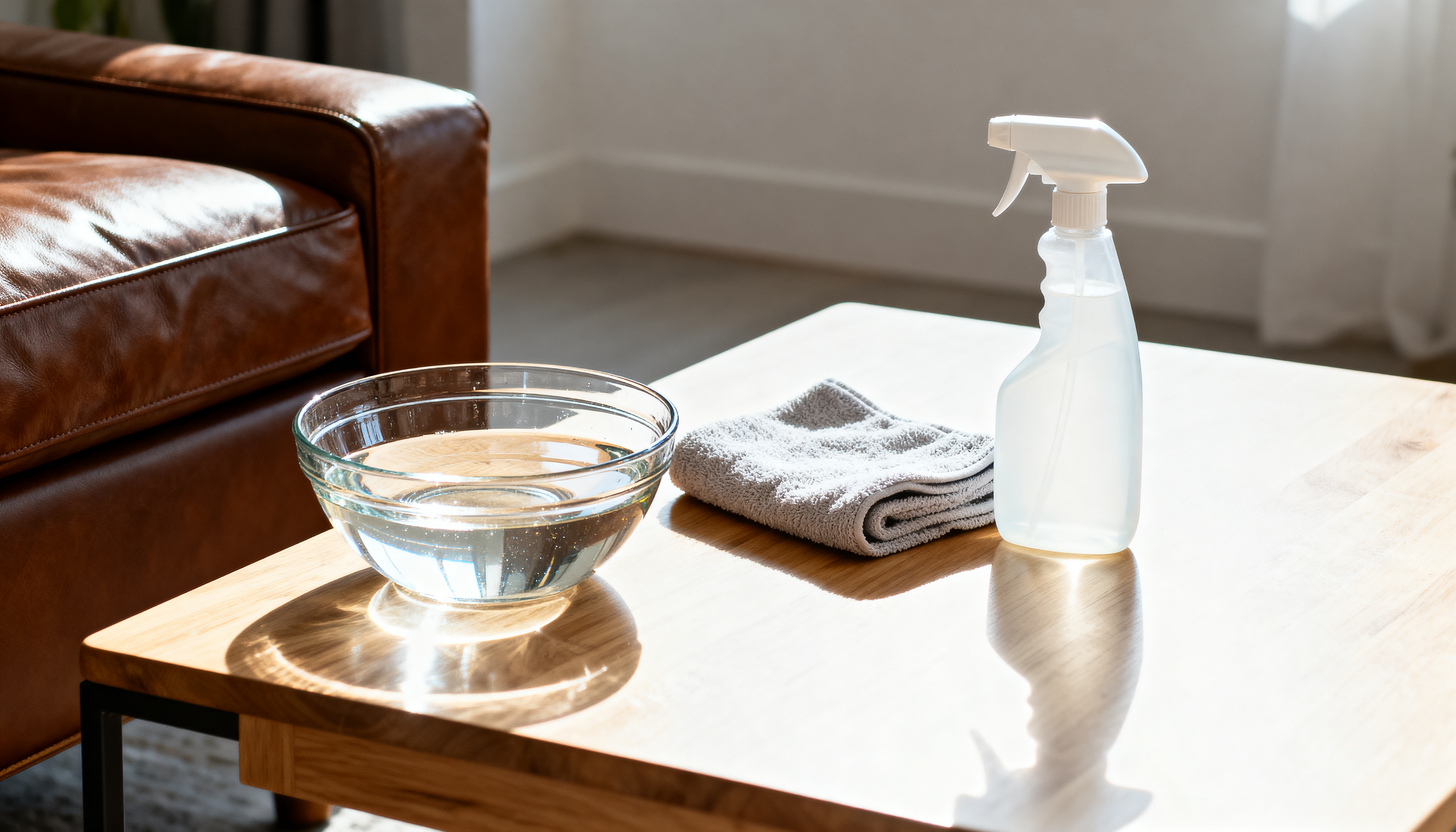
A simple, made-at-home leather cleaner works well for light dirt and regular care. Mix equal parts white vinegar and warm water in a spray bottle or bowl.
Follow these steps:
- Dip a microfiber cloth into the mix
- Wring it out until damp
- Avoid spraying directly on the leather
The cloth should never feel wet or dripping.
Step 3: Wipe the Leather Gently

Clean one small area at a time. This helps control moisture and gives a more even finish.
Use these tips:
- Wipe in soft circular motions
- Focus on arms, backs, seats, and headrests
- Do not scrub stained areas harshly
Gentle wiping protects the leather surface.
Step 4: Dry the Surface Properly

Water left on leather may weaken the finish. Drying the surface helps prevent water marks and dull patches.
Here is what to do:
- Use a clean, dry cloth
- Pat or wipe the area softly
- Let the furniture air dry naturally
Keep leather away from hair dryers, heaters, and direct sunlight while drying.
Natural vs. Store Bought Leather Cleaners
Many people use homemade cleaners for regular maintenance, while store-bought products are often used for tougher spots or dry leather. Both options can work well when used correctly.
| Cleaning option | Ideal use | Main benefit |
|---|---|---|
| DIY Leather Cleaner | Routine furniture cleaning | Budget friendly |
| Vinegar and Water Mix | Dust and light surface marks | Gentle on leather |
| Store-Bought Cleaner | Heavy stains and buildup | Stronger cleaning action |
| Leather Conditioner | Dry or rough leather surfaces | Helps keep leather soft |
For regular leather furniture care, simple homemade cleaning solutions are usually enough.
Habits that Keep Leather Looking New
Regularly caring for leather furniture helps keep the surface smooth, clean, and comfortable for daily use. Small maintenance habits can also help prevent fading, dryness, stains, and rough patches later.
- Keep furniture away from heat: Direct sunlight and heaters can dry leather and cause fading over time. Try placing leather furniture away from windows, fireplaces, and heating vents.
- Condition the leather occasionally: Leather can become rough and dry with daily use. Applying a small amount of conditioner every few months helps keep the surface soft and smooth without making it greasy.
- Clean spills quickly: Spills can turn into stains if left too long. Blot liquids immediately with a soft cloth and clean sticky spots gently to prevent marks and bad smells.
Mistakes that Can Damage Leather
Some cleaning habits may look harmless, but they can slowly damage leather furniture over time. Gentle care helps keep the surface smooth, clean, and durable.
Using Too Much Water
Leather does not handle heavy moisture well. Too much water can leave stains, dull spots, or cracks on the surface.
To avoid moisture damage:
- Use a slightly damp cloth only
- Never soak leather furniture
- Dry the surface right after cleaning
Scrubbing Too Hard
Rough scrubbing can wear down the leather finish and leave visible marks behind.
For safer cleaning:
- Wipe gently in circular motions
- Avoid hard brushes or scrub pads
- Clean stains slowly instead of rubbing forcefully
Using Harsh Cleaning Products
Strong chemicals may dry out leather and weaken the material over time.
For better leather care:
- Avoid bleach and alcohol based cleaners
- Use mild soap or DIY leather cleaner solutions
- Test products on a hidden area first
Skipping Regular Dusting
Dust buildup can make leather furniture look dirtier and rougher faster.
To keep furniture fresh:
- Wipe surfaces weekly with a soft cloth
- Clean corners and seams regularly
- Remove crumbs and loose dirt early
Using Rough Cloths
Hard fabrics may scratch leather while cleaning or drying.
For smoother cleaning:
- Use microfiber cloths for better results
- Avoid rough towels or stiff brushes
- Pat the surface gently while drying
Conclusion
Knowing how to clean leather furniture properly does not have to feel difficult. Small habits like light dusting, quick spill cleanup, and careful drying can help prevent common problems before they start.
Using gentle cleaners and avoiding harsh products also helps protect the texture and finish over time. Even simple homemade methods can work well for regular upkeep.
With a consistent care routine, leather furniture can stay comfortable, neat, and easier to maintain in the long run.
Frequently Asked Questions
Are Baby Wipes Safe for Leather Furniture?
Most baby wipes contain chemicals or moisturizers that may damage leather over time. A damp microfiber cloth is usually a safer option.
Does Faux Leather Need Different Cleaning Methods?
Yes, faux leather can handle slightly different products and moisture levels. Always check the care label before cleaning.
Why Does Leather Furniture Feel Sticky After Cleaning?
Sticky residue usually happens when too much cleaner or conditioner is left on the surface. Wipe it again with a clean, damp cloth, then dry it thoroughly.