

How to Clean a Stainless Steel Sink the Right Way
Your stainless steel sink handles more than almost anything else in your home – every dish, every rinse, every splash. Yet most people don’t think about cleaning it until it already looks dull or stained.
Keeping it clean is simple once you know the right technique. The wrong product, wrong motion, or bad habits can do more damage than the dirt itself.
This blog walks you through everything, step by step.
Why Stainless Steel Sinks Need Regular Care
Stainless steel sinks are strong, but they still collect water spots, soap film, food stains, and small scratches over time. A simple cleaning routine keeps the sink bright, fresh, and easier to maintain.
- Prevents Water Spots: Hard water can leave cloudy marks on the sink surface. Wiping the sink dry after use helps keep it clean and shiny.
- Reduces Soap Film: Dish soap and cleaners can leave a dull layer behind. Regular rinsing stops buildup from making the sink look dirty.
- Stops Food Stains: Coffee, tea, sauces, and acidic foods can leave marks if they sit too long. Quick cleaning keeps the surface clear.
- Controls Odors: Food bits can collect around the drain and corners. Cleaning the sink often helps prevent bad smells.
- Limits Scratches: Stainless steel can get fine scratches from rough pads or heavy cookware. Gentle care keeps the finish looking better.
- Protects The Finish: Harsh chemicals and standing water can weaken the shine. Mild cleaning and drying help the sink last longer
Materials Needed
You don’t need special products to get this right. The best cleaning solutions are things you likely already have at home – simple and easy to use.
| What You Need | How to Use It | Why It Matters |
|---|---|---|
| White Vinegar + Baking Soda | Mix into a paste and apply to the wet sink surface | Helps break down stains, grease, and mineral deposits |
| Soft Sponge or Scrubbing Pad | Scrub gently in the direction of the steel grain | Removes buildup without scratching the finish |
| Rubber Gloves + Dry Cloth | Wear gloves while cleaning, and dry the sink after rinsing | Protects your hands and prevents water spots |
How to Clean a Stainless Steel Sink Step by Step
The technique matters just as much as what you use. One simple rule – always scrub with the grain, never against it – is the difference between a clean sink and a scratched one.
1. Rinse the Sink with Water

Start by running warm water over the entire sink surface – the basin, sides, and around the drain. Make sure every area is wet before you apply anything.
A dry sink makes cleaning harder than it needs to be. Dry dirt and grease grip the surface and resist cleaning solutions.
Wetting the sink first loosens surface debris and helps your cleaning paste spread evenly without drying out mid-scrub.
2. Apply White Vinegar

Pour white vinegar directly onto the wet sink surface – the basin, sides, and around the drain. You don’t need a lot. A thin, even coat across the surface is enough.
White vinegar helps dissolve hard water stains, mineral deposits, soap scum, and grease that can dull a stainless steel sink. Its mild acidity breaks down buildup while neutralizing odors, leaving the surface cleaner and fresher.
Let it sit for 1 to 2 minutes before moving on to the next step. This gives the vinegar time to break down deposits rather than just sitting on the surface.
3. Sprinkle Baking Soda and Mix

Sprinkle baking soda evenly over the vinegar-coated sink surface and use a soft sponge to gently work the mixture into a light paste. The fizzing reaction is normal and helps loosen dirt, grease, and other buildup.
Baking soda acts as a gentle abrasive that removes stains without scratching stainless steel, while also helping neutralize odors.
Let the paste sit for 1–2 minutes before scrubbing to give it time to break down stubborn residue.
4. Scrub with the Grain

Scrub the sink using a soft sponge or non-scratch pad, always following the direction of the steel grain. This helps remove buildup without damaging the finish.
Work from the basin outward, paying extra attention to the corners and drain area where grease and residue tend to collect.
Avoid scrubbing across the grain, as it can leave fine scratches and dull the surface over time.
5. Rinse Completely
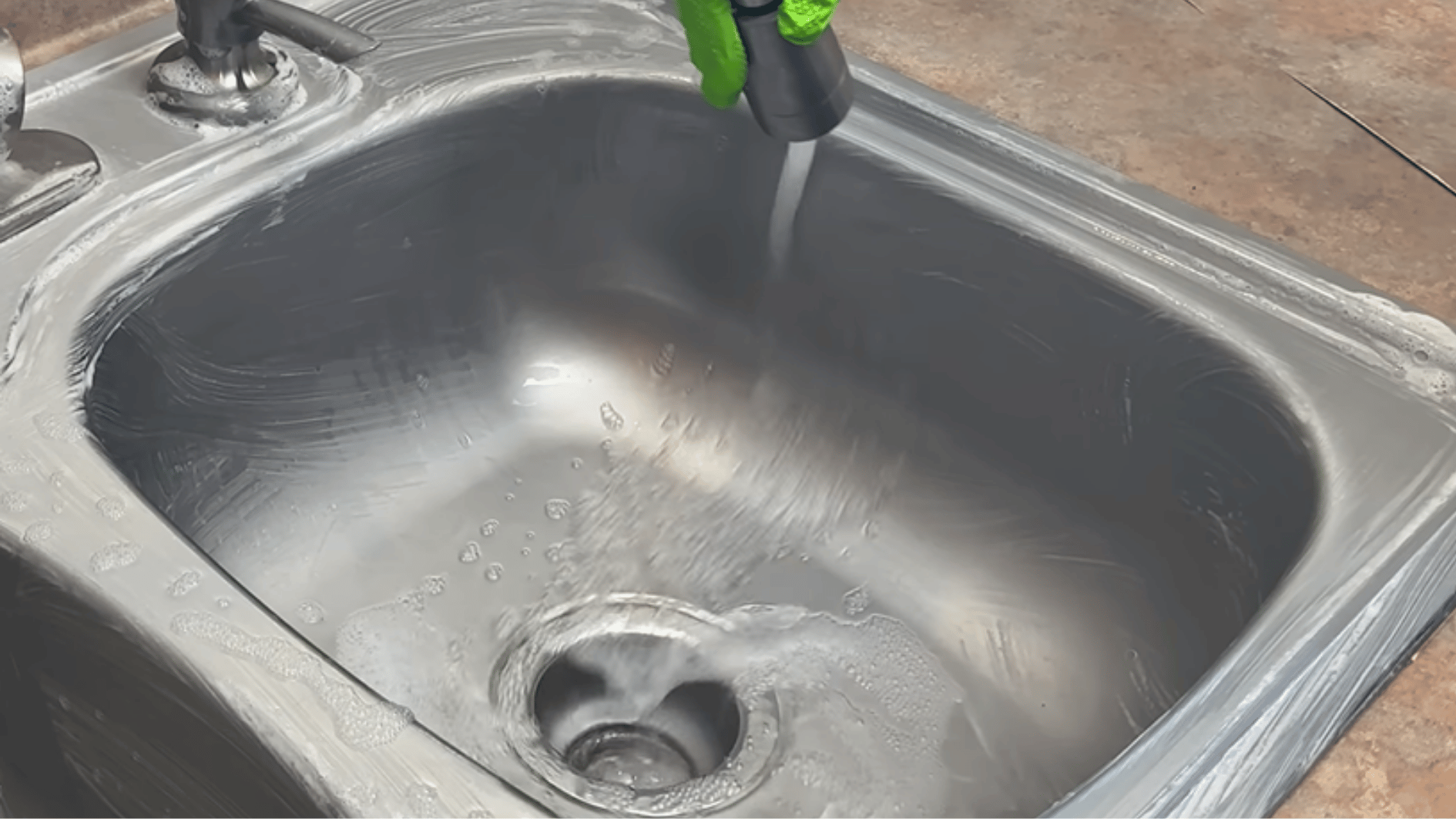

Rinse the sink thoroughly with clean water, making sure to wash away all of the baking soda paste, loosened dirt, and cleaning residue. Run water over the basin, sides, corners, and around the drain until the surface feels completely clean.
Taking a little extra time here is worth it. Any leftover residue can dry to a dull film, leaving the sink looking cloudy instead of polished.
If the surface still feels gritty, continue rinsing until it feels smooth to the touch.
6. Dry with a Clean Cloth

Dry the sink immediately with a clean microfiber cloth or soft towel, wiping in the direction of the grain of the steel. Make sure to cover the entire surface, including the basin, sides, corners, and around the drain.
Many people skip this step, but it’s what prevents water spots and streaks from appearing after cleaning.
Thorough drying also enhances the sink’s shine, leaving it looking cleaner, brighter, and better maintained for longer.
You can check out the whole tutorial below:
How to Maintain Your Sink Every Day
Cleaning is easier when you’re maintaining, not recovering. A few simple daily habits will keep your sink clean between deep cleans without adding much to your routine.
You don’t need to scrub every day – just rinse, remove, and dry. That’s all it takes to stay ahead of buildup and avoid the kind of staining that requires serious effort to remove.
- Rinse the sink after every use
- Remove sponges, pads, and dishes immediately after washing
- Never leave heavy pans sitting in the sink
- Do a quick dry wipe after rinsing to avoid water marks
What to Never Use on Stainless Steel
Some cleaning products that work great elsewhere will permanently damage a stainless steel sink. It’s worth knowing what to avoid before you reach for the wrong thing.
| What to Avoid | Why It Can Damage Stainless Steel | Use Instead |
|---|---|---|
| Steel Wool | It can scratch the surface and leave tiny metal particles that may rust. | Soft sponge or microfiber cloth |
| Abrasive Scrub Pads | Rough pads can leave visible scratches and dull the finish. | Non-scratch cleaning pad |
| Bleach | Bleach can damage the protective layer and cause staining or pitting. | Mild dish soap and warm water |
| Ammonia-Based Cleaners | These can be too harsh and may leave the sink looking dull. | Stainless steel-safe cleaner |
| Chloride Cleaners | Chlorides can cause corrosion, especially if left sitting on the surface. | Gentle pH-neutral cleaner |
| Harsh Powder Cleansers | Gritty powders can scratch the sink while cleaning. | Baking soda paste used gently |
| Oven Cleaner | It is too strong for sink surfaces and can cause discoloration. | Dish soap or vinegar rinse |
| Standing Salt Water | Salt can cause spots, pitting, or rust-like marks if left too long. | Rinse and dry after use |
The finish on stainless steel scratches more easily than most people realize. The wrong product or scrubbing motion can leave marks that won’t buff out – and once the finish is damaged, it stays that way.
Wrapping Up
A clean stainless steel sink doesn’t require expensive products or much time. It requires the right technique, a couple of good habits, and an understanding of what to avoid.
Scrub with the grain, use what you already have at home, rinse it out, and dry it down. Do that regularly, and your sink will look good for years.
The effort is small. The results are visible every single day.
Frequently Asked Questions
How Often Should I Clean My Stainless Steel Sink?
A quick rinse and dry daily keeps buildup at bay. A proper deep clean once a week is enough for most households.
Why Does my Sink Have White Spots or Streaks?
White spots are usually hard water mineral deposits. A white vinegar solution applied with a soft cloth will dissolve them without damaging the finish.
Where Can I Find Cleaning Products for Stainless Steel?
Most grocery and hardware stores carry stainless-steel safe cleaning powders and sprays. Look for products that specifically state they are safe for stainless steel.
Does Vinegar Damage Stainless Steel?
No, white vinegar is safe for stainless steel when used correctly. Avoid leaving it on the surface for long periods and always rinse completely after use.


