
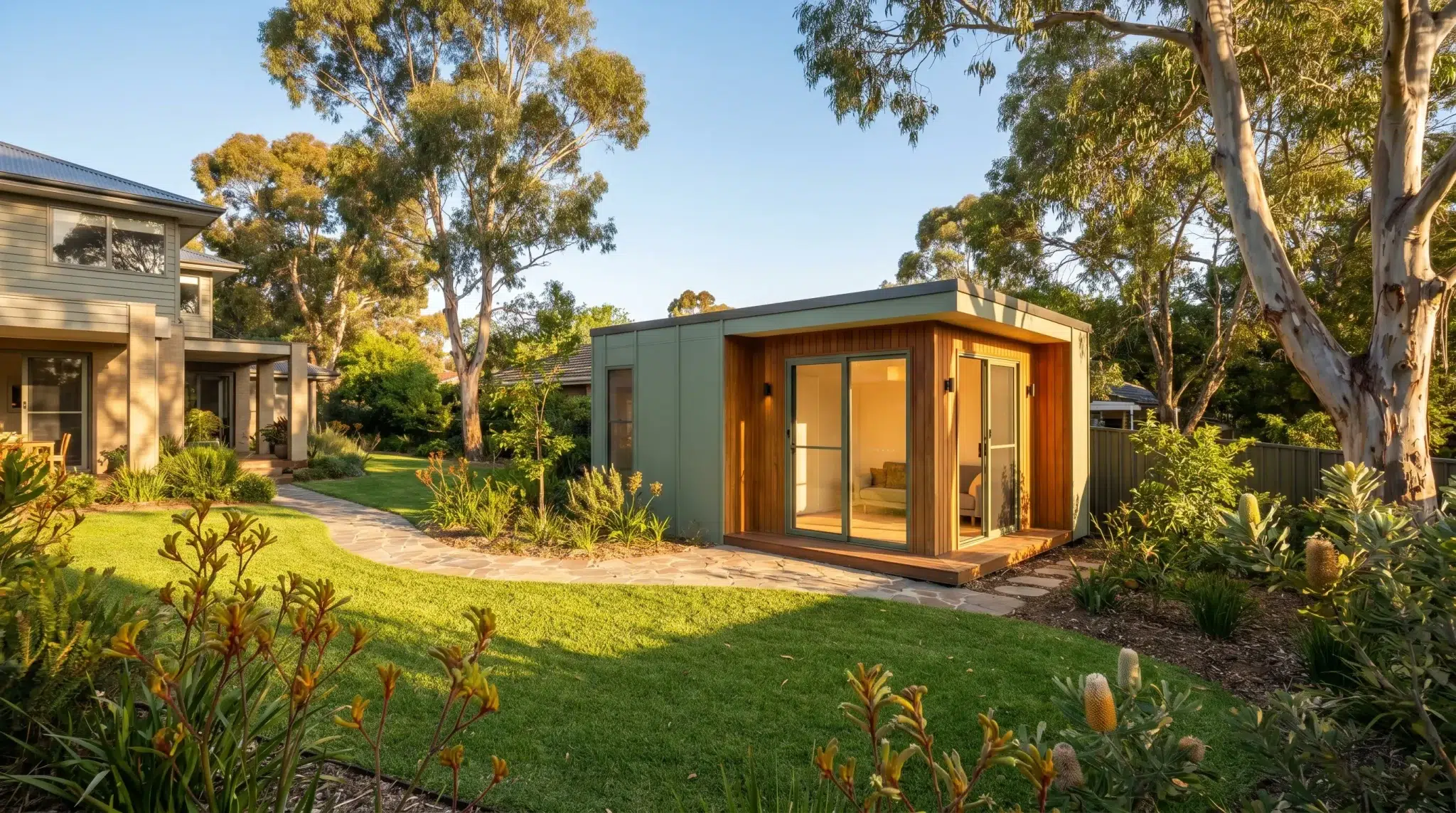
How Small Backyard Homes Are Changing Australian Living
Lately, the idea of building a secondary dwelling has been picking up real momentum across Australia. You have probably heard someone mention it at a barbecue, a colleague talking about the rental income they are earning from their backyard, or a friend explaining how their ageing parents moved into a small home beside theirs without anyone losing their privacy or independence. These conversations are happening more often, and for good reason.
If the growing buzz around granny flats has made you curious, you are not alone. This is not a passing trend. It is a genuine shift in how Australians are thinking about their homes, their families, and their finances. Here is a look at why it is happening and what is driving it.
What Are Granny Flats?
In Australia, a granny flat is commonly referred to as a secondary dwelling. They are self-contained small homes built on the same property as an existing residence and have their own kitchen, bathroom, bedroom, and living space. It functions as a complete home, just on a smaller footprint.
They are commonly called granny flats, though that name understates how versatile they have become. People are using them for elderly parents, adult children, rental income, home offices, and everything in between. The appeal is not a single use case. It is the flexibility to serve different needs at different points in life, all from the land you already own.
That said, let us now take a look at the practical reasons driving their growing popularity.
Helping to Ease Housing Pressure
Australia’s housing shortage is not a new problem, but it has become harder to ignore. Rental vacancy rates in most major cities have stayed low for years, and property prices remain out of reach for a significant portion of the population. Secondary dwellings offer one practical response to this pressure.
Recent reports have found there were around 242,000 properties in Sydney alone that were suitable for secondary dwelling development, with similar numbers in Melbourne and Brisbane. That is an enormous amount of latent housing capacity sitting in existing residential backyards, largely unused.
When a homeowner builds a secondary dwelling, they are adding to the housing supply without requiring new land, new infrastructure, or new suburbs. It is one of the more efficient ways to create additional housing in cities that are already built out.
Supporting Multigenerational Living Without Sacrificing Privacy
One of the most human reasons behind this trend is simply families wanting to stay close without crowding each other.
As the population ages, more Australian families are facing decisions about what to do when parents can no longer live entirely independently but are not ready, or willing, to move into a care facility. A secondary dwelling on the family property offers a middle path. Parents can live next door, retain their routine and independence, and have family nearby when they need support.
The same logic applies at the other end of the age spectrum. Young adults trying to save for their first home, or returning from elsewhere for work or study, often find that a secondary dwelling on the family property gives them affordable housing without removing their autonomy.
This shift toward multigenerational living is not unique to Australia, but Australia’s planning frameworks and block sizes make it particularly achievable here compared to many other countries.
Creating an Additional Income Stream
For homeowners who do not need the space for family, renting out a secondary dwelling is an increasingly attractive option. Rental demand remains strong across most of Australia, and a well-built, self-contained dwelling in a residential area tends to attract consistent interest from tenants.
The costs of build vary depending on size, design, materials, and location, so it is worth getting a proper quote early rather than working from rough estimates. Many owners find that over time, rental returns contribute meaningfully to mortgage repayments or general living costs, while also adding to the overall value of the property.
For homeowners who feel the pressure of rising living costs, this kind of return from land they already own is worth exploring seriously.
A Flexible Housing Model Other Countries Are Watching
What makes the Australian approach particularly interesting is how normalised it has become.
Rather than being seen as temporary structures, these dwellings are treated as legitimate housing solutions. Planning pathways in several states have been adjusted to make approvals more streamlined, provided certain conditions are met.
Other countries facing similar affordability pressures are beginning to examine this model more closely. The lesson is simple – compact, self-contained homes built on existing residential land can increase supply without dramatically altering neighbourhood character.
It is not a one-size-fits-all solution. It requires thoughtful planning, compliance with local regulations, and realistic budgeting. But when executed properly, it offers flexibility that traditional housing models often struggle to provide.
Should You Consider Building One?
By now, it should be clear that this shift is not happening by accident. It is happening because the model works in practical terms.
If you are thinking about building one, begin with the fundamentals. The rules around secondary dwellings vary by state and council area, and what is permissible on your block depends on a range of site-specific factors. Experienced granny flat builders in Sydney and across NSW can walk you through what is feasible on your property, what approvals are required, and what realistic costs look like before you commit to anything or fall in love with a layout. They can answer all your questions and help you understand your options clearly, empowering you to make a sound and compliant building decision.


