How Often to Water a Peace Lily and Spot Watering Problems
Peace lilies droop dramatically when thirsty, which confuses many new plant owners. Knowing how often to water a peace lily takes the guesswork out of those saggy leaves.
This post explains when to water, how the seasons change your routine, and how to tell overwatering apart from underwatering.
Whether your peace lily sits indoors near a bright window or in a shaded corner, you will find a simple system that keeps it healthy without turning watering into a daily worry.
How Often to Water a Peace Lily
Water a peace lily whenever the top one to two inches of soil feels dry, which for most homes works out to about once a week. Rather than sticking to a fixed calendar, check the soil with your finger before each watering.
This simple habit is the real answer to how often to water a peace lily indoors, since light, humidity, and pot size shift the schedule from week to week.
How to Tell When Your Peace Lily Needs Water
The best way to know when a peace lily needs water is to check the soil and the plant, not rely on a fixed schedule. Use these three simple signs:
- The Finger Test: Push your finger about one to two inches into the soil. If it feels dry at that depth, it is time to water.
- The Weight Test: Lift the pot after watering so you know how heavy it feels when moist. When it becomes noticeably lighter, the soil has likely dried out.
- The Leaf Test: Slightly drooping leaves can signal thirst. Check the soil before watering, since drooping can also occur when the roots stay too wet.
Watering Peace Lilies Indoors by Season
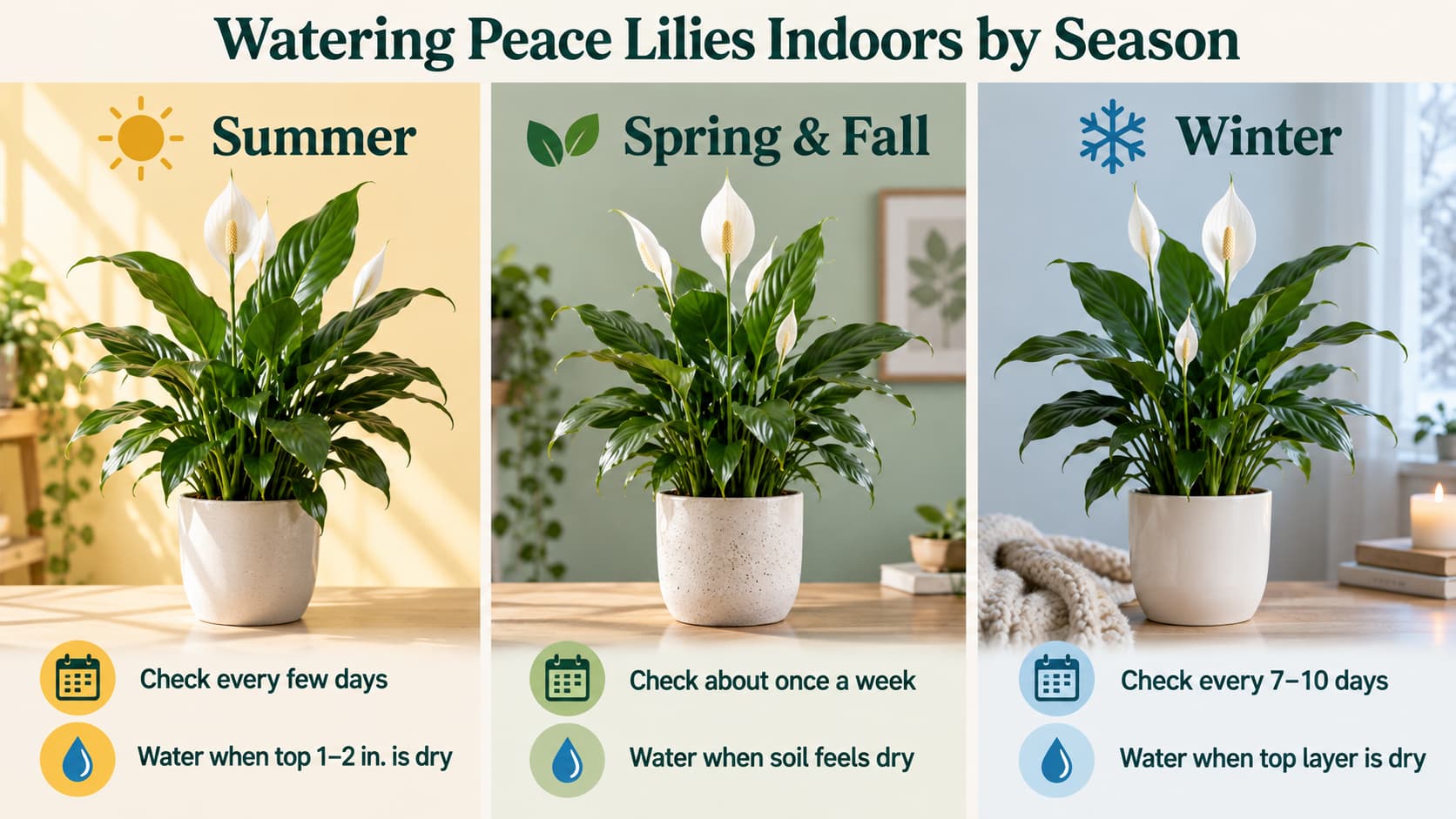
A peace lily’s watering needs change throughout the year as light levels, temperature, and growth rate shift. Instead of following a strict schedule, check the soil more or less often depending on the season.
1. Summer
During warmer months, brighter light and higher temperatures can make the soil dry faster. Check the top 1 to 2 inches of soil every few days, and water when it feels dry.
2. Spring and Fall
Peace lilies usually grow steadily during spring and early fall, so the soil may dry at a moderate pace. Check it about once a week, but let soil moisture determine when you actually water.
3. Winter
Shorter days and cooler temperatures usually slow growth and reduce water use. Check the soil every seven to ten days and water only when the top layer has dried. Indoor heating can dry the soil faster, so adjust based on your home’s conditions.
What Affects How Often You Should Water
Several factors quietly control your peace lily’s thirst. Bright indirect light speeds up soil drying, while low light slows it down, and Clemson Cooperative Extension notes peace lilies are among the few foliage houseplants that still flower in low light.
Warm, humid rooms pull moisture out faster than cool, dry ones. Pot material matters too, since terracotta breathes and dries out sooner than plastic or ceramic.
Soil type also matters, as light, airy mixes dry faster than dense, compact ones. Watching how these factors interact with your specific room is more useful than following a fixed schedule.
How Much Water and How to Water a Peace Lily Properly
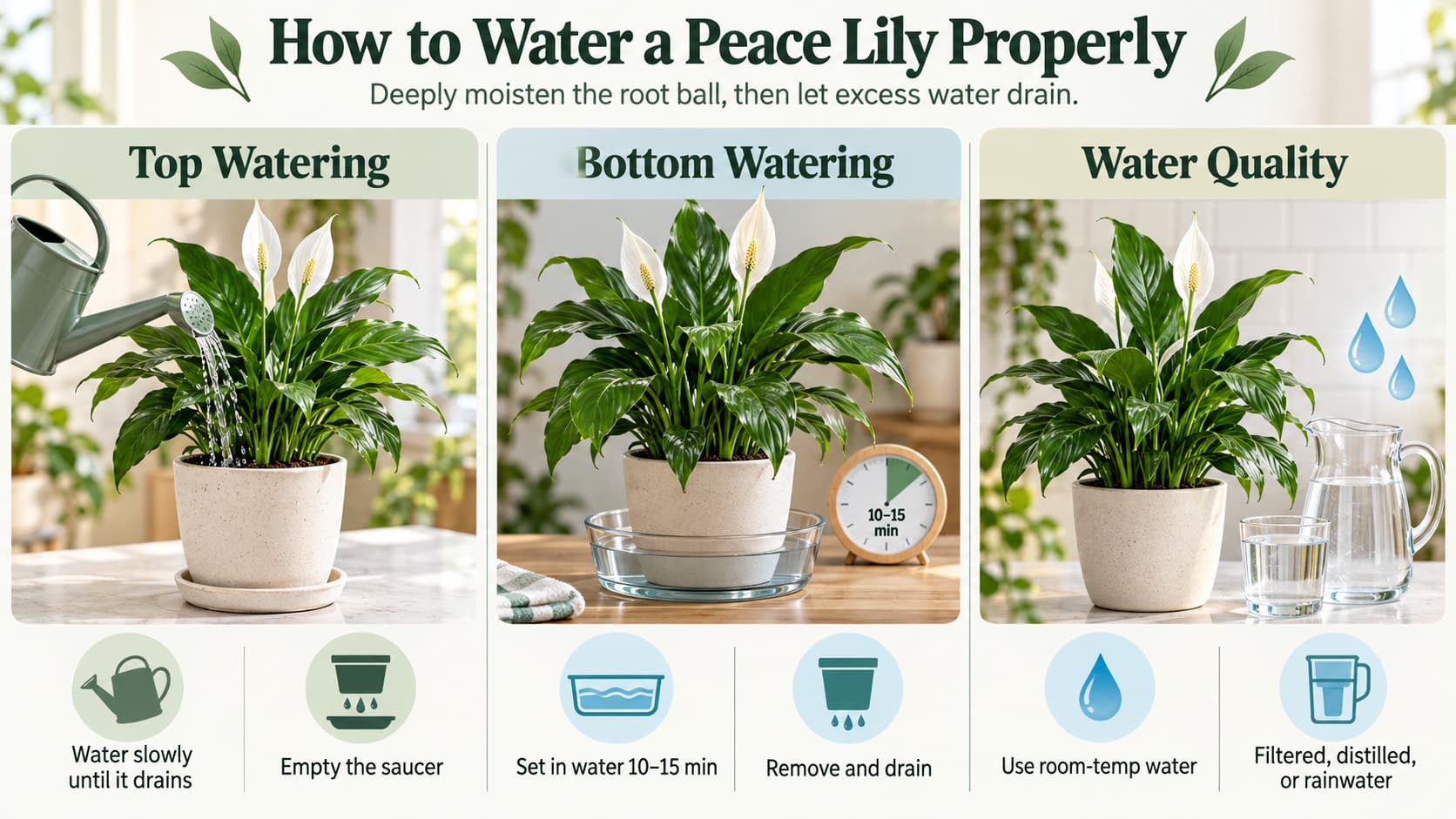
Water deeply enough to moisten the entire root ball, then allow all excess water to drain away. The goal is evenly moist soil, not soil that stays soaked.
Top Watering
Pour water slowly and evenly over the soil until it begins to flow from the drainage holes. Let the pot drain completely, and empty any water left in the saucer.
Bottom Watering
Place the pot in a shallow container of water for about 10 to 15 minutes. Once the soil surface feels slightly moist, remove the pot and let excess water drain before returning it to its saucer.
Water Quality
Peace lilies can be sensitive to minerals and chemicals in tap water, which may contribute to brown leaf tips. If this happens regularly, try filtered, distilled, or rainwater at room temperature.
What Are the Downsides of Having a Peace Lily?
Peace lilies are attractive and relatively easy to grow, but they are not completely problem-free.
A few common drawbacks are worth considering before adding one to your home.
- Toxic to Pets and Children: Chewing the leaves can cause mouth irritation, drooling, and digestive discomfort.
- Sensitive to Dry Soil: Peace lilies can wilt noticeably when the soil becomes too dry.
- Need Consistent Humidity: Dry indoor air may cause brown leaf tips and stressed foliage.
- Prone to Overwatering: Soil that stays soggy can lead to yellow leaves and root rot.
Signs of Overwatering vs Underwatering
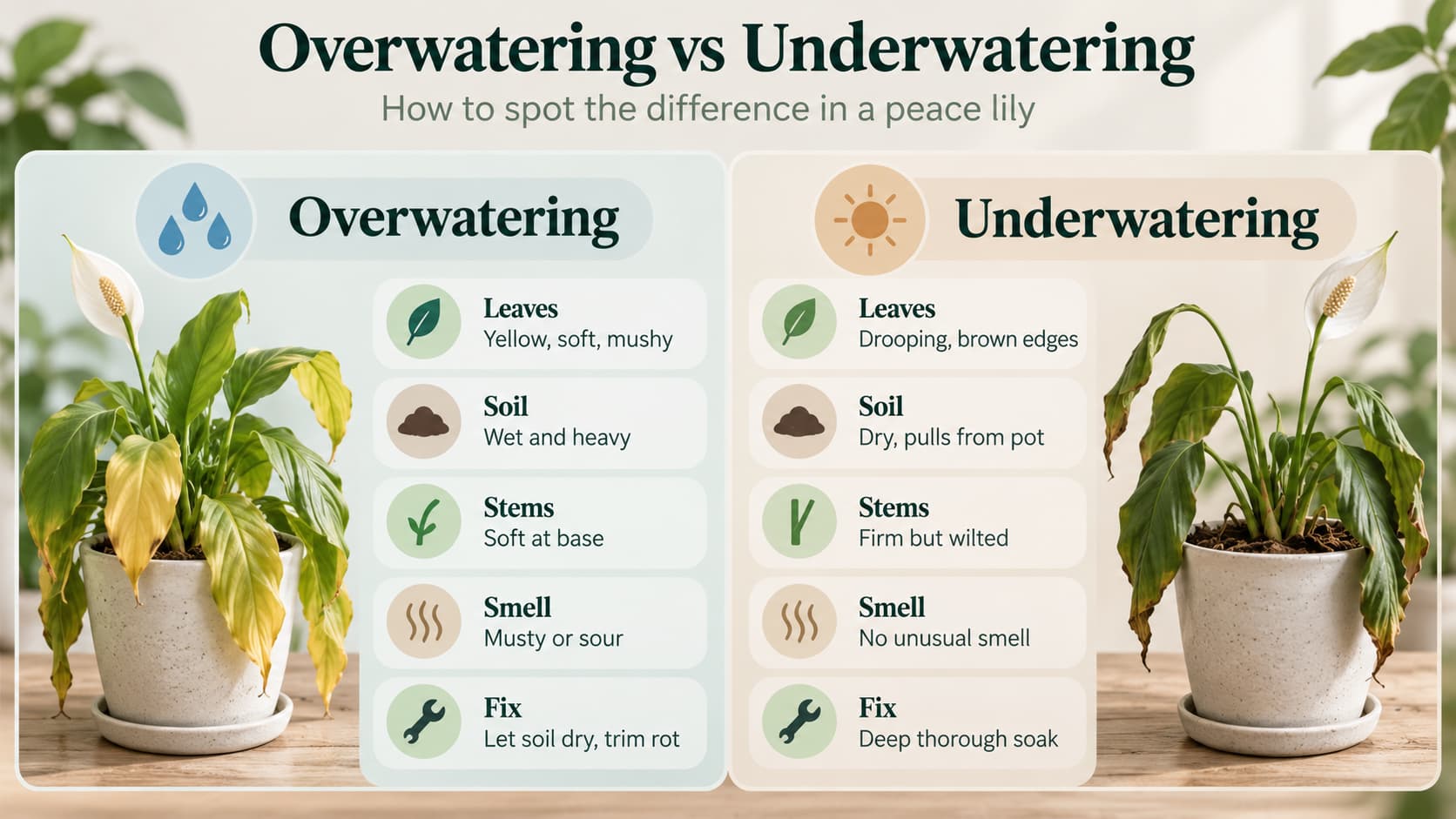
Both overwatering and underwatering can look like unhappy leaves, which makes them easy to mix up.
This table breaks down the difference so you know exactly what your plant needs.
|
Sign |
Overwatering |
Underwatering |
|---|---|---|
|
Leaves |
Yellow, soft, or mushy |
Drooping with crisp brown edges |
|
Soil |
Stays wet and heavy |
Dry and pulling away from the pot |
|
Stems |
Soft or mushy at the base |
Firm but wilted |
|
Smell |
Musty or sour soil |
No unusual smell |
|
Fix |
Let soil dry out, trim rotten roots |
Give a deep, thorough soak |
Why Peace Lilies Need Consistent Moisture
Peace lilies originate on the shaded floor of tropical rainforests in Central and South America, according to NC State Extension.
That environment stays humid and evenly moist, with rain draining away quickly rather than pooling around the roots.
Recreating that balance indoors, moist but never soggy, is why a rigid watering calendar rarely works as well as simply reading the soil. Consistent moisture supports steady growth and the glossy foliage peace lilies are known for.
Conclusion
Watering a peace lily comes down to one habit: checking the soil before assuming your plant needs a drink.
Once you learn to read drooping leaves, dry soil, and seasonal shifts, watering becomes instinct rather than a guessing game. Keep the soil evenly moist, adjust for light and temperature, and watch your plant’s leaves for honest feedback.
A peace lily that gets consistent, well-timed water rewards you with glossy foliage and regular white blooms for years to come, every season.
Frequently Asked Questions
Do peace lilies need sunlight?
Peace lilies need bright, indirect light to grow well and bloom, but they tolerate low light. Direct sun scorches their leaves, so keep them away from harsh afternoon rays.
Do peace lilies like to be misted?
Yes, peace lilies enjoy the added humidity from misting, since they come from humid rainforests. Mist the leaves a few times a week, especially in dry indoor air.
Can you overwater a peace lily?
Yes, overwatering is actually more common than underwatering. Soil that stays soggy suffocates the roots and leads to root rot, so let the top layer dry between waterings.
Are coffee grounds good for a peace lily?
Used sparingly and well dried, coffee grounds can add mild nutrients to the soil, but too much can make it too acidic or hold excess moisture, raising the risk of root rot.
What is the lifespan of an indoor peace lily?
With proper care, a peace lily can live for many years, often five years or more, sometimes stretching well past a decade indoors.
Should you cut the brown tips off your peace lily?
Yes, trimming brown tips with clean scissors improves appearance and stops the damage from spreading, but always leave a thin margin of brown rather than cutting into healthy green tissue.
What is the best food for peace lilies indoors?
A balanced, diluted liquid houseplant fertilizer applied every four to six weeks during spring and summer feeds a peace lily well, without the salt buildup that full-strength doses can cause.