

Catherine the Great’s Furniture: Fact vs Myth
When most people search for Catherine the Great’s furniture, they expect one of two things: gilded palace interiors or scandalous rumors about an erotic cabinet.
What they rarely expect is the full picture. Catherine II was not just a powerful empress. She was one of the greatest art collectors in history.
Her furniture was a deliberate statement about Russia, about power, and about her place in the world.
But somewhere between the Hermitage and the internet, fact and fiction got mixed up. Salacious rumors spread faster than historical records.
And a woman who built an empire got reduced to a punchline. This article distinguishes what is real from what is invented and explains why it still matters today.
What Is Catherine the Great’s Furniture?
The phrase “Catherine the Great’s furniture” means two very different things. One is real history. The other is a rumor that has never been proven.
Catherine II ruled Russia from 1762 to 1796. She is known as one of the most powerful women in history.
She came to power by overthrowing her own husband, Peter III, and ran one of the world’s largest empires alone.
Her personal life was bold for her time. She had around 12 to 22 known lovers throughout her life.
Many enemies used her private choices to try to damage her reputation, and that is exactly why her furniture became controversial.
Why Catherine Furniture Became a Topic of Interest?
The first story is about art and ambition. She filled her palaces with world-class furniture to show that Russia belonged among the great civilizations of Europe.
Every chair and cabinet was a statement.
The second story is about a rumor. Because Catherine was a woman in power who did not hide her personal life.
One of the most persistent is the legend of an “erotic cabinet”, a secret room said to be filled with sexually explicit furniture.
This is why the topic still causes confusion today:
- The real furniture collection is genuine, well-documented, and preserved in museums.
- The erotic cabinet story has never been proven with verified evidence.
- Both stories use the same phrase: “Catherine the Great’s furniture.”
- Viral content online often mixes the two without clarifying the difference.
The truth is, Catherine’s real furniture legacy is remarkable in its own right. The scandal story, while widely shared, remains unverified to this day.
The Catherine Furniture Collection
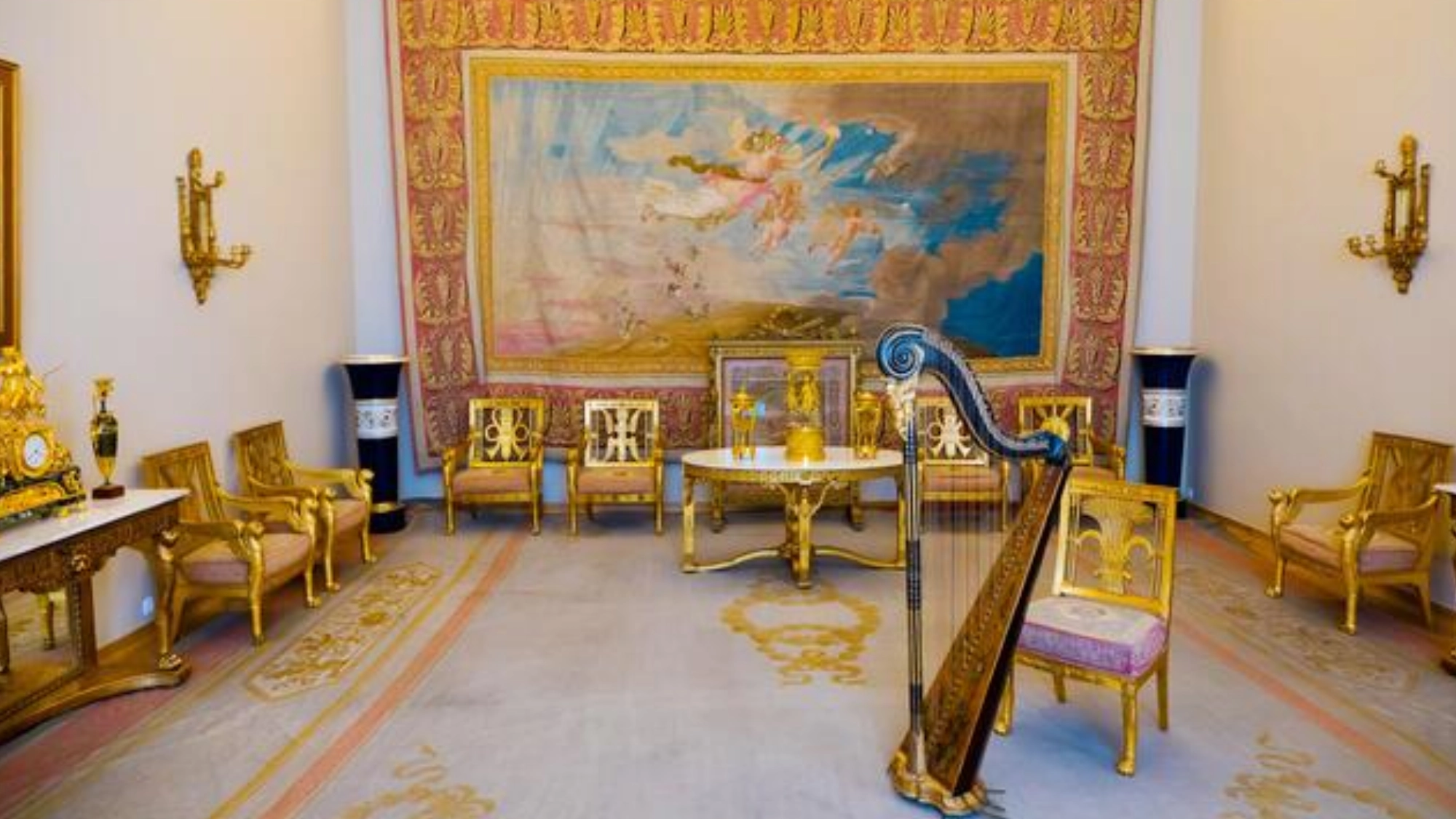
Source: Alamy
Before the rumors, there was the real collection. And it was extraordinary. Catherine owned thousands of pieces of furniture across her palaces.
These included ornate thrones, gilded writing desks, marble-topped cabinets, decorative screens, and elaborately carved chairs.
Every piece was chosen or commissioned with purpose. She brought in master craftsmen from France, Germany, and England.
She also trained Russian artisans to meet the same standard. The result was a collection that blended European elegance with Russian grandeur.
Styles and Materials of Her Furniture
Catherine’s taste evolved over her 34-year reign. Her collection spanned three major styles, rare materials, and multiple grand palaces.
- Baroque: Heavy and dramatic; used in ceremonial rooms to project power.
- Rococo: Soft curves and floral carvings; added warmth to private rooms.
- Neoclassical: Clean lines inspired by Greece and Rome; her signature later style.
- Mahogany, walnut, and Karelian birch: Rich woods sourced from Europe and Russia.
- Gilded bronze mounts and velvet upholstery: Luxury finishes on cabinets, desks, and chairs.
The shift from Rococo to Neoclassical was more than a design change. It was Catherine’s way of telling the world that Russia had arrived.
The Erotic Furniture Rumor
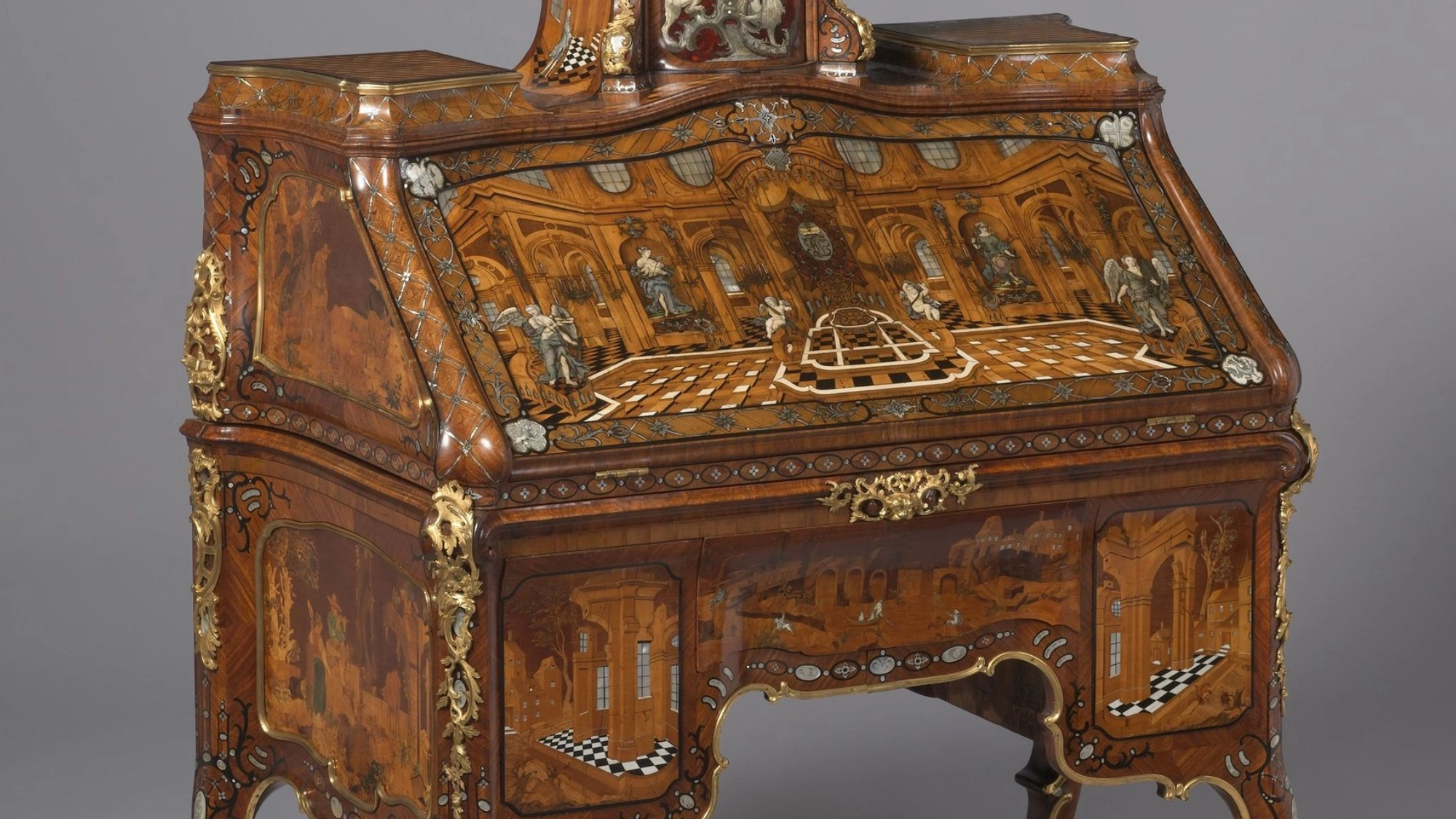
Source: The New York Times
This is the story that gets the most attention online, and the least scrutiny. The rumor claims Catherine owned a secret room filled with sexually explicit furniture.
Tables with phallic legs, chairs with erotic carvings, and walls covered in explicit art. Some versions even claim artifacts from Pompeii were brought in to complete the room.
The story traces back to World War II. Two Wehrmacht officers allegedly discovered this hidden room during the Nazi invasion and photographed it.
The palaces were later bombed, which is used to explain why no physical evidence remains today. It spread online because it is shocking and tied to a famous name.
Catherine’s well-known personal life gave the rumor just enough grounding to seem believable, and most people sharing it never stopped to question the source.
Is the Erotic Furniture Story True or a Myth?
Most historians are skeptical. The Hermitage has no record of erotic furniture. No Wehrmacht report has ever been found.
The legend claims the room was discovered in 1940, but the Nazi invasion did not begin until 1941. That single error undermines the whole story.
Many historians also see a familiar pattern. Rumors about Catherine’s private life were regularly used to discredit her as a female ruler.
The erotic cabinet story likely follows the same playbook. Some Hermitage staff have acknowledged a Romanov erotic art catalogue from the 1930s, believed destroyed by 1950.
It keeps the story alive, but possibility is not proof. Most experts call it an urban legend.
What Happened to Her Furniture After Her Death
Catherine’s collection had very different fates after her death in 1796. Some pieces were carefully preserved and passed down through generations.
Others were damaged, looted, or destroyed, especially during World War II. This is what happened to the most significant parts of her collection.
- Hermitage Museum: Holds the largest surviving share of her furniture collection today.
- Catherine Palace at Tsarskoye Selo: Still displays original pieces and accurate period reproductions.
- Pavlovsk Palace: Preserves her Neoclassical suites, largely intact from her reign.
- WWII bombing: Destroyed significant parts of her palaces and whatever was stored inside.
- Nazi looting: During the 1941 invasion removed or damaged many irreplaceable pieces.
- The Amber Room: Her most famous interior, was looted and has never been recovered.
- A Romanov erotic art catalogue: From the 1930s was reportedly destroyed by 1950, leaving no trace.
- Some pieces: Were quietly removed or hidden after her death, their locations still unknown.
Much of what survived is preserved and open to the public today.
But what was lost during the war, looted, bombed, or deliberately hidden, is likely gone for good and may never be fully accounted for.
Why Catherine the Great’s Furniture Still Gets Attention Today
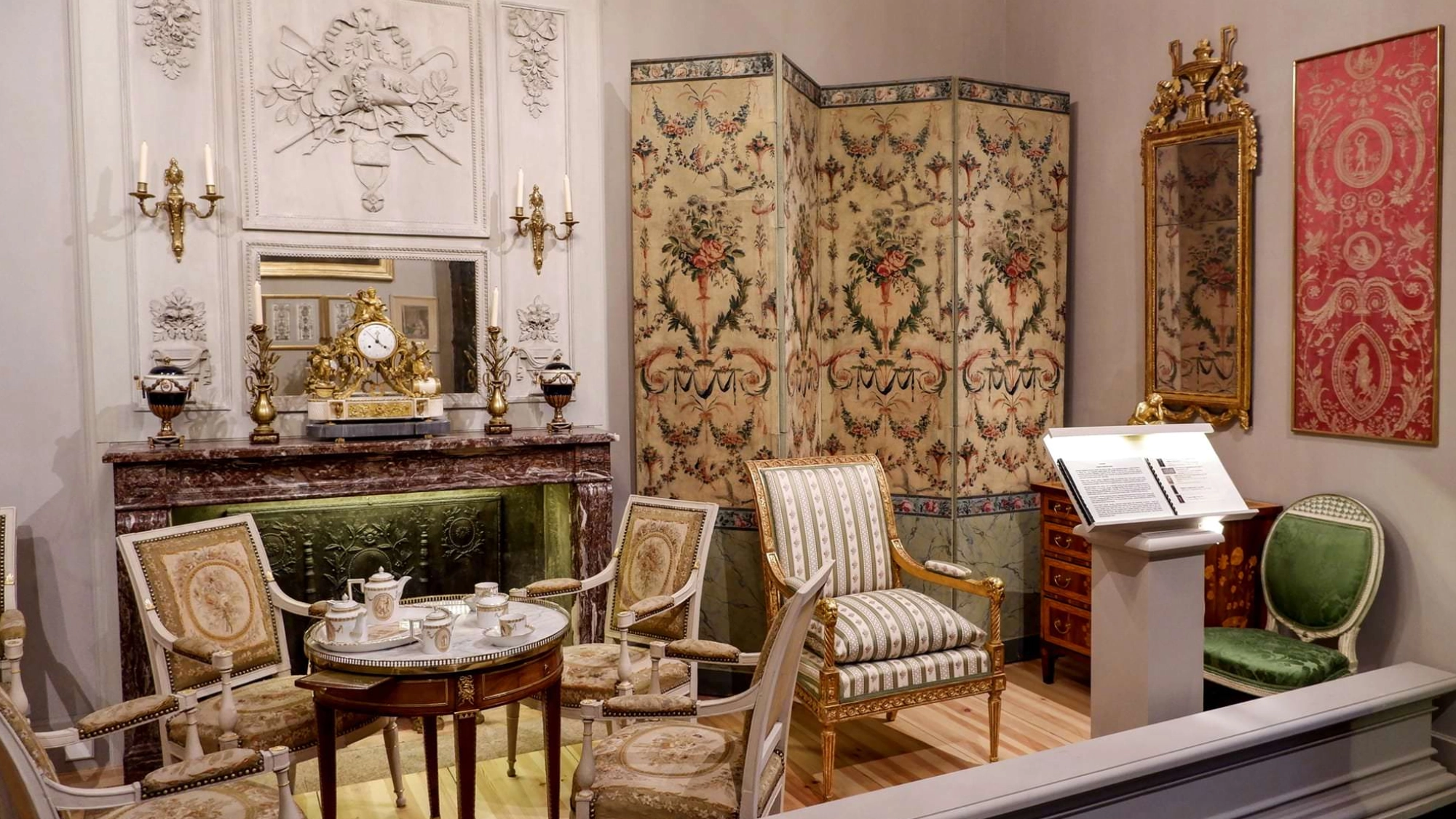
Source: rundale.net
Catherine’s furniture refuses to fade into the background of history, and there are very specific reasons why it keeps pulling people back in.
The historical weight alone is significant. She ruled for 34 years, reshaped Russia’s cultural identity, and left behind a collection that still sits in some of the world’s most visited museums. That kind of legacy naturally draws curiosity.
But the attention is not purely academic. A few other factors keep this topic circulating far beyond history classrooms:
- A powerful woman at the center: Stories about Catherine carry extra weight because she broke almost every rule of her era, making her life endlessly debated.
- The rumor factor: Unverified stories tied to her name spread faster than documented history, keeping her in casual conversation and viral content alike.
- Museums and travel interest: Visitors to the Hermitage, Pavlovsk, and Tsarskoye Selo regularly encounter her pieces firsthand, sparking fresh curiosity each year.
- Pop culture appearances: Films, series, and documentaries continue referencing Catherine, introducing her story to entirely new audiences.
What makes this topic unusual is that the real history is genuinely compelling on its own. The rumor simply travels louder, which often pulls people toward the facts eventually.
Conclusion
Catherine the Great’s furniture is one of history’s most misunderstood topics.
On one side, you have a real and extraordinary collection, Neoclassical masterpieces, gilded cabinets, and world-class craftsmanship preserved across Russia’s finest palaces.
On the other, you have a rumor with no verified evidence, a flawed timeline, and a long history of being used to discredit a powerful woman.
The erotic cabinet story is compelling. But compelling is not the same as true. Catherine’s actual legacy, as a ruler, a collector, and a cultural force, is far more interesting than any myth.
Her furniture still stands in museums today, telling that story quietly and without controversy. Now that you know both sides, which part surprised you the most?
Drop your thoughts in the comments below.
Frequently Asked Questions
Did Catherine the Great Design Her Own Furniture?
No. Catherine never designed furniture herself. She acted as a creative director, approving designs and choosing craftsmen. Master artisans like David Roentgen and Charles Cameron executed her vision.
Why Is Catherine the Great’s Furniture So Rarely Seen at Auction?
Most pieces were state property and never entered private hands. Remaining items were seized during the 1917 Revolution. Authenticated pieces rarely surface, but when they do, they can sell for over a million dollars.
Did Catherine the Great’s Son Hide Her Furniture After Her Death?
Paul I disapproved of his mother’s legacy and had certain pieces removed from public view after her death in 1796. What was taken and where it ended up has never been fully confirmed by historians.


