
Beyond IKEA: How to Create a High-End “Hidden” Smart Home with Automated Furniture
Modern living spaces are shrinking, but our demands for functionality are growing. The days of static, heavy furniture dominating a room are fading. In their place, a new trend is emerging: kinetic furniture. This isn’t just about buying a desk that goes up and down; it’s about transforming a living room into a home cinema or a kitchen island into a hidden bar with the touch of a button.
To achieve this level of “hidden luxury,” homeowners and DIY enthusiasts need to look beyond the wood finish and understand the mechanical heart of the system.
The Magic Behind the Movement: Linear Actuators Explained
At the core of every automated smart home application—whether it’s a TV lifting out of a cabinet or a bed adjusting its incline—lies a piece of technology called the Linear Actuator.
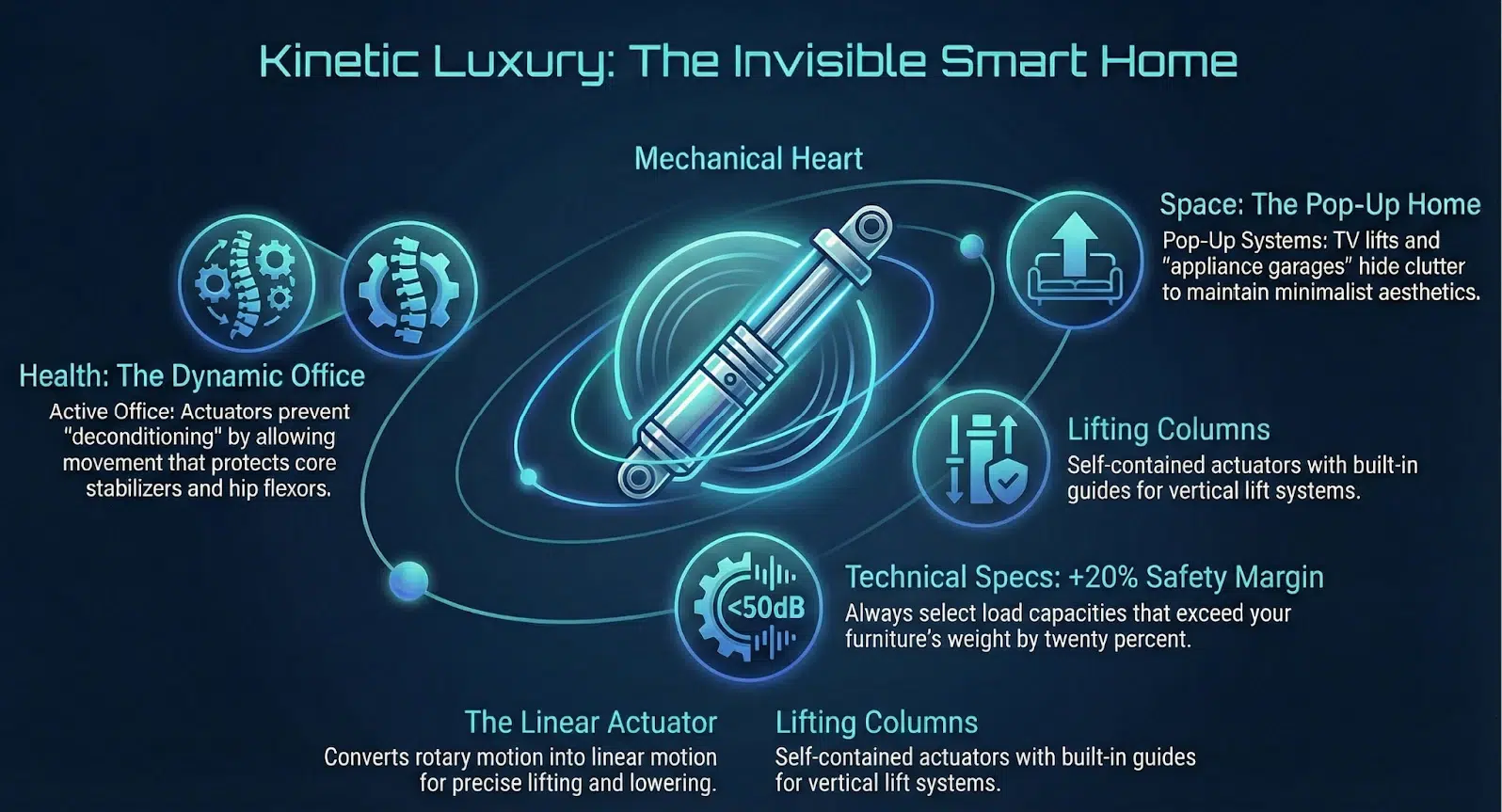
Simply put, a linear actuator converts rotational motion (from an electric motor) into straight-line motion. Along with Lifting Columns (which are essentially actuators housed in a telescopic tube for stability), these components are the muscles behind the movement.
However, not all motors are created equal. For furniture that resides in a quiet study or a bedroom, the noise level is a deal-breaker. Cheap components often grind and whir, destroying the feeling of luxury. High-end furniture designers rely on precision-engineered components to ensure smooth operation. For instance, manufacturers like Hoodland specialize in producing whisper-quiet linear actuators and lifting columns specifically designed for smart home applications, ensuring that your morning desk adjustment doesn’t wake up the whole house.
Transforming the Home Office
The most common entry point for residential automation is the home office. The static 9-to-5 sitting routine is being replaced by dynamic movement.
The Ergonomic Imperative
We often forget that the human body is a mechanical system, much like the furniture we build. When left static for too long, components fail. A report by Yale Medicine details how prolonged sitting causes ‘deconditioning,’ leading to weakened core stabilizers and tightened hip flexors. This biological reality makes the integration of linear actuators into home offices more than a luxury—it is a necessary evolution to keep our biological machinery running as smoothly as our synthetic one.
Hidden Luxury: Pop-up Systems for Living Rooms & Kitchens
While the office focuses on health, the living room and kitchen focus on space optimization and minimalist aesthetics.
- TV Lifts: Hide a 65-inch screen inside a sleek credenza. The screen only appears when you want to watch it, keeping your living room focused on conversation or decor the rest of the time.
- Kitchen Appliance Garages: Imagine a section of your counter rising to reveal your coffee machine and toaster, then lowering to hide the clutter.
These “Pop-up” systems rely on compact actuators that offer high force (to lift heavy granite or oak tops) but occupy very little vertical space when retracted.
How to Choose the Right Mechanisms for DIY Projects
If you are a DIY enthusiast planning to retrofit a cabinet or build a custom smart table, selecting the right mechanism is critical. Do not just look at the price tag; look at the specs.
Here are the key features to look for:
- Noise Level: Look for a rating of <50dB. Anything louder will feel industrial, not residential.
- IP Rating: If using actuators in a kitchen (near moisture) or a garage, ensure a higher IP rating (e.g., IP54 or IP66) for dust and water resistance.
- Load Capacity: Calculate the weight of the furniture top plus the items on it. Always choose an actuator with a 20% safety margin.
- Stroke Length: This is how far the actuator extends. Ensure it is long enough to lift your TV or desk to the desired height.
- Duty Cycle: This indicates how often the motor can run without overheating. For home use, a 10-20% duty cycle is usually sufficient.
The Future of Residential Automation
We are moving toward a fully integrated home. Soon, your furniture won’t just move via a remote control; it will respond to voice commands or automated routines. Imagine your blinds closing, lights dimming, and TV rising from the cabinet simultaneously when you say, “Movie Mode.”
Key Takeaways
|
Area |
Key Takeaway |
Impact/Data |
|
Tech |
Prioritize “whisper-quiet” actuators |
Max noise <50dB (Deal-breaker) |
|
Health |
Combat physical “deconditioning” |
Prevents biological failure (Yale Medicine) |
|
Design |
Use “Pop-up” systems for concealment |
Optimizes 100% of vertical space |
|
Specs |
Over-engineer load capacity |
Mandate 20% safety margin |
|
Durability |
Match IP ratings to moisture zones |
Kitchens require IP54 or IP66 |
Conclusion: Elevating Your Living Standards
Smart living is about seamless integration. Whether you are buying a ready-made standing desk or building a hidden TV lift, prioritizing the quality of the movement mechanism will ensure your home serves you for years to come.
Remember, while the wood and finish determine the beauty of your furniture, the internal mechanical core determines its lifespan and your daily experience. Start with one upgrade, and you will quickly see why static furniture is becoming a thing of the past.


