Best Dog Breeds for Houses: Active Dogs That Need Space
A house with a yard will provide your energetic dog with much greater freedom than living in an apartment. While there is no correlation between how large your yard is and whether that meets your dog’s exercise requirements. Some of these breeds were developed as working dogs for activities such as hunting, herding, or retrieving. When we fail to address both their physical and mental requirements, they can get frustrated.
While a bigger home can certainly make every day easier for your high-energy dog, especially if you have a way to safely let them outside, the best combination of space and exercise is a combination of regular exercise, training, and time spent playing, along with allowing them to explore.
What Makes a Dog Suitable for a Larger Home?
Active families are often ideal homes for high-energy dog breeds since these families provide the space and opportunity for their dog to have activity throughout the day.
Some qualities would make a family well-suited to an energetic dog:
- High energy level or high exercise tolerance
- Interest in working (e.g., hunting) or playing with the dog
- Dogs that respond quickly and consistently to commands/training
- Families who want to take part in regular outdoor activities with their dogs
- Families that can regularly engage in physical and mental stimulation of the dog
While having a big backyard is good, it does not replace going on walks or interacting with your dog.
Border Collie
Border Collies are one of the most mentally and physically exhausting breeds of dogs.
Border Collies were developed as working dogs, particularly for herding livestock, and they have been bred for their high level of intelligence and ability to focus and learn.
A home with secure, outside areas to run is important for their physical health, but their mental demands need much more than simply allowing them to run around in a yard.
These dogs require formalized training, problem-solving type games, extensive walking, and engaging in activities that provide them with a sense of purpose.
If they do not receive adequate stimulation, a Border Collie will exhibit unwanted behavior like extreme barking, excessive chasing, excessive digging, or destruction through chewing.
Australian Shepherd
Australian Shepherds have high levels of energy due to their strong herding backgrounds. They tend to do well in homes with families who enjoy participating in active pursuits outside the home. A few examples of ways to help burn off your dog’s excess energy include hiking, running, teaching obedience classes, taking part in agility training, or simply playing interactive games.
While having a securely fenced yard will certainly give you peace of mind while your dog plays at home, it should be paired with an opportunity for your dog to get some form of physical activity away from your home as well.
In addition to providing your Australian Shepherd adequate opportunities to run around physically, you’ll also want to consider challenging their mind through play, interaction, and/or training.
Labrador Retriever
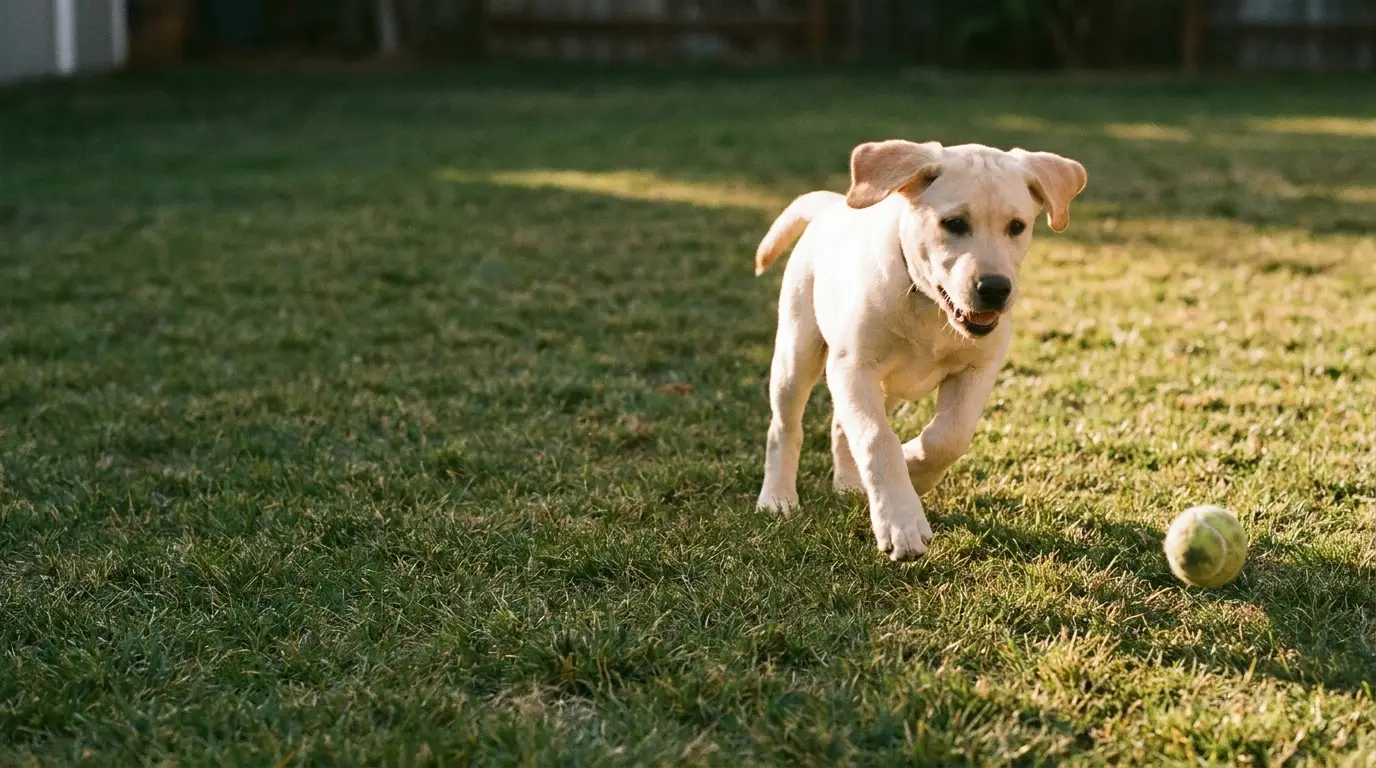
For many families who have a lot of room to roam or enjoy the outdoors together as a family, Labradors can also be a great companion dog.
Labrador Retrievers are often very lively and playful dogs, especially when they’re younger. They love to swim, run around in yards chasing balls, take long walks, and explore the outdoors.
Having a large area (yard) is beneficial for providing your Labrador Retriever with ample opportunity to engage in all sorts of fun activities; however, even if you don’t have a yard, structured exercise and interaction with your owner will always be important.
Also, as Labrador puppies grow into adolescence (usually about 1-2 years old), they can get quite excited and wild, so consistent training is needed to help them learn to stop jumping up on people, chewing on furniture, etc.
Golden Retriever
Golden Retrievers are energetic, social dogs who usually enjoy being a part of your family’s activities.
Therefore, as long as you provide an area outdoors or space to exercise your dog regularly, activities such as fetch, swimming, hiking, and extended walks will be excellent ways to keep your healthy adult Golden Retriever happy.
But because of their social nature, it would not typically suffice to just let them go out into the yard for hours. Instead, spending quality time with your family can help meet their social needs, while exercise, play, and training help address their physical and mental needs..
German Shepherd
German Shepherds are versatile working dogs requiring regular exercise, along with the opportunity to use their minds. Structured training and activities that allow for the development of new skills will be enjoyed by many.
Structured physical activities such as walks on leash, off-leash running, basic obedience work, interactive play, or even simply an open field to run through may serve well.
A secure yard would certainly be beneficial; however, they do have a strong desire for socialization and routine. Due to their size and strength, it is essential to develop good manners and establish reliable training.
Siberian Husky
Siberian Huskies were developed as endurance sled dogs and have plenty of physical stamina.
Because they can burn so much energy, and because their independent spirit may be overlooked by an owner who is new to owning a dog, huskies are often difficult to manage for inexperienced owners.
While a large yard allows your husky to run, in many cases a large yard does little to prevent a determined husky from escaping into the neighborhood.
Huskies will dig under fences. They will climb over fences. And if you leave a hole in your fence just big enough for them to get through it, they will find a way to squeeze through it.
Therefore, providing a husky with a place to live requires more than just adequate living space. It needs to include safe and secure boundaries. In addition, huskies require some form of exercise on a regular basis.
Belgian Malinois
Belgian Malinois are extremely energetic working dogs; therefore, homes with large yards alone do not make them a good fit.
The dog will require structure, training, socialization, and mentally stimulating activities to keep him occupied. While the Belgian Malinois is an intelligent breed that works hard, if he does not have adequate outlets for this energy and drive, it becomes increasingly difficult to manage the dog.
A Yard Is Not a Complete Exercise Plan
One of the biggest errors you can make when owning an energetic dog is thinking that simply having a big backyard will keep your dog happy.
Dogs require much more than just space. A balanced approach to exercise for dogs can include regular walks, interactive play, training, and activities suited to the dog’s age, breed, health, and energy level. Walks also expose dogs to new sights, smells, surfaces, and environments, while training and interactive games provide opportunities to use problem-solving skills and learn new behaviors.
Even if your dog has a huge yard where it is left all day long, it can still become bored without sufficient physical activity, interaction, and mental stimulation.
Consider the Dog’s Age
Puppy energy levels are typically short bursts of high intensity with long periods of sleep. Adolescent dogs may have higher amounts of energy and impulsiveness than adult dogs. Exercise and activity needs vary considerably among individual adult dogs and may change with health, fitness, workload, and age.
As dogs mature into their senior years, they may need less strenuous or lower-impact activity. If a dog’s exercise tolerance changes noticeably, or you are unsure what level of activity is appropriate for its age and health, seeking veterinary clinic can help ensure that its routine remains safe and suitable.
Therefore, when choosing a breed, you will want to consider your lifestyle now and potentially in the future.
Secure Outdoor Space Matters
Active dogs can often be very curious and very determined. The type of fencing used for your dog should match their size, strength, and how they behave. If you have gates at either end of the fence, make sure that they close tightly so as to keep them from escaping. It is recommended that you check all areas around the perimeter of the yard on a regular basis for possible ways in which a dog could get out.
Before giving an active dog free range in a yard, it is important to consider if there will be anything hazardous outside, such as pools, garden chemicals, toxic plants, or any other object that could cause harm to your pet.
Conclusion
While Border Collies, Australian Shepherds, Labrador Retrievers, Golden Retrievers, German Shepherds, Siberian Huskies, and Belgian Malinois may be suitable for families with big yards or houses, they each have different needs. While having a lot of space is helpful in many cases, it is still far from being enough. Most active breeds require some form of daily activity; some will also require mental stimulation as well as training. In addition, most people who are going to be able to provide for an active dog need to find a breed that matches their own energy level.