

16 Basement Remodel Ideas That Match Your Space and Budget
Most unfinished basements do not have an idea problem. They have a decision problem with too many directions, no clear starting point, and a budget that feels both flexible and limiting at the same time.
Basement remodel ideas are everywhere, but the ones that actually work depend on your space, lifestyle, and budget.
The best-looking idea on Pinterest becomes the most expensive mistake in the house.
The ideas below are organized by use type, each with honest notes on cost and what the build actually requires.
3 Things to Check Before Picking any Basement Remodel Ideas
Before picking a remodel idea, make sure your basement can support it. Check these three factors:
1. Moisture and Water
Moisture issues can quickly ruin a finished basement if ignored early.
- Finishing a wet basement leads to mold and warped floors.
- Identify the source: exterior waterproofing for hydrostatic pressure, a vapor barrier for condensation, or a plumber for leaks.
- Test for radon and fix moisture before starting any remodel.
2. Ceiling Height and Building Codes
Most codes require 7–7.5 ft for living spaces.
Options:
- Drop ceiling: loses 4–6 in, easy access to pipes
- Open joists painted black: no height loss, low cost
- Lower concrete slab: $50–$100/sq ft, maximum height gain
Entertainment rooms and gyms need at least 8 ft. Bedrooms must meet code minimum.
3. Budget Tier
Decide your budget tier before choosing ideas.
- Under $10K: paint, flooring, lighting, furniture
- $10K–$40K: drywall, framing, egress windows, room layout
- $40K+: full bathrooms, kitchenettes, legal bedrooms, ADUs
Entertainment Basement Remodel Ideas
Basements are naturally built for entertainment, isolated, below grade, and away from the rest of the house. Full builds run $15K to $45K, depending on AV, bar work, and soundproofing.
1. Home Theater
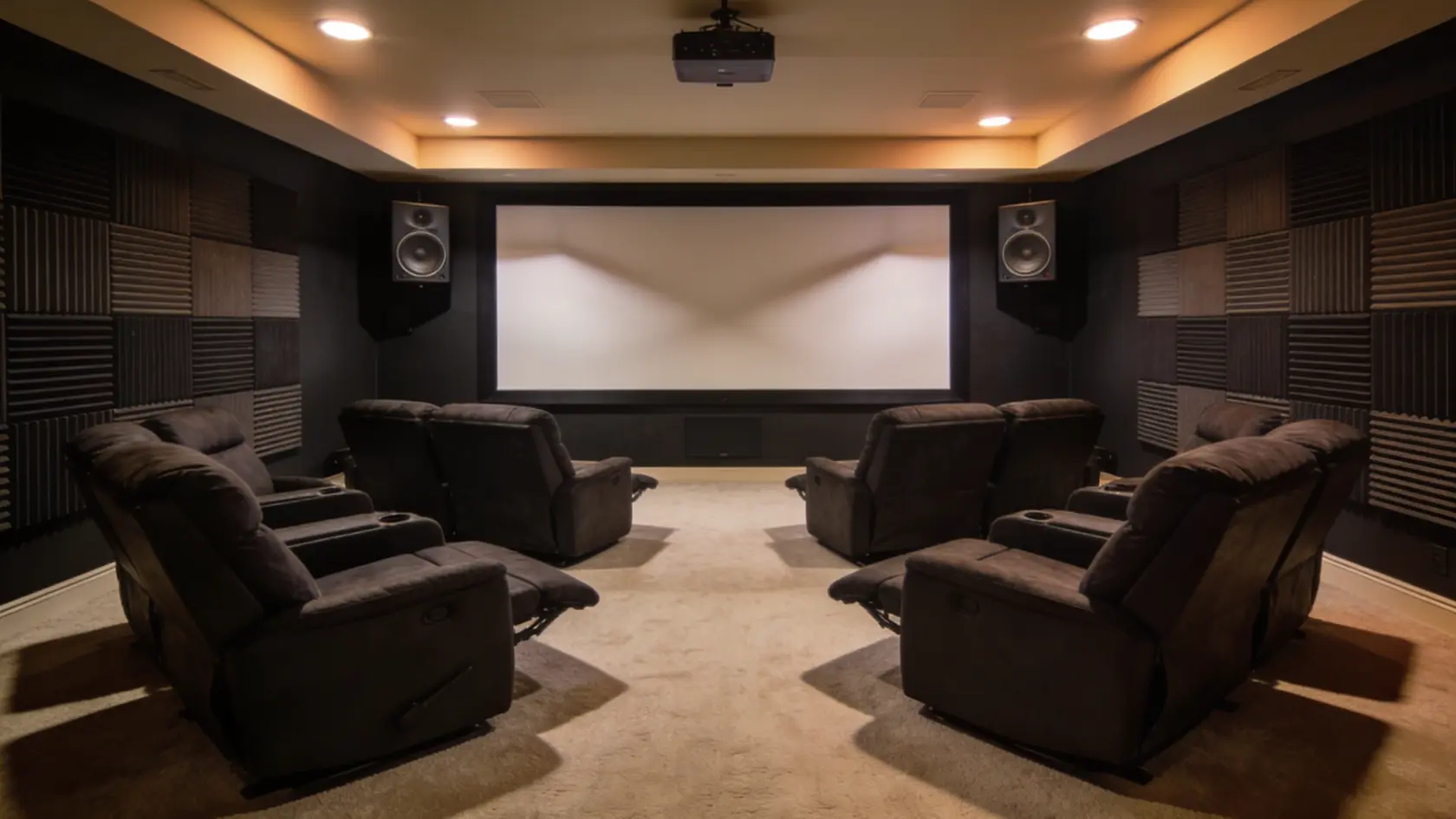
Use dark paint on walls to prevent light bleed that affects the image. Install acoustic panels before placing speakers to reduce echo from concrete surfaces.
Ceiling height should be at least 8 ft for a projector. Seating like recliners or a tiered sectional ensures proper sightlines.
Cost: $8K to $30K.
2. Wet Bar with Built-In Sink, Fridge, and Seating
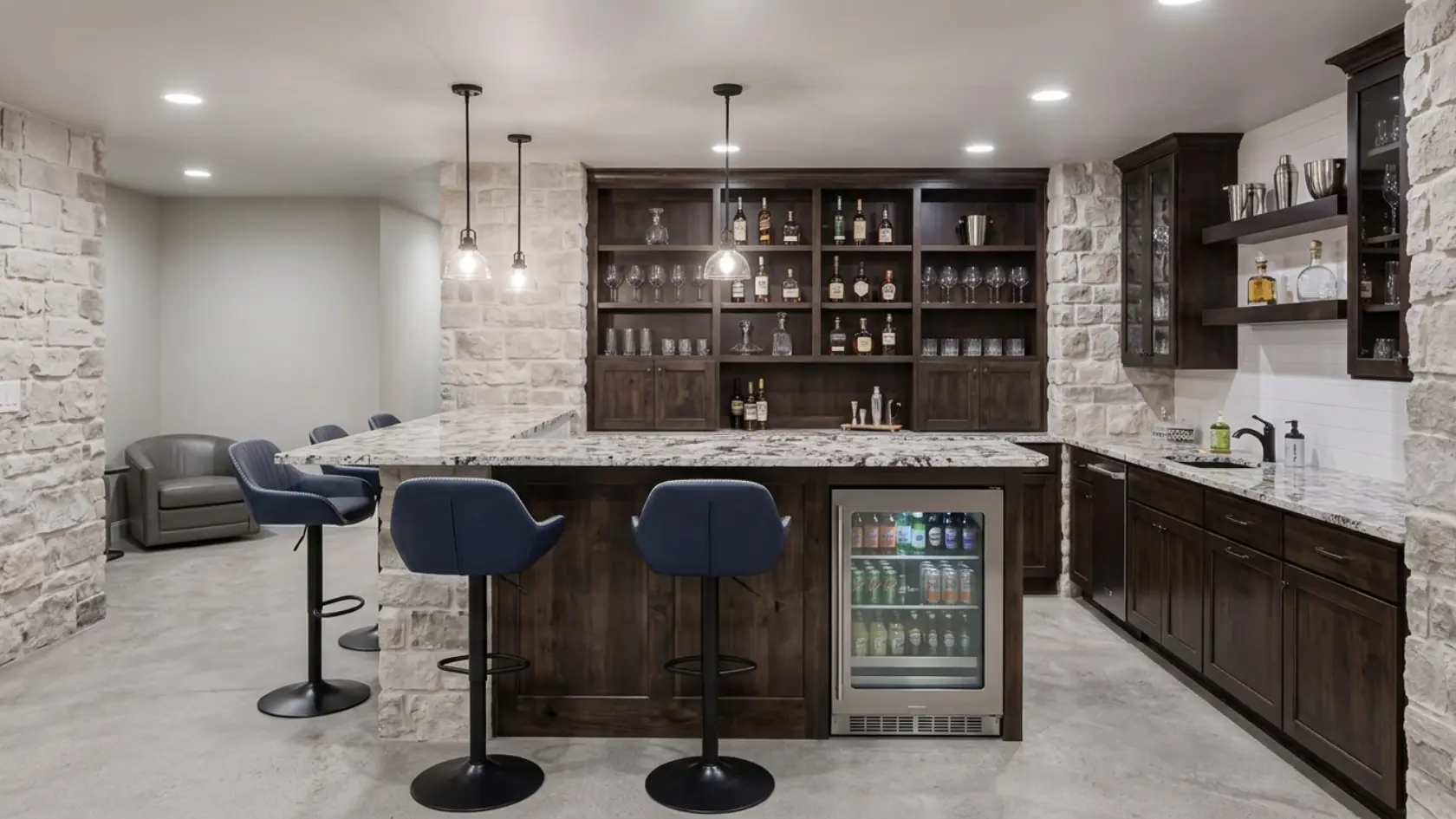
A wet bar needs only a drain line, no hood, and no cooking permit. A kitchenette requires both, which adds cost and permits complexity. Know which one you actually want before planning begins.
Built-in base cabinets, an undercounter fridge, and a bar sink along one wall. For seating, pick your counter height before ordering stools since bar height is 42 in and counter height is 36 in and they are not interchangeable.
Cost: $3K to $12K.
3. Game Room
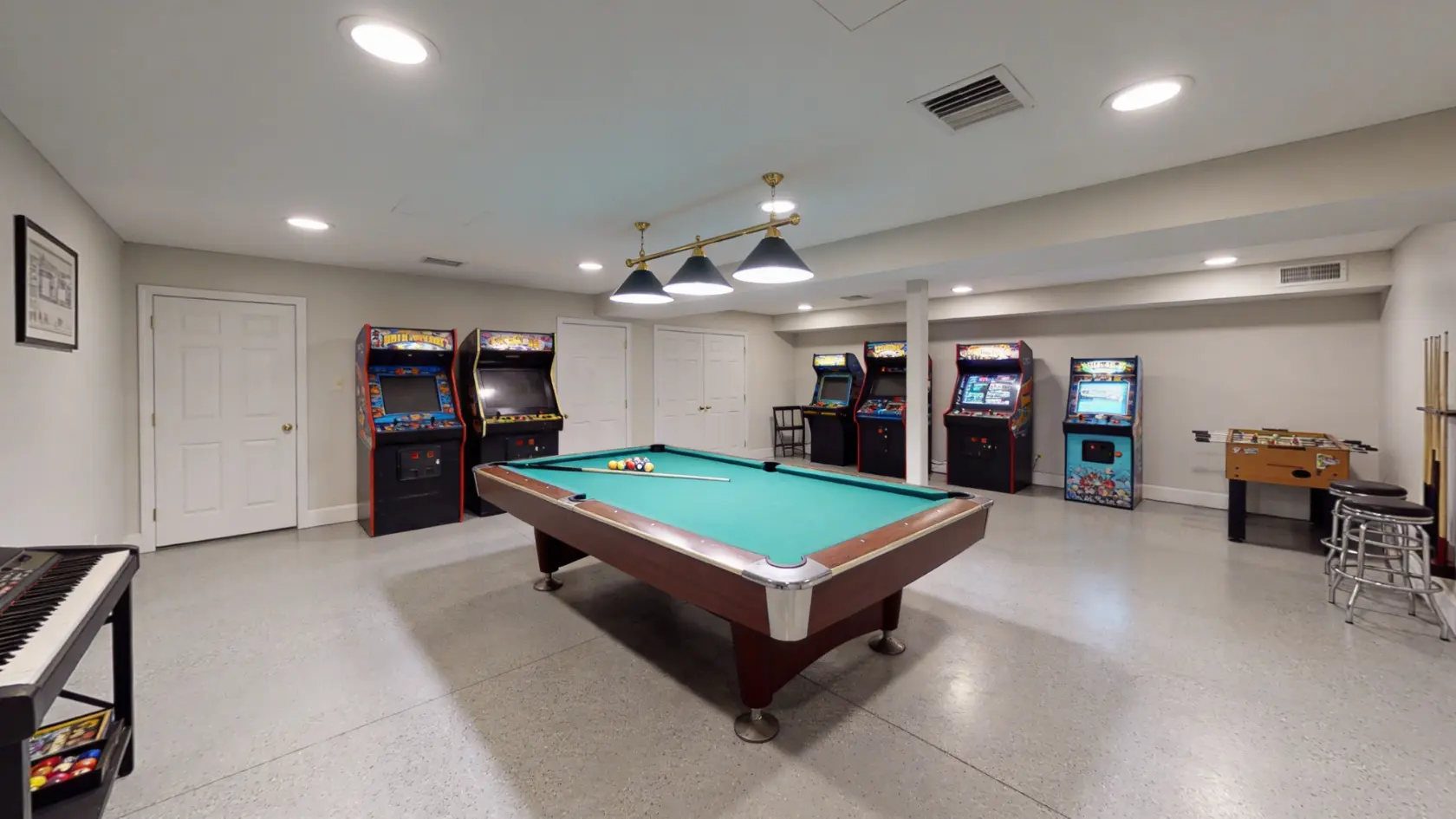
A pool table needs 5 ft clearance on all sides, so size the room before buying the table. Strong overhead lighting directly above the table is non-negotiable, and LVP or epoxy holds up far better than carpet near a bar area.
Pair it with arcade cabinets, a dart board, and foosball along the walls to fill the space without crowding the table.
Cost: $5K to $20K.
4. Music Studio or Podcast Room

Acoustic foam and bass traps control what you record, and a floating decoupled subfloor stops vibration transfer to rooms above. Budget acoustic treatment before gear, since room quality matters more than microphone quality
A separate HVAC damper or inline duct silencer kills the low hum that ruins recordings and is the most overlooked detail in basement studio builds.
Cost: $6K to $25K.
5. Multi-Zone Entertainment Space
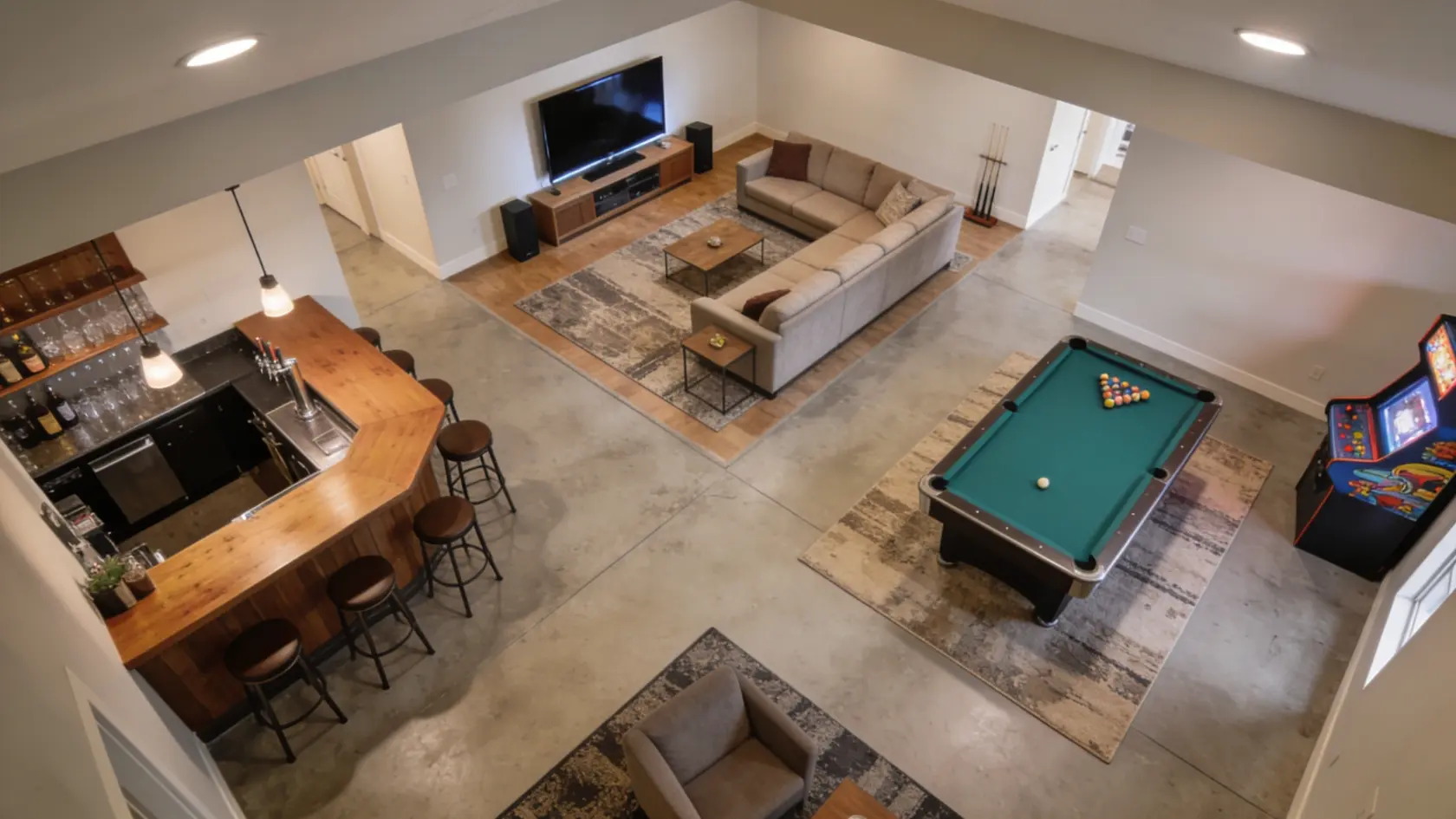
One open basement becomes a bar zone, TV zone, and game zone without a single full wall. Pocket doors and barn sliders create separation when needed, and separate dimmer switches give each zone its own atmosphere
LVP throughout with area rugs defines zones visually at zero construction cost.
Cost: $10K to $30K.
Functional Basement Ideas
These ideas prioritize daily utility over entertainment and are often lower-cost and easier to justify as ROI. Ventilation and lighting are the two most-skipped requirements in this category and the source of most regret.
6. Home Gym
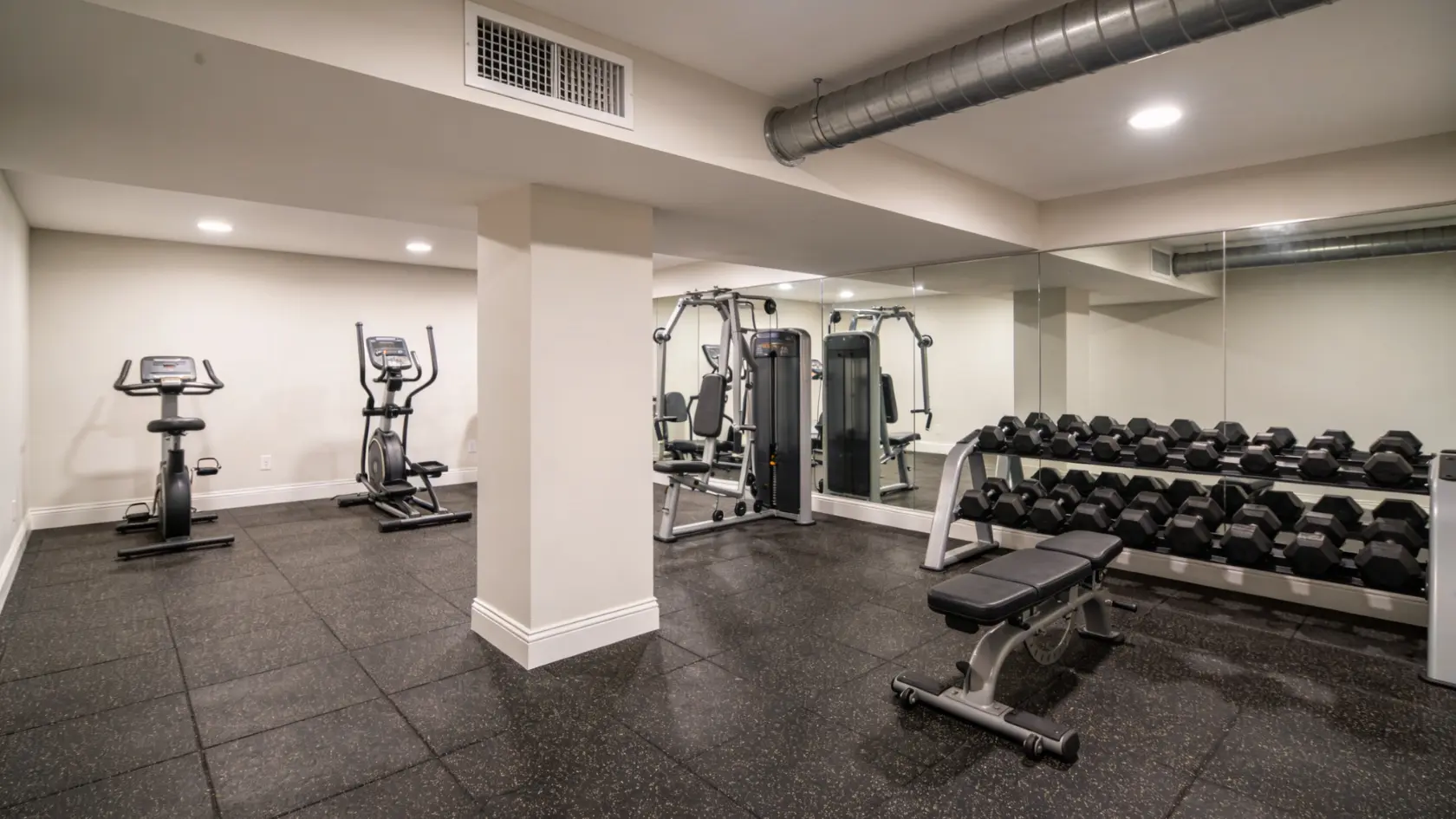
Rubber flooring thickness determines whether you need to raise the subfloor. Thicker mats sit on concrete directly, but heavier builds need a raised subfloor, which eats into ceiling clearance.
Mirrors on one wall only since full coverage creates dizziness during cardio. Add a dedicated exhaust fan since the basement HVAC alone rarely handles workout heat.
Cost: $3K to $15K.
7. Dedicated Home Office
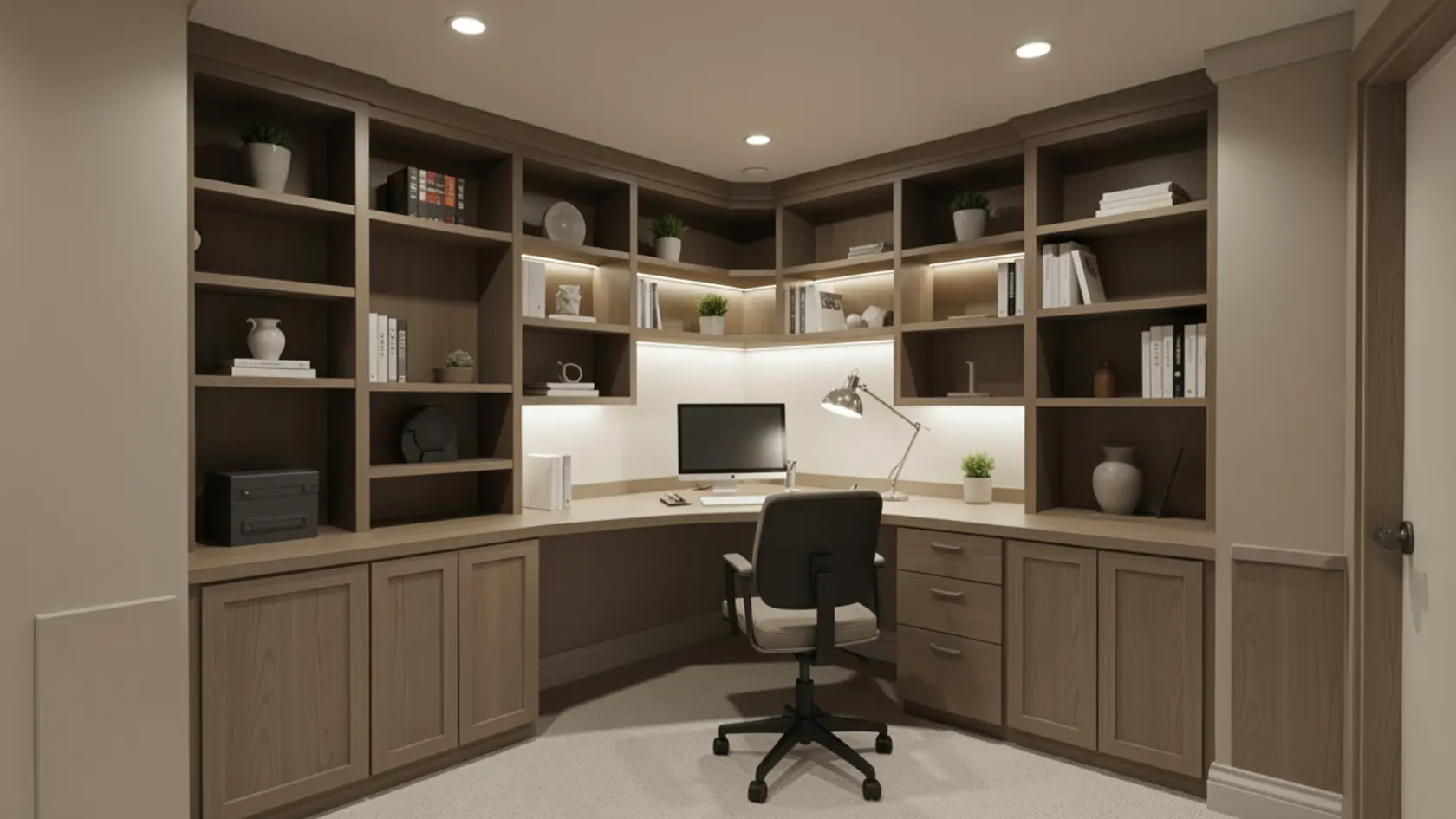
No natural light means layered lighting is mandatory. Desk lamp, overhead recessed, and indirect lighting working together eliminate the eye fatigue a single overhead fixture creates.
Soundproof in both directions: outside noise out, keyboard and call noise in. Built-in desk and shelving maximize square footage in tighter spaces.
Cost: $4K to $18K.
8. Wellness Room / Yoga Studio

For a yoga studio, three essentials ensure a safe and comfortable practice.
A sprung floor or thick cork mat protects joints during poses. Dimmable lighting creates a calming, adaptable atmosphere.
Proper ventilation keeps the air fresh, maintaining energy and focus throughout every session.
Cost: $5K to $30K.
9. Craft Room or Art Studio
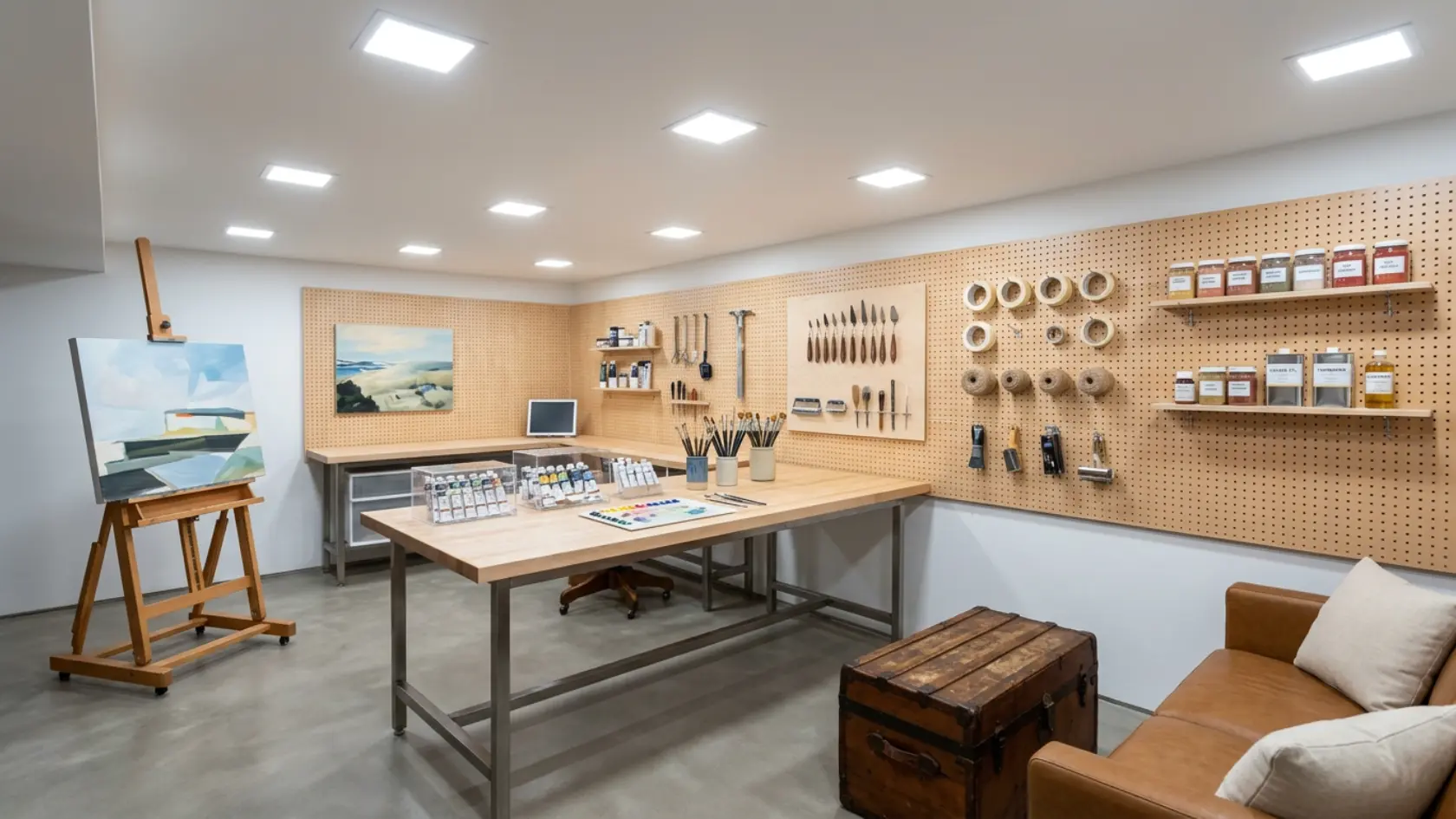
Create a functional basement craft or art space with the right setup. Use bright 5000K daylight LEDs for accurate color work. Install deep counters, at least 36 in, for large projects.
Choose durable flooring like sealed concrete or LVP instead of carpet. Add pegboard walls for organized storage and include a utility sink if plumbing allows.
Cost: $3K to $12K.
10. Kids’ Playroom
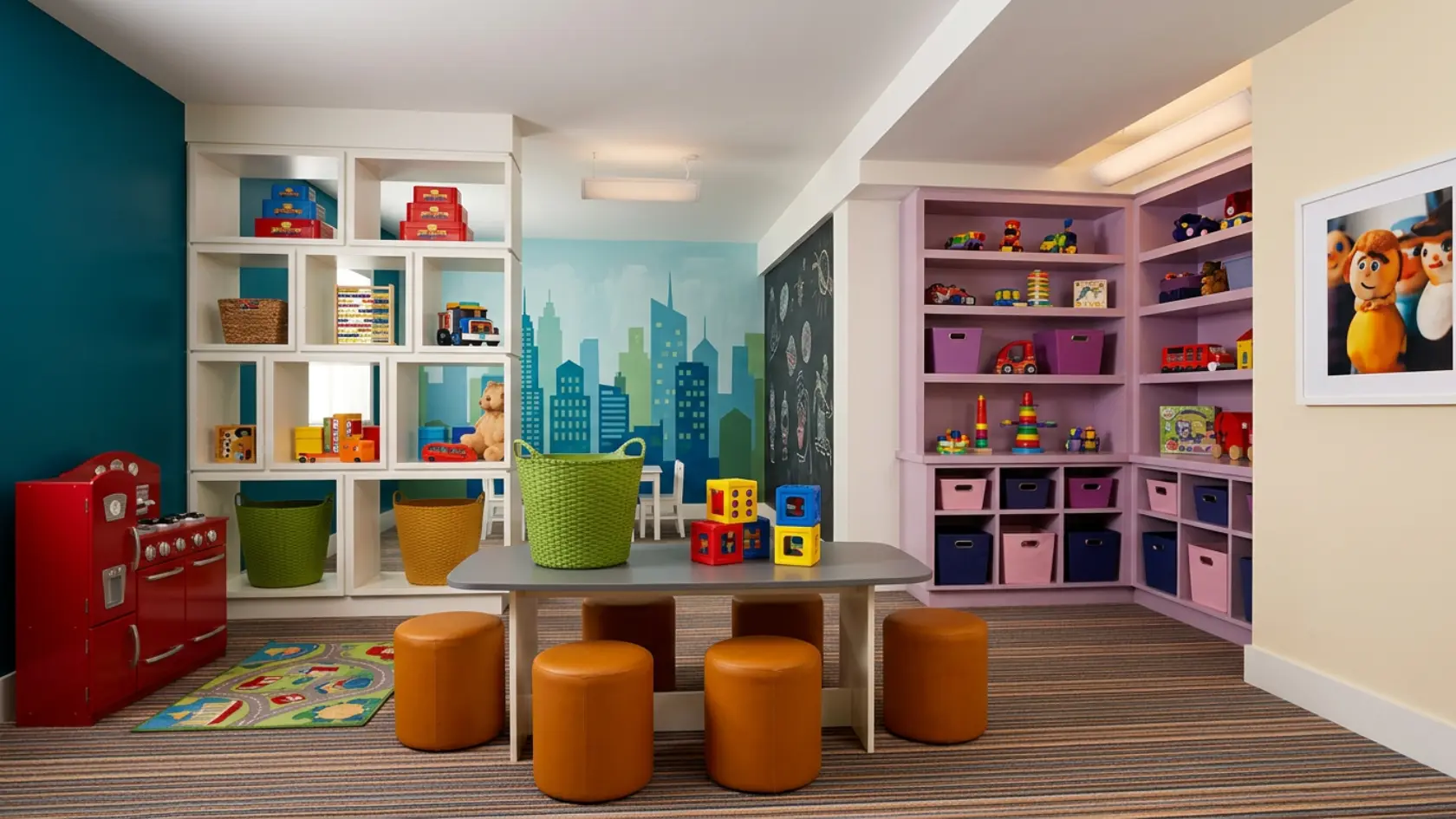
LVP or rubber tile on the floor, not carpet near paint or slime zones. Built-in cubbies and low shelving at child height keep storage accessible without adult help.
Open painted joists work well for the ceiling here. Kids don’t notice, and the savings go toward flooring and storage where they actually matter.
Cost: $3K to $10K.
11. Laundry Room Upgrade

Frame access panels around mechanicals to maintain service access while giving the space a finished appearance.
Install a utility sink and folding counter for added functionality. A wall-mounted fold-down table can serve as a secondary workspace when laundry is not in use.
This configuration optimizes smaller basements by combining utility and multi-purpose use.
Cost: $2K to $8K.
Living Space Ideas
Basement living spaces deliver the highest ROI of any remodel category because a single egress window converts unclassified square footage into a counted bedroom, which changes the entire appraisal basis.
12. Guest Bedroom (Code-Compliant)

An egress window is mandatory for legal bedroom status. Without one, the room cannot be counted in a listing or appraisal, regardless of how finished it looks.
Minimum opening dimensions are 20 in wide, 24 in tall, and 5.7 sq ft of clear opening, but verify locally since codes vary. Light paint, recessed lighting, and a closet or built-in wardrobe complete the room. Carpet is acceptable here since this is a dry comfort zone.
Cost: $2.5K to $6K.
13. Second Living Room or Family Room
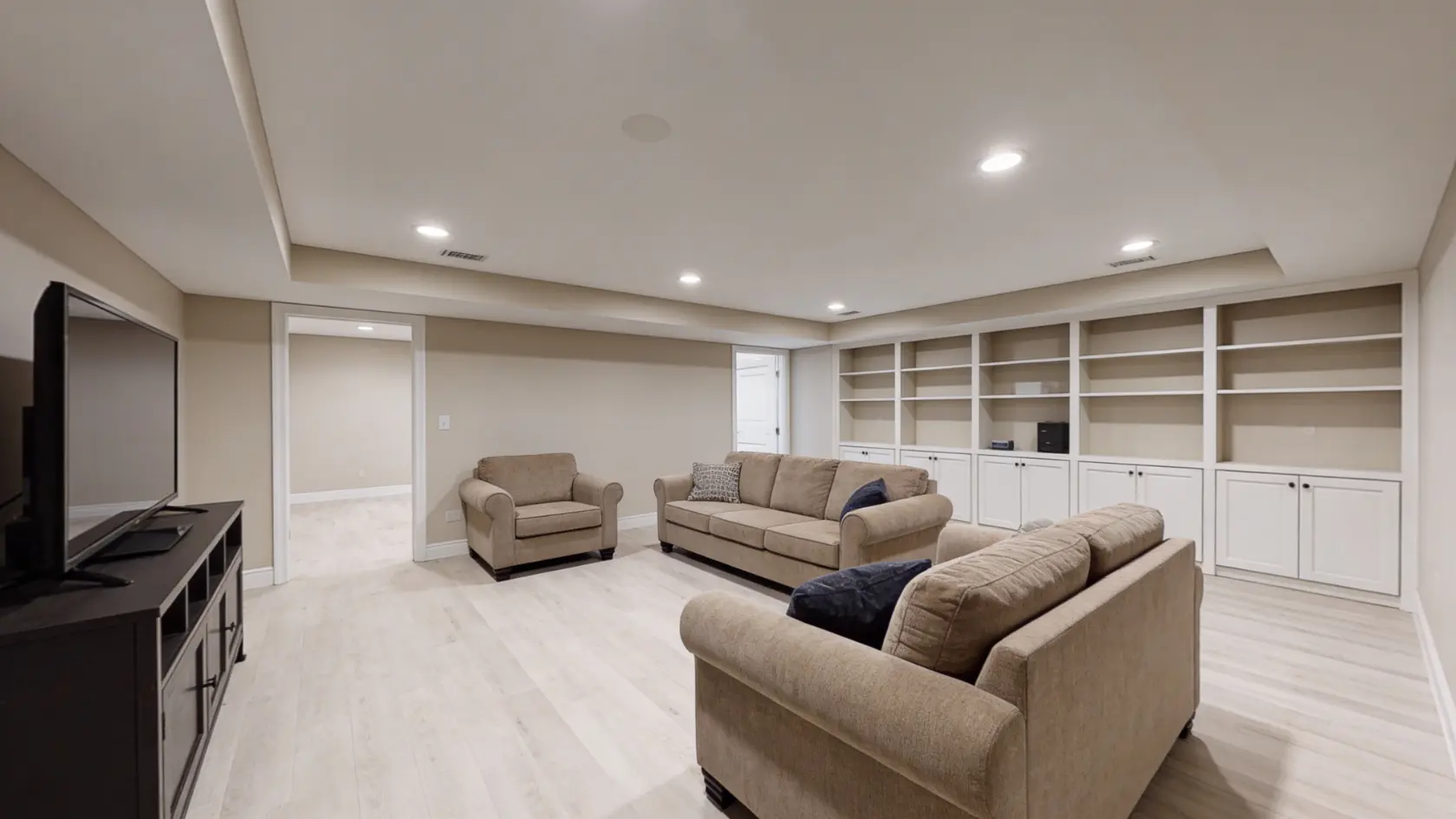
A second living room serves multi-generational households where the main floor living room is claimed by one group and the basement becomes the other. Comfortable sofas, a TV, kid-friendly LVP flooring, and built-in storage cover the essentials.
No egress required, no plumbing, no permit complexity. This is one of the most accessible living space builds in the category and one of the most genuinely useful for busy families.
Cost: $5K to $15K.
14. In-law suite and ADU

A bedroom, bathroom, kitchenette, and separate entrance cover the essentials for both uses.
The difference is intent: an in-law suite is designed for family use with shared utilities, while an ADU is a legally independent unit built to generate $1,000 to $2,500 per month in rental income.
Cost: $25K to $265K.
15. Studio Apartment for Short-Term Rental
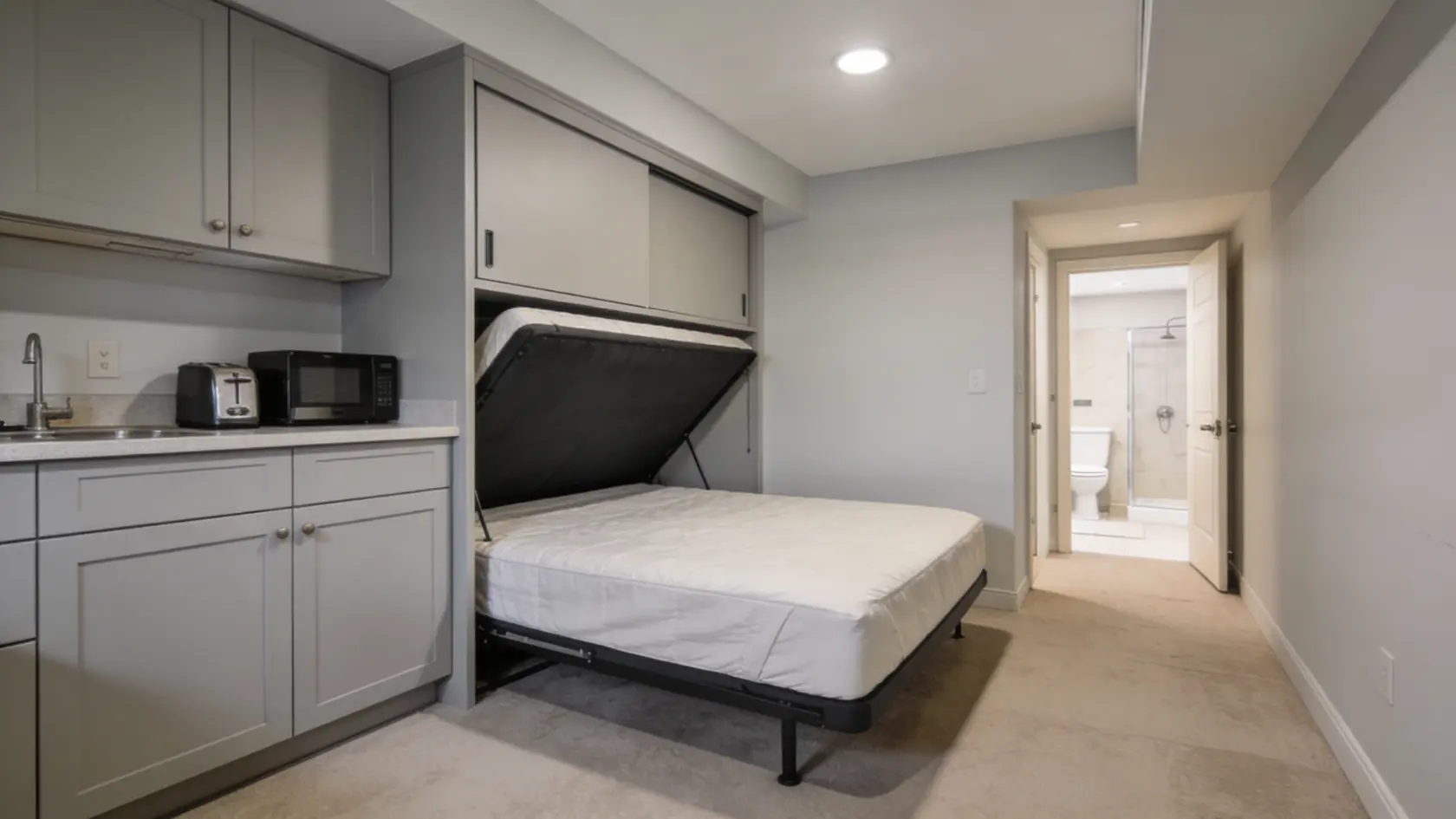
Similar to a full ADU but optimized for Airbnb-style use. Kitchenette, Murphy bed, bathroom, and a separate entrance are the four essentials.
Check local short-term rental regulations before planning, since many municipalities have added restrictions in recent years. Furnishing and staging costs are additional and should be budgeted separately.
Cost: $35K to $65K.
16. Flex Suite with Murphy Bed
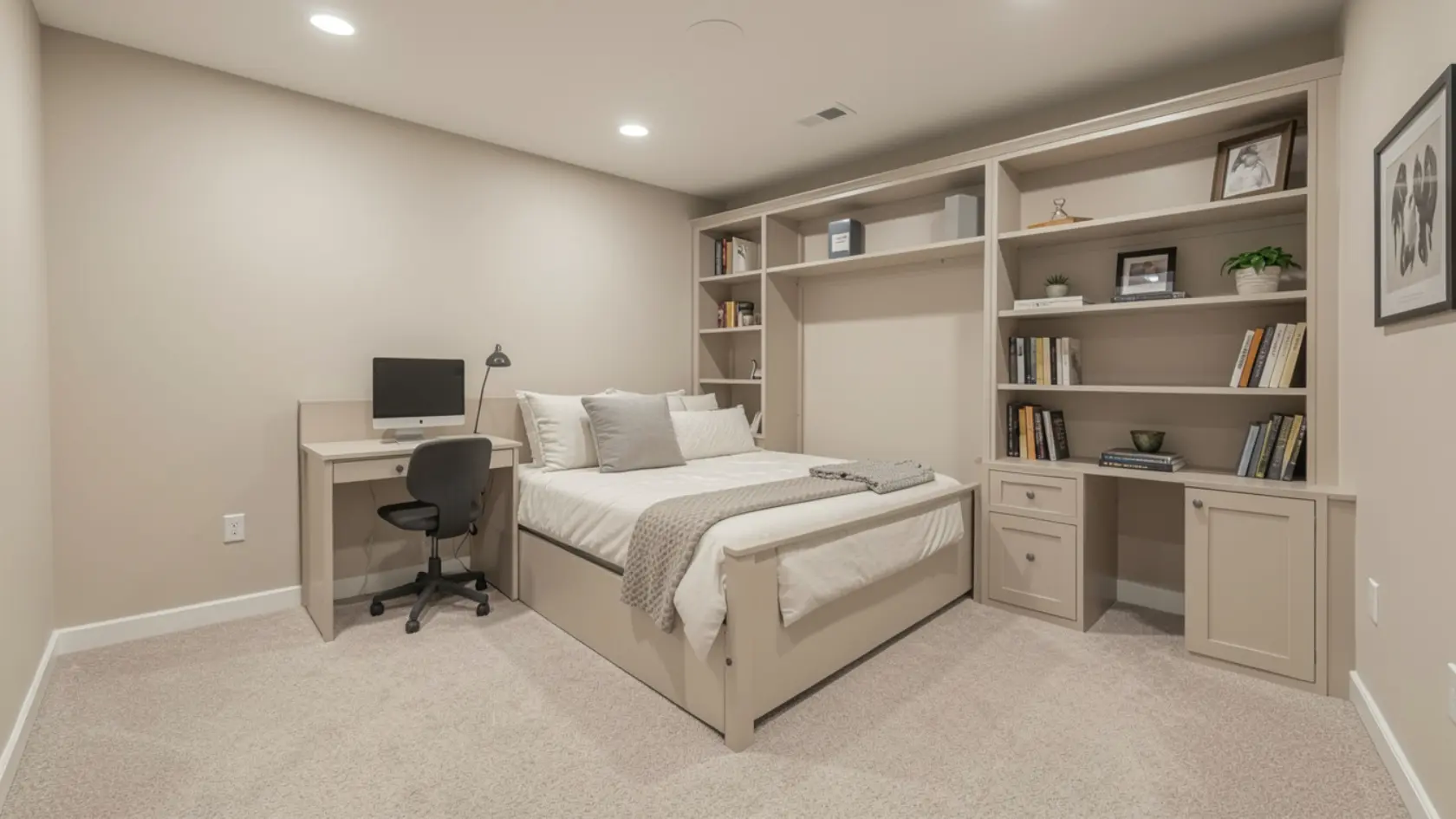
A Murphy bed with integrated desk and shelving serves as an office during the week and a guest bedroom when needed. This is the highest function per square foot idea in the article for anyone who does not need a full-time bedroom.
Egress is not required if the room is not listed as a bedroom, but adding it anyway protects safety and future resale value. Murphy unit alone runs $2K to $6K.
Cost: $8K to $20K.
What’s the Average Cost to Redo a Basement?
Basement remodel costs vary by space type and features.
A Quick Overview:
| Basement Project Type | Cost Range | Key Notes |
| Basic Finish (paint, flooring) | $2K – $10K | Surface updates only |
| Home Theater | $8K – $30K | Seating, acoustics, ceiling height |
| Wet Bar / Small Kitchenette | $3K – $12K | Plumbing, cabinets, counter height |
| Game Room | $5K – $20K | Table space, durable flooring |
| Home Gym | $3K – $15K | Flooring, mirrors, ventilation |
| Guest Bedroom | $2.5K – $6K | Includes egress window |
| ADU / In-Law Suite | $25K – $265K | Bathroom, kitchenette, entrance |
| Studio Apartment / Short-Term Rental | $35K – $65K | Full setup with furnishings |
These ranges give a starting point for budgeting your remodel based on your goals.
Common Basement Remodel Mistakes to Avoid
Most basement remodels that go over budget or fail inspection come down to the same handful of mistakes. Here are the ones worth knowing before you start.
- Moisture Problems: Wet basements can ruin drywall and flooring within 1 to 2 years. Fix all leaks before finishing.
- Skipping Radon Testing: Use a $15 test kit before finishing. Mitigation systems cost around $800 to $2,500.
- No Egress Window: A room without proper egress cannot count as a bedroom. Expect $2,000 to $5,000 to add one.
- Choosing Finishes Too Early: Finalize the layout and ceiling before buying flooring or lighting.
- Underestimating Utility Costs: Bathrooms and wet bars need extra plumbing and electrical work. Get quotes early.
- Ignoring Ventilation: Gyms and hobby rooms need added airflow. Install exhaust fans during construction.
- Over-Theming the Space: Highly personalized designs may reduce resale value. Keep the space flexible.
Conclusion
A basement remodel is one of the few home improvements that pays back in both daily quality of life and long-term resale value. The right idea matched to the right space and budget is what separates a successful build from an expensive regret.
These basement remodel ideas cover every budget, use case, and lifestyle. Whether you are finishing a lounge for under $10K or building a full ADU, the decision framework stays the same.
Start with your conditions, match them to your budget tier, then pick your idea. Which basement remodel idea are you planning first? Drop it in the comments below.
Frequently Asked Questions
What Is the Cheapest Way to Cover Basement Walls?
The cheapest way to finish basement walls is by skipping traditional wood framing and drywall. Instead, apply a waterproof masonry sealer, adhere rigid foam board directly to the concrete with adhesive, and cover it with plywood, pre-finished paneling, or floor-to-ceiling curtains.
What Draws Moisture out Of a Basement?
One can invest in a dehumidifier. It’s believed to be a game-changer for removing those damp, musty odors in your basement.
What Happens if I Finish My Basement without Permits?
If local building inspectors discover that your basement renovation was completed without permits, they may require you to dismantle parts of the work to meet code requirements.


