What Irvine Remodelers Should Check Before Covering Existing Woodwork
Home renovations often focus on improving appearance, updating interior finishes, and making better use of available space. However, installing new flooring, wall panels, decorative trim, or built-in furniture without examining the existing structure can conceal problems that may become expensive to address later. Older wooden components deserve particular attention because they may contain moisture damage, deterioration, or evidence of termite activity. Once new materials cover these surfaces, identifying the original condition becomes more difficult. In Irvine, where residential properties range from older homes to recently updated developments, remodeling projects should include a careful assessment of existing woodwork before construction moves forward. Checking framing, flooring, trim, and concealed connections helps homeowners understand what needs repair and prevents cosmetic improvements from hiding unresolved structural concerns.
Why Existing Woodwork Needs Inspection Before Renovation
Wooden components often remain hidden behind finished surfaces for years. During remodeling, removing old flooring, trim, cabinets, or wall coverings can reveal conditions that were previously inaccessible. These discoveries may include water stains, softened timber, cracks, insect damage, or deterioration around structural connections.
Termites are a particular concern because their activity can remain concealed inside wooden materials. A floor may appear stable while the supporting subfloor contains damage. Similarly, decorative wall panels can cover framing members that have experienced moisture exposure or insect activity.
Remodelers should therefore avoid assuming that existing wood is suitable for reuse simply because the visible finish appears attractive. Surface paint, varnish, and decorative coverings can hide defects without correcting the underlying condition.
A preliminary inspection should consider the age of the property, previous renovation work, known moisture problems, and any history of pest activity. Areas near bathrooms, kitchens, exterior walls, and plumbing installations deserve additional attention because moisture-related deterioration may occur around these locations.
Identifying problems before installing new materials gives contractors a clearer understanding of the work required. It also helps homeowners avoid paying for finished surfaces that may need to be removed again if concealed damage is discovered later.
Checking Older Framing and Structural Timber for Hidden Damage
Wall framing and structural timber support important parts of a residential building. Before covering existing framing with drywall, cabinetry, or decorative panels, remodelers should examine accessible wooden members for signs of deterioration.
Termite activity can affect studs, bottom plates, headers, and other framing components. Damage may appear as hollow sections, weakened surfaces, irregular channels, or timber that breaks more easily than expected. However, some signs overlap with ordinary wood decay, so visual observations should not be treated as a definitive diagnosis.
Moisture is another important consideration. Timber exposed to plumbing leaks, condensation, or inadequate exterior drainage may develop discoloration, softness, or fungal deterioration. Covering damp framing with new materials can restrict drying and allow the problem to continue behind the finished surface.
Contractors should inspect areas where wooden framing meets concrete or masonry. These interfaces can be vulnerable when moisture control or material separation has been inadequate. Connections around utility penetrations also deserve attention because leaks and unsealed gaps may affect concealed structural components.
When damage is discovered, the affected material should be assessed before renovation continues. Structural members may require evaluation by an appropriately qualified professional to determine whether repair or replacement is necessary. Cosmetic covering should never substitute for an examination of compromised framing.
Flooring, Subfloors, and Trim That May Conceal Termite Activity
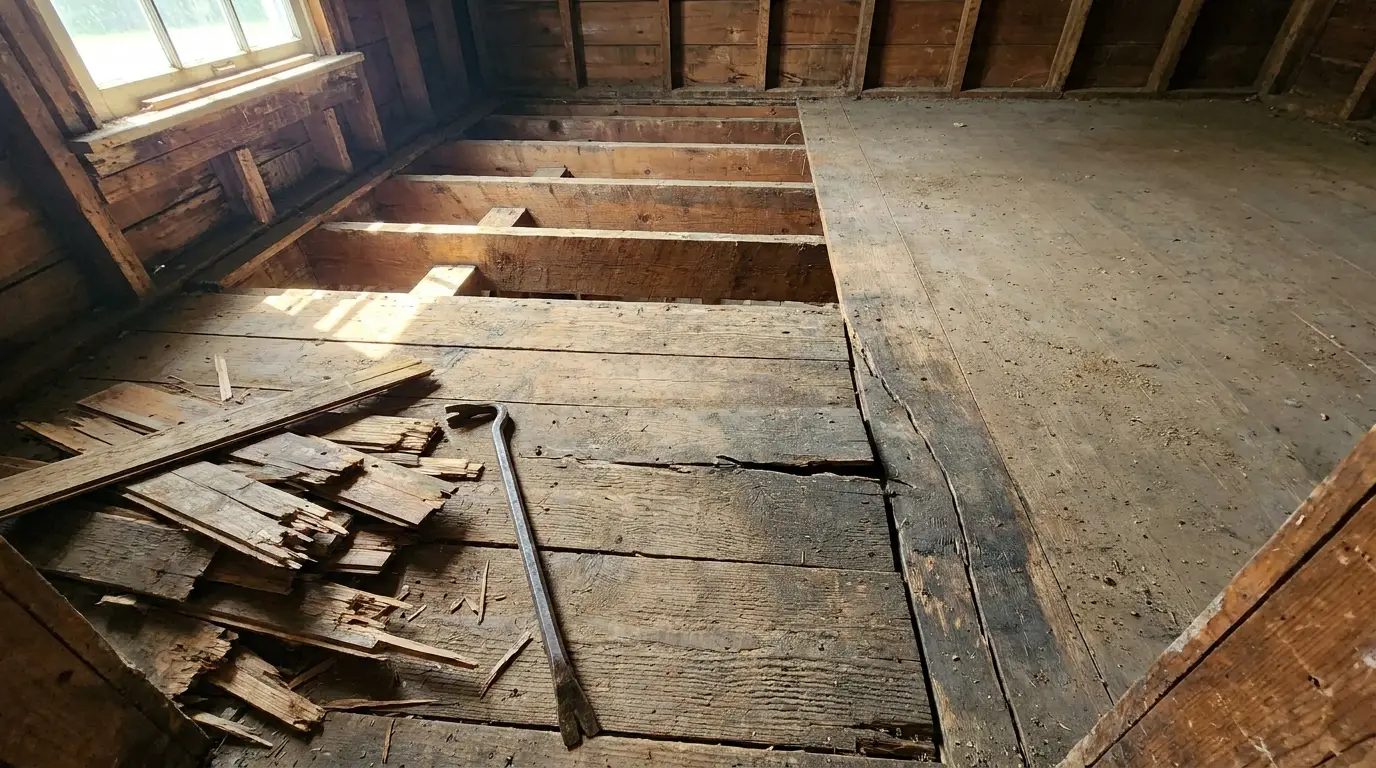
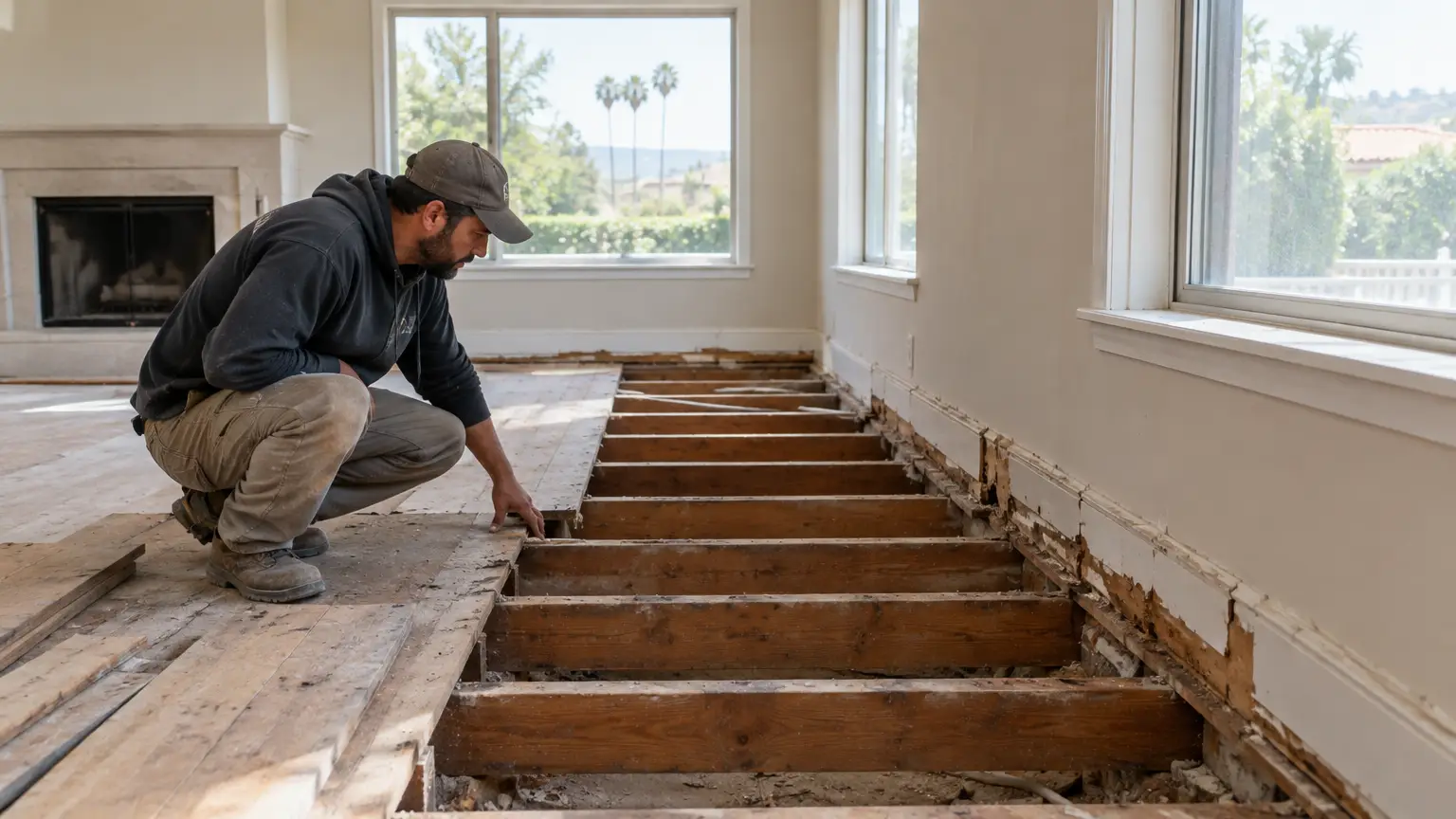
Flooring renovations provide an opportunity to inspect materials that are rarely visible during everyday use. Removing old carpet, laminate, or hardwood can expose subflooring, floor joists, and other wooden components. These areas may reveal damage that would otherwise remain concealed beneath decorative finishes.
Termites can affect wooden flooring systems when they gain access through soil, foundation connections, or other concealed routes. Damage may cause sections of flooring to feel uneven, become unusually soft, or produce hollow sounds. However, similar symptoms can result from loose fasteners, aging materials, or moisture-related deterioration.
Baseboards and door trim also deserve careful examination. These components sit close to floors and may conceal evidence of activity around wall framing or adjacent wooden structures. Small openings, crumbling edges, or unexplained discoloration should be investigated before replacement materials are installed.
Remodelers should pay attention to several areas during preparation:
- Exposed subflooring beneath removed floor coverings.
- Floor joists and wooden supports near damp areas.
- Baseboards with unexplained holes or deterioration.
- Door frames showing soft or damaged sections.
- Trim around exterior doors and windows.
- Wooden transitions between different flooring materials.
When unexplained damage appears around flooring, baseboards, or wooden trim, homeowners may consider Irvine Pest Control for a professional assessment before continuing with cosmetic repairs. Identifying possible termite activity at this stage helps prevent new materials from concealing existing problems.
Why Cosmetic Renovation Should Not Conceal Unexplained Damage
Cosmetic improvements can make an older property look substantially different without addressing the condition of the underlying structure. New wall panels, decorative mouldings, built-in wardrobes, and replacement flooring may cover visible defects, but they do not remove the causes of those defects.
For example, installing new cabinetry against a wall with an unresolved plumbing leak may conceal moisture damage while allowing deterioration to continue. Similarly, covering termite-damaged framing with decorative boards may make the room appear finished even though the structural problem remains.
The distinction between appearance and condition is particularly important when a property has a history of termite activity. Old treatment records may provide useful information, but previous treatment does not automatically establish that every affected wooden component is sound. Damaged timber may still require repair even after an infestation has been addressed.
Remodelers should also consider whether new construction details will restrict future inspections. Permanently enclosing vulnerable connections or covering access panels can make maintenance more difficult. Where practical, access to plumbing connections and other service areas should remain available.
Homeowners should request clear explanations when contractors discover unexplained damage. Before approving additional finishes, they should understand what caused the deterioration, which materials are affected, and whether specialist assessment is necessary.
When Professional Inspection Should Take Place During Remodeling
Professional inspection is particularly useful when renovation work exposes possible termite damage, unexplained wood deterioration, or persistent moisture problems. Although contractors can identify visible defects, determining the presence and extent of an infestation may require specialist knowledge and appropriate inspection methods.
Timing matters. The best opportunity for examination often occurs after existing finishes have been removed but before new materials are installed. At this stage, framing, flooring connections, and previously concealed surfaces may be easier to access.
Pest professionals can investigate possible termite activity, while qualified building professionals can evaluate the condition and repair requirements of damaged structural materials. These assessments address related but different concerns, and both may be necessary when structural deterioration is suspected.
If an infestation is suspected, remodelers should avoid immediately covering the affected area or attempting cosmetic repairs. The underlying source should be investigated first. Depending on the findings, the project may need adjustments to accommodate treatment, replacement of damaged timber, or correction of moisture-related problems.
Clear communication between the homeowner, contractor, inspector, and repair specialists helps prevent unnecessary work. Documenting findings, agreeing on repair responsibilities, and confirming that the affected area has been properly addressed can reduce the likelihood of future complications.
End Note: Protecting the Structure Before Improving Its Appearance
Successful remodeling involves more than selecting attractive finishes and modern fixtures. Existing framing, flooring, trim, and structural wood should be examined before new materials conceal them. Termite activity, moisture damage, and deteriorating timber can remain hidden behind apparently sound surfaces, creating problems that become more difficult to investigate after renovation. Irvine homeowners can reduce these risks by arranging appropriate inspections when questionable conditions appear and ensuring that structural concerns are resolved before cosmetic work continues. Contractors should document exposed damage, investigate unexplained deterioration, and preserve practical access to important building connections. Addressing the condition of existing woodwork first helps ensure that renovation improvements rest on a sound foundation rather than conceal problems that may require attention later.