Bougainvillea Care That Actually Keeps It Blooming
Bougainvillea care confuses many gardeners, and the plant rarely makes itself clear. It can grow long and green all season and still refuse to flower.
Most of the time, the problem comes down to three simple things: light, water, and feeding habits. Get those three right, and bougainvillea rewards you with color that lasts for months.
This article covers everything you need for solid bougainvillea care, from picking the right spot to planting, feeding, and pruning it for bigger, longer-lasting blooms.
What Is Bougainvillea?
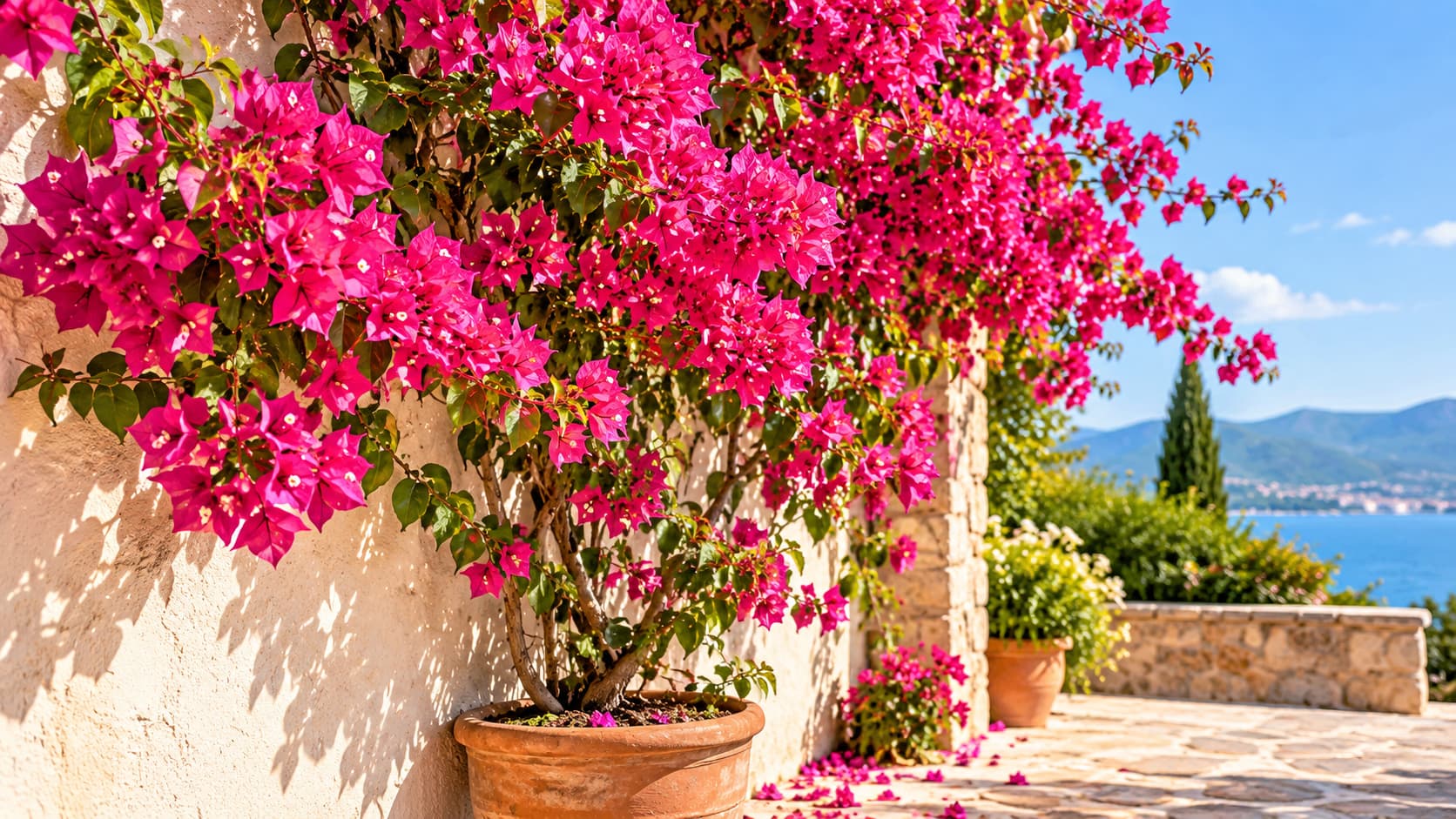
Bougainvillea is a thorny, fast-growing vine or shrub grown for its papery, brightly colored bracts rather than true flowers. Native to South America, it belongs to the four o’clock plant family and thrives in hot, sunny climates.
|
Attribute |
Detail |
|---|---|
|
Botanical name |
Bougainvillea spp. |
|
Plant family |
Nyctaginaceae |
|
Native region |
Central and South America |
|
Plant type |
Woody vine or sprawling shrub |
|
Common colors |
Pink, magenta, red, orange, purple, white |
|
Mature size |
3 to 40 feet, depending on variety and support |
Is Bougainvillea a Perennial or an Annual?
Bougainvillea is a true perennial in USDA Hardiness Zones 9 through 11, where winters stay mild enough for it to live outdoors year-round. In every zone colder than that, most gardeners grow bougainvillea as an annual or keep it in a container and move it indoors before frost hits.
That is why the plant shows up in garden centers nationwide, even though it survives outdoors year-round only in warm regions.
If you are unsure which category applies to your area, check your zone on the official USDA Plant Hardiness Zone Map before deciding whether to plant it in the ground or in a pot.
Where to Plant Bougainvillea for the Best Blooms
Location matters more for bougainvillea blooms than almost any other factor. It needs strong direct sun, quick-draining soil, and some shelter from harsh wind to perform at its best.
|
Condition |
What Bougainvillea Needs |
|---|---|
|
Sunlight |
At least 6 hours daily, 8 or more for peak blooming |
|
Soil drainage |
Fast-draining, never soggy or waterlogged |
|
Wind exposure |
Some protection, since strong wind can snap canes |
|
Support |
A trellis, fence, or wall, since it cannot climb on its own |
|
Best spots |
South- or west-facing walls, sunny patios, warm courtyards |
How to Plant Bougainvillea
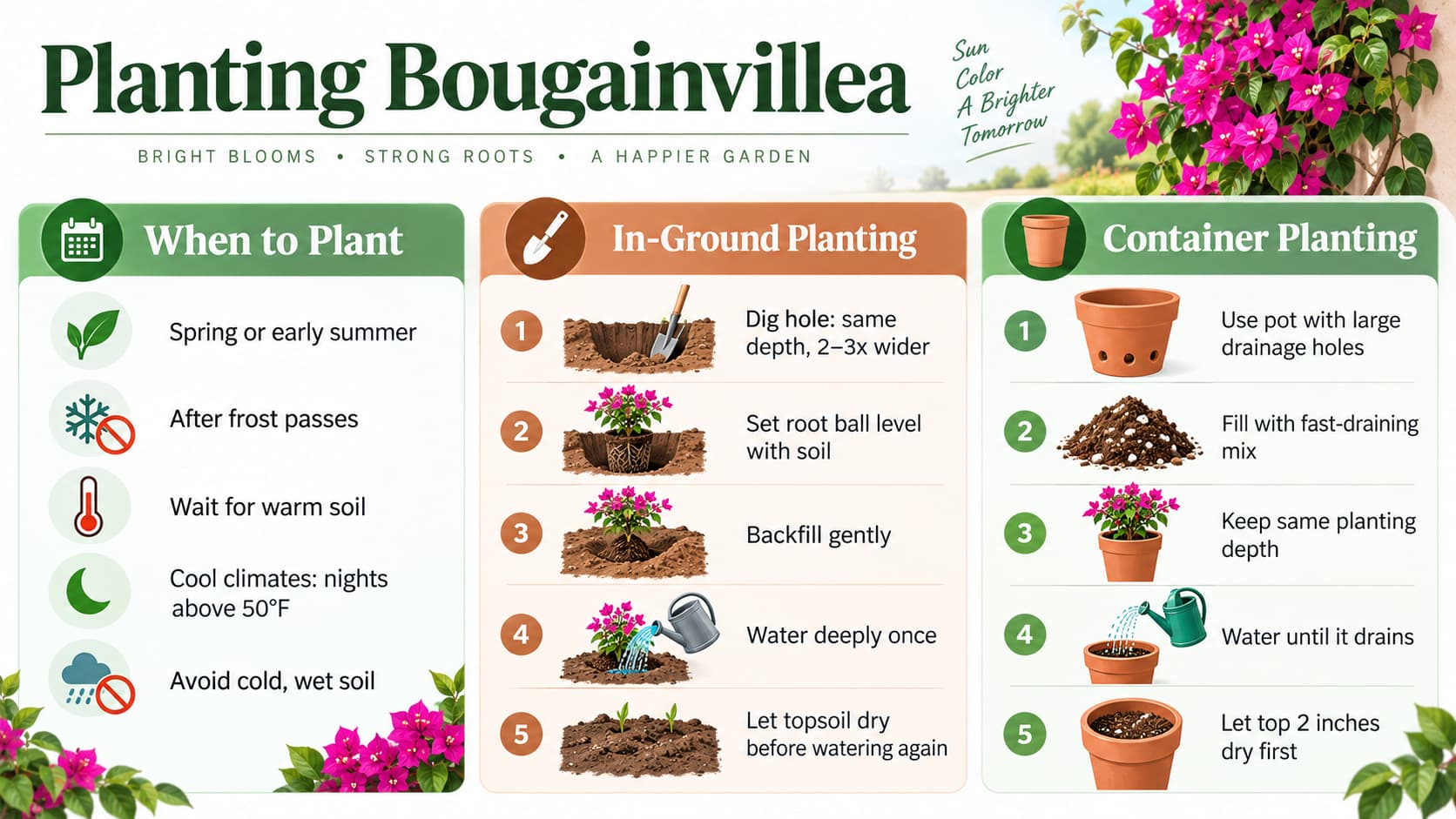
Bougainvillea has sensitive roots, so careful planting helps prevent stress and encourages strong growth. The method differs slightly for in-ground and container planting.
When to Plant Bougainvillea
Plant bougainvillea in spring or early summer after the risk of frost has passed.
- Wait until the soil has warmed.
- In cooler climates, plant only when nighttime temperatures stay above 50°F.
- Avoid planting in cold, wet soil, which can slow root growth and increase the risk of root problems.
How to Plant Bougainvillea in the Ground
- Dig the hole: Make it as deep as the root ball and about two to three times wider.
- Position the plant: Place the bougainvillea so the top of the root ball is level with the surrounding soil.
- Backfill gently: Fill the hole with soil without pressing it firmly around the delicate roots.
- Water deeply: Water thoroughly once to settle the soil around the roots.
- Let the soil dry: Wait until the topsoil begins to dry before watering again.
How to Plant Bougainvillea in a Container
- Choose a draining pot: Use a container with several large drainage holes to prevent standing water.
- Prepare the soil: Fill the pot with a fast-draining mix, such as potting soil combined with perlite or coarse sand.
- Position the root ball: Keep the plant at the same soil depth it had in its nursery container.
- Water thoroughly: Water until excess moisture drains from the bottom of the pot.
- Wait before watering again: Allow the top two inches of soil to dry before the next watering.
Bougainvillea Care Basics: Sun, Soil, Water, and Fertilizer
Once bougainvillea is in the ground, ongoing care comes down to four basics: light, drainage, watering rhythm, and a light hand with fertilizer. Get these right, and the plant does most of the work itself.
|
Care Factor |
What to Do |
|---|---|
|
Sun |
6 to 8+ hours of direct sun daily for strong blooming |
|
Soil |
Fast-draining, slightly acidic to neutral, roughly pH 5.5 to 6.5 |
|
Water |
Deep watering, then allow the soil to partially dry before watering again |
|
Fertilizer |
Low-nitrogen formula, such as 5-10-10, applied lightly during active growth |
For a closer look at soil and pH needs, Clemson Cooperative Extension’s bougainvillea factsheet is a solid reference point.
How to Care for Bougainvillea in Pots and Containers
Container growing works well for bougainvillea, and in many cases it blooms even better than plants grown in the ground. A few container-specific habits keep it healthy long-term.
- Pot size: Step up only one size at a time when repotting.
- Watering: Water thoroughly until it drains out, then wait for the topsoil to dry.
- Repotting: Only repot when the plant is rootbound, roughly every two to four years.
- Winter care: Bring containers indoors before nights drop near 40°F in cooler climates.
- Fertilizing: Feed lightly during active growth and stop once growth slows in fall.
Pruning and Training Bougainvillea for More Flowers
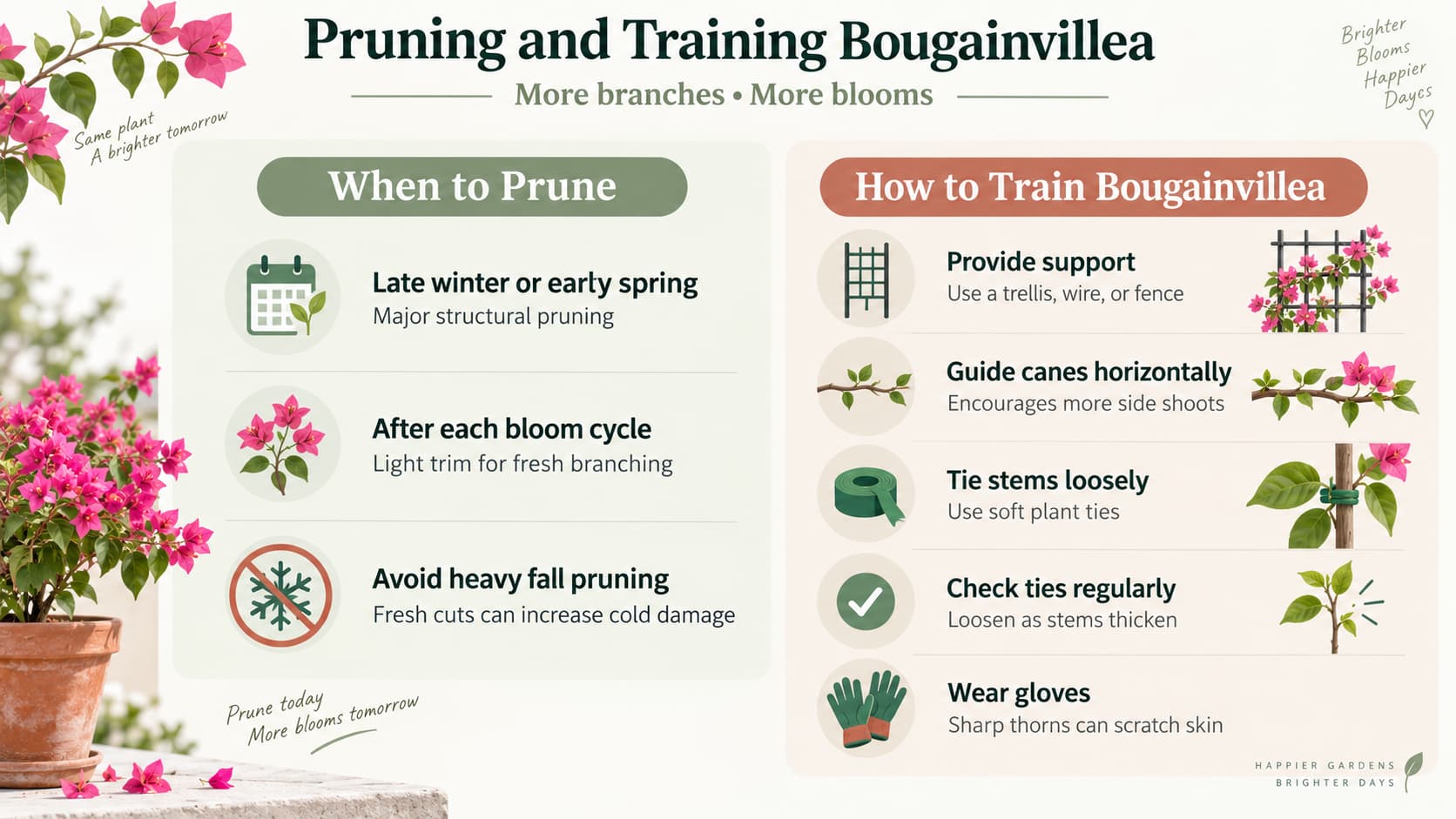
Bougainvillea blooms on new growth, so proper pruning and training can encourage more branches and flowers.
When to Prune
- Late winter or early spring: Do major structural pruning before new growth begins.
- After each bloom cycle: Lightly trim the plant to encourage fresh branching and another round of flowers.
- Avoid heavy fall pruning: Late-season cuts can make the plant more vulnerable to cold damage.
How to Train Bougainvillea
- Provide support: Use a trellis, wire, fence, or similar structure because bougainvillea cannot cling by itself.
- Guide canes horizontally: Horizontal growth encourages more side shoots, where many blooms develop.
- Tie stems loosely: Use soft plant ties that will not cut into growing stems.
- Check ties regularly: Loosen or reposition them as the stems thicken.
- Wear gloves: Bougainvillea has sharp thorns that can easily scratch or puncture skin.
Seasonal Bougainvillea Care Calendar
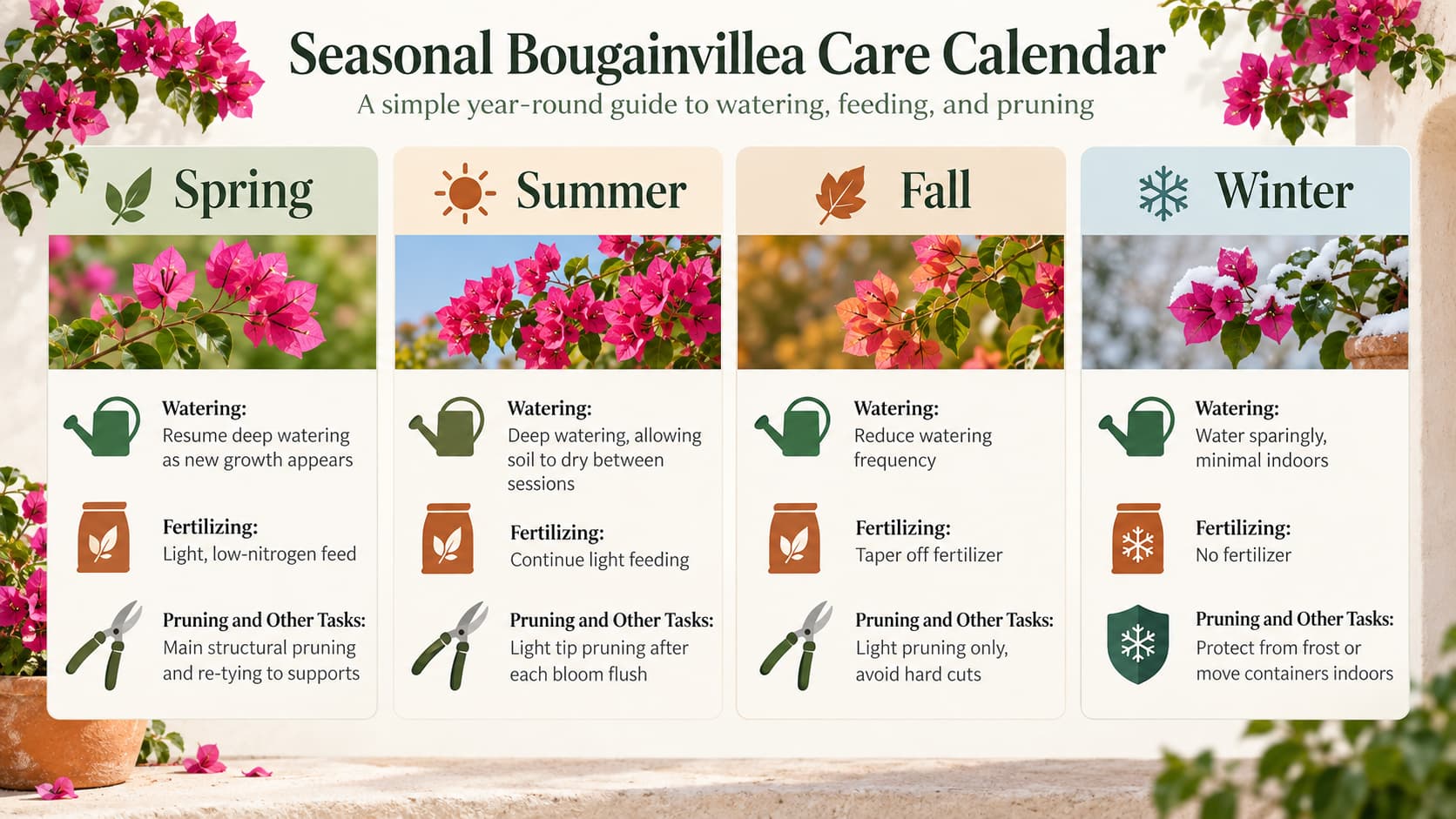
Bougainvillea care shifts slightly with the seasons, mainly around watering, feeding, and pruning windows. This calendar keeps the routine simple no matter where you garden.
|
Season |
Watering |
Fertilizing |
Pruning and Other Tasks |
|---|---|---|---|
|
Spring |
Resume deep watering as new growth appears |
Light, low-nitrogen feed |
Main structural pruning and re-tying to supports |
|
Summer |
Deep watering, allowing soil to dry between sessions |
Continue light feeding |
Light tip pruning after each bloom flush |
|
Fall |
Reduce watering frequency |
Taper off fertilizer |
Light pruning only, avoid hard cuts |
|
Winter |
Water sparingly, minimal indoors |
No fertilizer |
Protect from frost or move containers indoors |
Common Bougainvillea Pests and Problems
Bougainvillea stays fairly trouble-free when its basic needs are met, but a few pests and issues can still show up. Here is what to watch for.
- Aphids: Cluster on new growth. Rinse off with a strong spray of water.
- Mealybugs: Cottony white patches on stems. Treat with insecticidal soap or a cotton swab dipped in rubbing alcohol.
- Spider mites: Fine webbing and speckled leaves in hot, dry weather. Increase humidity and rinse foliage regularly.
- Bougainvillea looper caterpillars: Chewed leaves, often at night. Hand-pick or use Bt (Bacillus thuringiensis) for targeted control.
- Root rot: Yellowing leaves and wilting from soggy soil. Improve drainage and cut back on watering right away.
How to Keep Your Bougainvillea Blooming
Bougainvillea blooms best when it gets at least eight hours of direct sun a day, so start by checking that nothing is shading it during the growing season.
Next, look at watering, since constantly moist soil pushes the plant toward leafy growth instead of flowers, so aim for deep waterings followed by a real dry-down period between them. Skip high-nitrogen fertilizers entirely and choose a low-nitrogen formula instead, since too much nitrogen produces green leaves at the expense of bracts.
Finally, prune lightly after each bloom cycle, since new growth is exactly where the next round of flowers forms. Working through sun, water, fertilizer, and pruning in that order solves most blooming problems within a few weeks.
Conclusion
Good bougainvillea care comes down to sun, drainage, and restraint with fertilizer. Give it eight hours of light, let the soil dry between waterings, and skip the nitrogen-heavy feeds, and blooms will follow.
Remember that bougainvillea is a true perennial only in Zones 9 to 11, so gardeners in cooler areas should treat it as a container plant or seasonal annual.
Once you match your care routine to your climate, this plant rewards patience with color that lasts for months.
Frequently Asked Questions
Do bougainvillea come back every year?
Yes, in Zones 9 to 11. In colder areas, frost may kill top growth, though roots can survive light freezes. Most gardeners replant or overwinter pots indoors.
How to keep your bougainvillea blooming?
Give it full sun, let the soil dry between waterings, use a low-nitrogen fertilizer, and prune lightly after each bloom cycle.
Do coffee grounds help bougainvillea?
Not reliably. Used grounds are near neutral and may add excess nitrogen. Bougainvillea prefers pH 5.5 to 6.5 and light, low-nitrogen feeding.
What are the downsides of growing bougainvillea?
Bougainvillea has sharp thorns, sheds leaves and bracts, dislikes frost, and can grow aggressively in warm climates, so it needs regular pruning.
What is the secret to growing bougainvillea?
Mild stress helps it bloom. Give it full sun, let the soil dry slightly, and feed lightly. Rich soil and constant moisture often produce leaves instead of flowers.
What is the lifespan of bougainvillea?
Bougainvillea can live for several decades, often around 25 to 50 years or longer when grown in favorable conditions with proper care.
Does Epsom salt help bougainvillea bloom?
Only when the soil is magnesium-deficient, which is uncommon. Test the soil first, since excess magnesium can disrupt calcium and potassium. Correct sun, watering, and nitrogen first.